
 I sat on a webinar the other day and when it ended the first thought that crossed my mind was, they’re not talking to me. Their demographics in the study capped at 55-years of age. Really? No one over 55 matters to radio or to radio advertisers?
65+ People
Then I read this World Economic Forum article that was headlined, “For the first time ever there are more people over 65 than under 5.” Think about that for a moment. Economists point out there’s widespread consequences for productivity, inflation and global growth by this demographics shift, to which I would add, consider the impact on ad supported media.
65+ People are Renters
While millennials are buying homes – if they aren’t weighed down with student loan debt and minimum wage level jobs – seniors are becoming renters. People 65+ are empty nesters and find they simply don’t need a McMansion and all the work/expense that goes into living in one. I know that’s certainly been the case for me when I sold my home in 2003. I have been a renter since. Renting is much more economical than owning.
Market Watch reports that Americans will find they will need to spend nearly $9,400 in “hidden costs” to own and care for a median-priced home, based on the latest analysis from Zillow.
Millennials Abandon Brick & Mortar Stores
Tethered to their smartphones and comfortable with buying online, those millennials aren’t necessarily the best customers for their advertisers that radio might have thought.
Millennials are the largest generation in American history, and their shopping habits are worlds away from those of their parents. Thanks to the rapid pace of digitalization and new shopper-friendly tools, like browser extensions and voice assistants, retailers must be ready to embrace significant change.
PR Newswire, March 19, 2019
Only 18-months ago, research indicated that millennials were still going to brick & mortar stores, but that’s changed dramatically, and in a very short time. You can download the full report HERE.
$164.55 a Day
Jessica Dickler reporting on CNBC writes, “Between housing, food, cellphone bills and other expenses, Americans shell out $164.55, on average, in a given day.” Punching that number into my calculator, I quickly saw that’s over $60,000/year, but averages are funny things and you can be sure ‘your mileage may vary.’
Putting that number aside for a moment, we find that the bulk of that money is spent on housing. That fabled ‘American Dream’ can be a boat anchor on the pocketbook.
While seniors are moving from being home owners to renters, you might be surprised to learn how similar the senior household expenses are to the average household according to the Bureau of Labor Statistics.
Item
Food
Furniture
Major Appliances
Small Appliances
Household Textiles
Apparel
Transportation
New Vehicles
Old Vehicles
Health Care
Drugs
Entertainment
Insurance
Other ExpensesTotalSenior Household
$13,432
$401
$196
$88
$113
$1,640
$7,781
$2,052
$1,611
$2,416
$467
$2,060
$4,055
$4,093$40,817Avg. Household
$14,403
$460
$200
$81
$108
$1,870
$8,354
$2,055
$1,904
$1,758
$266
$2,142
$4,505
$3,956$42,631Source: Advertising Age’s American Demographics, based on Bureau of Labor Statistics’ Consumer Expenditure survey. (1) Includes social security contribution (excludes health insurance, which is classified as health-care expense).
Not all that different, is it.
And far from that other analysis of the average adult spending over $60,000 a year. So why aren’t more radio companies focusing at least one of their radio signals on seniors?
Retirement Epiphany
All my life, the focus was on planning for and saving for retirement. I’d like to say I did everything right, but the reality is far from that.
The great wealth destroyers are divorce, moving and changing jobs.
In my personal life, I’ve gone through two divorces. As the radio industry was dramatically changed by the Telcom Act of 1996, I would spend a decade moving around the country about every two years. That communications act also found me changing companies with just about every move too.
The final chapter of my working life, as a university professor of broadcasting, gave me seven years of stability and an opportunity to save as much as I could for retirement.
Now I’m retired. The goal is no longer to save for retirement, but to spend in retirement. My wife and I are in good health and taking zero medications, which affords us the opportunity to spend on our new found passion of traveling. Spoiling the grandkids, eating out, and redecorating are also high on our list of things to do. I’m sure we’re not alone.
The irony is, the radio media seem to ignore us. And they do so at their peril.
We’re retired, not dead.
 Gordon Borrell recently hosted a webinar that hit on the highlights of his #LOAC2019 (Local Advertising Conference) held in New York City. The shocker, for me and many others came when Gordon said the future for media expenditures would be a process of “thinning the herd.”
 Growing up in the 20th Century, things looked like what they were. Telephones were easily identified as telephones. Television sets were easily identified as televisions. And radios were easily identified as radios.
 our social media pages. In my case, it’s a cathedral style radio made popular back in the 1930s. A style of radio I never owned until I received a retro transistorized version at a company manager’s meeting back in the late 1980s.
 on their phones, I wondered if the new icon for radio might be just that, a smartphone device. But then, this same device could also represent a TV, a camera, a movie camera, a book, a newspaper, a magazine…well you get the idea, a lot of media was instantly replaced by this singular device.
 never had. She’s always there, waiting for me to call her name and fetch for me whatever I need, be it the latest news, weather, wind chill, traffic conditions, music, and more.
 These days, radio still dominates in the car, and the vehicles being produced today feature entertainment systems. These dashboard entertainment centers are loaded with unprecedented engagement capabilities and each one is accessed by an identifying App. Companies like Pandora and Spotify are providing a content rich environment to take full advantage these entertainment systems.
 Albert Einstein said “We can’t solve problems by using the same kind of thinking we used when we created them.”
 In a lot of ways, the future is here, now.
 Roger Miller was a very creative guy. His 1966 hit song, “
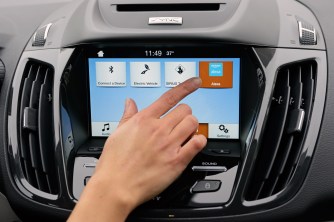 Radio’s last bastion of domination is the automobile (aka SUV, pickup truck etc.). In the home, voice activated devices are replacing AM/FM radios. I own 3 Echos, and Alexa has become a real friend of the family.
 I know that Downton Abbey premiered on PBS back in 2011, but at that time I was doing my own “Mr. Molesley career transition” (more on that in a moment) – from radio management to broadcast professor – in addition to moving from New Jersey to Kentucky, I didn’t have a whole lot of time to watch the series. Amazon Prime changed that for me in 2019 when I noticed it had made available the entire six seasons (52-episodes).
 of the Titanic also set in motion more intense regulation of wireless communication for ships at sea. The Wireless Ship Act of 1910 only required ocean-going ships to carry radio equipment when visiting the United States and only required a single radio operator. That was amended after the Titanic sank in 1912 to include vessels traveling on the Great Lakes in addition to those on the oceans, plus requiring two radio operators with the wireless being manned around the clock.
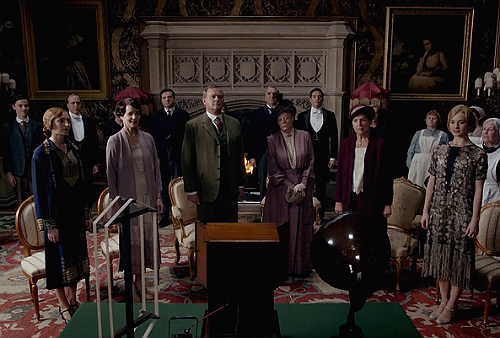 The scene could not be more amazing, seeing everyone gathered around the awkward looking device in the great hall, much as many Americans do for a Super Bowl, waiting to hear the King. When he comes on, the family all stands at attention, in much the same way they would if they were in his presence to hear him speak.
 Getting back to Mr. Moseley, he’s a fine example of what I mean and how we are similar. The downsizing he encountered saw him go from a trained butler to a second footman to a laborer in the streets. He saw his working life as a series of steps down and not one that was advancing in stature and pay. But Mr. Moseley loved learning and once dreamed of being a teacher. An encounter with the local headmaster of the town’s school led Moseley to taking a series of exams which proved him to be an exceptional scholar and he was then awarded a teaching position with the school. Moseley’s life was now moving in a direction he only previously dreamed about.
 Last week I told you about how our world is exploding with media to the point of over-saturation. Not only are we drowning in a plethora of media, the rate of new ways to communicate keeps accelerating at an unfathomable pace.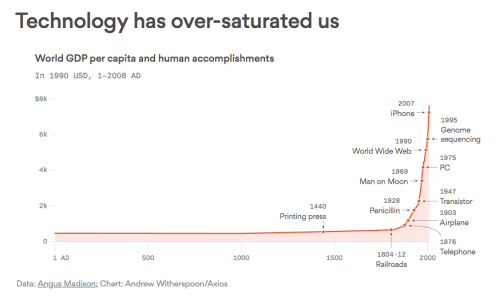
 DickTaylorBlog