
Tag Archives: Advertising

Evolve or Lose Relevance

23In two months, the world’s largest radio meeting will once again be taking place in Las Vegas; the 2016 NAB Show. Ironically, since leaving the radio industry and entering academia at Western Kentucky University, I attended my very first NAB show in 2011 and have every year since. So as visions of massive crowds and very sore feet dance in my head, I thought I’d look back over those past years and see how the theme of these meetings has evolved.

In 2011, the NAB highlighted that media consumption had become more digital and connected. TV everywhere strategies, mobile TV, the connected TV and the use of social media dominated the show.

In 2012, everyone was shouting about 4K video, ISP content delivery and the evolution of special effects technology. Everywhere you went you were shown 3DTV (I didn’t care for it, personally.)

In 2013, the NAB show hosted its first ever 2nd screen Sunday and the impact of more than one screen (the television set) vying for the viewer’s attention was fully recognized if not totally embraced by broadcasters.

In 2014, the NAB show wasn’t so much memorable for what it had but for what it didn’t have 3DTV. What had once been prolific throughout all the convention halls was now nowhere to be seen. 4K video & TV was now all the rage with Japan’s NHK demonstrating 8K video & TV. NHK said they will be recording the Rio Olympics in 8K and plans to televise (in Japan only) the 2020 Olympics in 8K. When you see TV pictures this detailed, you can instantly see why 3DTV bit the dust. 4K and 8K feels three dimensional and you don’t need any funky glasses.

Which brings me up to last year’s NAB show in 2015 where the theme was “Evolve or Lose Relevance” voiced by NAB President/CEO Gordon Smith. Smith urged broadcasters to embrace the new technologies like ASTC 3.0 & 4K for TV, and NextRadio’s mobile app for FM radio on mobile devices. Smith also talked about the spectrum auction which begins in March 2016 and characterized the auction as both “exciting and daunting.”

What may have been most daunting and certainly not exciting was to have been an AM broadcaster at this meeting – or any of the meetings of the last five years. Move along guys and gals, there’s nothing for you to see here. HDRadio was there every year and I think they had more cars outside of their convention hall than any previous year featuring their spiffy HDRadios, a technology that has been better embraced by the automakers than radio broadcasters for the most part. And of course, there were drones. Lots & lots & lots & lots of drones. Big drones, little drones…a drone for every size and budget. I’m wondering if the FAA will start coming to these meetings along with their friends from the FCC.

The only thing I haven’t seen addressed over these past five years is what seems to me to be the elephant in the room. Everything is supported on a business model that has been around since commercial broadcasting began in 1920, that being the selling of advertising. The covenant with the consumer of radio/TV programs was we will give you the programming for free if you allow us to expose you to our advertisers; a business model that worked extremely well through the birth of the Internet and dial-up connections. It would be the introduction of broadband and its rapid expansion that would challenge everything.

Blockbuster vs. Netflix is a good example. 2004 Blockbuster has 9,000 stores and almost $6 billion in revenue and only 4.4% of American homes had broadband. Netflix was mailing DVDs to its customers. 2010 Blockbuster files for bankruptcy, 68% of American homes have broadband and Netflix had been streaming to their customers for three years. Today Netflix has a market cap of almost $33 billion.

That really brings home the concept of “evolve or lose relevance” doesn’t it?

So what will the business model for media be evolving to? That’s the billion dollar question. Nobody knows. But what we do know is that Apple gave up its free iTunes music streaming at the end of January 2016 and now will only offer a paid subscription model. Disney’s ESPN is suffering the “agony of defeat” as more consumers cut their cable bundle (for which it’s reported that ESPN gets $7 per sub) and is causing this revenue stream to dry up while the cost of bidding for live sports events continues to escalate. Everything appears to be moving in a direction of asking the consumer to pay for what they want – like they do for HBO, Showtime, and Netflix etc.

So what’s the plan Stan for broadcast radio and TV? Or for any advertising supported medium for that matter? I think about this a lot.

8 Comments

Filed under Education, Mentor, Radio, Sales, Uncategorized

Day of Reckoning

20There’s an old saying “Nothing lasts forever.” Do you remember flying on TWA or Pam Am? How about shopping at Woolworths? Broadcasters will remember names like Group W Westinghouse Broadcasting, or Taft Broadcasting, or Nationwide, or RKO General that would put the successful Bill Drake Top 40 format (with the non-stop innovations & promotions of 93-KHJ’s Ron Jacobs) in major cities across North America. They’re all now a memory.

In a time of limited radio signals, radio could control its inventory and increase stakeholder ROI by raising rates as it increased the size of its audience. That’s now a memory.

Next came the Local Marketing Agreement (LMA) to soak up all those Docket 80-90 FM signals that were squeezed into the FM band but found themselves economically challenged. More signals meant a new way to make more money. That’s now a memory.

LMAs were “training pants” for the Telcom Act of 1996 that would unleash a consolidation of radio and television ownership like the world had never seen. Companies would rush to acquire as many radio signals as they could as fast as they could. And do what with them? They would figure that out later was the common response. Owning more stations was a way to make more money, until it wasn’t. That’s now a memory.

You might have thought that would have sent a message that there are limits. It didn’t.

Today the game is translators. And the number of radio signals continues to grow, all seeking funding through advertising, just like every other form of media out there today.

So is the ad pie growing? Not according to Adam Levy at Motley Fool who saw advertising drop nearly 4 percent in the second quarter of 2015.

When the advertising pie isn’t getting bigger, two things usually happen: 1) budgets get cut and people lose their jobs and 2) more spots are added to the hour. Unfortunately, all through consolidation and the Great Recession radio companies have been doing both. They are like the Federal Reserve wondering what you do when you already have cut the interest rate to zero to stimulate the economy. Not a fun place to be.

Suggested Solutions

 Not to be all doom and gloom on you, I think there are some things that can be done to turn things around. The first thing is to focus on something and own it. Steve Jobs would put it this way “Just get rid of the crappy stuff and focus on the good stuff.” The way Jobs took Apple from near extinction to the world’s most valuable company was by his relentless focus on creating a small number of simple and elegant products.

Seth Godin calls it finding and serving your tribe. Radio needs to give up the quest to be all things to all people and learn to be something some people can’t live without.

Some stations can be the national brand in town, but everyone can’t. Likewise if people can get what you do someplace else, then why do they need you? This is the secret of “less is more.”

Radio stations need to have the agility to make decisions on the front line. Top down management is out, front line management is in. Mary Berner, the new CEO of Cumulus gets it. She has been reported in the trades saying “Cumulus will rely less on top-down management and more on letting managers do the job they were hired for.”  She also understands that while IoT (Internet of Things) is the future, it’s not the place Cumulus needs to focus on today. It’s about changing the culture and the way the company operates first. Getting the programming right and improving sales of those radio programs next.

I remember when I starting working for Clear Channel and hired to turn things around in my market, the company had a big push on selling the web and developing that component. I told my sales manager after the conference call ended that was not going to be the case for us. First we needed to get the programming and radio sales on fire and then – and only then – would we begin tackling our web based program. It worked too.

The hardest thing sometimes is not doing things, but figuring out what to stop doing. Jobs was good at this at Apple. You need to invest some serious thought about what you need to stop doing in your radio property. Again, less IS more if done right.

And the last suggestion I have is directed at colleges and universities. We need to be focused on the business model of radio and putting more of a focus on the business side of radio and radio sales. Radio owners and operators I talk with aren’t clamoring for more DJs or news people like they are for more sales people and innovators that will create the next revenue stream for their property.

In the end, your audience size won’t matter if you don’t have a business model to monetize it.


15 Comments

Filed under Education, Mentor, Radio, Sales, Uncategorized

Looking Back at My 1st Year of Blogging

635867993253266683346579856_blog4Hard to believe I started this blog one year ago. It seems like only yesterday. Ironically, it was Sunday, January 3rd – the same date as today’s date.

Those early days were pretty lean when it came to readership, only a couple of folks to a couple of dozen in those first cold and blustery winter months of 2015. Most blogs – like most diet/exercise programs begun with a new year – last about four months. This blog is celebrating its 1st birthday and its readership has grown dramatically. Thank YOU for being a reader.

 Here were my top 3 most read blog posts of 2015:

We Never Called It Content

Larry Lujack, The Real Don Steele, Robert W. Morgan, Dale Dorman, Ron Lundy, Salty Brine, Bob Steele, and so many, many more. These names I’ve dropped are all no longer on the radio. Terrestrial radio anyway. We radio geeks like to think they are now Rockin’ N Rollin’ the hinges off the pearly gates. https://dicktaylorblog.com/2015/09/06/we-never-called-it-content/

Top 3 In-Demand Radio Jobs

What is the future for jobs in radio in our digitally connected world? Three jobs in particular stand out as being in demand right now and look to be still in demand as radio celebrates its 100th Anniversary in the year 2020. The first won’t surprise anyone, the second is a job that only recently became critical and the third is a job that’s been a part of radio since day one. https://dicktaylorblog.com/2015/02/22/top-3-in-demand-radio-jobs/

Why I Fired My Top Salesperson

My students are always stunned when I tell them about the time I fired my top salesperson. “Why would you do that?” they always ask. Today, I’m going to share that story with you.

In today’s competitive world, top performers are usually cut a little slack. There’s nothing really wrong with that, unless it breaks a culture of honesty, fairness and trust.   https://dicktaylorblog.com/2015/11/01/why-i-fired-my-top-salesperson/

-0-

I learned that my readers, while coming from all over the world, are mainly located in the United States, Canada and United Kingdom. My readership has grown to near 18,000.

Some of the posts I consider to be some of my most insightful you might have missed, the links are posted below:

https://dicktaylorblog.com/2015/03/15/the-future-of-ad-supported-media/

https://dicktaylorblog.com/2015/09/13/is-radio-ready-for-a-black-swan/

https://dicktaylorblog.com/2015/10/25/the-limitations-of-a-spreadsheet/

https://dicktaylorblog.com/2015/04/05/attention-to-detail/

https://dicktaylorblog.com/2015/10/18/how-do-you-measure-employee-performance/

Posts from this blog have been re-published in Tom Taylor’s NOW – Radio’s Daily Management Newsletter, radioINSIGHT, North American Radio Network, Radio Ink, James Cridland’s newsletter, and RAIN among many others (I know I’m leaving some wonderful publications and people out, my apologies in advance). Thank You for sharing my thoughts.

I’ve been invited to appear on Vlogs and podcasts by Owen Murphy, Ryan Wrecker and Larry Gifford as a direct result of my blog. Thank You too.

Next week I will begin a new year of blogging my thoughts about radio, education and the changes each is working through during the communications revolution caused by the Internet of things (IoT).

I hope you will continue to enjoy reading my posts and learning something from what I share. You’re always invited to share your thoughts in the comments section. I learned at the Wharton School that while no one can predict the future, it is amazing when minds come together and share their perspective of what the future holds, how close to what will happen can be revealed.

Let’s grow together in media mentorship.

-0-

Next week, I will take a look at the plight of the small to mid-size Internet streaming broadcasters’ dilemma in light of the Copyright Royal Board’s rates for 2016-2020 and why what’s happening is not new. It’s déjà vu.

4 Comments

Filed under Education, Mentor, Radio, Sales, Uncategorized

Radio – America’s #1 Mass Reach Medium

radio-reaches-245-million-americans-2015-2This was certainly true in the first golden age of radio, that period of time from its birth in 1920 through the mass takeover of television in the 1950s. Once TV came along, radio had to reinvent itself.
 

That reinvention came in the form of Rock ‘N’ Roll, the transistor radio and the car radio. Radio was portable, TV was not. TV took over the living room, but radio took over every other place.


In my life, I’ve lived through every new form of technology that was going to be the death of radio. The 8-track tape, the cassette tape, the CB radio, the CD player, the CD changer, the cell phone, the MP3 player, and most recently, the World Wide Web, Internet streaming and wireless broadband.


So you might be surprised to learn that at the 2015 annual meeting of the Association of National Advertisers Masters of Marketing Conference in Orlando, Florida attendees learned that when it comes to adults 18+, RADIO reaches 93% of them every week. That’s more than TV, more than smart phones, more than PCs and more than tablets.

8

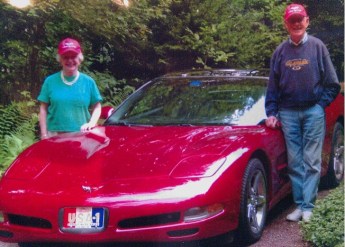
I remember when I got my first GM position. It was a daytime radio station that featured Al Ham’s “Music of YOUR Life” format, big band music for those not familiar with the programming. Yes, my audience was old. But only according to the calendar, but not the way they thought about themselves. Nampa and his corvette

It was always a tough putt with new advertisers, getting across this concept that you are as young as you think. So I wasn’t surprised to learn that one of the sessions talked about “APT.” APT was all about the “Age People Think” not demographics.


I’m not sure that lumping people by demographics was ever a sound marketing idea, but like a lot of bad ideas (buying radio on a Cost Per Point basis) in advertising, people do what’s always been done and ignore if it’s a sound way to place advertising.


A lot of my radio stations over my career have focused on an older demo. When Ken Dychtwald’s book “Age Wave” came out in 1990, I read it with enthusiasm. Dychtwald told of the massive population and cultural shifts that would be taking place because of the Baby Boom Generation. He put forward how the boomers would shift the epicenter of consumer activity from a focus on youth to the needs, challenges, and aspirations of maturing consumers. Those predictions are playing out today.


So again, I wasn’t surprised to read that at the ANA gathering attendees were told that old people were a growth market. In light of the trillion dollars in student loan debt, the millennials are cash challenged in a way that the Boomers are not.


I grew up in a Chevy family. Remember those days of yore? Chevy families and Ford families competing for bragging rights as to which drove the better cars?


Many marketers would have you believe that we are now stuck in a rut with our product choices and only the young are pliable enough to be swayed to try or change brands. So let’s see how that plays out in my family. I have two older brothers; one drives a Honda and the other a Toyota. How about our kids? Well we have a BMW, Mercedes Benz, Hyundai and Honda. In my case, I drove a Hyundai for the past eight years before switching to a Honda Accord; so much for that concept that once you are stuck in a brand, you stay there for life. Even my toothpaste is not the brand I grew up using.


Everything has changed about the world with the exception the way marketing is created and advertising is bought.


One of the big changes is that RADIO is back! It’s the massive reach medium that advertisers seek to expose their products and services on, except that they don’t know it.


Radio needs to use some frequency and repetition to get the word out.


Willie Sutton said he robbed banks because that’s where the money was.


If you’re an advertiser, you need to advertise where the people are and that’s today’s RADIO.

1 Comment

Filed under Education, Mentor, Radio, Sales, Uncategorized

Why I Fired My Top Salesperson

My students are always stunned when I tell them about the time I fired my top salesperson. “Why would you do that?” they always ask. Today, I’m going to share that story with you.

In today’s competitive world, top performers are usually cut a little slack. There’s nothing really wrong with that, unless it breaks a culture of honesty, fairness and trust.

If you’re in any kind of sales, you know that one of the ways management motivates and stimulates sales people are through the use of contests. Sales people are competitive folks and the best like to win. I know I do. In fact, I have a picture that has hung the wall of every office I’ve ever occupied. It says “If you ain’t the lead dog, the scenery never changes.” Lead Dog

Well this latest sales contest was coming down to the wire and the sales people were running neck and neck. It was having every employee in the whole radio station wondering which one of the sales people would capture the top prize and finish first.

On the final day of the contest, just before the 5 o’clock bell rang signifying the end of the contest, my top sales person came running into my office with a contract that put him in first place. We all congratulated him on his win and went home to enjoy the weekend.

On Monday morning, my traffic and business department people came to me with that signed contract along with other signed contracts from that same client and it was quite apparent something was fishy. The signature turned in just before the bell on Friday was quite different than all the others.

I called my top sales person into my office along with my sales manager and we asked this person if the client had actually signed this contract. After some hemming and hawing, he said “NO.” He explained that the client was on a cruise and wouldn’t be back in the office until today and he was planning to go over there and get his approval for the advertising. He said that he knew the client would definitely agree to the advertising. I knew he would too. And that’s why it was so sad when I told him he was fired.

Enforcing a culture of honesty, fairness and trust is hard.

The only way you can maintain that culture is by understanding that you have to fire people no matter what their performance has been. You can’t build a great organization unless you commit to doing just that.

Unlike many other radio stations in my market, I had a waiting line of top sales people wanting to join my team. A great culture helps you attract the most talented people.

A half-dozen years later I was recruited back into this same market from the Midwest and had the task of launching a brand new radio format. I needed to hire people for every position.

The good news is that because of my reputation for honesty, fairness and trust, I attracted many in-market pros when I hung out the “Help Wanted” sign.

One of the people who came to see me and apply for a position on my new sales team was the top salesperson I had fired years ago. He was employed in sales at another radio station in the metro and was doing quite well. Most of the accounts he had on-the-air at his current station had already been assigned to sales people I had already hired. He didn’t care. He wanted to come back and work with me. We reviewed the past that led up to his termination and he swore he had learned his lesson and that it would never happen again. I believed him. It never did.

In his first 30-days, he sold over $100,000.00 in advertising. Most of it paid cash-in-advance. He once again was my top salesperson. I believe in second chances. I also believe in committing to the type of culture that wins with honesty, fairness and trust.

5 Comments

Filed under Education, Mentor, Radio, Sales

Digital Feudalism

I follow Jeremiah Owyang on Twitter. He’s been observing, writing and talking about the new collaborative or sharing economy for some time now. He says it’s the future and where all business is headed.

You might have heard of Uber (the taxi company that owns no cars) or Airbnb (the lodging company that owns no rooms) etc. and how they are growing by leaps and bounds. The venture capital is flowing into these new business models leveraging this collaborative concept.

So you can imagine my surprise to read this headline: “Jeremiah Owyang just dropped a bomb in Paris.” (Not literally, but figuratively) The “bomb” being the reality that “the driving force behind this disruptive movement isn’t peer relationships with customers,” but “the one percent own the collaborative economy.”

Why was this a stunning announcement? Because the concept of this new value proposition called the Collaborative Economy “is organic, peer-to-peer digital interaction to create opportunities that bypass outmoded processes of brick and mortar businesses.”

Much like I wrote about in my blog post “The Future of Ad Supported Media.

Owyang was revealing the dark side of this new economy. The rich were getting richer and the poor, poorer. While some tried to dress this new sharing economy in the clothes of Ronald Reagan’s “Trickle-Down” economics, the reality is clear; that’s not what’s really happening. The world’s wealth-gap continues to expand and it’s picking up speed.

For media companies, this new economy is seen as sharing of thoughts, ideas, information and creation via the Internet. The result has seen the number of dominant media companies go from somewhere around fifty back in the 1980s to about five around the turn of the century.

The old ways of doing business – printing newspapers & magazines or broadcasting over radio & television – are dying.   The “smart money” is moving into digital marketing and advertising. The party’s over, turn off the lights, it’s time to go home – OR IS IT?

Have you heard about ad blocking?

It turns out this a big deal and growing exponentially. The advertising industry has simply looked the other way as though it didn’t exist, but it does.

While only about 15% or so of the US folks are using an ad blocking extension, other countries around the world are approaching 40%. Gaming sites are reported to be even worse with over 80% of their ads being blocked by gamers. Frederic Filloux goes into a lot more detail in his blog post titled “Ad Blocks’ Doomsday Scenarios.

This could be a real opportunity for radio especially. But it needs to look in the mirror, put its big boy pants on and do what it knows it should have been doing all along.

Barry Drake spells it out better than I ever could in his book “40 Years 40,000 Sales Calls” (which I highly recommend you pick up and read). Barry writes the following prescription for radio’s future:

“…there must be investment, the fuel necessary to attack the four major issues.

In Programming:

  • Fresh content to attract a new generation of listeners, 95 million millennials

  • Promotion and advertising to achieve prominence

In Sales:

  • Severe reduction and limits to inventory  (Not a gimmick, smart business)

  • Contact with the BOSS (calling on decision makers by local sellers)

The very entity that caused so much grief is going to eat its own tail.

This is radio’s next big opportunity to reinvent itself and reassert itself as the powerful medium that it always was.

Leave a comment

Filed under Education, Mentor, Radio, Sales

Will Programmatic Buying Help Radio?

My good friend Pierre Bouvard circulated an article on LinkedIn that was published in Ad Age titled “Programmatic TV: Lots of Talk Lately, Not Much Real Action.”  We know what happens in TV land trickles down to radio. That’s what got me thinking about the impact that programmatic buying might make on the radio industry.

First, if you haven’t heard the term, programmatic buying is letting computers buy advertising time. This type of advertising placement is already pretty commonplace in the online world. It can take the form of data-driven real-time purchasing, online auctions or private exchanges, with transactions handled by machines according to Rino Scanzoni, chief investment officer at GroupM. It’s fast, efficient and needs no human sellers.

The large radio companies have been trimming the work force since the beginning of the “Great Recession.” Don’t waste a good crisis was the way one radio industry leader put it at a meeting I attended. Meaning, when the economy is in the dumper and all companies are trimming their expenses to survive, you can use this type of environment to make lots of cuts; especially through RIFs (Reduction In Force).

Computer automation equipment, voice-tracking, syndication, and networking has all replaced live and local radio program origination. However, when it came to ad revenue, the personnel has largely remained intact. Could programmatic buying do to radio sales staffs what the aforementioned computerization did to programming staffs?

The short answer is yes.

At the end of the last decade I watched Google’s ad insertion system place ads onto my radio stations in the very early morning hours. Google’s hardware recorded air checks of every ad they placed on my stations and Google was able to give their advertisers not just a paper verification of the ad running but air checks of every ad, run on every station. Something my local sellers could not do for their clients. It was impressive.

The downside was Google had no idea where anything was in my state and so many of the ads were not appropriate to be airing on my stations for any number of reasons; the most important reason was that business was a hundred miles or more away.

Now while I realize that what I’m talking about here is more programmatic ad placement than programmatic ad buying, I’m making the assumption that the selling of those ads were executed in a similar manner; via automation like Google sells online.

The Ad Age article stated that one big reason that programmatic buying of TV would be a ways off was due to “TV networks also still need to approve the ads before they run, both for standards and to make sure they fit with the surrounding programming. That step doesn’t exist in programmatic ad sales online.”

Remember when radio stations had program directors that listened to everything that would go out over their airwaves to make sure that it met their standards and made sure it fit with the surrounding programming? Ah, the good old days of radio. That attention to detail is why radio sounded so good.

The Google experience taught me that even as a market manager, I no longer had any control over what might be heard over my air. Automated ad insertion is why streaming commercial breaks might air the same commercial multiple times during the same break. It’s a reason that many listeners find listening to over-the-air radio stations online so annoying. (I know I do)

ESPN’s Eric Johnson put it this way: “Programmatic buying means a lot of things to a lot of people. It includes providing some automation to the buying and selling process.”

For radio, only one thing has ever mattered; what comes out of the listener’s speaker. My fear is that as radio continues to abandon this critical aspect of its product in the pursuit of saving money it will kill the goose that lays the golden egg. No one is looking out for the radio listener and in a world of infinite choice, the listener will simply go elsewhere.

You can’t save your way to success.

1 Comment

Filed under Education, Mentor, Radio, Sales

The Future of Ad Supported Media

I’ve just finished reading Thomas Piketty’s book “Capital in the Twenty-First Century,” which I highly recommend everyone read, and Piketty stops me cold on page 357 with this graph (see below). I’ve highlighted in yellow two things for you to take note of. In a moment I’ll explain why this hit me so hard.

This same week, I was reading Seth Godin’s blog post “Mass production and mass media” where he explains that mass media exists because it permits mass marketers to do their job and how mass media is going away. If you’re in radio or TV, that kind of proclamation will get your attention; BIGTIME.

Godin is predicting that the “mass” part is what’s going away and that it is being replaced by “micro.” In essence that it’s better to be important to a few than be irrelevant to the many.

Then this article appears in AllAccess “Radio’s Dying…But The Cause Isn’t What You Think.” Seth Resler writes that radio isn’t going to die because it has been abandoned by listeners, but it’s going to die because it’s been abandoned by advertisers. Resler goes on to make the case that advertising is moving away from the Mad Men era art form that it was, towards a keyword and search scientific algorithm metric of today.

“…there has been little doubt for more than a decade that the advertising model that traditionally supported an industrial-age news and information system is evaporating,” writes Anderson, Bell and Shirky on pages 11-15 in “Post-Industrial Journalism: Adapting to the Present (2012)”

Mark Perry, blogging at the American Enterprise Institute writes: “The dramatic decline in newspaper ad revenues since 2000 has to be one of the most significant and profound Schumpeterian gales of creative destruction in the last decade, maybe in a generation.”

Well, I’m here to have you consider a 3rd possibility, one that stopped me in my tracks as I was reading Piketty’s book. Now, I may be putting words in Professor Piketty’s mouth when I tell you what I’m about to say. Piketty did not write about radio or TV, or mass media in general in his book. He writes about wealth inequality in our world from antiquity to the present day and then makes some predictions about where things are headed based on current trend lines.

But this graph on page 357 haunts me.

Picketty Chart on page 357

That graph, from the period of 1913 to 2012 includes the period in which radio and television were born. It’s the era when advertising supported media took off. I worked the last forty years of that graph in the radio business and experienced the change in business that this graph shows.

Commercial radio was born in 1920. Commercial TV took-off in the 1950s. And I quite agree with Seth Godin when he writes “Mass production, the ability to make things cheaply, in volume, demanded that we invent mass marketing – it was the only way to sell what was being made in the quantity it was produced. Mass media exists because it permits mass marketers to do their job.” To which I would add to Seth’s thoughts that mass media and mass marketing both existed because there was a strong American middle class of consumers.

If Piketty is correct, the concept of a middle class consumer economy that existed between 1913 and 2012, was an anomaly. It didn’t really exist anywhere in the world before 1913 and it’s very likely not going to exist anywhere in the world as we journey away from the year 2012. The middle class consumer economy will evaporate and along with it, advertiser support for mass media.

1913-2012 was a unique period in world economic history. It gave birth to consumers who had money to spend, mass production that could produce lots of goods and mass media that could advertise those goods. All three were simultaneously occurring at the very same moment.

The new buzz words are “shared economy” and “collaborative economy.” What roles will large corporations, universities and mass media play when people are getting what they need from one another?

In 2014, Nielsen Music reported a staggering drop in music sales where as much as a fifth of music buyers didn’t buy anything.   2014 also saw box office ticket sales plunge to their lowest level in three years. The home ownership rate reached its lowest point in 25 years at the end of 2014. More people were now living in shared living arrangements or going back home to live with mom and dad. And NYC Mayor Bill de Blasio appearing on “The Nightly Show with Larry Wilmore” told viewers that:

“The wealth gap in New York City today is worse than during the Great Depression or The Roaring 20s – and the gap is growing bigger. Today over half the people in NYC pay over a third of their income for housing. The reality is, (according to the mayor) if we don’t change course middle class families won’t exist in New York City.”

Are these reports canaries in the consumer coal shaft?

Medialife Magazine, a magazine devoted to media buyers and planners, reported that 2014 wasn’t good for advertising. Total spending was up 3.0 percent, but if you take out political spending and the Winter Olympics, the number shrinks to 1.6 percent. “That’s the worst yearly growth pace since the recession began in 2008,” said writer Bill Cromwell. Traditional media is struggling and according to Magna Global, “this appears to be a lasting trend.”

Only recently have broadcast operators said things like “flat is the new up” when comparing year-over-year revenues. I realize there are exceptions to what I’m saying. Your broadcast property might be one of them. But what are the trends that are taking place and how will they impact you in the years to come?

It took two world wars to re-set the wealth inequality gap and put into place FDR’s New Deal. Changes that have in more recent times been stripped away returning things to the way they were in the 19th Century; a period of time when the concept of a middle class of consumers didn’t exist.

Roy H. Williams, aka The Wizard of Ads wrote recently (Monday Morning Memo, March 2, 2015) about “the shrinking of mass media” and “the growing reality of gender equality.” America went from being 16% single to 46% single in just one generation, Williams writes. “A once-proud nation of families is evolving into a proud nation of individuals.” And Williams sees “The trend toward singleness is sociological (while) the erosion of mass media is technological (as) each trend accelerates the other.”

Williams comes to this conclusion:

“We’re approaching the end of a golden time when courageous advertisers can invest money in mass media and see their businesses grow as a result. My suspicion is that we’ve got perhaps 5 to 7 more years before retail businesses and service businesses will be forced to begin playing by a whole new set of rules. Buy mass media while the masses can still be reached.”

The future of ad supported media is tied to consumerism. Consumerism is tied to having a strong middle class.

Does the Piketty graph on page 357 of his book “Capital” send a chill down your spine like it does to mine?

P.S. Thomas Piketty published an amplification on his r>g theory. You can read that here.

36 Comments

Filed under Education, Mentor, Radio, Sales

Top 3 In-Demand Radio Jobs

What is the future for jobs in radio in our digitally connected world? Three jobs in particular stand out as being in demand right now and look to be still in demand as radio celebrates its 100th Anniversary in the year 2020. The first won’t surprise anyone, the second is a job that only recently became critical and the third is a job that’s been a part of radio since day one.

#1 Radio Sales People

I’m sure it comes as no surprise that the need for trained, professional sales people is the number one radio job in demand today and as far out as the eye can see. Since I’ve been in radio it seems hiring good sales people was always on the lips of general managers and sales managers. So when we asked the operator’s of Kentucky’s 300 radio stations what were the jobs they most needed to fill, sales was job one.

Ironically, it’s the class not offered by many of America’s colleges and universities that offer a broadcast curriculum. Where I teach at Western Kentucky University, Bart White started teaching radio sales decades ago as part of the broadcast degree program in Radio/TV Operations. In fact, Barton C. White wrote two books on radio sales, his second called The New Ad Media Reality Electronic Over Print should have been widely distributed from the day it came out in 1993. I know I wished I had been aware of it back then.

I was hired to replace the retiring Professor White and immediately charged with teaching both the Broadcast Radio/TV/Digital Sales class as well as the Radio/TV Operations Capstone class. Since I began five years ago as a tenure track professor at WKU, I’ve overseen the creation of the KBA WKU RADIO TALENT INSTITUTE that contains a strong sales component as well as adding a second sales class to the broadcast curriculum in Advanced Radio Sales that enables students earn their professional Radio Advertising Sales certifications in both radio and digital sales from the Radio Advertising Bureau (RAB).

My students have learned that with this type of training, they are almost guaranteed a job upon graduation wherever they decide to live. I’ve successfully placed students with companies like iHeartMedia, CBS Radio, E. W. Scripps, Cromwell Broadcasting, Alpha Media, Commonwealth Broadcasting, Viacom, Summit Media, and Forever Communications.

This year at BEA2015 (Broadcast Education Association) in Las Vegas I’m moderating a panel I proposed to encourage other colleges and universities to consider adding radio sales classes to their curriculum by letting them hear directly about the need in this area from some of the radio industry’s leaders who will be in Vegas attending the NAB April Convention.

#2 Internet Content Creator

The next position that is in demand is for people who can create original content for radio station websites. Not cut and paste artists who “borrow” others’ website content and re-purpose it but innovators that can act like a combination of journalist/advertising/public relations specialist and populate radio station websites with engaging, compelling original content that is of interest to people in the station’s service area.

#3 RF Broadcast Engineers

Not that it was ever easy to hire great radio engineers, the talent pool used to be a whole lot bigger. Consolidation chased a lot of them out of the business and what they learned was the job could be more lucrative by becoming a consultant engineer to groups of radio stations. Other engineers found new opportunities in other industries that could apply their talent and strong work ethic that was instilled into them by radio’s 24/7 on-call employment. Computers and digital technology also demanded that radio engineering learn this new radio operational system or get out.

Well, those who went into private consulting are now reaching the age of retirement. Those who went into other industries learned the pay and hours were often better than radio. Further complicating things, most schools are teaching the skills needed for the digital world and radio stations still generate broadcast signals using radio frequency (RF) and there are fewer schools turning out these types of engineers for radio stations. Graduates are sought by the wireless communications companies that have similar needs to radio stations and have the deep pockets to entice them to work for them.

Positions Not In-Demand

General Managers, Promotions Directors and News Reporters are found on the bottom of the employee needs list. It would appear this is a result of radio’s consolidation. One manager is now needed to oversee a cluster(s) of radio stations. Promotions are now planned on a group-wide basis and news hubs have been set-up to serve regional areas.

22 Comments

Filed under Education, Mentor, Radio, Sales

Combined or Separate?

When I started in radio sales, the company I went to work for after leaving programming and operations ran an AM/FM combo that simulcast all of their programming. Selling for these two stations meant every spot sold was heard on both broadcast bands. (Piece of cake)

Then one day, the owner announced the signals were being split apart. The AM station would program an entirely different format from the FM station, but the sales team would be selling both separately programmed radio stations. (A two layer cake)

Anyone who has some history in the radio business will tell you the answer to the age old question of whether it’s better to field two separate sales teams for an AM/FM combo versus having one sales team. In fact they will give you a definitive answer: “it depends.” (Did someone leave my cake out in the rain?)

Before the radio industry could wrap their brain around this puzzle regarding sales staffing, along comes the Telcom Act of 1996 and companies now own clusters of radio stations. It was now possible for a cluster to number 5 or more radio stations serving a metro. (My cake is melting, melting. Did I mention I never really understood the lyrics to MacArthur Park?)

One brave company in Florida announced they were going with the single sales force concept for their nine station cluster. That got my attention as I was now in management. Well you can imagine I wanted to catch up with these folks at the next RAB Managing Sales Conference to find out how it was going. I did. I asked. The answer they gave me? “Oh well.” “Oh well?” I asked puzzled. They then explained it was very difficult to find radio sales person who could manage selling multiple formats (music, talk, sports, etc). They maybe had one person on their rather large sales team that could do it. A couple could handle maybe 50% of the cluster at the same time, but the rest maybe two radio stations in the cluster at most. The result was they abandoned the idea of one sales team selling everything.

Closer to home, I launched a print program at a cluster I was managing that had an AM station, an FM station and an LMA’d FM station. We had separate a separate sales team selling the LMA’d FM station and a combo sales team selling the owned AM/FM stations. It was decided that all sales people would now sell the new print program. I should explain the print program was actually two components. It was a quarterly coupon book distributed in five different mailing zones in the metro and then there was a calendar that was sold in all the mailing zones on an annual basis.

So, my sales force was now responsible for selling radio spots (and promotions) where you saw the advertiser today and he started in the next couple of days. A print coupon book where you saw the advertiser today and the ad would come out in the next quarter. And an ad in a calendar you sold today and it came out next year.

So how did that work out? Fabulously, actually. Till it didn’t.

What we would learn is it was a good way to launch and put immediate new revenue on the books. Over time the print program re-trained our radio sellers; which was an unintended consequence. They soon learned when an advertiser said they didn’t want radio ads; they had found themselves a print customer.

After an ownership change, I made the decision to break away our print program into a separate entity with its own management and sales people.

So it was no surprise when Borrell Research came out with their latest research study this week “2015 UPDATE: Assessing Local Digital Sales Forces” and it said that those companies that had sales people who were digitally focused produced more digital revenue than those that had one sales team selling everything. You can find the full report clicking on the hyper-link.

Quoting from Borrell’s Executive Summary: “The result is stark: Those with digital-only sellers report far greater confidence in their staff’s ability to understand market trends and clients’ digital needs, and they generate four times as much digital revenue. For instance, two different newspapers, each with a total of 22 sales reps, reported $7 million in digital sales last year and $360,000 in digital sales. The difference? One had seven digital-only reps; the other had none.

But before you get the idea that I’m taking the position separate is best, it really depends…..depends on the skill level of your sales people and their embracing of new technology and new ideas.

When I was starting out in radio sales I got to see and hear a lot of great sales trainers. One that I really liked was Don Beverage. Don would categorize sellers in one of four ways. They were “Commercial Visitors,” “Product-Oriented Peddlers,” “Problem Solvers,” or “Sustaining Resources.” See the snake in the wood pile when it comes to answering the question “Combined or Separate?”

If your sales team is made up of first three types of sellers, separate your sales force. If they are level four sales people, “Sustaining Resources” then you might win with a combined force.   But here’s one more twist. The very best sellers will be “Problem Solvers” with some of their clients and “Sustaining Resources” with others. Even Don Beverage was quick to point out that reaching the level of “Sustaining Resource” was being in rarified air.

So you know a “Sustaining Resource” level of selling is when the client believes in you so much that they pick up the phone and call you in BEFORE they take the first step in the advertising/marketing program. YOU are part of the team that will create and design the strategy and then plan out the tactical steps to get to the finish line and win.

So there you have it. Put on MacArthur Park by Richard Harris and spend the 7-minutes, 25-seconds and ponder what’s best for your operation.

2 Comments

Filed under Radio, Sales