Tag Archives: AM Radio

Dream Along With Me…………………. (My Plan to Save AM Radio)

26I’ve been reading all the opinions about the FCC’s proposal to change the rules regarding America’s 77 Class A (formerly known as clear channel) licensed radio stations. Supposedly, all being done to “revitalize” the AM broadcast band. Like giving AM radio stations an FM translator does nothing to revitalize AM radio listening, neither – in my honest opinion – does this bright idea either.
The FCC’s plan is to allow AM radio stations to retain their daytime power at night, politically correct though it may be the laws of physics play by no such rules. And we don’t have to wonder about the consequences, because to some extent this type of thing has already been initiated with 1,000/250 licensed stations maintaining a full 1,000 watts day and night, and it didn’t work.

First, I don’t have a dog in this fight. So what I’m about to say is not to benefit one side or another. These are my own opinions.

My first GM job was running a daytime 1,000 watt radio station with no pre-sunrise or post-sunset authorization. We signed on with local sunrise (7:15am in the winter) and signed off at local sunset (4:15pm in the winter). I was at my desk before my radio station went on the air about half the year and I remember writing commercial copy for an advertiser I’d sold that day as my radio station was playing the Star Bangle Banner to sign-off for the day.

When that carrier was turned off, WBT from Charlotte, NC would come booming in.

I know the pain of being a small radio operator.

Today, such a radio station has probably obtained a 250-watt FM translator and has its programming appearing on local FM radios in addition to their AM signal. Ever listen to any of these radio stations? I have, when I take road trips. I’m listening to their AM signal but they only identify themselves by their FM dial position.

The History of Clear Channel Signal Radio Stations

The clear channel signal designation goes back to the Radio Act of 1927 and the creation of the Federal Radio Commission (FRC). The FRC immediately went about creating a number of national “clear channel” AM radio stations that would be superior in quality broadcast content and with enough power to be heard over an entire region. Their signal would be on a frequency that would have no competition. Lower power AM radio stations would be relegated to a complex system of frequency sharing.

The FRC was later replaced by the Communications Act of 1934 and the establishment of the Federal Communications Commission (FCC). The FCC was put in place to be the “cops” of the people’s airwaves and protect those airwaves from being misused or interfered with in any way.

Less Is More

The FRC operated under the belief that it would be better for America to have fewer radio stations of higher quality than lots of radio stations that were mediocre.

The FCC, mainly through deregulation, has lost that mission. For broadcasters it meant less oversight – which they didn’t mind – but it also meant that the FCC wasn’t looking out for their interests when it came to policing things that might interfere with the AM broadcast band. You see the FCC regulates (or not) those things that now are the bane of AM radio. Things that, like Mother Nature’s lightning, interfere with AM radio signals – light bulbs, power lines, computers etc.

I Grew Up On AM Radio

By the way, it was lightning’s interference with AM radio that was the impetus for Edwin Howard Armstrong to invent frequency modulation or FM radio. FM is how the audio gets to your TV set.

It was AM radio that I grew up on. It was AM radio that attracted me to a radio career that spanned over forty years. And I believe that AM radio should be preserved, because it is low tech and is the signal most likely to be around after some event that takes out everything digital – which today is just about everything.

However, I also ran a news/talk AM radio station once that people depended on in emergencies and that was the problem. They didn’t think about it any other time. So I’m very aware that to be viable, a radio station needs to program something that people want/need even when there’s no emergency affecting their lives.

How To Save AM Radio

So here’s my “bright idea” to save AM radio. Eliminate Class B, C and D AM radio stations, sign these signals off and let them make their current FM translators their whole radio station. First, they will be able to liquidate the land their AM antenna farm sits on and at the same time reduce their operational costs. They already are identifying by their FM translator’s dial position and local residents have most likely made the switch.

For America’s Class A (formerly known as clear channel class stations), I proposed a HUGE power increase, like to 250,000, 500,000, 750,000 or a million watts for these current 77 stations. I would also propose a study be done of AM radio stations, not currently licensed as Class A being reviewed for such a designation, but with a power of say only 50,000 or 100,000 watts to deal with specific geographies and locations of America.

I’m Not a Radio Engineer (But I’ve Stayed at a Holiday Inn)

There’s simply no way to put the “noise genie” back in the bottle that causes AM radio such grief. My hope would be (and you radio engineers feel free to weigh in here and set me straight) is that by removing a lot of the AM radio clutter caused by other AM radio stations and increasing the power of the few remaining stations, we might cause these stations to be really listenable in more (most?) situations.

I would also regulate these new high power radio stations in the same way that the FRC proposed when they established them. These would be stations that would create original programming. They would be operated by entities that would operate in the public interest, convenience and necessity. They would be a low tech backup in a high tech world. They would have the scarcity of competition that should make them economically viable because of their attractiveness to advertisers. They would tie the country together in the event of a disaster. If a local dominant AM radio station was taken out by a disaster, the other high power stations, not similarly affected would be able to be heard and assist the affected area.

This situation happened years ago in Kentucky when floods put Louisville under water and Nashville’s 650AM-WSM stepped in to provide residents with the information they needed.

AM radio that provides solid information and yes, even entertainment, would get listeners. But even more importantly, it would provide America with a life-line in times of emergencies that digital communications has been shown to fail.

35 Comments

Filed under Education, Mentor, Radio, Sales, Uncategorized

AM Radio, Streaming Radio, FCC Spectrum Auction & the Future

6Every June, I set-off on a road trip back to New Jersey to speak at the annual New Jersey Broadcasters Convention and Gala in Atlantic City. The roundtrip spans 3-weeks and I drive over 3,000 miles.

This year on the drive up I listened to AM radio and on the drive back I listened to streaming radio. I’d like to share my thoughts with you about what I heard and observed, as well as ponder what the future of both might hold.

Small signal AM radio stations primarily identify themselves with their FM translator dial position (How’s that saving AM radio?). The “pups” are mostly syndicated, automated, religious, sports or Spanish. They aren’t very engaging, which is probably a good thing if you’re driving because you don’t care when you lose the signal. Oh, and just try to hear their translator FM signal; forgetaboutit.

The “big dawg” signals (Bill Bungeroth, former Cumulus Broadcasting president used the term “big dawgs” for those monster signal radio stations and “little pups” for everything else and that’s where I picked it up) on AM like WOWO in Ft Wayne, Indiana, WJR in Detroit, Michigan, WLW in Cincinnati, Ohio and KDKA in Pittsburgh, Pennsylvania are in another universe when it comes to radio programming.

While listening to WOWO, I heard a powerful morning show that was fun, engaging and tuned into the Ft Wayne area. WJR told me about Frankenmuth, Michigan while their midday show was broadcasting live from this unique resort town on the great lakes. WLW was talking about how the Cincinnati police were getting body cameras and how they were loaning them to the news folks in Cincinnati to wear and learn how they work. It was fascinating radio. And KDKA was a potpourri of information about all things Pittsburgh; thoroughly engaging and very enjoyable.

I rode each of these big dawg stations for hundreds of miles and enjoyed listening to them every minute. Each was different, unique, fun, engaging and LOCAL.

The observation I made was that maybe the AM band should be reserved for these high power AM signals that have the bench strength to do great radio.

My drive home started in Albany, New York. I drove back to my hometown in Western Massachusetts following the NJBA Convention and Gala to visit a close family member that had suffered a significant stroke. Thankfully, that situation is improving daily.

I decided my drive back to Kentucky would focus on the other kind of radio available these days; streaming radio. My streaming provider of choice is called Radio Tunes. I like this service because their music formats are curated by people who know and love their genres. Jimi King out of London, England curates the Smooth Jazz channels. Smooth Jazz is a format that has almost completely disappeared from America’s airwaves.

Side Note: WNUA in Chicago, Illinois was a top five radio station playing the Smooth Jazz format. That is until the PPM became the listener measurement currency in Chicago and the other top 48 American metros chasing this format off FM radio. Is Smooth Jazz a PPM unfriendly format for PPM encoding? Might a Voltaire have helped Smooth Jazz? Just asking.

My first day of my 15-hour drive back home allowed me to listen to this streaming radio station through my iPhone4S fed into my car’s audio system with no dropout, no buffering, no disruption of any kind. The audio fidelity beats anything coming out of AM or FM terrestrial radio or SiriusXM too.

On day two of my drive home, I again put on Radio Tunes’ Smooth Jazz channel knowing that Jimi King and Stephanie Sales would be hosting a LIVE 3-hour Smooth Jazz show (they do this every Sunday). This makes Radio Tunes into a real radio station, though I will admit that I love the channel mainly because of all the things it doesn’t do the other 165 hours a week. However, for three of the 7-hours of my second day’s drive, the companionship was really nice.

Again, I experienced no disruption to my listening as I proceeded from Maryland and through the state of West Virginia and into Kentucky. I carried Radio Tunes all the way into Lexington, Kentucky where I stopped to have some lunch.

While eating lunch it occurred to me how well my reception to streaming radio through my smartphone was. It’s scary good when you think about it. Excellent fidelity, no dropout, buffering or other disruptions.

Brian Solis recently spoke at the PromaxBDA Station Summit and told attendees:

“Disruption happens because someone innovated and innovation changes behavior. A good place to start is thinking about a mobile experience. 74% of businesses have no plans to optimize their sites for mobile viewing meaning they don’t have a plan to stay competitive in the increasingly mobile world. If most content experiences are starting here, then that experience needs to be reimagined.”

It wasn’t until I left Lexington that I found gaps in the cell service and finally gave up my experiment of listening to streaming radio through my smartphone in my car.

My observations were cell service is becoming ubiquitous. There are times when having the companionship of LIVE personalities are appreciated versus just streaming music without any talk. Your smartphone gets really hot when you stream on it continuously for a lot of hours. The data use for streaming audio is not huge, like streaming videos or downloading pictures and if all the cell companies make streaming audio free from a person’s data usage plan, it would provide a serious threat to over-the-air radio. Just as Netflix, HBO, Showtime and other OTT (over-the-top) TV services are proving a challenge to cable companies, OTT radio services could be just as challenging to the radio industry.

Then I read this article “Could LTE Broadcast Technology Supersede Over-The-Air Broadcasting?” Listen to what this technology can do:

“LTE Broadcast is based on the eMBMS (Evolved Multimedia Broadcast Multicast Service) point-to-multipoint interface specification developed for delivery of any content received by multiple viewers at the same time, including files and emergency alerts as well as broadcast video. The motive in all cases was to avoid consuming large amounts of bandwidth through transmission of the same data over multiple unicast sessions, which is particularly expensive in the case of HD video.”

Does that get your attention? Then read this second article “Further Consideration of LTE Broadcast”:

“LTE Broadcast is the most efficient mechanism to distribute the same content to many users, and is an important solution to address the 1000x data challenge. Initially focusing on venue-casting, LTE Broadcast can address many other media distribution such as software updates and breaking news. The evolution of LTE Broadcast makes it dynamic and more scalable, and in the long term, takes it even beyond mobile as a solution for next generation terrestrial TV.”

And anything done for TV is even simpler to do for radio.

LinkedIn CEO Jeff Weiner has been reported saying:

“There is a widening skills gap where the existing workforce has been educated and trained to obtain jobs of yesterday and not the jobs of today and tomorrow.”

The broadcast game is rapidly moving to the cellular platform. If you’re wondering why Tim Cook is jazzed about Apple Music it’s because he understands broadcasting is entering a new era. The future belongs to those who can deliver superior content to the global village known as planet Earth.

Now which company do you think has a better chance of winning this race? Apple with $178 billion cash in the bank or, I don’t know, say iHeartMedia with $20.7 billion in debt?

The FCC’s spectrum auction is all about creating more spectrum for the mobile communication platform.

Now do you understand why spectrum is being reallocated?

3 Comments

Filed under Education, Mentor, Radio, Sales

Are We Losing the Next Generations?

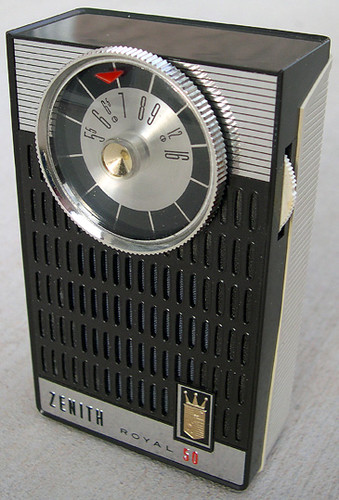
Growing up in western New England, the transistor radio would impact my life and career. Radio has been in my blood as long as I can remember, but it would be my Zenith transistor radio that would first allow me to explore new stations, new music, new personalities and new ways of delivering content without the supervision of my parents. My transistor radio and ear piece would make me the master of my own radio dial.

Growing up, it seemed like most radio markets had two radio stations battling for the teenage ear. WPTR and WTRY out of Albany, New York’s capital district would be mine. Each of those radio stations would bring their mobile studios to our county shopping center and broadcast LIVE. It was such a thrill.

Hartford had WDRC and WPOP. Boston had WMEX and WRKO. Philadelphia had WIBG and WFIL. Chicago had WLS and WCFL.

New York City would finally be a battle between WMCA and WABC for the Top40 crown in the Big Apple.

What made traveling around in my folk’s car so exciting was that each of these radio markets and radio stations were special and different. The personalities, the promotions, the station jingles and yes, even some of the music was unique to each station and market. Local and regional bands could be heard hoping to be discovered and go national with their music.

Radio stations all did music research back then and printed weekly surveys charting how the hits were doing from week to week with local listeners.

That was then, this is now. Larry Rosin at Edison Research says that today “virtually no radio stations perform formal research for music among teens nor target teens directly in their marketing strategy.”

I’ve sold “old people radio formats” where the presentation was quick to point out that what advertisers should be focused on is not the age of the audience but the amount of money they control and have as discretionary to spend as they wish.

I’ve also sold “young people radio formats” where we pointed out that kids are the masters of convincing their parents and grandparents to get them anything they wanted, so please don’t focus on how young they are. I mean once my boys were out of the house, I no longer went to Mickey D’s and ordered “Happy Meals.” (That made me very happy!)

Radio has always focused on the “family reunion demo” aka 25-54 adults; though that demo is shifting upwards with the aging baby boomers to 35-64 adults.

When Radio Disney was born and focused on little tykes, it appeared there was now a radio operator ready to pick up the torch for young people listening to radio. But then radio was shocked the day Disney announced it was selling all but one of its owned and operated Radio Disney stations. Radio Disney basically operated on AM radio. AM radio is no longer used for music listening by the public and so was Disney just abandoning AM radio for FM radio? No. Radio Disney had established a strong beach front on two audio delivery mediums; SiriusXM and online listening. (It also benefits from the Disney TV Channel on cable, satellite and streaming via the Net.)

It should also be noted that around the time Radio Disney was coming into existence that the radio ratings company known at that time as Arbitron began to measure listening audiences down to age 6+ with their new PPM device where as the diary previously only measured “adults 12+.” When Nielsen bought Arbitron and rebranded the radio ratings service Nielsen Audio it kept the 6+ listening metric. Nielsen also now is trying to establish a listening service that will measure all audio listening consumption across all platforms. Can you see where this is going?

Radio listening is a habit. My father never acquired it. I was raised on it. My sons were raised on it. But I see my grandchildren are holding iPad-like devices and easily navigate their parents’ iPhones.

You would have thought that with more radio stations on-the-air in America than at any time in history there would be more variety than at any time in our history, but that’s not the case. There’s actually less variety.

After launching two Smooth Jazz formatted radio stations and falling in love with the artists and their music I now can only hear this music streamed online. So like my grandchildren, I’m forming a listening habit that doesn’t require a radio; just my iPad or iPhone.

I believe the future is going to be all about being the best at something, not necessarily garnering the most people. Radio was always about getting the most ears. Everything was based on CPP (cost per point), but in a world of infinite choice, the best will dominate.

Radio can play in this world if programming is turned back over to people who program their passions to others just like themselves.

Steve Jobs made Apple into the world’s most valuable company by focusing on design (in radio, that’s programming) and making products that he and his team wanted to have for themselves (building a radio station that you not only own, but love to listen to yourself).

Radio is either going seize the day or have a seizure.

4 Comments

Filed under Education, Mentor, Radio