
 I often wonder if today’s youth would gravitate to the style of radio that attracted me to make radio broadcasting my career for five decades. Would they be attracted to a Dan Ingram, Robert W. Morgan, Dave Maynard, Ron Lundy, The Real Don Steele, Big Ron O’Brien, Larry Lujack or any of the countless other personalities that so influenced me as I was growing up?
Spoiler Alert: probably not
Old Brains vs New Brains
Our brains are wired by our experiences.
Those of us who grew up in the 60s, most likely had a transistor radio that only received  AM radio. Mine was a Zenith Royal 50 that came with an ear phone, that allowed me to listen to the Red Sox while in elementary school or to radio stations from far, far away after it was ‘lights out’ and I was supposed to be asleep.
This is an advertisement for that radio.
I saw it in Bristol, Tennessee at the “Birthplace of Country Music Museum.” I’m finding that a lot of my career memories are now museum pieces.
My brain was originally wired for AM radio, then FM stereo radio and all of the great radio personalities, promotions and stationality of that era.
More recently my brain has been wired for streaming audio and the convenience of playing anything that fits my mood via an Amazon Echo.
But anyone who has grown up in a world where streaming audio has always been there, has had their brain wired for only this kind of world, not the world of the 20th Century.
Classical Music’s Challenge
Classical music venues, including radio stations, are searching for new audiences as their current audience gets older.
With the typical American adult spending eleven-plus hours-a-day connected to media, today’s musical consumer can’t help but have their brain wired in a new way. Most of that listening is via computer speakers or wireless ear buds, not known for delivering the highest quality sound, but very convenient.
Classical music aficionados are all about quality of sound, so huge sums of money are spent building acoustically perfect auditoriums that often are in locations that are anything but easy for people to access.
People want to listen to music everywhere; in cars, on buses, on trains & planes, and while walking on busy city streets. They don’t mind that the sound quality is less than perfect because convenience for them rules.
Our Brains Re-wire Quickly
To give you an example of how quickly our brains can be re-wired, V.S. Ramachandaran did an experiment where test subjects were shown a group of black dots on a white page. After studying the dots, participants soon began to see the form of a dog. MRI scans were used during the process and monitored participant brains being re-wired. Once the dog was seen, participants could not look at the paper again without immediately seeing a dog. Their brains had been re-wired that quickly.
On Demand Entertainment
I’ll admit it, I want my entertainment – audio or video – immediately available when I want it. My radio and television habits are nothing like they were when I was growing up when the only media I could see or hear came through the ether.
Initially cable TV and the TV remote control re-wired my brain for television viewing, but nothing has impacted my home media entertainment habits like streaming and on demand. Be it audio entertainment via our Amazon Echoes (now numbering 3) or video entertainment via Apple TV or Firestick, everything now is on demand to match our mood thanks to streaming via the internet.
Is It Real or AI?
Artificial Intelligence, or AI, has gotten so sophisticated that they are “paving the way for “deepfake” videos, content that falsely shows people saying and doing things they never said or did,” says CNBC.
Just the other week I read where James Dean, who died 64 years ago, will be starring in an upcoming movie about the Vietnam War. This has been made possible by the use of computer-generated imaging of James Dean.
A New Radio Format
 That got me to thinking that maybe a new radio format could be created bringing back deceased personalities like Robert W. Morgan, Dan Ingram, The Real Don Steele, Big Ron O’Brien, Ron Lundy, Larry Lujack among other greats by using the power of artificial intelligence. These incomparable radio personalities would “live again” via talented writers and programmers who would tell them what to say. Can you imagine how it might sound?
It would be like the “DJ Hall of Fame” on Rewound Radio, only the weather forecasts, the news, the community events etc. would all be current and up-to-date.
Which brings me back to how I started this article, would the radio listeners of today listen? Would their brains be so completely re-wired that they wouldn’t find it appealing? I fear they wouldn’t. Just as Vaudeville shtick stopped appealing to the generations of audiences with access to movies, television and radio.
In the end, doing something new means doing something fundamentally different.
+++++++++++++++++++++++++++++++++++++++++++++++++++++++++++++++++
If you’d like to know more about how advanced Artificial Intelligence has become, watch this five and a half-minute YouTube video. AI can clone your voice after listening to it for just 5-seconds. Click HERE
And for a really deep dive on how AI will change our future in ways we never imagined, watch this two-hour FRONTLINE report from PBS HERE
 I was reviewing the last FCC report about the number of broadcast stations in America as of December 31, 2018 and in my head I found myself singing a parody of the Bellamy Brothers song, “Too much is not enough.” Only my version was “too much is way too much.”
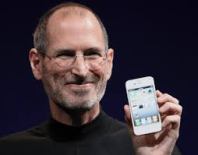
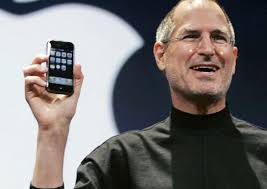 It was only 11-years ago that Steve Jobs took the stage and held in his hand the future. It was an iPhone.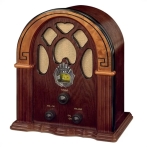

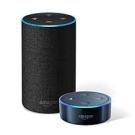 Most research today indicates that since the introduction of the smart speaker, the device that’s getting a little less use is the smartphone. I would concur that is the case in my home as well. Our 3 Amazon Echoes are the way we access at home radio listening, get flash briefs, find out the time and latest weather forecast.
 What the smart speaker and the smartphone have in common, are both devices give the user what they want, when they want it. On Demand is the real game changer of the 21st Century communications world.
 There’s something that’s been troubling me for some time. It’s the radio industry’s habit of reporting radio listening results by calling it “AM/FM” versus what it really is, virtually all FM radio listening.
 WTOP was built on AM radio. It moved its entire operation over to the FM band and grew its audience, revenues and lowered its listener demographic. People who never heard this radio station on its AM dial position were suddenly newly minted fans of their all news format.
 From my blogging, I get lots of feedback about a variety of things concerning broadcasting. One reader wrote to me about his father, a sports fan, who turned on WIP-FM to hear the latest chatter. WIP-FM was broadcasting a game of no interest to his father, so his son said to him, why don’t you turn on WIP AM610. Sadly, this person wrote the audio was unlistenable. He wrote: “You’d think the FCC would mandate that AM have standards for audio quality in receivers.”
 When I was living in Bowling Green, Kentucky, I couldn’t receive 650AM WSM in my office, even though my office looked south and my antenna was able to enjoy a full wall of windows. The noise floor both inside my university office as well as around town while driving in my car made the station unlistenable. WSM was once listened to all the way to Louisville in northern Kentucky. Instead, I downloaded WSM’s app and could enjoy the radio station in crystal clear stereo. (I see WSM has stopped subscribing to Nashville Nielsen Audio ratings.)
 The British Broadcasting Corporation (BBC) did a review of the range of services it offered on the AM band (called medium wave across the pond) and it included a financial review of all its services too. They concluded the ROI (return on investment) in AM was not there and announced they would be turning off some 13-AM radio stations in January 2018 according to Radio Business Reports.
 There’s a great radio operator in Cadiz, Kentucky by the name of Beth Mann. WHVO is her AM radio station at 1480, but if you go on her website, you won’t find any mention of this station being on the AM radio dial. It’s promoted as
  On this last Sunday of 2017, it’s a good time to look back at the year just past and share with you The Top 5 Most Read and shared blog articles from 2017. Maybe you missed them or perhaps you’d like to read them again.
 If you’re in sales, this is probably the question that haunts you most: Why do people do the things they do?
 Then Houston was hit by Hurricane Harvey and KTRH zoomed to #3, but soon after the impact of the storm began to fade and life in Houston began its long road back to “normal,” KTRH sank back to #15.
 an FM translator for their AM station.Putting your programming content on an FM translator is NOT saving AM radio. Period.Saving Fax MachinesI remember the day I got a fax machine for my radio stations in Atlantic City. It was the day one of our biggest client's ad agency called about the next month's orders for their casino client and told me that if I wanted to be on the buys going forward, I needed a fax machine. Only those radio stations with fax machines would be bought.Holy Batman! I got a fax machine that same afternoon.Soon a dedicated phone line was installed just for the fax machine.How important is faxing these days? I still see fax numbers on business cards and websites but really, does anybody send faxes anymore?There’s no effort that I know of to save the fax machine.AM RadioI spent over four decades of my life in radio broadcasting because of AM radio. I remember my first radio, a Zenith transistor radio (120.jpg)
 I write about radio in most of these weekly articles. Recently, an article that compared
  that came with a single ear piece. I remember sneaking it into school to hear the Red Sox playing in the world series. I don’t remember what the teacher said in those classes.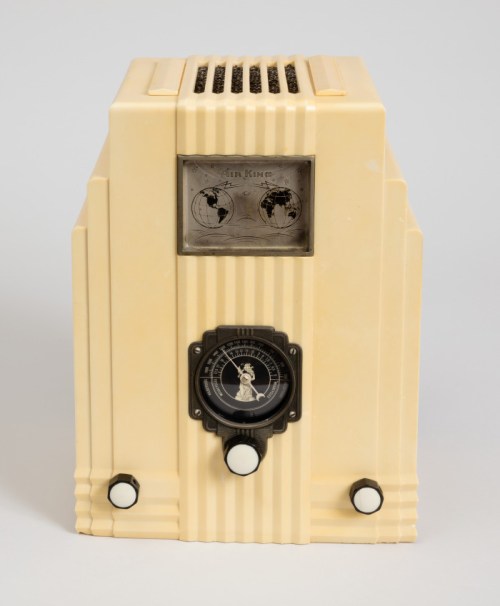
 I lived in Kentucky for 7-years.
 You’ve probably heard the old saying “you can’t make a second first impression.”
 There are some things in life you can’t have too much of.
