Tag Archives: Federal Communications Commission

Radio’s Most Pressing Issues

This past week, Radio/TV state broadcast associations were in our nation’s capital meeting with their elected representatives in both the House and Senate about issues that are important to them. It’s the annual National Association of Broadcasters (NAB) State Leadership Conference.

More than 500 radio broadcasters from across America assembled to hear Senator Ted Cruz (R-TX) speak on his support of the “AM Radio for Every Vehicle Act,” and advocating for a level playing field in the advertising market.

Cruz is the new Chairman of the Senate Commerce Committee and he pledged a proactive approach to support broadcasters, create jobs and uphold free speech.

Free Speech

Brendan Carr is the new Chairman of the Federal Communications Commission (FCC) and in only a couple of weeks, since taking this leadership position, his actions have caught the attention of some members of Congress, who were alarmed by recent moves impacting broadcasters.

Representative Jerold Nadler (D-NY) expressed his concern over the Carr’s FCC assault on a media organization’s free speech.

“Exploiting his asserted ‘unitary executive’ powers, [President] Trump is unleashing his sycophant FCC Chairman, Brendan Carr, on every newsgroup whose news stories he does not approve of — actually threatening to pull the broadcast licenses for ABC, CBS, NBC, PBS, and NPR,” said Rep. Jamie Raskin (D-MD). “Is this North Korea?”

The President of Free Press Action, Craig Aaron, in testimony said that threats and opening investigations into broadcast outlets by the FCC is out of the norm.

“The FCC usually talks about licenses on very narrow terms, such as if an owner has committed a major crime,” Aaron said. “The idea that a news organization would be threatened because they asked a tough question of the President, or because they tried to fact check him during a debate, or because they edited their own news content before putting it out over the airwaves is preposterous, and it’s dangerous.”

DEI

Diversity, Equity and Inclusion (DEI) has been terminated by Carr at the FCC and he’s been signaling that the agency might go after FCC licensees over their own DEI programs.

Are DEI programs good for business? Apple’s shareholders think so, so do Costco shareholders, and Hyundai’s marketing executive, Erik Thomas, credits its DEI programs with driving the automobile manufacturer’s bottom line.

SiriusXM

Nine years ago I wrote an article with a title that sounded like click bait titled “SiriusXM Radio is Now Free,” which speculated when the FCC licensed satellite broadcaster would start offering ad-supported channels for free.

Four years later, I wrote that “Could 2021 Be the Year SiriusXM Adds FREE Channels?” speculating that new SiriusXM CEO, Jennifer Witz, would be pursuing revenue growth by  leveraging the 132 million cars the service was available in. SiriusXM, like commercial radio over-the-air (OTA) broadcasters, knows that the competition for listener ears is in the car. The advantage the satellite broadcaster has over AM/FM radio operators is they know exactly what their listeners are listening to, and don’t have to rely on audience estimates that may or may not be accurate in today’s media saturated world.

Last year, what I have been predicting since 2016, became a reality, as I wrote in:  “Ad-Supported SiriusXM Requires No Paid Subscription.”

Monopoly

One of the radio industry’s most respected researchers, Dr. Ed Cohen, wrote “The direct-to-consumer satellite radio business is a monopoly,” shortly after my 3rd article on this subject was published. Originally, the FCC offered only two satellite broadcast licenses, one went to a company called “Sirius” and the other to a company called “XM,” with the idea being they would be competitors and that the consumer would benefit by not having a single company – a monopoly – control satellite radio and what it could charge.

The two companies were supposed to never be able to merge, but in August of 2008, by a 3 to 2 vote of the FCC, that changed. Dr. Cohen does a really good deep dive into explaining how this all came about in his article “SiriusXM and the FCC: Is the Camel’s Nose Under the Tent?” Which is an allusion to a story that takes place in Arabia, with this metaphorical moral:

If the camel once gets his nose in the tent, his body will soon follow.

What the FCC never took into consideration was, how much damage might occur to local AM/FM radio stations, if and when, the new combined SiriusXM ever decided to provide an ad-supported free radio service.

Dr. Cohen believes that while this new free service from SiriusXM is limited in scope, like the proverbial camel, it won’t be long before the whole service becomes real competition for audio listeners and advertisers.

People Love Free

AM Radio vs SiriusXM

Dr. Cohen makes an excellent case for commercial radio broadcasters to be demanding, the FCC revisit the SiriusXM merger decision in light of this change by the satellite broadcaster.

By the way, public broadcasters also have a horse in this race, as NPR Now is part of the new free SiriusXM service.

“While the NAB is busy with getting Congress to force OEMs (Original Equipment Manufacturers) to include AM in every vehicle, the battle with SiriusXM’s ad-supported venture is probably more important to the industry in the long run,” says Dr. Cohen.

It’s The Economy Stupid

But the most important issue facing the commercial radio industry are the financial fears that have been generated by the Trump tariffs and fire hose of government regulatory changes that seem to come at us on an hourly basis. I wrote about this concern in February with an article titled “The Cost of Uncertainty to Radio.”

Now BIA Advisory Services this week updated its local advertising revenue forecast for 2025. Cameron Coats, in Radio Ink, reports that “over-the-air revenue [for radio] takes the largest hit, falling by 6%.” Digital radio, says Coats, shows a slight increase of 0.1%.

SiriusXM has enjoyed growth through the sale of new cars, but with the high tariffs Trump has announced, it wouldn’t be a surprise if people hang onto their current vehicles a little longer, which also means that AM radio will still be accessible. Without an economic downturn, the average life of a car in America is 12-years, up from 8.4-years in 1995. Progressive Insurance says that a well-maintained car will reach 300,000 or more miles, and those cars have both AM/FM radios as well as SiriusXM.

The radio industry’s most pressing issue is who wins in the car, and in that arena AM radio – a hundred year old medium is not our industry’s best play –

stopping satellite radio’s FREE ad-supported service is.

When the pie isn’t growing,

the game becomes who can cut the biggest slice.

5 Comments

Filed under Uncategorized

What’s the Future of Radio, AM or Digital?

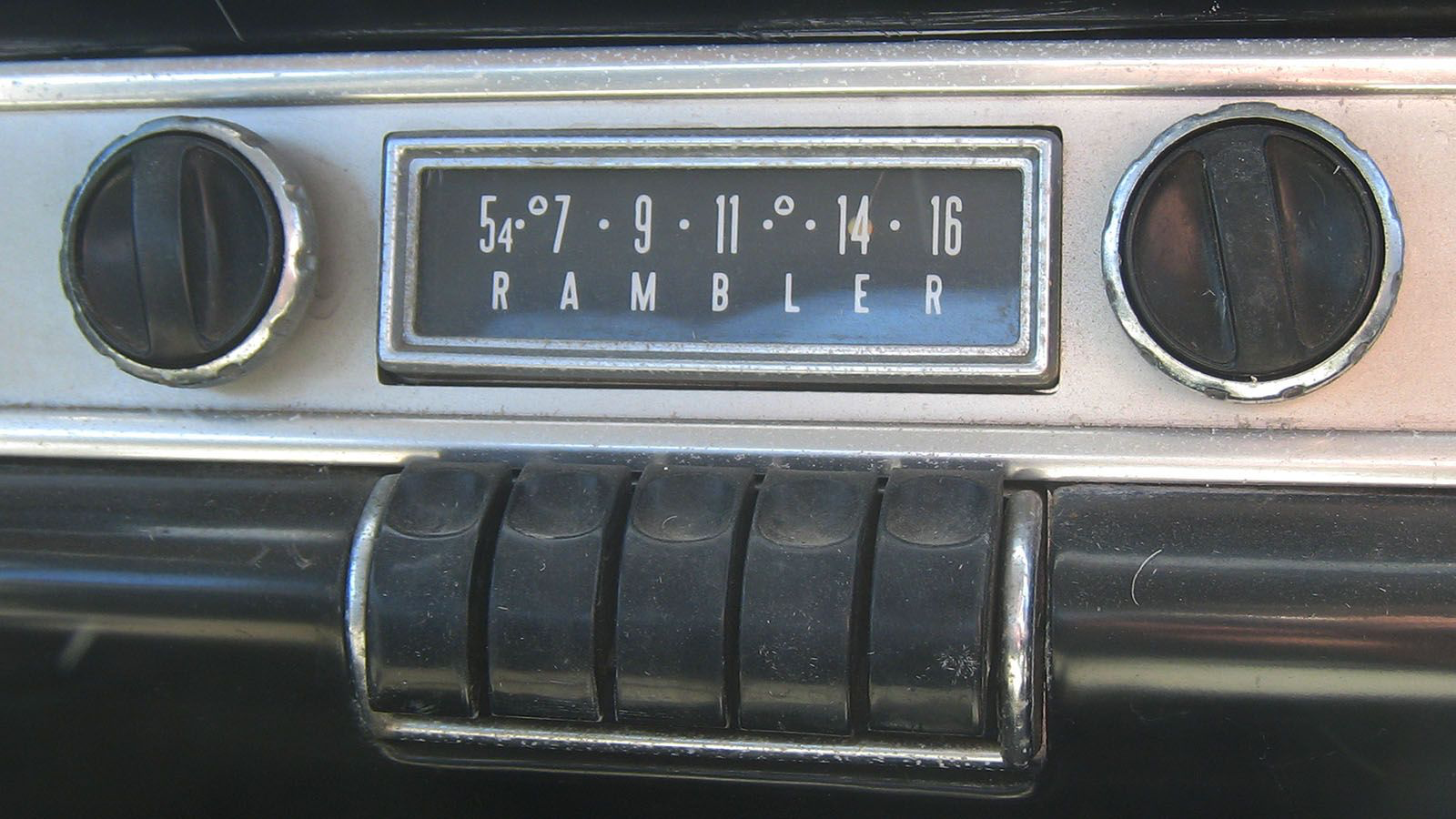
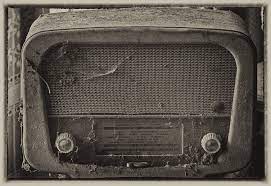
Reading the RAB’s “Radio Matters” blog, I couldn’t help but notice the picture of the radio used for the article, “What’s on the Horizon for Radio?” was an AM/FM radio set that couldn’t receive HD Radio broadcasts. (Picture of that radio is on the left.)

Radio Digital Growing

The article did cite that in 2025 radio digital* presented the radio industry in America with growth potential, stating:

“The Finance/Insurance category will be the spending leader for Radio Digital with $586 million in local ad spend, with other categories that will be significantly increasing their spend in Radio Digital being QSRs (Quick Service Restaurants), Supermarkets & Other Grocery Stores and Tier 3 – New Car Dealers.”

HD Radio

What I found most curious about the blog article was the total absence of anything regarding America’s digital radio standard, HD Radio.

We just acquired a new car that has an HD Radio, and I am finding great difficulty in navigating radio stations and their HD 1, 2, 3 & 4 subchannels. Hopefully, the FCC’s  (Federal Communications Commission) “Modifying Rules for FM Terrestrial Digital Audio Broadcasting Systems, First Report and Order” will improve this digital radio service.

Ironically, when we enter our new car, it automatically and seamlessly connects to Apple CarPlay and allows us to play our personal music library or favorite streaming App. It’s so easy, because it operates just like our iPhones and accepts voice commands.

AM Radio

James Cridland wrote in this week’s newsletter:

“In the US, the House of Representatives is reviewing “the AM Radio For Every Vehicle Act”, a piece of legislation aimed at ensuring that AM radio is not removed from car radio receivers, “because emergencies”.”

“John “Cats” Catsimatidis, “a true self-made billionaire, philanthropist, and former NYC mayoral candidate“, has been buying full-page ads in the New York Post – like the one below – raising awareness of the issue. He’s the owner of 77 WABC, an AM radio station in New York, so he’s got considerable skin in the game.”

“I’ve written much about AM’s decline; but it should be noted that in Europe, a piece of legislation aimed at ensuring that DAB was put into all cars, “because emergencies”, was passed – and is a good reason for the success of DAB on the continent.”

Sadly, it appears that the American broadcast industry is investing its money and political capital in trying the preserve the past rather than lead the charge into the future.

Alaska

Before COVID-19 and a global pandemic closed down the world, Sue and I had planned a trip to our 49th state, Alaska. Now, four years later, that trip was finally taken.

We traveled through Anchorage, Seward, Juneau, Skagway, Haines, Hoonah and Ketchikan. Music was playing in just about every business we entered, not on a radio, but on a digital speaker that was apparently connected to a streaming music service or personal library.

Also, not one of our hotel rooms had a radio in them, unlike in 1922 when having a radio in your hotel room was a big deal. I wrote about that in a blog titled “Once It Was Radio.”

We found local cell service to be prolific everywhere we went and often available on our cruise ship while cruising the inland passages, allowing us to avoid purchasing the cruise lines internet/cellphone package.

Our smartphones are portable and allow us to tune into the world for music, entertainment and information. So, the possibility arises that the “horizon for radio” is delivery of its programming primarily via smartphones, as in our household, they represent the portable “transistor radio” of our youth.

In today’s connected world, relevant content rules.

Relevant is the new local.

* Radio Digital means digital radio advertising including local advertising sold by local stations (streaming, email advertising, O&O banners, SEM (not SEO), website advertisements) and pure play streaming services except CTV/OTT.  that utilizes digital formats. Includes the share retained by local radio stations after reselling other online platforms (e.g., Google AdWords). -BIA Advisory Services

4 Comments

Filed under Education, Mentor, Radio

What If Every Radio Station in America Could Operate Like EMF?

At the beginning of 2024, I read an article from Rolling Stone.com that I can’t get out of my head. It was titled “Why Is the Radio Full of Christian Rock? Thank This Nonprofit.” It’s a long article, that I encourage you to read, but if you’re short on time, I will summarize its most important content for the commercial radio industry.

What is EMF?

EMF stands for the “Educational Media Foundation,” a name that does not immediately convey that they are a religious broadcaster.

On their website, the foundation states their mission this way:

“Educational Media Foundation (EMF) is a nonprofit, multi-platform media company on a mission to draw people closer to Christ. Founded in 1982 in Santa Rosa, CA, with a singular radio station, EMF today owns and operates the nation’s two largest Christian music radio networks (K-LOVE and Air1) with over 1,000 broadcast signals across all 50 states, streaming audio reaching around the world, and a growing family of media ministries including podcasts, books, films, concerts, and events. EMF employs nearly 500 team members between its offices in Nashville, TN, Rocklin, CA, and field locations around the country.”

Today, I believe, EMF is the largest radio station owner in America, with more radio signals in its control than iHeartRadio, estimating that it reaches a weekly audience numbering over 18-million listeners. It’s those listeners – and their donations – that fund EMF’s operations, much like the listeners support at public radio stations. EMF’s radio stations are licensed as non-commercial educational (NCE) radio stations and the foundation receives the majority of their donations during their twice annual pledge drives; usually held in the spring and fall.

What is iHeartRadio?

iHeartRadio is America’s largest commercial radio broadcaster and owned by iHeartMedia, which was rebranded by CEO Bob Pittman from Clear Channel Radio in 2014.

Full-disclosure, I worked for Clear Channel Communications from 2004-2010, a time when the company operated in a decentralized manner, allowing each of its radio station’s general managers to make their own decisions based on local market conditions and to deliver what was forecast by the radio station’s annual budget. That would change after I left the company to a centralized management model.

At its peak, Clear Channel owned and operated more than twelve hundred American radio stations. Today, the iHeartMedia website says:

“With over 860 live broadcast stations [with 781 employees] in 160 markets across America, there’s an iHeartRadio station where you live. Discover how our stations can deliver your message live and local to your community.”

Wikipedia says ”iHeartRadio’s main radio competitors are Audacy, TuneIn and SiriusXM,” which I found interesting in that TuneIn owns no radio stations, and while SiriusXM is licensed to operate by the Federal Communications Commission (FCC) and does employ land-based transmitter sites in addition to its satellites, it is basically a subscription service.

Its real competitor, like that of the rest of the commercial/public radio industry, is flying under the radar.

EMF versus Commercial/Public Radio

Rolling Stone writes: The big difference between EMF and other commercial broadcasters is that it operates without a local presence and unmanned transmitters.  

“Almost every new EMF station operates as a repeater

with no local voices, few local jobs and barely any overhead.”

Rolling Stone says that as of 2022, this “little-known organization had just shy of a billion dollars in net assets (a number that grows steadily year after year), with an annual revenue of nearly a quarter billion. (National Public Radio, by comparison, had net assets of less than $150 million and operated near the break-even mark.)”

The EMF business model has few operating costs – unlike commercial and public broadcasters – where every new radio station they acquire becomes a new source for donations. It’s estimated that about ninety-seven cents of every dollar comes from listener donations.

“Nonprofit EMF has built an unassuming money-making machine.”

-Rolling Stone

The genius of the EMF business model is that it exploits loopholes that the FCC created to help small nonprofits.

“in my own heart, I know God was involved

[in the decision to form a 501(c)(3)]

because being a not-for-profit has paid off for us

many, many times.”

Mike Novak, EMF CEO

The decision to incorporate as a “not-for-profit” entity allows EMF to enjoy many benefits:

  • Avoid paying taxes
  • Waves FCC applications costs and other fees
  • No requirement to maintain a local broadcast studio
  • Legally accept tax-deductible donations from their listeners (a revenue stream not available to commercial broadcasters)
  • The acquisition of translators* that are made more easily available to entities such as religious broadcasters
  • Access to lower FM band frequencies (88.1 – 91.9) that the FCC reserved for use by colleges, community and public-radio organizations and tribes; entities that the FCC envisioned would have limited funds to acquire these frequencies, and  commercial broadcasters were banned from bidding on, but didn’t exclude a not-for-profit giant like EMF from buying up.

Sadly, true community broadcasters find this unlevel playing field almost impossible to compete with, when EMF’s billion-dollar foundation can offer iHeart-level prices for neighborhood radio stations. It’s something I personally witnessed happen in my city of Winchester, Virginia when EMF bought 50,000-watt WINC-FM. All local community programming vanished, along with its employees and building.

While the FCC still maintains a policy of not allowing a single radio broadcaster from owning more than five AM or five FM stations in any one city, it left open a loophole for noncommercial broadcasters by never applying its ownership cap to nonprofits. There’s also no ownership cap on the number of translators a nonprofit may own in a single radio market.

Soft Conservatism

While nonprofits can’t legally engage in any political campaign activity, don’t think EMF isn’t using its fortunes to influence its point-of-view; through lobbying and legislation. Those in the Contemporary Christian Music (CCM) industry know that the genre is a punchline for most Americans; it’s something that actually works to EMF’s advantage, by keeping them low profile.

Unfortunately, this unlevel playing field is negatively impacting local commercial and public radio stations to profitably operate, which impacts the communities these stations once served with vital local news, sports, weather and community information.

*Translators are small FM radio signals that rebroadcast a parent radio station into an area the original signal couldn’t reach.

22 Comments

Filed under Education, Mentor, Radio, Sales

AM Radio in Retreat

While the National Association of Broadcasters (NAB) is still pursuing its goal of getting Congress to pass the “AM Radio in Every Vehicle Act*,” the number of AM radio stations on-the-air continues to shrink.

How Many Radio Stations Are There?

Inside Radio published the latest FCC radio station count and the number of AM radio stations on-the-air continues to shrink.

In 1968, I passed my 3rd Class Radiotelephone FCC License, Broadcast endorsed, it was also the year that the Federal Communications Commission (FCC) began publishing its Broadcast Station Totals reports.

At that time the FCC said that 4,236 AM radio stations and 2,306 FM radio stations were on the air.

In December 1990, the next report the FCC published became available showing 4,987 AM radio stations and 5,832 full power FM radio stations were now on the air; plus, another 1,866 FM translator/boosters.

It’s worthy to note that the general public cannot tell the difference between a:

  • Full power FM
  • FM booster
  • FM translator signal

as to the FM listener they all are received on a standard AM/FM receiver. Only broadcasters, broadcast engineers and the FCC are concerned about such distinctions.

So, in just the first two decades of my radio career, FM signals outnumbered AM signals by 2,711.

Telecommunications Act of 1996

On February 8, 1996, President William Jefferson Clinton signed into law what is commonly referred to as “The Telcom Act of 96.” The intent of the legislation was to allow more companies to operate in the communications space, but what actually happened was a flurry of mergers and acquisitions as corporate media giants bought out small, local broadcasters.

The FCC reported that as of February 29, 1996 there were:

  • 4,906 AM stations
  • 7,151 FM stations
  • 2,527 FM translators/boosters on-the-air

almost two FM signals beating the airwaves to every AM signal.

A year after the Telcom Act of 96, the number of AM signals began its decline to:

  • 4,840 (a loss of 66 AM signals in one year)
  • full power FM signals increased to 7,295 (up 144 FM signals)
  • FM translator/booster signals grew to 2,744 (up 217 FM signals)

While AM radio signals were signing off, FM radio signals were growing by an additional 361.

Ten Years After Passage of the Telcom Act of 96

On March 31, 2006, ten years after the Telcom Act became law, and the consolidation of the radio industry began, the FCC Broadcast Station Totals report listed:

  • 4,759 AM signals
  • 8,989 full power FM signals
  • 4,049 FM translator/booster signals

and now something new began appearing, Low Power FM signals (LPFM) which numbered 712,  meaning the radio listening consumer could now access 13,750 FM signals versus 4,759 AM signals.

Wall Street investors were clearly showing more interest in FM signals than AM signals as their money poured into the radio industry.

Twenty Years After Passage of the Telcom Act of 96

Twenty years after President Clinton signed the Telcom Act and consolidation continued squeezing out the mom and pop broadcasters, the FCC Broadcast Station Totals report listed:

  • 4,680 AM signals (down 307 signals from the day I began my broadcast career)
  • 10,811 full power FM signals
  • 6,582 FM translator/booster signals
  • 1,516 LPFM signals

AM signals totaled 4,680 and FM signals totaled 18,908.

Radio Broadcast Signals 2024

Which brings us to the present day report, March 31, 2024. The FCC Broadcast Station Totals report now lists:

  • 4,427 AM signals
  • 10,983 full power FM signals
  • 8,913 FM translator/booster signals
  • 1,960 LPFM signals

Remember, the radio listening public DOES NOT distinguish between the different classifications of FM signals, as they all appear on the same FM radio receiver they are using.

To the radio listener, they have

4,427 AM signals compared to 21,856 FM signals

they can access. Almost 5 times as many FM signals as AM signals, and each year we witness those AM signals either reducing their power or just signing off-the-air and turning in their FCC broadcast license.

Radio Dominates in Vehicles

The latest research from Quu ( www.quureport.com ) shows that in 2023 model vehicles:

  • 100% of them have an FM radio
  • 98% of them have an AM radio
  • 98% of them have Android Audio
  • 98% of them have Apple CarPlay
  • 92% have SiriusXM
  • 70% have HD Radio

What surprised me about this research report, was that this was the first time I’ve ever seen separate AM and FM numbers listed. All reporting about radio usage should list AM and FM listening separately. I feel it is disingenuous to give the false impression that AM and FM broadcast signals contribute equally when that’s clearly NOT the case.

Having access to an audio service does not equate to usage.

Fred Jacobs in his TechSurvey 2023 for example, revealed how HD Radio was only listened to by 16% and SiriusXM was only listened to by 28%, which shows that despite their high availability numbers in vehicle dashboards, usage is still low. Unfortunately, AM/FM is never broken apart, but listed together so can they can garner 86% of the listening.

I’m thinking that both HD radio and SiriusXM usage might eclipse AM radio listening, if we were allowed to see AM and FM usage shown separately.

Vehicles On The Road in America Today

According to S&P Global Mobility, there are 284 million vehicles on our roadways and the average age of them continues to rise to a new record of 12.5 years. About 23% of all passenger cars now are 20 years or older with the bulk of them made between 2015 and 2019.

By 2050, when electric vehicles are projected to make up 60% of new sales, the majority of vehicles on America’s highways will still be powered by gasoline, because most vehicles today last twenty years meaning AM radio will still be in most cars, but the bigger question is how many AM radio stations will still be on-the-air.

Radio Needs To Look Forward

In ten to twenty years, AM radio will be at best a niche way to listen to audio.

Where the radio industry and the National Association of Broadcasters should be focusing their time is keeping FM radio viable, in all vehicles and FREE!

Sadly, the FM band is becoming overcrowded with signals and this, I believe, needs to be seriously addressed.

Finally, I would like to believe, as does Scott Shannon, that radio can still succeed in the 21st Century if it will just be “authentic, local, magical, and deliver an audio product with passion.” Or as radio programming consultant and author Valerie Geller puts it:

Great radio is interesting people communicating with listeners

by telling the truth, making it matter and never being boring.

14 Comments

Filed under Education, Mentor, Radio, Sales

Radio’s Disappearing Act

Is AM radio disappearing from new cars the issue the radio industry should be focused on?

I think not and here’s why I say that.

WBZ 1030AM

I grew up listening to WBZ AM out of Boston on my daily college commute in Western Massachusetts. Carl DeSuze, Dave Maynard, Larry Justice, Mean Joe Green in the BZ Copter with Boston traffic reports and Gary LaPierre with the news. It was truly “The Spirit of New England.”

So, when Sue and I were headed to Boston for the graduation of our son-in-law from Berklee College of Music, I put on WBZ as we left our hotel in Spring Valley, New York, and we listened to this station on our three hour drive into Boston, we didn’t listen to it on 1030AM, but via its stream on the StreamS application (App). The station, which is now an all-news operation, sounded fabulous.

The fidelity was of higher quality than FM and there was no buffering or dropout of the signal.

Once in Boston, I tried listening to WBZ over my car’s AM radio and the quality was poor, with noise and interference emanating from our surroundings.

What Does a Radio Look Like?

Back in June of 2017, I wrote a blog article asking what a radio looks like today and the most likely answer to that question was a smartphone. I also addressed in that article of six years ago, I was noticing that hotels were replacing those cheap AM/FM radios with charging stations containing a digital clock, perfect for charging smartphones, tablets and laptops.

Car Radios & The Future

Then in September of 2020, I wrote about how radios first came to be an option for buyers of new cars in June of 1930. But today’s new car buyer wants Bluetooth capabilities more than they want an FM radio; AM radio is not a must-have in 2023 according to the latest Jacob’s Media Techsurvey. What do people connect in the car with that Bluetooth, their smartphones.

What I Recently Witnessed About Radio Use

After COVID began to fade, Sue and I took a trip out to the west coast to visit our children and grand children in that part of the country. What we noticed in every hotel room we stayed was a giant flat screen TV, but no radios, just more of those charging stations with digital clocks.

This prompted another article that same year titled, “Is Radio Up Schitt’s Creek?” Sue and I became big fans of this series out of Canada, that takes place in a fictional town called “Schitt’s Creek,” and takes place primarily in The Rosebud Motel, where the shows characters use televisions, computers and smartphones, but never use a radio.

When watching movies and TV shows, I often look to see if there’s a radio in sight, noticing in British productions they often are, but not in American ones.

Once It Was Radio

When Sue and I stayed in Bethlehem, Pennsylvania we visited the museum inside the Hotel Bethlehem and found that fifty years ago, a hotel having a radio in your room was cutting edge.

The Hotel Bethlehem opened in 1922, two years after the birth of commercial radio in the United States and in 1953, it announced that patrons would enjoy a brand new AM alarm clock radio in every room.

Now seventy years later, Hotel Bethlehem features fiber optic WiFi.

Where Are the Radios?

Last year, Sue and I took a road trip through Atlantic Canada. We stayed in hotels and Bed & Breakfasts (B&Bs) throughout our trip, and found WiFi has totally replaced the AM/FM clock radios.

In Montreal, our room at the Hôtel William Gray, had a Bang & Olufsen (B&O) Bluetooth speaker that easily connected to my iPhone. The fidelity of B&O equipment is legendary and it was a joy to be able to connect any of audio Apps on my phone during our stay.

Radio Set Ownership in the Home

In American homes today, 39% don’t have a single radio set in them, and radio set ownership gets worse for young Americans age 12 to 34, where that number grows to 57% according to Edison Research.

To put this into perspective, the Federal Communications Commission (FCC), says only 6% of the population still lacks access to fixed broadband service at threshold speeds. Meaning, the internet is more accessible than broadcast radio.

Are Broadcasters in Denial?

Valerie Geller, who wrote the excellent book “Beyond Powerful Radio,” recently said

“You can sit down with a broadcaster who rails against podcasting and digital audio and artificial intelligence (AI). Then you get in the car with them, they’re using GPS, they’re listening to a podcast, they’ve got SiriusXM, they’ve got Spotify. Podcasting and radio co-exist now. That’s our truth.

Radio is its own worst enemy. We have not spent or invested in developing talent. Every other business has research and development (R&D) and they spend on it because they are investing in the future. I love radio, but I hate the state it’s in.

A lot of the voice-tracking I’ve heard already sounds like AI. There’s nothing human about it. It’s just a broadcaster playing an actor playing a broadcaster. AI is just as good as those voice-tracks because there’s nothing real being said.”

AM Radio Leaving the Dashboard

Automobile manufacturers removing AM radio from the dashboard ought to be alerting the radio industry to BIGGER PROBLEMS. The AM situation is a symptom of what we should be focused on, and that’s creating GREAT RADIO.

If you think it won’t happen to FM next, you haven’t been paying attention.

AM/FM radio sets are vanishing from hotels, B&Bs, American homes and big box retailers.

If your listeners aren’t up in arms about that, then losing AM radio in their dashboard won’t be a big deal to them either.

To paraphrase the great sales trainer Don Beverage:

Make your radio station so valuable to a listener,

that they want to hear your programming more

than you want to broadcast it to them.

38 Comments

Filed under Education, Mentor, Radio, Sales

Whatever Made Auto Manufacturers Think AM Radio Is Over?

The CEO of the National Association of Broadcasters touted that 47 million people listen to AM Radio every week during a fireside chat at the Country Radio Seminar in Nashville this past week.

“It’s short-sighted for the automotive industry to consider

dropping AM Radio (from the dashboard).”

-Curtis LeGeyt, CEO, National Association of Broadcasters

Putting that number of listeners into perspective, the current population of the United States, according to the U.S. Census Bureau is 334,233,854 people and AM radio reaches 47 million of them or about 14%.

Saving AM Radio

In 2013, the chairman of the Federal Communications Commission (FCC), Ajit Pai, said he was going to make it his mission to save AM radio.

“The digital age is killing AM radio, an American institution

that brought the nation fireside chats, Casey Kasem’s Top 40

and scratchy broadcasts of the World Series.

When I was born (1973), AM radio accounted for approximately half of all listening.

Today it’s less than twenty percent.

The number of AM station is declining,

and every day it seems harder to receive a quality AM signal.”

-Ajit Pai, FCC Chairman

So, where are we, a mere ten years later?

Pai’s Plan to Save AM Radio

I never understood the wisdom of trying to save amplitude modulation (AM) by using low power frequency modulated (FM) transmitters, but Pai said this in his speech delivered during lunch at the RAB/NAB Radio Show in Orlando, Florida on September 20, 2013:

“We should make it easier for AM stations to get and use FM translators.”

-Ajit Pai, FCC Chairman

Do you think the automotive industry was listening to this plan for broadcasting in America?

What Happens When an AM Radio Stations Gets an FM Translator?

In market after market, when an AM radio station got an FM translator, two things usually happened, it changed its format from news/talk/information to a music based programming one along with re-branding itself as an FM radio station; even though it had to continue its AM service.

An example would be WNTW 610AM in Winchester, Virginia. In 1994, the station’s programming was news-talk-sports with newscasts from CNN. In 2014, an FM translator was acquired by the station, and in 2015 the station rebranded as “102.9 Valley FM” featuring a classic hits format.

WTOP’s Big Change

It was on January 4, 2006, that the owner of WTOP 1500AM in Washington, DC announced that it would be moving its successful news franchise from the AM radio band to the FM band. Bonneville International accomplished this by eliminating its classical programming on co-owned WGMS 103.5FM and putting all of WTOP’s programming on that signal.

The results were impressive, as WTOP has been the dominant radio station in the 25-54 demographics since moving to FM and has been the nation’s top billing radio station in America since 2014.

The Future of AM Radio in the United Kingdom

AM radio in the UK is in terminal decline with audiences vanishing and AM transmitters shutting down. The current forecast for AM in the British Isles is for the majority of the remaining transmitters to be shut down by the end of 2027; four short years from now.

AM radio was the dominant listening medium in the United Kingdom until the mid 1980s when it was overtaken by FM.

In America, when the number of FM radio signals equaled the number of AM signals, 75% of all radio listening was to FM. Today, there are 21,858 FM radio signals broadcasting in America compared to only 4,484 AM radio signals.

FM Radio Ends in Norway

Norway was the first European country to shutdown its national broadcasts of its FM network, switching to digital audio broadcasting or DAB; and that happened six years ago. Other countries that say they will be doing the same include Switzerland, Britain and Denmark.

BBC & CBC

Both the British Broadcasting Corporation (BBC) and the Canadian Broadcasting Corporation (CBC) have said they are both planning for the day, in the next decade, when they will be turning off both their radio and television transmitters, to become an online-only service.

Which came first, the Chicken or the Egg?

So, while the radio industry in America is up in arms over auto manufacturers eliminating AM radio in their Electric Vehicles (EVs), we need to be honest with ourselves about

who started down this path first.

You can’t save the AM radio band by moving it programming to the FM radio band. All the FCC and broadcasters succeeded in doing was to send out a signal to listeners and vehicle manufacturers alike that it was time to say goodbye to AM radio.

Actions speak louder than words.

31 Comments

Filed under Education, Mentor, Radio, Sales

Where Have All the People Gone?

It’s almost hard to believe, in an economy where employers are finding it difficult to hire and retain employees, that the radio industry continues to eliminate people.

iHeart Initiates Round of Cuts

Lance Venta of RadioInsight broke the news on Wednesday, June 8th about iHeart doing a new countrywide Reduction In Force (RIFs). On Friday evening, as I scrolled down my screen, Lance updated his initial report with locations of where some of the known cuts had taken place. Boston, Chicago, Des Moines, Jacksonville, New Hampshire and Tampa.

Reading the names of the people cut, I couldn’t help but notice they have been in their positions for decades, with titles like Senior Vice President of Programming and member of the National Programming Team. We’re talking some very senior level people with tenured radio careers.

Main Studio Rule Eliminated

It was back in October of 2017 that the Federal Communications Commission (FCC) voted to eliminate the Main Studio Rule, a provision that had been in place since 1934, and allowed radio owners to no longer maintain a main studio within its principal community contour. In other words, there’s no one home at your local radio station.

Lance speculated that in the future, we would see much leaner broadcast facilities. Welcome to that future.

Public Interest, Convenience and Necessity

The case broadcasters make for Over-The-Air AM/FM radio is that in times of emergencies, staying on the air is what makes radio an essential resource. They like to point out that other forms of communication, like satellite dishes, cell towers and microwave relays do not.

Ironically, without having a main studio in the affected area, broadcasters use satellite dishes, cellular communications and microwaves to feed local transmitters, often from hundreds of miles away from where a natural disaster is occurring.

Broadcasters have abandoned local staff being on the ground in their FCC licensed service area and with it, the vital connections with local emergency management officials.

Efficiently Eliminating Radio’s Advantage

Radio is a people business.

When I started in radio back in 1968, every radio station was a beehive of professionals dedicated to being the best they could be.

As an example, CKLW, a stand-alone AM radio station in the Detroit metro, had twenty-three people just in their news department.

Was radio efficient back then? No.

Was radio effective? YES!

Did radio make money? Tons of it!

Radio’s advantage has always been the people who make the magic happen.

Sadly, radio today operates in an “efficiency bubble,” where efficiency is valued over effectiveness.

Efficient radio chases away listeners.

Effective radio creates them.

The pursuit of efficiency is a rational answer to an emotional problem.

The radio business was never built on Excel spreadsheets and doing what was most efficient, it was built by creative people who touched others emotionally. Be it station imaging, air personalities, promotions, contests, community events, advertising or marketing, radio always went for people’s hearts.

Radio is successful when it delivers a sense of community and companionship to the listener.

Show me a successful radio station in 2022 and I will show you one that continues to foster emotions in their listeners and advertisers.

Radio done correctly still wins.

28 Comments

Filed under Education, Mentor, Radio, Sales

Best Suggestions for Radio’s Purpose in 2022 & Beyond

This week, I will review the best suggestions sent in by readers of this blog about what Over-The-Air (OTA) radio needs to do in order to survive and thrive in a 21st Century world.

But first, let’s set the stage for these ideas with something Dale Parsons wrote in the comments on my blog site:

“Every time someone asks what radio needs to do to become relevant again, I hear the old chestnut, ‘be live and local.’ Everything you listed Dick, is a live and local function that is now being done better by another platform. Just being live and local isn’t going to make it. We need to discover the compelling reason for people to use their radio. In the 1950s, when the electronic eye of TV put the whammy on radio, that compelling reason became music and news. Now the online platforms can do that better and faster.

Here’s the scary part concerning radio’s future. You and I have been in the business for about the same number of years. I realized yesterday that we have only one working radio in our house. It’s a palm sized Sony and the battery is dead. Where I live there is little radio coverage, however, when I visit town on the other side of the island on which we live, I find that I tune in streaming choices, rather than radio stations. I find no compelling reason to listen to the radio.

We have always considered radio to be a useful household appliance, much like a toaster. My compelling reason to pull out the toaster is because I need toast. My compelling reason for pulling out my radio was to be entertained and informed.

There’s nothing on the horizon that will be replacing my need for toast, but if a better way of delivering that toast comes along, I’ll probably switch to the new appliance.

People have a compelling need for entertainment and information. In the future, those needs might just be satisfied by a new appliance.

Hopefully, radio won’t be discarded like my toaster will be.

Ramblings from out here in Hana Maui jungle.”

[Dale Parsons was the program director that would transition WNBC-660AM in New York City from a music-intensive to a full service radio station when he took over in 1984. WNBC featured Imus in the Morning, Soupy Sales in middays and Howard Stern in afternoon drive. There was no other radio station, on AM or FM radio, that sounded anything like it. It was one-of-a-kind.]

Curtis LeGeyt, President & CEO of the National Association of Broadcasters (NAB)

The new leader of the NAB Curtis LeGeyt, appearing before a recent Congressional hearing, was asked to explain the viability of radio in today’s multi-media world. Here’s what he said:

I think where radio can stand out and where it will remain very, very viable in today’s media landscape is with a hyper-focus on local and a service to a demographic that simply can’t afford those subscription fees through other services. I believe there’s a really unique value and niche that we fill that none of our other competitors are hitting.

Hyper-Local Maynard Meyer

Maynard Meyer, or “Mr. Radio” as he is known to his listeners in Madison, Minnesota started in radio the same year I did, 1967. In 1983, he and his long-time friend, Terry Overlander, put KLQP-FM on the air.

Maynard is a member of the local Chamber of Commerce, the Kiwanis Club, a member of the city council, as well as serving on numerous boards and participating in several community activities. His dedication to radio and serving the community are credited with shaping the city of Madison, as well as much of western Minnesota, into what it is today. Maynard was inducted into the Minnesota Broadcasting Hall of Fame in 2011.

Responding to my question of “What is Radio’s Purpose in 2022,” Maynard wrote:

In rural America we are doing radio pretty much the same as we did when I started 50 years ago (as far as content goes), and the formula still works. Perhaps it would still work in larger markets, but, unfortunately, a couple of generations of programmers have led people to believe that radio is a music medium…there are a lot better ways to get music and people have found them.

The physical involvement of you and your staff in your community is as important, or possibly more important, than the content of your broadcasts. Everyone needs to know who you are and you need to become an indispensable part of the fabric of your community. You can’t just sound ‘local” you have to BE local. That formula continues to work for us in small town America where radio is often alive and well.”

Maynard Meyer certainly sounds like the type of broadcaster Curtis LeGeyt is referring to.

Randy Black, Radio Host

Another blog reader put it this way:

“You are going to have to personalize it for it to work. Included listeners. Cater to them. Put them on the air. Involve them. I am talking music stations here. Be informative. Be fun. Involve. Make it as 4d as possible.”

Steve Rixx, The Wake Up Morning Show on KSAM

“Radio in 2022 still serves its purpose by serving its local communities…IF it’s done correctly. My stations lean into the local, and are deeply involved with our people. Our listeners LISTEN because we are the source for everything happening in our area, and we support our youth and charitable organizations…and we just happen to play great music. BE the change you want. STOP complaining that ‘it’s not like it used to be.’ Most things aren’t. You can stay on the sidelines or get your hands dirty…you choose which.”

Darryl Parks on WLW’s Jim Scott

Can radio do this in a major market like Cincinnati? Yes, as Darryl Parks told us on his blog about the impact that Jim Scott made on the listener loyalty to The Big One – 700AM – WLW.

Darry wrote:

“Cities like Cincinnati are extremely provincial. Neighborhoods are strong. Some say our communities are closed to outsiders. Some of that maybe true. But, if you stick it out, once you belong, you will find the closest of friendships. Our little area of the Midwest is a very special place.

Now imagine that close friendship with over 2 million people. That’s how many people Jim Scott considers his friends – the entire market. I’m guessing that’s how many people might consider Jim a friend too.

As the radio story goes, when Jim first arrived in Cincinnati from WKBW in Buffalo, he made it a point to introduce himself to everyone.  And I mean everyone.  He’d finish his morning show on WSAI and then head to Cincinnati’s Fountain Square where he’d hand flowers to women and ask them to listen to him.  Other days, Jim would literally knock on doors, going house to house, neighborhood to neighborhood, introducing himself and asking those that answered if they would listen.  That was decades ago and he never stopped.

Years ago, at a wedding reception at Cincinnati’s beautiful art deco Union Terminal, I was standing with a small group of people, including Rich Walburg, my programming partner in crime at 700WLW. Another in the group noticed Jim going table to table introducing himself.  The fellow said, “Is that Jim Scott?  I want to meet him.”  Rich in his driest delivery replied, “Stay here.  He’ll make his way over.”  He eventually did and Jim introduced himself.

Jim has a way to make everyone feel special and he really is interested in how you’re doing.  He has a deep compassion for people.

He’s a radio personality who understands his on-air role, the importance of being an active member of the community and the value of his personal brand in the market.  He treasures his relationship with listeners and advertisers.  He knows ratings must come with revenue.

Jim is actively involved with many of our community’s service organizations and charities, because he knows how important it is to give back. Being involved in community service is normally the job of a radio station’s Market Manager.  That wasn’t the case at 700WLW.  I joked over the years, we had no idea what he did.  We just knew at night he was representing the station at a fundraiser and the next morning he was on the air at 5am.

Year after year, decade after decade, Jim gave himself to his radio audience, everyone of them considered dear friends. He was there during good times and bad. Sunny skies or snow. Jim Scott is a radio personality to study from. There will never be another like him.”

[Jim Scott retired from radio in 2015 after more than 50 years in broadcasting.]

It was 18 Years Ago…

So, nothing about what radio needs to do in a 21st Century world is all that different from the way it all began. Oh sure, the technology has changed dramatically, the ways of sending our content out to our listeners has multiplied and also made it possible for anyone with a computer and an internet connection to become a entertainment/information provider.

It was at a Federal Communications Commission (FCC) hearing 18 years ago, that Maynard Meyer sounded the warning about radio’s future.

On May 24, 2004, the FCC held a “Broadcast Localism Hearing” in Rapid City, South Dakota.  The president, general manager and co-owner of KLQP-FM licensed to Madison, Minnesota (population 1,767) addressed the commission.  (I’ve edited his comments. The full text can be found here.)

“Localism in radio is not dead, but it is in dire need of resuscitation in many areas.  I have been involved in the radio business in announcing, sales, engineering and management for about 36 years, all of my experience is in communities of 5,000 people or less.  We personally live in the communities we serve so we know the ‘issues,’ we work to address them in our programming and have been doing so for the past 21 years.

A few years ago, many stations operated this way, but much of that has changed for a variety of reasons.  I think the beginning of the end of local broadcast service started in the 1980s when the Federal Communications Commission approved Docket 80-90.”

Mr. Meyer went on to explain to the FCC how many communities which “on paper” had a local radio station, but actually had a transmitter that was being fed from another location tens of miles away.  Mr. Meyer went on to say:

“I don’t think this is the best way to promote local radio service.  From what I have seen through my personal experience, as soon as a hometown studio is closed and relocated, the local service is relocated as well.”

“Wednesday Was Not A Great Day for Radio”

That was the headline Radio Ink ran with its article recapping the previous day’s Congressional hearing on Respecting Artists with the American Music Fairness Act. What made it a bad day for the radio industry? Maybe because all of those things that were presented as reasons radio needed to be protected from the recording industry, are things that only a handful of radio broadcasters actually still do.

Gloria Estefan speaking on behalf of recording artists explained that music has value and the very people who create those popular songs – artists, singers and studio musicians – see no compensation for their efforts that are fueling a billion dollar radio business. Their songs are being used without their permission or compensation.

Estefan did credit her career’s success to radio, but also went on to point out how much the business model had changed since she had a hit record with her Miami Sound Machine song Conga (1985).

The Advertising Pie

Before the COVID19 pandemic gripped our world, Gordon Borrell hosted a webinar in early 2019 and told of how the media pie is today sliced too thin.

To put things in perspective, Gordon shared how an over-populated media landscape is impacting local advertisers.

  • 1,300 daily newspapers, 6,500 weeklies
  • 4,700 printed directory books
  • 4,665 AM radio stations, 6,757 commercial FM radio stations
  • 1,760 Class A TV stations
  • More than 1,000 cable systems with local sales staffs
  • 660,000 podcasts were actively produced in 2018
  • 495 NEW TV shows were introduced last year in addition to what’s already on
  • PLUS, local ad sales are taking place on Facebook, Google and Amazon

For radio broadcasters, Gordon Borrell said the solution to the future of media expenditures would be a process of “thinning the herd.”

Borrell said, the way advertising buyers are responding to a world of media abundance is by:

  • Decreasing the number of companies from which they buy advertising from 5 to 3.5, and
  • 90% of their media buys are being made with companies who can bundle traditional and digital advertising.

Quality Over Quantity

I believe that we’ve reached a point where quality will beat quantity. Whether we’re talking about Netflix vs. Disney+ vs. Apple+ etc. or ABC vs. NBC vs. CBS etc. or magazines, newspapers, TV stations or radio stations. The day of reckoning is arriving and only the best will survive.

For radio stations that have always operated like Maynard Meyer’s, there’s no reason to fear the future. Stations that aren’t just saying they’re local, but proving it every day by their total involvement in their communities. Great radio means being dedicated and invested in operating in the public interest and fulfilling, as Dale Parsons said, “a (listener’s) compelling need for entertainment and information.”

 “In the struggle for survival,

the fittest win out at the expense of their rivals

because they succeed in adapting themselves to their environment.”

-author unknown (often attributed to Charles Darwin) updated 2/13/2022 thanks to Tom Asacker

5 Comments

Filed under Education, Mentor, Radio, Sales

What Purpose Does Radio Serve in 2022?

I often think about how much radio has changed since I began my career as a professional broadcaster in February 1968, 54 years ago. Local radio at that time told us who was born, who died, whether school was open or closed, what happened at the city council or school board meetings, what was going on in the world, our nation and our community. We depended on our hometown radio station for weather, sports and entertainment.

In 1968 local radio was the way we often learned about events first; it was “magical.”

Radio’s Prime Purpose

The Columbia Electronic Encyclopedia 6th ed. in 2012 defined radio’s purpose this way:

The prime purpose of radio is to convey information

from one place to another through the intervening media

(i.e., air, space, nonconducting materials)

without wires.

Isn’t that the same thing my iPhone does? It conveys information to me through the same intervening media without wires.

In fact, when the Federal Communications Commission (FCC) issued my broadcast license back in ’68, it was called it a “Radio Telephone Third Class Operator Permit (Restricted Radiotelephone Certificate).” This always made me wonder why it was called that, as I studied to earn this permit for the sole purpose of being able to operate a broadcast radio station, not work for a telephone company.

Radiotelephone

A radiotelephone, it turns out, is a phone that uses radio transmission. Wikipedia defines it this way:

A radiotelephone (or radiophone), abbreviated RT,[1] is a radio communication system for transmission of speech over radio. Radiotelephony means transmission of sound (audio) by radio, in contrast to radiotelegraphy, which is transmission of telegraph signals, or television, transmission of moving pictures and sound. The term may include radio broadcasting systems, which transmit audio one way to listeners, but usually refers to two-way radio systems for bidirectional person-to-person voice communication between separated users, such as CB radio or marine radio. In spite of the name, radiotelephony systems are not necessarily connected to or have anything to do with the telephone network, and in some radio services, including GMRS,[2] interconnection is prohibited.

Today’s smartphones are both radios and televisions – and a whole lot more.

First Source for Breaking News

In 2011, a rare earthquake shook our nation’s capital and then Hurricane Irene added to the area’s misery as she swept up the coast causing fatalities and billions of dollars of destruction. Both of these events disrupted lines of communication for millions of residents in the Washington, DC area.

Larry Thomas, a former Shift Commander for Montgomery County Fire and Rescue Services who lives in Annapolis, wrote in the Association of Public-Safety Communications newsletter, about the important role radio played in both of these natural disasters. Thomas wrote:

“Public safety authorities know that radio is the single most reliable outlet for information, which is why a battery-operated radio is so important and always part of any preparedness kit recommended by every organization from local agencies to FEMA and the Red Cross.”

Yet, stranded motorists on I-95 during a recent winter storm found their car radios providing none of the needed information they sought.

Those within range of a news station like WTOP, were kept informed, but sadly, those types of radio stations prove to be the exception rather than the rule.

Has Radio’s Purpose Been Appropriated?

When I think of all the things that made radio important in people’s lives, I can’t help but notice that these very attributes are now fulfilled by other sources, and often done better than broadcast radio. Here’s a partial list of what I’m talking about:

  • Weather: The Weather Channel, Accuweather etc.
  • News: NY Times, Washington Post, TV News Apps, other News Apps etc.
  • School Closings: Schools notify students, faculty & staff via text messages, websites etc.
  • Births/Deaths: social media etc.
  • City Council/School Board meetings: watch them online live
  • Road closures or other important information: text messages, websites, emails
  • Sports: the schools broadcast games online
  • Or to put it more simply, everything radio was famous for, today is easily accessible via the internet on a smartphone

I’m not saying these things to be hurtful to the radio industry, but to ask the fundamental question about its future.

What is Radio’s WHY?

Simon Sinek’s book “Start With Why” is a deep dive into why “some people and organizations are more innovative, more influential and more profitable than others.”

Sinek says what all the successful individuals and companies have in common is their starting point. They first clearly must define their WHY.

What I’m not reading in any of the radio trades, in any of the materials from the Radio Advertising Bureau or the National Association of Broadcasters is what is radio’s WHY in the 21st Century. Instead I’m reading about how radio is developing podcasts, streaming, centralizing their news operations around regional hubs, consolidating their radio dayparts around national hosts…and on…and on…and on.

As Sinek says:

“Any organization can explain what it does; some can explain how they do it; but very few can clearly articulate why. WHY is not money or profit – those are always results. WHY does your organization exist? WHY does it do the things it does? “

What does your radio station do, that provides your advertisers and listeners, with a unique experience that has them coming back day after day?

“How do you get there if you don’t know where you are going?”

-Lewis Carroll

The WHY for commercial radio to survive and thrive in a 21st Century world is not the same as when it was born over a hundred years ago, because both radio and the world were different then.

Without a clearly defined and articulated WHY, I fear that radio will continue to be tossed like a rowboat in the stormy sea of mediated communications.

37 Comments

Filed under Education, Mentor, Radio, Sales

Oh, The Insanity

The National Association of Broadcasters (NAB) submission to the Federal Communications Commission for the FCC’s 2018 Quadrennial Regulatory Review is eye-opening.  You can read it for yourself HERE. It left me shaking my head.

The NAB told the commission that “’local radio stations’ Over-The-Air (OTA) ad revenues fell 44.9% in nominal terms ($17.6 billion to $9.7 billion) from 2005-2020.” Local 2020 digital advertising revenues by stations only increased the radio industry’s total ad revenues by $0.9 billion bringing them to $10.6 billion.

The NAB’s solution to the problem is for the radio industry to become more consolidated.

The definition of insanity is doing the same thing over and over

and expecting different results.

-Albert Einstein

Say What?

Back in the mid 90s, the radio industry was telling anyone who would listen that the problem with the state of radio broadcasting in America was that the industry was made up of little “ma and pa” radio stations/groups which could not scale and if the ownership caps weren’t lifted the radio industry would perish.

Excuse me, but I’ve already seen this movie and how it ends. So, why would doing more of what didn’t work, result in a different outcome.

The Media World Has Changed

I don’t think anyone would contest that the media world we live in has changed dramatically since 2005. Facebook, the world’s largest social media company with over 1.84 billion daily active users, opened its doors on February of 2004. YouTube began in 2005 and Twitter in 2006.

Google, the dominate search engine on the internet, began in 1998 and internet retailing behemoth, Amazon, began in 1994.

The new internet kids on the block that dominate our day are WhatsApp (2009), Pinterest (2009), Instagram (2010), Messenger (2011), SnapChat (2011) and TikTok (2016).

The Top 10 internet companies at the end of 2020 raked in 78.1% of the digital ad revenue ($109.2 billion).

All Ad Dollars Are Green

While we like to break money spent on advertising into distinct categories like digital media, traditional media etc. the reality is the total number of advertising dollars is a finite number and in the end you can’t tell a dollar from digital from a dollar from analog advertising.

“You can’t handle the truth!”

Colonel Jessup

(played by Jack Nicholson in the 1992 film “A Few Good Men”)

Since 2005, many young entrepreneurs have created a better mousetrap to capture those advertising dollars. No one ever made a regulation or a law that prevented the radio industry from doing what any of those internet companies did. The passenger railroad industry never thought of themselves as being in the transportation business but only the railroad business. That’s why it found itself challenged by other means of people transportation, namely the airlines.

The radio advertising industry was born by entrepreneurs that learned how to create a product that attracted a large listening audience, which in turn enabled them to sell audio advertising to companies wishing to expose their product or service to these consumers.

Unfortunately, we found ourselves challenged by new media competition. Initially, it was television, but transistor portable radios, along with car radios, allowed our business to reinvent its programming and flourish once again.

With the advent of the internet, radio was caught flat-footed.

If that were its only problem.

Radio Stations (2005-2020)

In 2005, America had 18,420 radio signals on the air.

  • 13,660 AM/FM/FM Educational radio stations on the air
  • 3,995 FM translators & boosters
  • 675 Low Power FM stations.

By 2020, those numbers increased to 26,001 radio signals.

  • 15,445 AM/FM/FM Educational radio stations
  • 8,420 FM translators & boosters
  • 2,136 Lower Power FM stations

18,330 vs. 26,001

That’s a 41.8% increase in the number of radio stations.

While radio folks were busy trying to steal radio advertising from the station across the street or consolidating with their former competition, the internet folks were focused on selling more advertising. From 2005 to 2020, the sale of digital advertising grew from $12.5 billion to $139.8 billion. That’s an increase of 118.4%.

But during that same time, radio grew its digital advertising footprint by $0.9 billion.

Quantity vs. Quality

When radio regulation began in America under the Federal Radio Commission (FRC) the decision was made by that regulatory body to focus on the quality of radio programming versus the quantity of radio stations they allowed to broadcast. Only people or companies with the economic capital to operate a radio station in the “public interest, convenience and/or necessity” would be allowed to obtain a radio broadcast license.

I believe you could say that the radio industry’s downfall began when we ceased worrying about quality and went with the more signals we license, the better for radio listeners mantra.

Sydney, Australia

Sydney is a major city in the country of Australia with a population of 5.312 million people. There are 74 radio stations on the air in Sydney.

By comparison, Los Angeles (America’s second largest city) has a population of 3.984 million people and 158 radio stations serving its metro.

In July 2021, radio revenues in Sydney were up 11.3% year-on-year according to Milton Data.

The Benefits of Pruning

Gardeners know that pruning is the act of trimming leaves, branches and other dead matter from plants. It’s by pruning a plant that you improve its overall health.

A beautiful garden is one where the plants have been trained to grow properly, to improve in their health/quality, and even in some cases to restrict their growth. Pruning is a great preventative gardening and lawn care process that protects the environment and increases curb-appeal.

The irony of gardening is, the more fruit and flowers a plant produces, the smaller the yield becomes. Pruning encourages the production of larger fruits and blooms.

Why do I share this with you?

I believe that everything in the world is interconnected. You can’t for a moment think that what makes for a bountiful garden would not also make for a robust radio industry.

Today’s radio industry is so overgrown with signals and other air pollution, that it has impacted its health.

Doing more of the same, and expecting a different result is insane.

It’s time to get out the pruning shears.

Less Is More

I believe that the way to improve the radio industry in America, to have more advertising revenues to support quality local services including news, sports and emergency journalism, along with entertainment by talented live performers, is by reducing the number of radio signals.

AM radio is the logical first place to start.

Elsewhere in the world we are seeing that not only the AM band being sunset but the analog FM band as well. The world has gone digital.

American radio has one final chance to get it right by correcting for past decisions, hurtful to radio broadcasting, in creating a new and robust digital broadcasting service.

17 Comments

Filed under Education, Mentor, Radio, Sales