
 Simon Sinek says people don’t buy what you do, they buy why you do it. Watching the live streams of the 2018 Radio Show sessions and reading all of the reporting on the meetings in Orlando this past week, left me asking the simple question: “What’s radio’s why?”
College Kids on Radio
The RAIN Conference in Orlando put four college kids from the University of Central Florida on stage and asked them about their radio listening habits.
Spoiler Alert: They don’t have any radio listening habits.
These four students said things like “radio is obsolete,” “there’s no need for radio,” and “it’s very rare that I listen to radio.”
To these kids, radio doesn’t have any “why.”
What does?
YouTube, Apple Music, Spotify…in other words things that stream what they want, when they want it.
Write The Wrongs About Radio
George Johns and Bob Christy are getting together to write a blog aimed at fixing radio, by writing about the things they hear radio is doing wrong.
“(Radio) has to evolve to be relevant in today’s world,” they write. “There has been almost no evolution in radio (and) what George and (Bob) want to do is challenge radio to evolve and become relevant again.”
They write the 3 basics of great radio are: 1) be professional, 2) be interesting and 3) be entertaining.
The 25-54 Demo
Fred Jacobs wrote about the fabled radio demo of 25-54, also known as, the “family reunion demo.” It never really existed, except as a way for an agency buyer to get the C.P.P. (Cost Per Point) down for a radio station they really wanted to place their client on.
You would have thought as the number of radio signals increased, that the variety of programming choices would have too, but the reverse happened. Radio offered less choice of programming and music formats. As Fred writes, “broadcast radio surrendered its Soft AC, Smooth Jazz and Oldies stations to SiriusXM and streaming pure-plays.”
Millennials are not kids. I know, both of my sons are part of the millennial generation. They are both well-entrenched in successful careers and raising families.
The college kids referenced earlier are part of Generation Z. And those kids don’t know (or care) what radio even is. They don’t even know what life was like before smartphones. And smartphones have really replaced just about every other device Millennials and Boomers grew up with.
Norway Turns OFF Analog Radio
Norway is a country of about 5.5 million people. Norway turned off their FM signals almost a year ago and went all digital using DAB+. So what’s happened to radio listening in Norway?
Jon Branaes writes, “Norwegians still choose radio when they think it’s worth choosing. Radio has not lost our biggest fans but the more casual listeners.”
Norway has also seen FM listening replaced by internet delivered radio, which grew significantly after turning off analog FM signals. They expect smart speakers to contribute to even more of that type of listening in the future.
The Takeaways
Radio first needs to know its “WHY.” Then it needs to communicate it, clearly and simply or suffer the consequences. Bud Walters of Cromwell loves to say, “If you don’t know where you’re going, any road will take you there.” Until the radio industry figures this out, getting new people to listen (or former listeners to return) will be a challenge.
“FM is not the future. DAB+ (digital broadcasting) can keep radio relevant in a digital future of endless choices.” But Jon Branaes adds, “Radio must respond with its core strengths – being live and alive, useful and present in listener’s lives.”
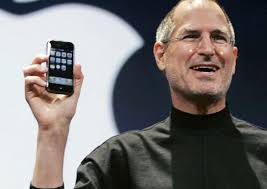 It was only 11-years ago that Steve Jobs took the stage and held in his hand the future. It was an iPhone.

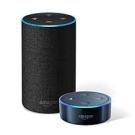 Most research today indicates that since the introduction of the smart speaker, the device that’s getting a little less use is the smartphone. I would concur that is the case in my home as well. Our 3 Amazon Echoes are the way we access at home radio listening, get flash briefs, find out the time and latest weather forecast.
 What the smart speaker and the smartphone have in common, are both devices give the user what they want, when they want it. On Demand is the real game changer of the 21st Century communications world.
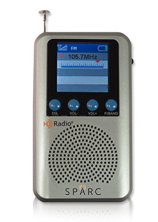 There’s something that’s been troubling me for some time. It’s the radio industry’s habit of reporting radio listening results by calling it “AM/FM” versus what it really is, virtually all FM radio listening.
 WTOP was built on AM radio. It moved its entire operation over to the FM band and grew its audience, revenues and lowered its listener demographic. People who never heard this radio station on its AM dial position were suddenly newly minted fans of their all news format.
 From my blogging, I get lots of feedback about a variety of things concerning broadcasting. One reader wrote to me about his father, a sports fan, who turned on WIP-FM to hear the latest chatter. WIP-FM was broadcasting a game of no interest to his father, so his son said to him, why don’t you turn on WIP AM610. Sadly, this person wrote the audio was unlistenable. He wrote: “You’d think the FCC would mandate that AM have standards for audio quality in receivers.”
 When I was living in Bowling Green, Kentucky, I couldn’t receive 650AM WSM in my office, even though my office looked south and my antenna was able to enjoy a full wall of windows. The noise floor both inside my university office as well as around town while driving in my car made the station unlistenable. WSM was once listened to all the way to Louisville in northern Kentucky. Instead, I downloaded WSM’s app and could enjoy the radio station in crystal clear stereo. (I see WSM has stopped subscribing to Nashville Nielsen Audio ratings.)
 The British Broadcasting Corporation (BBC) did a review of the range of services it offered on the AM band (called medium wave across the pond) and it included a financial review of all its services too. They concluded the ROI (return on investment) in AM was not there and announced they would be turning off some 13-AM radio stations in January 2018 according to Radio Business Reports.
 There’s a great radio operator in Cadiz, Kentucky by the name of Beth Mann. WHVO is her AM radio station at 1480, but if you go on her website, you won’t find any mention of this station being on the AM radio dial. It’s promoted as
  I lived in Kentucky for 7-years.
 You’ve probably heard the old saying “you can’t make a second first impression.”
 There are some things in life you can’t have too much of.
 That was the headline that appeared in the
 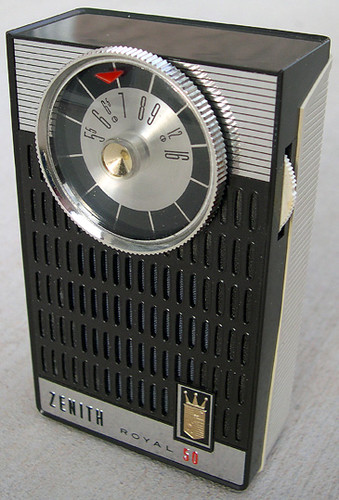 Growing up in western New England, the transistor radio would impact my life and career. Radio has been in my blood as long as I can remember, but it would be my Zenith transistor radio that would first allow me to explore new stations, new music, new personalities and new ways of delivering content without the supervision of my parents. My transistor radio and ear piece would make me the master of my own radio dial.
