Tag Archives: FM translators

AM Radio in Retreat

While the National Association of Broadcasters (NAB) is still pursuing its goal of getting Congress to pass the “AM Radio in Every Vehicle Act*,” the number of AM radio stations on-the-air continues to shrink.

How Many Radio Stations Are There?

Inside Radio published the latest FCC radio station count and the number of AM radio stations on-the-air continues to shrink.

In 1968, I passed my 3rd Class Radiotelephone FCC License, Broadcast endorsed, it was also the year that the Federal Communications Commission (FCC) began publishing its Broadcast Station Totals reports.

At that time the FCC said that 4,236 AM radio stations and 2,306 FM radio stations were on the air.

In December 1990, the next report the FCC published became available showing 4,987 AM radio stations and 5,832 full power FM radio stations were now on the air; plus, another 1,866 FM translator/boosters.

It’s worthy to note that the general public cannot tell the difference between a:

  • Full power FM
  • FM booster
  • FM translator signal

as to the FM listener they all are received on a standard AM/FM receiver. Only broadcasters, broadcast engineers and the FCC are concerned about such distinctions.

So, in just the first two decades of my radio career, FM signals outnumbered AM signals by 2,711.

Telecommunications Act of 1996

On February 8, 1996, President William Jefferson Clinton signed into law what is commonly referred to as “The Telcom Act of 96.” The intent of the legislation was to allow more companies to operate in the communications space, but what actually happened was a flurry of mergers and acquisitions as corporate media giants bought out small, local broadcasters.

The FCC reported that as of February 29, 1996 there were:

  • 4,906 AM stations
  • 7,151 FM stations
  • 2,527 FM translators/boosters on-the-air

almost two FM signals beating the airwaves to every AM signal.

A year after the Telcom Act of 96, the number of AM signals began its decline to:

  • 4,840 (a loss of 66 AM signals in one year)
  • full power FM signals increased to 7,295 (up 144 FM signals)
  • FM translator/booster signals grew to 2,744 (up 217 FM signals)

While AM radio signals were signing off, FM radio signals were growing by an additional 361.

Ten Years After Passage of the Telcom Act of 96

On March 31, 2006, ten years after the Telcom Act became law, and the consolidation of the radio industry began, the FCC Broadcast Station Totals report listed:

  • 4,759 AM signals
  • 8,989 full power FM signals
  • 4,049 FM translator/booster signals

and now something new began appearing, Low Power FM signals (LPFM) which numbered 712,  meaning the radio listening consumer could now access 13,750 FM signals versus 4,759 AM signals.

Wall Street investors were clearly showing more interest in FM signals than AM signals as their money poured into the radio industry.

Twenty Years After Passage of the Telcom Act of 96

Twenty years after President Clinton signed the Telcom Act and consolidation continued squeezing out the mom and pop broadcasters, the FCC Broadcast Station Totals report listed:

  • 4,680 AM signals (down 307 signals from the day I began my broadcast career)
  • 10,811 full power FM signals
  • 6,582 FM translator/booster signals
  • 1,516 LPFM signals

AM signals totaled 4,680 and FM signals totaled 18,908.

Radio Broadcast Signals 2024

Which brings us to the present day report, March 31, 2024. The FCC Broadcast Station Totals report now lists:

  • 4,427 AM signals
  • 10,983 full power FM signals
  • 8,913 FM translator/booster signals
  • 1,960 LPFM signals

Remember, the radio listening public DOES NOT distinguish between the different classifications of FM signals, as they all appear on the same FM radio receiver they are using.

To the radio listener, they have

4,427 AM signals compared to 21,856 FM signals

they can access. Almost 5 times as many FM signals as AM signals, and each year we witness those AM signals either reducing their power or just signing off-the-air and turning in their FCC broadcast license.

Radio Dominates in Vehicles

The latest research from Quu ( www.quureport.com ) shows that in 2023 model vehicles:

  • 100% of them have an FM radio
  • 98% of them have an AM radio
  • 98% of them have Android Audio
  • 98% of them have Apple CarPlay
  • 92% have SiriusXM
  • 70% have HD Radio

What surprised me about this research report, was that this was the first time I’ve ever seen separate AM and FM numbers listed. All reporting about radio usage should list AM and FM listening separately. I feel it is disingenuous to give the false impression that AM and FM broadcast signals contribute equally when that’s clearly NOT the case.

Having access to an audio service does not equate to usage.

Fred Jacobs in his TechSurvey 2023 for example, revealed how HD Radio was only listened to by 16% and SiriusXM was only listened to by 28%, which shows that despite their high availability numbers in vehicle dashboards, usage is still low. Unfortunately, AM/FM is never broken apart, but listed together so can they can garner 86% of the listening.

I’m thinking that both HD radio and SiriusXM usage might eclipse AM radio listening, if we were allowed to see AM and FM usage shown separately.

Vehicles On The Road in America Today

According to S&P Global Mobility, there are 284 million vehicles on our roadways and the average age of them continues to rise to a new record of 12.5 years. About 23% of all passenger cars now are 20 years or older with the bulk of them made between 2015 and 2019.

By 2050, when electric vehicles are projected to make up 60% of new sales, the majority of vehicles on America’s highways will still be powered by gasoline, because most vehicles today last twenty years meaning AM radio will still be in most cars, but the bigger question is how many AM radio stations will still be on-the-air.

Radio Needs To Look Forward

In ten to twenty years, AM radio will be at best a niche way to listen to audio.

Where the radio industry and the National Association of Broadcasters should be focusing their time is keeping FM radio viable, in all vehicles and FREE!

Sadly, the FM band is becoming overcrowded with signals and this, I believe, needs to be seriously addressed.

Finally, I would like to believe, as does Scott Shannon, that radio can still succeed in the 21st Century if it will just be “authentic, local, magical, and deliver an audio product with passion.” Or as radio programming consultant and author Valerie Geller puts it:

Great radio is interesting people communicating with listeners

by telling the truth, making it matter and never being boring.

14 Comments

Filed under Education, Mentor, Radio, Sales

Use It or Lose It

How important is it to have AM radio in cars if the majority of the people don’t listen to any AM radio stations?

I loved AM radio and my five decades plus career started on AM radio back in the 60s, but if I’m being honest, I can’t remember the last time I listened to any AM radio station, even though both of my older cars have decent AM radios in them – and I’m a “radio guy.”

Can we get real about AM radio’s problems? Mandating AM radio in all vehicles won’t cause more people to listen this radio service.

650AM – WSM

When I worked at Western Kentucky University in Bowling Green, Kentucky, the only way I could listen to 650AM – WSM broadcasting from Nashville, Tennessee was via their stream. My office had a huge picture window that looked south towards the WSM tower site, but the interference from the fluorescent lights and the steel structure of the building made AM reception impossible.

Inviting radio professionals into my Capstone Class to talk about radio, one of those professionals was the program director of WSM who told my students that more people listened to his radio station via the WSM App & stream, than did via their AM 50,000-watt FCC licensed clear channel frequency on the AM radio dial in Nashville.

Monthly Radio Ratings

Every month, when the radio trades publish radio ratings, you’re lucky to find a single AM radio station listed; in market after market. Often you find no AM radio stations listed at all, and on rare occasions you might find two.

If you go deep into the weeds, you might find an all religious station or foreign language AM radio station with a small listener base.

WIIN – AM1450

Back in the early 80s, WIIN-AM1450 in Atlantic City had a news/talk format with a local news team, sports director and even a plane in the sky doing traffic reports during the busy summer tourist season. Its sister FM radio station was 50,000-watt WFPG that featured a beautiful music format. WFPG was rated #1 by Arbitron and WIIN never showed up in the ratings.

WFPG, on the FM band, was fully automated and made all the money. WIIN-AM was fully staffed and lost a great deal of money. The owners of WIIN once said it would be more cost effective to mail the station’s few listeners a news sheet than broadcast the news to them.

AM Radio or AM Programming

Every radio format, once only associated with AM radio – like news or sports programming –today can now be heard on an FM signal.

18-years ago WTOP-AM 1500 moved its excellent news format to FM and yet, do you recall anyone being up in arms that Washington, DC area residents had just been “unserved” with important news and information, because this format moved from the AM band to FM? Quite the opposite, many FM only listeners discovered WTOP for the very first time and became avid listeners.

Revenue wise, WTOP-FM has been the nation’s top billing radio station and has won all the major radio awards year after year. In fact, our nation’s capital is dominated by FM signals. The first AM radio station doesn’t show up until you get to #24 and it only managed a 0.4 audience rating – it also is connected to an FM translator where I’m guessing, the audience is listening.

The reason AM radio formats have moved to the FM radio band is that most people today only listen to FM radio.

I rob banks, because that’s where the money is.

-Willie Sutton, bank robber

Corollary:

We broadcast emergency information on FM, because that’s where the listeners are.

-Dick Taylor

The AM Exceptions

The Big One, 700AM-WLW in Cincinnati is just one of the notable exceptions to the problem with AM radio listening. It operates on what the FRC (Federal Radio Commission, which predated the FCC or Federal Communications Commission) called a clear channel frequency. It was in November 1928, under provisions of the FRC’s General Order 40, that 700kHz was one of 40 frequencies designated as “clear channels”, allowing WLW to operate exclusively on this frequency in both the United States and Canada.

Then in early 1933, WLW would begin building the largest broadcasting transmitter in the world with 500,000-watts of AM broadcast power, at a cost in today’s dollars of $11.3 million. It would sign-on its new half-million watt transmitter on May 2, 1934 with President Franklin D. Roosevelt pressing a golden telegraph key to ceremonially launch the new signal. WLW truly became “The Nation’s Station.”

Saving AM Radio

It seems to me that if AM radio is deemed such a critical service for the nation in times of emergency, maybe it’s time to re-think the entire AM radio band and once again establish a network of high powered AM radio stations that cover the entire continental United States, and are manned 24-hours a day, 7-days a week, providing all Americans with this type of radio service. There could even be a special circuit in all radios that would automatically switch the radio to these emergency channels when warranted; much as cellphones so effectively alert their owners of an impending emergency situation.

Likewise, current local AM stations should be allowed to sunset their AM signals and continue serving their communities via their FM signals (translators), just as they are currently doing, often with much better coverage than their original AM license permits.

Saving AM Radio via FM Translators

Giving AM radio stations an FM translator signal in order to save its AM signal – would be like trying to save Ford by giving everyone a Chevy. It was a ludicrous of an idea that the FCC never fully thought out before implementing.

The FCC was also derelict in its duties by not protecting the AM band from all kinds of noise interference, for example the kind generated by the electronic ballast in fluorescent lighting and by not standardizing AM stereo along with not setting audio quality standards for AM broadcasting.

The “AM Radio in Every Vehicle Act” currently before Congress says nothing about mandating a certain quality standard for AM radio in vehicles, leaving open the possibility that vehicle manufacturers will install the cheapest and lowest quality AM receivers, if such a law is passed?

Longtime agricultural broadcaster, Max Armstrong, loves AM radio, but admits that broadcasters are part of the blame for AM radio’s decline. Some examples are:

  • Sold the land that was needed for strong AM signals, and reduced power
  • Changed the format of their AM station, once they obtained an FM translator
  • Re-allocated resources for areas other than for AM broadcasting
  • Poorly maintained their AM transmitting facilities, in favor of their FM

“When the epitaph is written for AM radio, I think it will be

that AM radio killed itself. I think broadcasters have

neglected it to some extent.”

-Max Armstrong

19 Comments

Filed under Education, Mentor, Radio, Sales

Whatever Made Auto Manufacturers Think AM Radio Is Over?

The CEO of the National Association of Broadcasters touted that 47 million people listen to AM Radio every week during a fireside chat at the Country Radio Seminar in Nashville this past week.

“It’s short-sighted for the automotive industry to consider

dropping AM Radio (from the dashboard).”

-Curtis LeGeyt, CEO, National Association of Broadcasters

Putting that number of listeners into perspective, the current population of the United States, according to the U.S. Census Bureau is 334,233,854 people and AM radio reaches 47 million of them or about 14%.

Saving AM Radio

In 2013, the chairman of the Federal Communications Commission (FCC), Ajit Pai, said he was going to make it his mission to save AM radio.

“The digital age is killing AM radio, an American institution

that brought the nation fireside chats, Casey Kasem’s Top 40

and scratchy broadcasts of the World Series.

When I was born (1973), AM radio accounted for approximately half of all listening.

Today it’s less than twenty percent.

The number of AM station is declining,

and every day it seems harder to receive a quality AM signal.”

-Ajit Pai, FCC Chairman

So, where are we, a mere ten years later?

Pai’s Plan to Save AM Radio

I never understood the wisdom of trying to save amplitude modulation (AM) by using low power frequency modulated (FM) transmitters, but Pai said this in his speech delivered during lunch at the RAB/NAB Radio Show in Orlando, Florida on September 20, 2013:

“We should make it easier for AM stations to get and use FM translators.”

-Ajit Pai, FCC Chairman

Do you think the automotive industry was listening to this plan for broadcasting in America?

What Happens When an AM Radio Stations Gets an FM Translator?

In market after market, when an AM radio station got an FM translator, two things usually happened, it changed its format from news/talk/information to a music based programming one along with re-branding itself as an FM radio station; even though it had to continue its AM service.

An example would be WNTW 610AM in Winchester, Virginia. In 1994, the station’s programming was news-talk-sports with newscasts from CNN. In 2014, an FM translator was acquired by the station, and in 2015 the station rebranded as “102.9 Valley FM” featuring a classic hits format.

WTOP’s Big Change

It was on January 4, 2006, that the owner of WTOP 1500AM in Washington, DC announced that it would be moving its successful news franchise from the AM radio band to the FM band. Bonneville International accomplished this by eliminating its classical programming on co-owned WGMS 103.5FM and putting all of WTOP’s programming on that signal.

The results were impressive, as WTOP has been the dominant radio station in the 25-54 demographics since moving to FM and has been the nation’s top billing radio station in America since 2014.

The Future of AM Radio in the United Kingdom

AM radio in the UK is in terminal decline with audiences vanishing and AM transmitters shutting down. The current forecast for AM in the British Isles is for the majority of the remaining transmitters to be shut down by the end of 2027; four short years from now.

AM radio was the dominant listening medium in the United Kingdom until the mid 1980s when it was overtaken by FM.

In America, when the number of FM radio signals equaled the number of AM signals, 75% of all radio listening was to FM. Today, there are 21,858 FM radio signals broadcasting in America compared to only 4,484 AM radio signals.

FM Radio Ends in Norway

Norway was the first European country to shutdown its national broadcasts of its FM network, switching to digital audio broadcasting or DAB; and that happened six years ago. Other countries that say they will be doing the same include Switzerland, Britain and Denmark.

BBC & CBC

Both the British Broadcasting Corporation (BBC) and the Canadian Broadcasting Corporation (CBC) have said they are both planning for the day, in the next decade, when they will be turning off both their radio and television transmitters, to become an online-only service.

Which came first, the Chicken or the Egg?

So, while the radio industry in America is up in arms over auto manufacturers eliminating AM radio in their Electric Vehicles (EVs), we need to be honest with ourselves about

who started down this path first.

You can’t save the AM radio band by moving it programming to the FM radio band. All the FCC and broadcasters succeeded in doing was to send out a signal to listeners and vehicle manufacturers alike that it was time to say goodbye to AM radio.

Actions speak louder than words.

31 Comments

Filed under Education, Mentor, Radio, Sales

Choice Paralysis

57 channelsI sat in on Radio World’s presentation about “Digital Sunrise for AM Radio” hosted by editor-in-chief Paul McLane. The webcast lasted almost two hours and was technically informative.

The question Paul kept asking the presenters about going all digital on AM, was a question he hears numerous people asking him, “has the horse left the barn?” In other words, has the world moved on and does anyone really cares about AM radio anymore.

But that’s not the question that was running through my mind.

Too Many Choices

We live in a world with infinite choices when it comes to audio & video entertainment. Twenty-eight years ago, Bruce Springsteen released his song “57 Channels and Nothing’s On.” The lyrics are very telling of the condition we find ourselves in today.

I bought a bourgeois house in the Hollywood hills
With a truckload of hundred thousand dollar bills
Man came by to hook up my cable TV
We settled in for the night my baby and me
We switched ’round and ’round ’til half-past dawn
There was fifty-seven channels and nothin’ on
Well now home entertainment was my baby’s wish
So I hopped into town for a satellite dish
I tied it to the top of my Japanese car
I came home and I pointed it out into the stars
A message came back from the great beyond
There’s fifty-seven channels and nothin’ on
Well we might’a made some friends with some billionaires
We might’a got all nice and friendly if we’d made it upstairs
All I got was a note that said “bye-bye John
Our love is fifty-seven channels and nothin’ on”
So I bought a .44 magnum it was solid steel cast
And in the blessed name of Elvis well I just let it blast
‘Til my TV lay in pieces there at my feet
And they busted me for disturbing the almighty peace
Judge said “What you got in your defense son?”
“Fifty-seven channels and nothin’ on”
I can see by your eyes friend you’re just about gone
Fifty-seven channels and nothin’ on

It’s not unusual for people to spend an entire evening going through the program guide on Netflix only to finally retire for the evening having not watched a single program. We’ve all done that.

On just Netflix alone it was estimated in 2015 that it would take a person 34,739 hours to watch everything available on the streaming service. I’m sure that number has grown considerably when you consider in 2019 Netflix introduced 371 series and movies to view.

Add to Netflix more television streaming services like Amazon Prime, Hulu, Apple TV+, Disney+, YouTube and it means choice is not the TV viewer’s problem, it’s choice paralysis. (And maybe also how to pay for it all.)

ALL DIGITAL AM

The question running through my mind about investing in building out an all-digital AM radio service in America is, “why?” When I scan the AM band now, I can hear the same talk shows on station after station. The FM band is no different when it comes to everyone doing the same type of programming.

It has me humming Bruce Springsteen’s song in my head, only with a lot more channels of programming attached to the “nothing’s on” part.

Digital AM seems to be the answer to a question, that listeners aren’t asking.

Less is More

Many businesses fall into the trap of thinking that more products equal more sales and radio certainly can be accused of falling into that trap.

HD Radio was designed to offer a higher quality broadcast signal for AM and FM radio stations. FM station owners didn’t really get interested in HD Radio until they learned they could feed FM translators with HD2, HD3 signals and put more FM analog signals on-the-air in their market.

I learned that the all-digital AM service offers the opportunity for an HD2 signal that could feed another FM analog translator.

What Al and Laura Ries tell us from their research is how this strategy of adding more and more choice becomes a trap and can lead to negative consequences in the long term.

Just One Thing

In media sales, we try to have our clients identify what one thing makes them special and unique. What makes their business so different that consumers will want to come to them instead of their competitors. You may know this process as finding a business’s “unique selling proposition.”

One Good Reason

Back in the day, 66-WNBC put up a billboard that gave radio listeners one good reason to turn their radio dial to 660 AM. It simply said “If we weren’t so bad, we wouldn’t be so good.”

56

This one simple sentence captured the essence of both Don Imus and Howard Stern. It was this radio station’s one good reason to listen. It was this radio station’s one good reason to advertise on it.

And speaking of one, I was told by the WNBC Sales Manager that it only took one commercial on Howard Stern for an advertiser to see immediate sales results.

That’s the power of a unique brand.

Misplaced Priorities

Radio had a choice to make in the last decade, to either develop unique powerful brands localized to the marketplace the FCC licensed them to serve, or build out more signals with programming that was virtually hard to tell apart from one another. Unfortunately, the radio industry chose the latter and as a result has turned the business into a commodity.

Something for everyone equals nothing for nobody.

Economics defines a commodity as goods or services that have fungibility, or in other words something the marketplace treats as everything being nearly equivalent to each other, with little regard for who produces it.

This is why radio sales people will often hear advertisers says things like “all radio stations sound the same, now let’s talk about your spot price.”

Perception is reality.

Or should I say that the listener and advertiser’s perception is accurate with the reality today being all radio stations do sound the same.

Elections & Radio Listening

I read an article the other day that said what changes the outcome of any election is turnout. That the way someone wins an election is by getting people, who normally sit it out on the couch, engaged and out to the polls. It’s not getting people to switch party affiliations.

I think radio may have a similar problem.

For the radio industry to be growing again, what radio needs to be focused on, and investing in, are its people and programming, not putting more signals on the air with nothing to hear.


18 Comments

Filed under Education, Mentor, Radio, Sales

Is Radio Biting Off More Than It Can Chew?

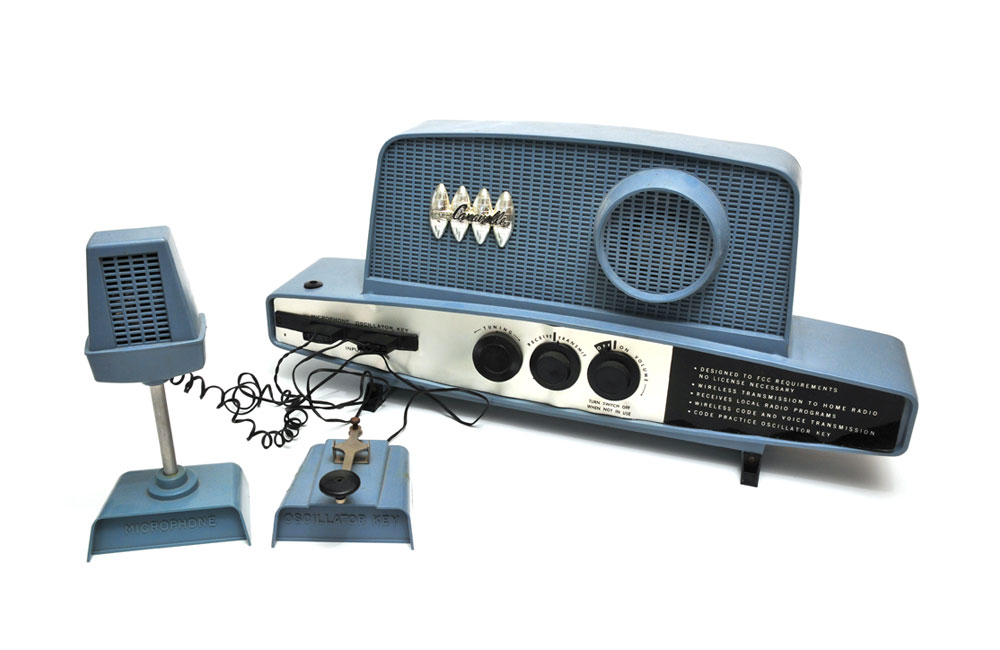
caravelle radio broadcast stationThere are lots of items in the news these days about what the radio industry should be doing. Streaming, podcasting, smart speaker accessible etc. The one thing I hear little talk about is, improving the core product and focusing on what the listener is seeking.
The Radio Ecosystem

If you think about it, the radio ecosystem, AM/FM radios, have not seen any real changes in decades. Oh, there was the introduction of HD Radio – introduced around the same time as Apple introduced the iPod (R.I.P. 2001-2014), but listeners never really understood the need for it. HD Radio was embraced by commercial broadcasters when they learned they could feed analog FM translators from HD Radio signals and have more FM radio stations in a single marketplace. This was hardly listener focused and actually chained the radio ecosystem to old analog technology.

What IS Radio?

In the beginning, radio was a way to wirelessly communicate with other people using Morse Code on spark gap transmissions. Guglielmo Marconi built a radio empire on this technology.

David Sarnoff, a skilled Morse Code operator and a Marconi employee envisioned a “radio music box” and wrote a memo about developing a commercially marketed radio receiver for use in the home. It wasn’t until after World War I, when Sarnoff proposed the concept again, this time in his new position as general manager of the Radio Corporation of America (RCA), that it would see the light of day.

Sarnoff would demonstrate the power of radio by broadcasting a boxing match between Jack Dempsey and Georges Carpentier. In just three years, RCA sold over $80 million worth of AM radios, and not soon after created the National Broadcasting Company (NBC).

Federal Radio Commission

America’s first attempt at regulating radio transmission was the Radio Act of 1912, that was enacted after the sinking of the Titanic. This law didn’t mention or envision radio broadcasting.

As radio broadcasting began to grow in the 1920s, then Secretary of Commerce Herbert Hoover would begin the process of trying to regulate the limited spectrum that everyone now wanted a piece of.

The Radio Act of 1927 was America’s first real attempt at regulating radio broadcasting. The Federal Radio Commission (FRC) was then formed by this act.

It should be noted that the FRC operated under the philosophy that fewer radio stations, that were well funded and provided live original programs, were better for America than a plethora of radio stations providing mediocre programming. It was an idea that the major radio receiver companies championed.

Federal Communications Commission

In 1934, the Congress took another attempt at regulating broadcasting (radio & TV) as well as all the other forms of communication that now existed. The Communications Act of 1934 created a new regulatory body called the Federal Communications Commission (FCC). By 1934, radio broadcasting had evolved into a highly profitable business. Broadcast educator, Fritz Messere, writes: “Many of the most powerful broadcasting stations, designated as ‘clear channels’ were licensed to the large broadcasting or radio manufacturing companies, and the Federal Radio Commission’s adoption of a rigid allotment scheme, under General Order 40, solidified the interests of the large Broadcasters.”

The biggest and most well-funded broadcasters have been favored since the very beginning. What kept things in check until 1996 was the limit on the number of AM, FM and TV stations a single company could own.

Telcom Act of 1996

Those limits would evaporate with President Clinton’s signing of the Telcom Act of 1996. Radio, as America had known it, would be over.

Now, for the most part, a single owner could own as many radio stations as their pocketbook could afford. Lowry Mays and Red McCombs, founders of Clear Channel Communications, would grow their portfolio of radio stations to over 1200 from the 43 radio stations they owned before the act was signed.

In 2003, Mays testified before the United States Senate that the deregulation of the telecommunications industry had not hurt the public. However, in an interview that same year with Fortune Magazine, he remarked, “We’re not in the business of providing news and information. We’re not in the business of providing well-researched music. We’re simply in the business of selling our customers products.” (Mckibben, Bill (2007). Deep Economy. San Francisco: Ignatius Press. p. 132.)

Radio Zoning The FCC is now considering whether to further loosen up the ownership limits of radio and TV stations in America. FCC Attorney John Garziglia recently wrote:

“If radio stations could be erected like fast-food establishments and grocery stores, with no numerical limits imposed other than a businessperson’s risk tolerance, it would be difficult to argue for FCC-imposed ownership limits on radio. Indeed, a regulatory agency enacting numerical limitations on restaurants and grocery stores would likely not pass legal muster.

But there are widely-enacted municipal limitations on just about every type of local business. The limitations are called “zoning” – the permitting or prohibiting of certain uses in certain areas to protect the character of the community.

The FCC’s radio ownership rules can be thought of as a kind of radio zoning. In the same way as land-use zoning protects a community’s character, the FCC’s ownership rules permit or prohibit certain radio station combinations protecting the amorphous concept of the public interest.

With land-use zoning, communities maintain a distinct character, livability, aesthetic, and economic success by not bowing exclusively to the profit motive of land developers. Allowing several or fewer owners to own virtually all of the radio stations in the country would doom the specialness of our radio industry.”


I think John makes some excellent points and I would encourage you to read his complete article HERE.

Biting Off More…

Radio operators today can’t properly staff and program the stations they already own. What makes them think that will change if they own even more of them? Most radio stations are nothing more than a “radio music box” run off a computer hard drive, an OTA (over-the-air) Pandora or Spotify.

Former Clear Channel CEO, John Hogan, introduced the “Less Is More” concept when I worked for the company. While it actually introduced more on-air clutter, not less, the idea was neither new or wrong.

If owning more radio stations was the answer in 1996, then why in 2018 are we worse off than we were then?

Why was Jerry Lee able to own a single station in Philadelphia and dominate that radio market?

Why are many locally owned and operated radio stations some of the healthiest and most revered in America today?

Radio not only needs zoning on the number of radio stations a single owner can control in a market, but the total number of radio station on-the-air in a market. And it needs radio stations that are neglected to be condemned like property owners who let their land go to seed.

The FRC wasn’t perfect, but the concept of “less is more” served America well for many decades. Fewer radio stations that provided high quality, live programming, operating in the ‘public interest, convenience and necessity’ and by virtue of that diversity of ownership, provided diversity of voice and opinions, as well as healthy competition.


19 Comments

Filed under Education, Mentor, Radio, Sales

You Can’t Have Too Much Fun

77There are some things in life you can’t have too much of.

You can’t have too much fun.

You can’t have too much wisdom.

You can’t have too much love.

Too Many College Bowl Games

My university invested a ton of money to upgrade to Conference USA. We won our bowl game in Florida this year too. Did you watch our team win? Probably not. Turns out attendance at the plethora of Florida college bowl games is down.

“When the Outback Bowl in Tampa announced an attendance of 51,119 on Monday who watched Florida dismantle Iowa 30-3, it became the sixth college bowl game among eight in Florida to have a decline in attendance from the previous year,” reports the Florida Times-Union.

NFL TV Viewership Decline

Rolling Stone magazine wrote that one of the big stories of 2016 was the decline in viewership of the NFL. How big was the decline? Down 8%.

Prime Time games were down the most with an audience erosion of 10 to 12%.

Commuter Traffic

The Federal Highway Administration says that by 2025 passenger miles traveled will have increased 72%. Why? Because that same agency says our population will have increased by 26% by that same year.

Tell me the road you commute to and from work isn’t already over congested.

Why is Country Music not the Top Radio Format in Nashville?

Nielsen Audio did a research study in 2014 and said the top radio format in America was country music. Ironically, the top radio station in Music City aka Nashville was NOT a country station. And it’s still not.

The latest ratings for Nashville show the highest rated country music station is ranked #7. The following radio formats are all ahead of that country station: Adult Contemporary, CHR, Sports, Urban AC, Talk and Variety Hits.

However, if you combine all of the audience of the many country format radio stations in Nashville, you will have a higher share of audience than the number one radio station commands.

Less Is More

So while you cannot have too much fun, wisdom, or love, you can have too many choices of products and services. Great for consumers’ maybe, but not for business owner/operators. Ask those who are dealing with the increase in college bowl games, NFL games, traffic congestion or playing country music in Nashville.

Radio is experiencing its own issues with supply versus demand.

The FCC will open up two windows for new translators this year. That’s after 750 new FM translators were signed on in 2016. Currently there are 19,778 FM signals beating the airwaves throughout America. Compare that to 4,669 AM radio stations currently on the air.

At the point in America’s history when the same number of AM radio stations equaled the number of FM radio stations on the air in America (end of 1992), 75% of all radio listening was to FM radio.

The Psychological Aspects of Overpopulation

This brings me back to my own undergraduate college days and psychology class. I remember learning about an experiment about putting too many rats into a confined space.

“As the number of rats rose above a certain level, the effects became rather dramatic,” wrote Albert J. M. Wessendorp, Psychologist-Psychotherapist. The rats displays behavioral disturbances, death rates rose, male rats began to show deviant sexual behavior and more. You can read more here.

Whales are known to commit collective suicide in order to control overpopulation.

What about you and me? How are we impacted by overpopulation (or over choice)?

The research says even human population growth is subject to limits. If we fail in controlling things ourselves, mother nature will begin to do it for us. (Think: Climate Change)

Radio Station Overpopulation

I love the radio business.

I share these thoughts because I’m concerned that the current overpopulation of the FM band is not taking into consideration the laws of physics or the impact of anything that gets overpopulated.

The FRC when it was formed (Federal agency that pre-dates our current FCC) it made it its mission to see America have quality radio stations or a large quantity of mediocre ones. We now look back on this period of time as “The Golden Age of Radio.”

Wessendorp writes that Maslow taught us that “People are only stirred into action when they feel their basic needs to be threatened.”

Have you looked at the revenue forecasts for radio for 2017? Are you feeling threatened yet?

What You Can Do

Next week I will continue with this topic and offer up what I believe is a solution to radio’s problem in an overpopulated entertainment world.

15 Comments

Filed under Education, Mentor, Radio, Sales, Uncategorized