

 I read with great interest the five part series by Matt Bailey on “The Alexa Effect.” In the 5th and final installment Matt shared what he called the “radio weapon Spotify will never have.” What is it? The radio personality. He wrote:
-
“A radio personality can tell you the backstory of a breakthrough artist that makes you want to hear her work.”
-
“A radio personality can point out that crazy line in the second verse to stay tuned to hear.”
-
“A radio personality can engage you to smash or trash a song on the station’s social media.”
-
“A radio personality can give you the chance to be among the very first to hear a new song by a star artist.”
“A radio personality can add context that will make listeners excited to hear a song that otherwise would simply be weird and unfamiliar. It’s a deeply personal and emotionally engaging weapon no algorithm can match. When we stifle their voices and their role in introducing new music simply to avoid potential tune-out, we might win a few tenths of a point in the PPM battle, but we will lose the new music war to Spotify.”
Consolidation & Voice Tracking
I don’t disagree with Matt, but I lived through the ramifications of the Telcom Act of 1996 and the consolidation of radio stations, along with the rollout of voice tracking.
Clear Channel called it “Premium Choice,” and we were told it would replace our local personalities with big market talent.
I watched in market after market as radio personalities, who were like members of the radio listener’s family, were sent to the unemployment lines. Relationships that took years, even decades to establish, wiped out in an instant.
Early Media Expectations
I grew up at a time when the family television set received a signal from a couple of antennas on the roof. We had two channels, which meant we received two television networks, CBS and NBC. If you wanted to change the channel, you had to get off the couch and change it. There was no remote control.
Our radios had both the AM and FM bands, but I remember wondering why. I often scanned the entire FM band to hear nothing at all with only the AM band picking up radio signals.
My early media expectations were two TV channels and AM radio stations. The radio provided a lot more variety, plus I had a radio in my room and our family had a single TV located in the living room. I controlled my radio, my parents controlled the family TV.
Media Expectations Change
In time, I would come to expect television to be in color, to be connected to a cable and have a remote control to easily change the multitude of channels I could now receive, from the comfort of my couch.
Radio would expand to the FM band and a whole new type and style of radio was born. The one thing that connected AM and FM radio was the radio personality. Every station had them and the decision to listen to one station over another was because of the radio personality.
In fact, I wrote an article on the power of the radio personality back in 2015 entitled “We Never Called It Content.”
I wrote this article after reading about the latest round of “forced retirements” in the radio industry.
And if you thought this type of downsizing was only occurring in large radio metros, the movie “Corporate FM” told the story of how in the 80s, ninety percent of mass media in America was owned and controlled by about fifty different companies, but after the Telcom Act of 1996 it was down to just six corporations.
New Media Brings New Expectations
Let’s fast-forward to today. I cut the cord on cable TV two years ago and all of my television viewing is streamed. Netflix, Amazon Prime, Sling TV and YouTube provide me with more hours of television entertainment and information than I could ever have time to watch, and I’m retired.
Amazon Echo provides me with all of my audio entertainment and I do mix it up between stations via TuneIn and the pureplays like Pandora and Amazon Music.
I also read a lot and subscribe to several online newsletters that all link to the original source of the material.
Which leads me to this conclusion, my calendar age did not cement my media habits. They’ve been fluid all of my life.
My 21st Century Great Expectations
- I expect NPR to open up my world to things I should be aware of, that I might not have been. I expect them to also provide me with more depth to the stories in the news. I expect them to have all of this posted online for almost immediate access. They don’t disappoint.
- I expect my television viewing to be On Demand and commercial free.
- I expect my music listening to match my mood and be there by simply asking Alexa to play my favorite channels when I want to hear them.
- Finally, I expect I’m not alone in these “21st Century Great Expectations.”
Rewound Radio DJ Hall of Fame
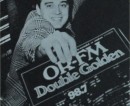
On Saturdays, I enjoy asking Alexa to play Rewound Radio so I can hear another fabulous radio personality featured in the weekly “DJ Hall of Fame.” The other weekend they featured WOR-FM out of New York City and the air personality was Johnny Donovan. OR-FM air checks are all in stereo and the music mix has plenty of variety. It was a time when Music Radio 77 – WABC dominated the world’s airwaves on the AM band. But the one thing I notice in these weekly trips down memory lane is how integral the radio personality was in the total program. They were a constant companion. They really were radio’s “secret weapon” to attracting faithful listeners.
The question I ponder often is, was this period of radio history akin to the vaudeville period of theater. It filled the right hole at the right time but won’t ever be coming back again.
I welcome your thoughts.


 Sue & I are taking a vacation and this blog will be on hiatus for the next couple of Sundays while we’re traveling. That got me to thinking about travel, and hotels, and the like.
 On this Easter Sunday morning, I’m still processing the pictures etched into my brain of Notre Dame Cathedral, in flames. This 856 year old church, is the most visited structure in Paris, eclipsing the Eiffel Tower.
 Traditional habit patterns used to be that as people grew older, they grew into the same habit patterns as their parents. Things like reading a newspaper, watching the evening television news, becoming involved in their children’s schools, the community and listening to radio. But new research says, those patterns have been upended by what else but, the internet.
 I sat on a webinar the other day and when it ended the first thought that crossed my mind was, they’re not talking to me. Their demographics in the study capped at 55-years of age. Really? No one over 55 matters to radio or to radio advertisers?
 Gordon Borrell recently hosted a webinar that hit on the highlights of his #LOAC2019 (Local Advertising Conference) held in New York City. The shocker, for me and many others came when Gordon said the future for media expenditures would be a process of “thinning the herd.”
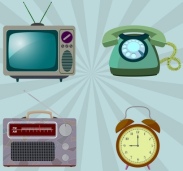 Growing up in the 20th Century, things looked like what they were. Telephones were easily identified as telephones. Television sets were easily identified as televisions. And radios were easily identified as radios.
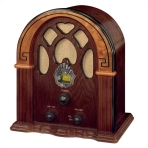 our social media pages. In my case, it’s a cathedral style radio made popular back in the 1930s. A style of radio I never owned until I received a retro transistorized version at a company manager’s meeting back in the late 1980s.
 on their phones, I wondered if the new icon for radio might be just that, a smartphone device. But then, this same device could also represent a TV, a camera, a movie camera, a book, a newspaper, a magazine…well you get the idea, a lot of media was instantly replaced by this singular device.
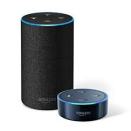 never had. She’s always there, waiting for me to call her name and fetch for me whatever I need, be it the latest news, weather, wind chill, traffic conditions, music, and more.
 These days, radio still dominates in the car, and the vehicles being produced today feature entertainment systems. These dashboard entertainment centers are loaded with unprecedented engagement capabilities and each one is accessed by an identifying App. Companies like Pandora and Spotify are providing a content rich environment to take full advantage these entertainment systems.
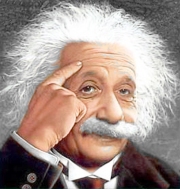 Albert Einstein said “We can’t solve problems by using the same kind of thinking we used when we created them.”
