
 Radio broadcasting began in the “Roaring 20s.” A time in America that saw the first tabloid newspaper appear. Reader’s Digest, New Yorker Magazine, Time Magazine would also be born right along with radio. It was a time of unprecedented economic prosperity and social change. It was a time of a strong backlash of racism, fear of immigration and morality.
The 1920s and the world we are living in today are not all that dissimilar. Today, the wealth inequality is greater than it was in the early 1920s.
And just like those times, almost a hundred years ago, that gave birth to radio we are living in times that are giving birth to the “Internet of Things.”
Immigration: Then & Now
After World War One ended, America got tough on immigration. The most stringent set of immigration restrictions in American history was enacted with “The National Origins Act of 1924.” It restricted the flow of immigrants from Europe (and elsewhere) to less than 200,000 per year. This fear of immigrants reignited the Ku Klux Klan. The KKK membership saw its membership rise to a new high in 1928. Reformers advocated for a more militant, less conciliatory stance.
Today the battle rages on over building a wall between Mexico and the United States and over immigration of Muslims.
Women’s Rights
While women had won the right to vote, they still couldn’t go to college and most professions still excluded women. While women could now own property, they couldn’t establish credit with a bank or get backing for a business venture.
Many felt that the only thing that changed in America when women were given the power to vote was prohibition; the 18th Amendment to the Constitution.
War on Illegal Substances
So while the United States tried to control alcohol in the 20s and failed, today we find America battling another illegal substance battle, marijuana, with much the same results.
People will find a way to do something they really want to do.
Modern Mass Media
The 20s ushered in the first decade of modern mass media. American-made films not only captured the attention of American audiences, but the whole world. Every city would have at least one movie house by the end of the decade.
Because the movies were silent, musicians were in high demand for the movies. And because radio was all live, it too needed musicians to perform during each broadcast day.
Radio Jingles
The 20s also saw advertising agencies now develop departments devoted to the creation of radio advertising and soon the commercial radio jingle was born.
The Worst of Times
The Roaring 20s would end with Black Tuesday, October 29, 1929, the stock market crash and the beginning of the Great Depression.
While this decade created favorable conditions for big business to prosper, the alliance of government and industry left labor unions out in the cold.
It was these times that radio was born.
The Great Recession of 2008 would be the environment that would see the Internet of Things born.
Today’s Big Regulatory Difference
The big difference I see today for radio versus its toddler years is how it is regulated. The Radio Act of 1927 provided the foundation for all broadcast regulation right up until today. While more Acts were passed and made law over the years, the basics remain much the same as when they were first made law.
Some of the key provisions in the original Act that we’ve deviated from today are:
- Limiting the number of broadcasters to foster higher quality radio broadcasts versus having more stations of poor or mediocre qualities
- Radio broadcasters would operate in the “public interest, convenience and necessity”
- Radio would be a regulated medium to assure high quality and operating in the public interest
- Radio would be commercial and privately owned (a condition that made radio broadcasting in the USA different from every other country in the world)
Those who complain that radio isn’t like it used to be only need look at how broadcast regulations have been changed over the past century; the biggest change being the Telcom Act of 1996.
Utopian Hopes, Dystopian Fears
When commercial radio was born in 1920, it was hoped that it would bring about national unity. Those utopian hopes and dystopian fears would fall basically into four different areas.
- Radio would create a physical unity in the country bringing people together as one
- Radio would bring about a new cultural unity as Americans
- Radio would make America a one language nation providing linguistic unity
- Radio would bring about institutional unity where everyone wanted the same things and held the same vision
I will let you draw your own conclusions on the success or failure of these goals for radio.
Internet of Things
Broadcasting in America started out as a government-assisted oligopoly. The internet did too. Both, I would argue, now fall into the unlimited category. While I realize this is definitely true for the internet, I know others would quickly point out the limited amount of spectrum for AM and FM radio broadcasting. However, with the growth of FM translators and LPFM stations, it feels like it’s unlimited.
The original system of a government preferred broadcasting system is being challenged today by the Internet of Things.
And covered in dust, is the original fundamental principle of operating in the public interest, convenience and necessity and not merely for maximum profits.
 We live in interesting times. The internet has changed our world in a revolutionary way. In its current form the
  For the past half-dozen years, I’ve had the opportunity to work with college students looking for a career in radio. It’s made me think about my own radio career and college education. Let me share with you some observations.
 “Well, here’s another nice mess you’ve gotten me into.” Variations of this line were always a part of Laurel and Hardy movies. In fact, the pair made a film in 1930 with the title “Another Fine Mess.”
 This is not a blog about politics. It’s a blog to mentor people about media.
 The radio show was close to home this year, just down the road from my university, in Music City USA, Nashville, Tennessee. Plus, the Tennessee Association of Broadcasters decided to roll their annual convention into an opening event at the Radio Show. So as soon as I finished my morning class, I was on the road to Nashville.
 Everyone wants to know what the future for them will be. It’s why fortune tellers with crystal balls and astrology forecasts have been so popular.
 I’m not a shopper. I admit it. Shopping for me is work. When I do shop, I like places like Costco because while they offer choices, they don’t offer so many as to overwhelm. I like stores that do the “heavy lifting” for me and give me a selection of the best to pick from.
 I worked for Clear Channel for five years. As best as I remember, not a meeting went by that John Hogan wouldn’t say “we’re not about tall towers in big fields anymore.” And as I watch radio companies all across America selling off their radio towers, I think that day has come to fruition.
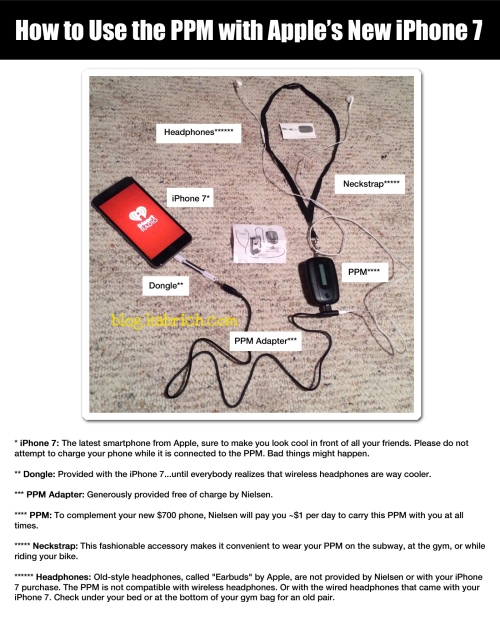 and you really should read all that Randy has to say on the subject with his article on Tom Taylor’s NOW
 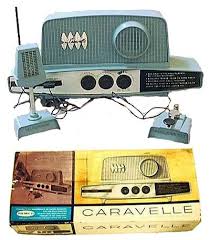 I loved being a general manager of radio stations. It wasn’t the job that first attracted me to radio however; it was to become a disc jockey. From as far back as I can remember I wanted to be a DJ on the radio. My first radio microphone was made out of tinker toys. Then I got a Caravelle (pictured) transmitter for Christmas from Santa Claus and I took to the air waves.
 DickTaylorBlog