Category Archives: Mentor

What I Learned About Being a General Manager

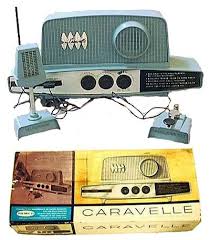
48I loved being a general manager of radio stations. It wasn’t the job that first attracted me to radio however; it was to become a disc jockey. From as far back as I can remember I wanted to be a DJ on the radio. My first radio microphone was made out of tinker toys. Then I got a Caravelle (pictured) transmitter for Christmas from Santa Claus and I took to the air waves.

I started in commercial radio when I was in the 10th grade in high school, getting my FCC 3rd Class Radio-Telephone Operator Permit. Due to my age at that time, I needed to get a work permit. The Massachusetts employment office that issued those types of permits for underage workers asked me what type of employment I would be doing. I told them, I’m going to be a DJ. They didn’t have a category for DJ in their book, so they wrote “Talent” on my work permit and sent me on my way. I never mentioned that I would also be taking transmitter readings every half hour standing next to a 1,000-watt broadcast transmitter. If I had, they would never have issued me a work permit, as that environment would have been considered to hazardous for a person who was only 16 years old.

As I look back on it, it almost seems ironic that I could have a license to operate a commercial radio station, but my mother would have to drive me to work and pick me up because I couldn’t get a driver’s license to operate an automobile.

In time, I would learn that what I really wanted to do in radio was not be the person who was the product, but the person who ran the whole enchilada; also known as the general manager. To get to that lofty office, I would need to leave the air and programming and go into sales.

Once in sales I quickly rose through the ranks to sales manager, station manager and finally general manager. Yes, at the ripe old age of 32, I was a general manager in Atlantic City, New Jersey; the world’s famous playground.

Lessons Learned

So what did I learn almost three decades later? A career is not a sprint, but a marathon. You never know everything you need to know. Every day is a learning experience. That your attitude becomes the attitude of your employees, so keep it positive.

Success

Like making a baby, you can’t speed up the process of success in life. It takes time. Repetition is key. Malcolm Gladwell in his book Outliers wrote it takes about 10,000 hours of repetition and practice to master anything.

While Radio Ink Magazine named me one of the best general managers in radio before I left the industry to become a broadcast professor at a university, I would find that I would learn even more about my craft trying to teach it to others. So today, I think I’d be a much better general manager than when I took a sabbatical to enter teaching.

Love

They say if you love what you do, you will never work a day in your life. That was true for me about my radio career for over four decades and it’s been just as true for my teaching these past six years. But here’s the big take away: You can love your career, but it will never love you back. So you have to make time for the things that do love you back like your family. I may have been a hard working, successful radio general manager, but I never missed any of the special moments in my boys’ lives as they were growing up.

But the real credit goes to their mother. She made the decision to be a stay-at-home mom – the most important and difficult career choice on the planet – and the credit for the successful men both of my sons turned out to be, goes to her.

Marriage

Sadly, while I tried to be a good dad and a good radio general manager, I probably was lacking in the husband department. The mother of my sons and I would divorce. My life was not in proper balance. Don’t let this happen to you.

Stay Curious

When you’re starting out, you are very curious about how everything works. You’re like a sponge trying to soak it all in. Don’t lose that curiosity. Always pitch in and do whatever needs to be done. Always listen to the ideas of others; it might surprise you how much they know. Make every day a new day to learn and grow and be better than you were yesterday.

Management

When you manage people, unlike things, know that each one is different. Each person is an individual and there’s no “one size fits all” approach. Celebrate your people’s victories, benchmarks and life events. Empower your people to not need you. Compliment in public, correct in private. Compliment in a note, correct face-to-face.

Listen

You were born with two ears and one mouth. Listening is what you should be doing twice as much as a general manager. Just because you’re the GM doesn’t mean you have all the answers. You don’t. Collaboration is the 21st Century Skill Set. It’s been my experience that often the answers to the problems confronting my radio stations were inside my own workforce. As manager, it was my job to get the answers out of them.

My Boss is a Bastard

This is a tough one. You never really want to work for a boss who’s an S.O.B. But sometimes family obligations put you in that uncomfortable position of just having to tough it out until you can make a change. I tell my students when we go over case studies of employees working for a bastard that unlike now – when they are students with no other people they are responsible for – it seems like it would be easy to just walk away from a terrible employment situation, but when you have a mortgage, car loan, kids etc. you can’t. But what you can do is begin you job search and get out of there as soon as you can. Bad work relationships are toxic. Don’t stay in one.

It’s About More than Work

New managers sometimes have a hard time understanding why everyone isn’t as dedicated as they are to their job. But often, the reality is, your employees have lives outside of their workplace and those lives aren’t always smooth sailing. Each of us has a finite emotional capacity. So if their home life is stealing more than 50% of their emotional capacity, it leaves less capacity for the office. So if one of your best employees is suddenly under-performing, explore what’s going on in the rest of their life and how you, as their manager, can help them through this rough patch in their life. People will never forget how you made them feel when they needed your help and understanding the most. Even better, when that rough patch is over, you have one of the most empowered and dedicated employees now on your team.

Does Everyone Share the Same Mission?

Every company has a “Mission Statement.” Most are too long and rarely remembered, let alone embraced and understood by every employee. And that’s a BIG problem for you, the general manager.

There’s an old story about President Kennedy visiting the National Aeronautics and Space Administration complex when he stopped and asked a person cleaning the floor what his job was. The person said their job was to put a man on the moon. Now that’s a focused workforce.  What would your people say they do in your radio station if someone were to ask?

Don’t wonder what the answer is, ask your people. Get everyone on the same page.

Facebook

The world we live in today has blurred the lines between our work life and our home life. Our computers, tablets and smartphones now mean we are always available to our employer and always able to connect with our social networks. So should you ban Facebook? I was asked do to that once by one of my employees. My response was “no” I would not ban Facebook. And here’s why: First that person got all their work done and done correctly. That person was available to me at any time 24/7 if I needed something fixed regarding our program logs. If I could invade their home life, if necessary, then their home life could invade my work place.

The good news is recent research has shown that employees who take social network breaks online are more productive than those that don’t. Everyone needs to take a break and refresh to continue to perform at the highest levels they are possible of achieving.

Sales people are known to take a break after a lot of “No’s” and hit some golf balls at the driving range to refresh and get back to closing sales.

Personal Ethics

You know right from wrong. Never let any work place or manager compromise your personal ethics or values. If it walks like a duck, quacks like a duck, it’s a duck. And if that “duck” doesn’t feel right, it probably isn’t. Take a stand. Speak up, especially if you’re the manager because your people only have you standing between them and the top management of your company.

Failure is Learning

Want to learn more, fail more often and more quickly. Sounds counter-intuitive but research has proven that failure is all part of the way we learn. We only eliminate the unsuccessful paths by finding out if they lead us to success or not.

I had the opportunity to visit the Thomas Edison laboratory in New Jersey. A sign in the lab where Edison had invented the light bulb had this Edison quote: “I have not failed. I have just found 10,000 ways that don’t work.” Don’t fear failure. Learn to take risks.

Management vs. Leadership

In the end, what you really want to become is a leader. What’s the difference you ask? Peter Drucker says it best:

Management is doing things right;

leadership is doing the right things.

17 Comments

Filed under Education, Mentor, Radio, Sales, Uncategorized

Radio’s BIG Opportunity

54I know that radio needs to be planning for the future and the future is not going to be like the past. However, to ignore the present makes no sense to me whatsoever. Here’s what I mean, take a look at this quote:
“Japan is selling more adult diapers than diapers for children. Think about that for a moment.” –Joseph Coughlin, founder of the AgeLab at the Massachusetts Institute of Technology

Coughlin’s point is, that while Millennials may be getting all the buzz in today’s media and advertising world, that retailers must be on alert to the aging Baby Boomer population that have all the money. Coughlin recently addressed the International Council of Shopping Centers Conference telling the 4,000 attendees important facts they need to know in order to grow and prosper.

Coughlin advises that retailers would be better to focus on the aging generations than the younger ones.

Robbing Banks

Willie Sutton has been famously quoted as responding to a reporter’s question about why he robbed banks all his life as saying “because that’s where the money is.”

Well, if you’re in the retailing business or the media business, the money today is with the Boomers and it’s time to focus on them more than anyone has in the past.

Coughlin’s Research

The research I’m going to share was reported in the Tampa Bay Times and you can go to their website for more details about all of this.

Coughlin pointed out that fewer people today are having kids and the result of that reality is the over-60 folks will outnumber the little people aged 1 to 15 by 2047. What’s interesting, is that Coughlin points out this has never happened before.

But if you’re smart like Willie Sutton, you need to consider the fact that right now nearly 70 percent of all disposable income in the economy is controlled by Americans in the age 50 and over group. (50 is the age that AARP sends you your first invitation to become a member. I know that, because that’s when I became a member of AARP.)

College Towns #1 for Retirees

Coughlin also said that retirees are attracted to college towns. Many colleges offer low or no-cost tuition to seniors plus they have lots of educational and entertainment programs that are often free or at very low cost.

My university put on a production of Beauty & the Beast with all of the original Broadway show sets and costumes, but the actors were from the university theater department and the full orchestra was made up of teachers and students from the music program. I have been to many Broadway shows in New York City and I’m going to tell you it was as good as any of them I’ve seen and the cost to park for the show was free, the seat I had was front row center and the cost of my ticket was $5.00; try and beat that!

Corvette City

Bowling Green, Kentucky is the home of the Chevrolet Corvette. The average age of a Corvette owner is 59 years old. So you shouldn’t be surprised to learn that Coughlin says that luxury products that are high-tech and high price are bought by senior citizens.

But it’s not just cars. It’s everything. Grocery stores, drugstores, health, beauty and fitness and more.

With this crowd what’s in high-demand is internet proof. It’s experiences they can’t get online.

Beautiful Music

This week a station group in Michigan announced a new format for WBZX in Big Rapids.  The new format is beautiful music with the station’s new branding: “Beautiful 104, as beautiful as Northern Michigan.”

One of my favorite stations and the one that gets voted #1 every year in the local newspaper as one of the “Best of Naples” is WAVV in Naples, Florida. Both the music and the ads are perfectly targeted to their audience. Even better, the station maintains a commercial load of only eight commercials per hour. Four times an hour they stop the music and play two sixty-second commercials and then return to their unique musical offering.

Senior Power Radio

None of this should come as a surprise to anyone. Ken Dychtwald wrote about this back when I first became a general manager of an Al Ham “Music of YOUR Life” radio station to be followed by managing a Bonneville Beautiful Music radio station in Atlantic City. The Age Wave clearly laid out the opportunities that would be coming.

Well, that day is here. Senior Power Radio is a true opportunity to leverage people who grew up on broadcast radio and will embrace any radio station that is focused on their needs.

It’s time for some smart broadcasters to make some money by focusing on the “interests, convenience and necessities” of the Baby Boomers; because we’re going to be around for a while.

11 Comments

Filed under Education, Mentor, Radio, Sales, Uncategorized

Millennials Love Radio

52News is about the exception. A car driving down the main street of your hometown is not news. But let that “radio on wheels” run into something and that’s news.


It’s the same with radio listening. The fact that 92% of the population of America listens to radio every week is not news, but finding out one of them listens to something other than radio grabs the headline.

Millennials Outnumber Boomers

It was just a year ago that Millennials outnumbered us Baby Boomers. That was news, because the Boomers have ruled the roost for several decades. So how does radio listening stack up for the Millennial generation? 91.3% of Millennials are reached by radio every week. 94% of GenX’ers are reached by radio and us Boomers come in at 93.5% reached by radio every week according to Nielsen.

Millennials Don’t Hate “Old Media”

MediaLife magazine just reported on what’s really happening with Millennial media usage versus what many believe is happening. Example: Newspapers – more Millennials read a newspaper once a week than use a tablet. Another example: Radio – more Millennials crank up the radio (80%) than have an MP3 player (45%).

What Millennials Aren’t In-Love With

What you might find surprising is that Millennials aren’t swooning over Satellite Radio, smartwatches and connected cars. In fact, Millennials would rather ride share or use public transportation than even own a car.

Time For Another Paradigm Shift

It was Thomas Kuhn who is credited with coining the term “paradigm shift.” He defined it as changing from a set of beliefs or views that members of a community all shared.

It’s hard to predict the future and many of the models people develop to predict levels of risk really miss their mark. Two examples are the Fukushima nuclear disaster where the “experts” said a twenty-foot wall would protect the plant from any Tsunami. However it was a twenty-four foot wall of water than would take out the plant. And everyone knows that insurance companies are in the business of predicting risk, its how they come up with the premiums people will pay them. So how did AIG miss the financial collapse in 2008 that would bring down the company?

The Lesson of Procter & Gamble

Procter & Gamble aka P&G is a huge company. They primarily make cleaning products; soap.

When commercial radio was born in 1920, P&G was quick to move their advertising monies from print to radio.

When TV came along, again P&G would lead others in moving their advertising monies to TV. (The radio & TV “Soap Opera” name comes from the creation of serial dramas that were created by P&G to sell their soap products in.)

When the internet came along, P&G was a leader in moving their ad monies from traditional broadcast to online.

Except this time, it didn’t work as it had in the past.

The Wall Street Journal ran a story entitled “P&G to Scale Back Targeted Facebook Ads.”

“Procter & Gamble Co., the biggest advertising spender in the world, will move away from ads on Facebook that target specific consumers, concluding that the practice has limited effectiveness.

Marc Pritchard, P&G’s chief marketing officer, said the company has realized it took the strategy too far. ‘We targeted too much, and we went too narrow’

P&G could be the bellwether on how consumer goods companies and big brands use digital advertising. Over the past year some marketers, specifically consumer product companies, have discovered they need to go ‘much more broad’ with their advertising”

Bob Hoffman, “The Ad Contrarian” has been predicting this for some time. He recapped his prediction on a recent one of his blogs that you can read here.

Advertising Is Sloppy

The problem with today’s “targeted advertising” is that it misses lots of targets. Great advertising works, in part, because it’s sloppy. By that I mean it produces results because it reaches a large and diverse audience through a mass medium like radio.

Radio is the number one reach and frequency medium in America today.

I’ve advertised on radio stations I’ve run for help for positions we had open. What never ceased to make an impression on me was how many people I’d interview who came in for the advertised position and had never heard the ads. How did they know about the opening? A friend of theirs who heard the ad told them about it. That’s what I mean by advertising being sloppy. That’s what I mean about hitting the target even when you are not aimed at it.

Great Ad Copy

The one thing that is critical is your advertising copy. Great copy will produce results on virtually any radio station. It’s not about being on the most listened to station in the market that will produce results for the advertising client, it’s the radio message itself that will make the difference. Next, it’s the ability to deliver that message consistently day-in and day-out, fifty-two weeks a year.

Breaking News

Radio has always been the advertising medium that gets results when used correctly.

To be successful, you need to build your brand in the mind of the consumer. Radio let’s you whisper in the ear of the consumer every day.

Radio will not only help you build your brand but keep it top of mind too.

The “breaking news” is target marketing is OUT.

Mass media sloppy advertising is IN.


6 Comments

Filed under Education, Mentor, Radio, Sales, Uncategorized

Inc. Magazine Radio

53


Saturday, August 20, 2016, I was Alan Taylor (no relation) guest for Inc. Magazine’s Radio Show. Details on how you can listen to an archived version of the live broadcast can be found below.

http://www.ernlive.com/show/inc-radio/15335/episodes/ugly-ideas-and-hostage-situations-full-show-88

The show focused on my blog post “Your Idea is Ugly” and that post can be found here: https://dicktaylorblog.com/2016/07/24/your-idea-is-ugly/

Live Stream

Show streams live every Saturday 11am-12pm PST, 2-3pm EST.   Click on this button to listen to our live stream. All other times the stream features the best from our ERN program line up. Hear previous episodes of Inc. Radio – click here

1 Comment

Filed under Education, Mentor, Radio, Sales, Uncategorized

Radio Creates Traffic

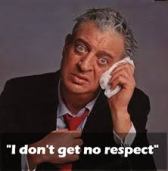
51Radio is like the Rodney Dangerfield of media; it doesn’t get any respect. Ask any business owner what form of advertising is best and they will almost always respond “word of mouth.” Hard to argue that position. Well, radio is really word of mouth communication with a really big mouth.

Last week I wrote an article titled “Don’t Let Radio End Up Like Yahoo!” The whole point of the story was that radio has the power to make things happen; to create traffic, be it in-store or online.

Google Analytics & The Great Oz

TechCrunch published a great article on “How Google Analytics Ruined Marketing” that a good friend of mine sent to me. It’s a long, but excellent read. It left me thinking how Google is like the Wizard of Oz. The Great Oz wasn’t as great as the people in the Emerald City made him out to be. But the wizard was very good at distraction. While everyone was staring at the huge face and the smoke and flames that billowed from below it, Oz took everyone’s eye off of reality.

Google Analytics is like that. It created a whole new bunch of buckets to measure people’s online marketing effectiveness. Except it really doesn’t tell you what you really need to know and that is WHY things happened. If people began searching for your business or product on Google or clicked on your ad on Facebook, you haven’t a clue as to what caused them to do that.

Marketing Channels vs. Marketing Strategies

Radio is a marketing channel. TV is a marketing channel. Newspaper is a marketing channel. But in the digital world, those channels are called social media marketing and search marketing; only they really are not. Facebook, Google, and all the rest are just another marketing channel. You need to develop a marketing strategy first and then deploy it on marketing channels.

What Google Analytics Misses

Google Analytics traps business owners and advertising agencies into thinking that it measures everything in their marketing strategy. It doesn’t. It only measures online activity. It completely misses how radio, TV or any of the mass media are having an impact.

It’s All About the Message

I’m a disciple of The Wizard of Ads, Roy H. Williams, who has long preached there really are no bad marketing channels only bad messages. Roy prefers the power of radio and its ability to deliver word of mouth advertising with the longer lasting results of echoic retention. Roy uses the example of eye witnesses vs. ear witnesses. Police often find that everyone saw something different when then go around interviewing witnesses but when it comes to what they heard, they all pretty much agree on that.

Consumer Behavior

Back when gas prices were high and the great recession was beginning, a story in New Times Magazine told of how America’s love affair with the automobile was over. Car sales were in the tank and the United States had to bailout General Motors.

If you were an auto dealer advertising on the radio, you probably were telling your account executive how their radio station wasn’t working.

Fast-forward to 2015 and auto/truck sales just recorded their best year ever in a single year.  Oh and it just so happens that gas prices plummeted and the great recession was mostly over.

If you were an auto dealer advertising on the radio, you probably were telling your account executive their rates were too high and you didn’t need to advertise as cars were flying off the lot.

We Buy With Our Emotions

People buy on emotion and then justify their purchase with logic. That’s never going to change. People buy stuff to make themselves feel good.

Google Analytics measures the activity in the action channel of marketing. It doesn’t measure what got people all emotionally fired up in the first place.

Google’s Getting Your Credit

When I started selling radio advertising, it was long before the internet and Google. Back then when we advertised something for a retailer on the radio, people would come in and say they read about the item in the newspaper.

History doesn’t repeat but it rhymes and so today the newspaper has been replaced by Google search. Now with the free Google Analytics tool, retailers and ad agencies can measure the power of their “digital marketing” and show you how their SEO worked magic. Except the reason anyone did the search in the first place was because they heard about it on the radio.

Radio & Rodney

Which brings me back to where I started, Radio & Rodney “don’t get no respect.”

The Question You Should Be Asking

Samuel Scott says in his TechCrunch article that the question you should be asking is this:

“How would you market yourself if the Internet didn’t exist?

Answer that, and it’ll help your online marketing too.”

16 Comments

Filed under Education, Mentor, Radio, Sales, Uncategorized

Don’t Let Radio End Up Like Yahoo!

49I just finished listening to Jason Jennings’ podcast about how Yahoo went from being a company worth $120 Billion to its sale to Verizon for $4.8 Billion. I think the wisdom that Jason shared is very applicable to the radio industry’s journey through consolidation since the Telcom Act of 1996.

Jason says the selling of Yahoo is like a train wreck; you don’t want to look, but you just can’t help yourself. I know many who’ve said similar things as Wall Street invaded radio with its goal of “increasing shareholder value.”

So how can radio learn from Yahoo’s mistakes? What are the lessons Jason shared that apply to radio? Let me share with you the Top 5 Lessons of Yahoo:

#1) Know What You’re All About

Yahoo never really defined itself and the revolving door of CEOs contributed to this with each one bringing a different vision – or no vision – to Yahoo. Or as Jason puts it, the company didn’t have a purpose; they never knew what they were all about.

As radio was deregulated and its original mission of serving the public interest, convenience and necessity was abandoned, nothing replaced radio’s reason for existing except for “increasing shareholder value.” Not surprising as radio people were replaced by Wall Street investors.

#2) Have a Set of Guiding Principles

Radio’s guiding principles were first established by the FRC (Federal Radio Commission) and then by the FCC (Federal Communications Commission). Under President Ronald Reagan – and his government is best that governs least approach – radio’s deregulation began. President Bill Clinton would open the flood gates of consolidation with his signing of the Telcom Act of 1996.

With no guiding principles, investors were free to move in all directions; and they did, buying up not just radio stations but many of its manufacturers and service providers for radio.

It’s like the old saying, if you don’t know where you want to go, any road will take you there.

#3) Using a Business like a Personal Piggy Bank

Radio investors and many top radio executives began using radio as a personal piggy bank, only taking care of themselves and focusing on the immediate quarter with no long term vision, strategy or investment. Too many just lined their pockets and left.

#4) Trying to Be All Things to All People

Jason says “great companies stick to their knitting. You can’t be all things to all people.”

Radio was originally about serving their community of license via over-the-air broadcasting. It delivered local news, local sports, local community events, local bands and more by local radio personalities who lived in the communities they served. It was focused like a laser beam on local, local, local.

#5) Don’t Copy the Competition

Radio today is trying to copy Pandora, Spotify, Apple Music and others. Radio today is trying to also copy YouTube, Facebook, Pinterest, Twitter and SnapChat. Radio is trying to copy just about every other business advertising model and without any guiding principles has been economically treading water.

Yahoo’s SVP Brad Garlinghouse wrote his infamous “Peanut Butter Memo” in October of 2006 that pleaded with the company to narrow its focus and clarify its vision.

Brad felt that Yahoo was spreading its resources too thinly. Business Insider recently wrote “This internal memo from 10-years ago shows Yahoo still hasn’t solved its biggest problem.”

If Yahoo had a culture problem, radio by way of mass consolidation had an even bigger one. First, as Wall Street money flowed in and radio stations were bought up, each of those stations represented its own culture that would need to merge into a larger culture. Then these new larger radio groups would try to change the culture from a local scope to a national scope. National radio personalities like Ryan Seacrest, Rush Limbaugh and many others would replace local personalities. National radio contests would replace local ones. Live and local for the most part would soon only appear in the history books on radio.

Culture is created at the top. Over the last twenty-years, radio’s consolidation has seen a revolving door of top leadership. The culture of radio has been a moving target for both industry professionals and listeners alike. Culture is built over time. There is no “quick fix” for building culture.

Absent a company culture, what fills the vacuum is one of everyone for themselves.

Now twenty-years later, there are signs of new growth as people who believe in live and local, and operating in the public interest, convenience and necessity are entering the business.

In many small markets, this way of operating never got sucked into the vortex of consolidation.

Even some of our country’s biggest radio companies are focused on getting back to the core principles radio was built upon.

Radio, the first broadcast transmission system to reach a mass audience, almost 100-years later is still the leading way to reach a mass audience.

37 Comments

Filed under Education, Mentor, Radio, Sales, Uncategorized

Paying It Forward

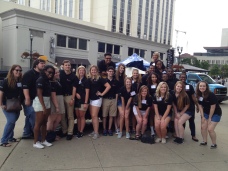
47The picture on the left is of the 2016 KBA WKU RADIO TALENT INSTITUTE class. These twenty-three outstanding students all earned their Radio Marketing Professional (RMP) certification in radio sales from the Radio Advertising Bureau during the ten-day institute.

I began working with Steve Newberry, former NAB Joint Board Chairman and President/CEO of Commonwealth Broadcasting to bring the talent institute to my university in 2012. Our first class would graduate in 2013. The 2016 institute marks my fourth and last one as director at WKU. It truly has been the university activity I’m most proud of.

The whole concept of a radio talent institute was conceived by Dan Vallie and Art Kellar. I wrote more extensively about the program in Radio World and you can read that article here.

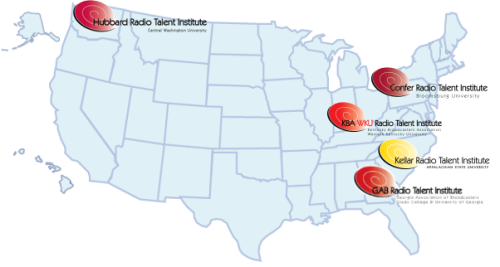
Working with Dan Vallie over these past five years has been an incredible experience. No one is more dedicated to “paying it forward” to the next generations than Dan. He has boundless energy and has grown the number of talent institutes in America to five.

inst_map_keller_kbawku_confer_gab_hubbard


Expect more radio industry leaders like Kerby Confer and Ginny Hubbard’s Hubbard Broadcasting along with state broadcast associations like the Kentucky Broadcasters Association and the Georgia Association of Broadcasters to sponsor even more locations in the years ahead.

Some of the industry professionals that presented at this year’s institute in Kentucky were Kristin Cantrell-owner/CEO of CapCities Communications and Seven Mountains Media, Mike Keith-the voice of the Tennessee Titans, Christine Hillard-President/COO of Forever Communications, Steve Newberry-President/CEO of Commonwealth Broadcasting, John Ivey-Senior Vice President of Programming iHeartMedia and Program Director of KIIS-FM in Los Angeles, Don Anthony-Publisher, Morning Mouth & Jockline, Creator & Host of Morning Show Boot Camp and Founder & President of Talent Masters, Gary Moore-Air Talent at KLOS in Los Angeles, Bryan Sargent, PM Drive Air Talent at Mix 92.9 in Nashville, John Shomby-Director of Programming at NASH-FM & Charlie Cook-VP/Country at Cumulus Media, Lynn Martin-President of LM Communications, Terry Forcht-Founder, Chairman & CEO of the Forcht Group of Kentucky (a company with 2,400 employees) along with the Presidents of both the Tennessee Association of Broadcasters, Whit Adamson and the Kentucky Broadcasters Association, Henry Lackey.

Thirty-six professional radio broadcasters, two of whom have been awarded the National Radio Award – the highest honor bestowed on a radio broadcaster – by the National Association of Broadcasters shared their passion and performance knowledge.

Every student that has gone through the program has told me it has been the best ten-days of their life and as the director these past four years; I know it has been for me as well.

If you know a student that wants to get into broadcasting, point them in the direction of the National Radio Talent System website  for more information, applications forms, scholarships and the dates/location of the institute nearest to them. Students who apply are thoroughly vetted for acceptance in the program.

Broadcasters looking for air talent, sales talent; digital and video talent should also go to the National Radio Talent System website for a complete listing of graduates that have gone through the program. There they will find each student’s bio and a sample of their on-air work.

I know Dan Vallie is already hard at work on the 2017 radio talent institutes. The radio industry is truly fortunate to have someone of Dan’s vision and action in establishing this innovative radio talent farm system for broadcasters.

46

Dan Vallie

4 Comments

Filed under Education, Mentor, Radio, Sales, Uncategorized

Your Idea Is Ugly

44Ever had someone say that to you? How did it make you feel?

Well, all ideas start out as ugly.

Ed Catmull, CEO of Pixar writes in his book Creativity Inc. that early in the creative process every movie Pixar has ever made sucked.  They all start out as “ugly babies” that are “awkward and unformed, vulnerable and incomplete.” And that’s OK, because the public never sees these “ugly Pixar babies.” Catmull says it’s the company’s job to protect these original, fragile ideas from being judged too quickly. They understand that great ideas aren’t born; they are created from ugly ones.

Ideas Are Born Ugly

The problem today is too many ugly ideas are released to the world while they are still ugly. No one has invested the time, love and attention to craft them into something great. Or, just as bad, ideas not ready for broadcast are put on-the-air piecemeal. Radio is famous for doing this sort of thing when they change music formats and start off with 10,000 songs in a row. You don’t get a second chance to make a first impression. So why put something on the air that is not going to be what it will be when it’s finished?

Practice, Practice, Practice

You don’t see a Broadway show open without there being a lot of practice first. You don’t see any type of performance art take to a stage without practice. “All of showbiz except for radio has rehearsals,” observes programming genius George Johns. Why is that?

When Did Radio Stop Rehearsals?

Ron Jacobs, the first Boss Radio PD in America at 93/KHJ writes in his book KHJ Inside Boss Radio that before the new KHJ launched, every air personality and board engineer spent two weeks practicing for the station’s debut. “Every word and every nuance was critiqued on the fly by Jacobs and (Bill) Drake,” said Boss Jock Gary Mack. “More up! More energy! Faster! I remember the distinct odor of flop sweat. But every day got better, and we made our mistakes off the air,” said Mack.

The entire original Boss Jock air staff was all seasoned radio professionals by the time they were hired to launch the new KHJ. But they all had to attend “Boss Jock Kindergarten” before they could go on the air. Boss Jock Tommy Vance put it this way, “I was to spend six hours a day doing it (practicing) until he (Jacobs) decided I would be ready for the real thing. He would be listening in his office. If the red phone rang, pick it up and listen to every word he said – very carefully. Take notes and follow his directions to the letter. Jacobs left me in my Boss Jock kindergarten.”

“Six hours every damn day I played the records. Read the commercials. Again and again, and yet again. The red phone never ceased ringing. Criticism was heaped upon me hour in, hour out. I began to picture Jacobs as the force behind the Spanish Inquisition. As the Marquis de Sade. Jack the Ripper. Eventually I was let out of the bag and given the six to nine pm shift,” said Vance.

That Used To Be Us

This was the way radio worked once upon a time. Nothing went on the air unrehearsed. Everything that went on the air was screened to insure it would meet the standards set by the station. “Ugly babies” were nurtured until they became great ideas that became great radio stations.

Great radio takes work. Great radio is exciting to listen to. Great radio gets results.

Let’s make radio great again.

9 Comments

Filed under Education, Mentor, Radio, Sales, Uncategorized

SiriusXM Radio is Now Free

43

What would you do if you woke up one morning and saw this as the headline in all the radio trades? Have you ever considered the possibility of this happening? Well lots of people woke recently to this headline “Angie’s List is now free: What this means for your business.”

Call it a subscription, a membership fee or a paywall, what happens when they are eliminated? In Angie’s List’s case, less than one percent of Americans were members at the $40/month fee that had been in place. Paying that fee let people see the reviews of other members that had experienced certain businesses or services they had used. Now everyone can see those reviews. Angie’s List had developed a reputation for its members writing rather substantial reviews as well as being a website that is strong, trusted and contains valuable content.

Why Did Angie’s List Tear Down Their Paywall?

Angie’s list is a publicly traded company. Their stock is down seventy-five percent from three years ago. Management is under pressure. Tearing down their paywall means increased page views. When page views go up, revenue goes up. See the strategy?

Could SiriusXM Follow Suit?

Satellite radio currently captures about ten percent of radio listening and mostly in vehicles. The new digital dashboard entertainment centers will be a gateway to Pandora, Spotify, Apple, YouTube and more. Having an XM button on my Honda Accord, I know that my access can be selectively turned on or off by SiriusXM. When they do one of their free listen promotions, they don’t turn on all the channels, just the ones they think will hook me to listen. So, I would imagine, they could create a group of channels that could be on all the time and carry a limited commercial inventory attractive to national advertisers. Like the most popular musical venues, such as adult contemporary. Even if they only turned on the top five music formats, it would mean drivers could listen to them wherever they drove across America, plus SiriusXM would have the ability to pop in promos for their other channels that remained behind a paywall. It’s almost too scary to consider the possibility.

Teens Love Streaming

Teens love streaming audio and their smartphones. According to the Music Business Association and their data partner LOOP, teens spent 51% of their listening time on a typical day streaming their music versus only 12% of their time with AM/FM radio. This is a media usage habit being formed in the next generation. It not only affects traditional AM/FM broadcasters but satellite radio as well. This is a problem that needs to be addressed.

NextRadio App

Thanks to Jeff Smulyan and Emmis, the NextRadio App is the way FM broadcasters can get their audio into those smartphones, without running up a user’s data plan. However, Sprint has already removed many audio streaming services from running up their data plans by letting their customers listen as much as they want at no extra charge. Since teens avoid paying any fees whenever possible, free is always an attraction.

Less Than 1% of World Pays For Streaming Audio

AM/FM radio has been built on free. That’s an advantage that too often gets taken for granted. According to Nielsen 61% of people find out about new music via their AM/FM/satellite radio.

Price is the number one reason more people don’t pay for streaming audio. Out of a worldwide population of over seven billion people, about forty-one million buy some form of audio streaming; 0.58% of the world’s population. That percentage turns out to be lower than the total number of people who have a Netflix subscription around the planet.

23,870 AM/FM Radio Signals On-The-Air

The FCC just published their latest numbers for broadcast stations as of June 30, 2016. We are approaching 24,000 signals for radio in America. 19,194 of those signals are FM and 4,676 are AM. Plus we have two satellite radio signals, Sirius & XM, which are now under a single owner.

Pay & Free

It doesn’t take a whole lot of imagination to see satellite radio one day deciding to have the best of both worlds. Offer premium pay channels to those willing to pay for them and at the same time create a free tier of channels that could be ad supported by national advertisers.

What history shows us are things that happen in other industries and services eventually make their way around to virtually all of them. It’s only a matter of time.

31 Comments

Filed under Education, Mentor, Radio, Sales, Uncategorized

What We Have Here, Is a Failure to Embrace Complexity

42The world we live in today is a complex place. The KISS operational style seems like it would be a good idea. (KISS = Keep It Simple Stupid) But maybe not.

Turns out in a complex world, being agile is more importance than being efficient. Being efficient kills innovation. Innovation today is the primary driver of building value and creating value is one of the basic reasons for any organization to exist.

Managing Complexity is a 21st Century Skill

People who can manage complexity will be the leaders of the future. Managing a radio station was complex due to the fact that radio has two customers, which want totally opposite things. One customer is the radio listener. This customer wants information and entertainment. This customer usually isn’t fond of commercials. The other customer is the radio advertiser. Anytime their ad isn’t dominating the airwaves and driving consumers into their store is a moment the radio station isn’t doing its job. To add to this complexity are the talented people needed to service both of these customers. Air personalities that attract listeners and sales folks that service advertisers.

Consolidation & Complexity

As the radio industry began consolidating after the Telcom Act of 1996, the traditional thinking of protecting margins was amplified. This resulted in reducing labor costs. RIFs became commonplace (RIF = Reduction In Force). For those that were left wages became stagnant, little money was invested in training and the number of people left in the workforce was reduced to a bare minimum.

The problem is, when you have low paid, poorly trained and overworked people, your operation lacks new and innovative ideas that can improve the business. When the only ideas that are introduced come from the tippy top, they rarely connect with the challenges seen at the front line.

Zeynep Ton writes in her book The Good Jobs Strategy about a discount retailer that took a different approach to their operation than most companies when the great recession of 2008 struck the world. Rather than cut wages or reduce staff, Ton says they asked their employees to contribute ideas. The result was that this company managed to reduce prices to their customers by ten percent while increasing their market share from 15% to 20% from 2008 to 2012.

Herb Kelleher writes in his book NUTS! about how Southwest Airlines created a culture where employees are treated as the company’s number one asset. Southwest does a number of things to benefit its employees, including such programs as profit-sharing and empowering employees to make decisions. This empowerment during the period when oil prices hit a high of $145 per barrel in 2008 saw the Southwest pilots taking the initiative to plot more efficient flying altitudes and work with ground crews to get in and out of the gates quicker to control the Southwest ticket prices and not lay off any people while maintaining a positive profit margin. These actions did not come from the corporate home office but from employees in the field.

What to Do When You Have Maximized Efficiency

Let’s face it; the ability for any radio operator today to squeeze out any more profit through efficiency is over. Radio consultant George Johns puts it this way: “Radio today is in the no business, it has no money, no time and no people.”

So what’s the answer? Collaboration.

The radio companies of the 21st Century will need to develop the ability to make collaboration a competitive advantage. The game has changed from what you own and control to what you can access. Access happens via platforms. Radio needs to create platforms that bring consumers and producers together, much like the Apple App store does globally, but locally for their service area.

Radio needs to find a way to attract listeners by causing them to be fearful of missing something if they’re not listening while directing them to local places via platforms they control that can fulfill their wants and needs on demand.

In other words, radio needs to “think different.”

13 Comments

Filed under Education, Mentor, Radio, Sales, Uncategorized