Category Archives: Sales

What’s in a Name?

WKU-SJBIf you are a high school senior and are considering a career in broadcasting or journalism, what term would you Google to find the best colleges or universities for this field of study? Probably you would type in “broadcasting” or “journalism.”

School of Media

What would you expect a “School of Media” to offer? Well, since “media” is the plural of “medium,” you might say it means “something for everyone in the area of communications.”

The problem is, in my honest opinion, when you try to be all things to all people, you are special to no one.

Journalism

If I wanted to be a journalist today, I would need to know how to write, shoot pictures & video, collect audio and produce all of it for every media platform. But the job would remain one of being a journalist.

Broadcasting

Likewise, to be a broadcaster today, I would need to also be able to write for the internet, as well as shoot video & still pictures, along with doing on-camera and audio recordings. But the job would remain one of being a broadcaster.

Media-ist

Here’s where things get sticky. There is no job that I know of that is called a “media-ist.”

A high school graduate trying to decide on what type of career they might like to pursue will speak in terms that are standard job descriptions. Broadcasting & Journalism are well-established careers. “Media-ist” is not.

Olympics

The first modern Olympics was held in Greece on April 6, 1896. Olympiads that came in first won the Gold Medal. The Silver Medal was for second place and the Bronze Medal was for third place.

Over the decades, the equipment and physical abilities to win a medal changed dramatically, but the Olympics have never changed the names of the medals that were awarded. Why? Because they’ve been well-established benchmarks of athletic achievement.

The Big Name Change at WKU

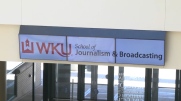
So, you’re probably wondering why I’m writing about all of this in today’s blog. Well, this week I learned that Western Kentucky University’s School of Journalism & Broadcasting, where I was a broadcast professor for 7-years is changing its name to “School of Media.”

WKU alumni around the country are not pleased.

The College Heights Herald reports that alumni are concerned about the lack of emphasis on journalism the new name would create.

“To me, it’s burying the part of the program that has brought the most national reputation to the university. It’s a program that presidents over the years have cited for its success. To me, it buries the part of the program that has been so important to Western.”

-Robert Adams, former director of student publications, former editor-in-chief in 1964 and a retired WKU professor of journalism

The building that the school’s newspaper occupies is named after Bob Adams. Bob went to school at Western and then worked at the university until his retirement. Bob was there when the program went from two classes offered in the English department to the School of Journalism & Broadcasting. He has had a front row seat to its evolution for over 50-years.

I think Bob Adams makes a very valid point when he says the new name is not what people are looking for when searching for a college.

RADIO

When Apple was working to develop its own online streaming audio service “Beats 1” they brainstormed for months on what to call it, and finally decided to call it “Radio.”

Pandora, like so many other audio offerings, also called its service “Pandora Radio.”

Radio is a term that has been used since the advent of broadcasting music and voice through the ether. It’s a term that is almost 100-years old in commercial audio broadcasting, beginning with the sign-on of KDKA in Pittsburgh in 1920.

Why would developers of modern forms of audio communication use the term “radio” to describe what they do? Because everyone knows what it means, even though it now has many more applications from its origins.

Board of Regents

WKU’s Board of Regents will vote on making the name change official at their next meeting on August 2nd.

When you build a name, a reputation, a brand if you will, changing it can be very risky. (Think New Coke and what a disaster that was for the Coca Cola company back in 1985.)

A brand name helps people to identify why you exist, how you plan to proceed and what people will gain from doing business with you, or in this case, attending your school. A brand helps you to differentiate yourself from others.

Communication is critical in marketing and having an established brand name is an integral element in communication to anyone in the market for your product or services.

Changing the name to “School of Media” to me is like throwing the baby out with the bath water and if it becomes a reality, the 2019-2020 academic year will become the beginning of building a new brand.

One thing that I learned in my 50-years of being in the advertising business is, it takes more energy to establish a brand new brand than promote an established one. After reading how economically challenged the university is these days, I’m skeptical the money is there to properly fund the change of name.



13 Comments

Filed under Education, Mentor, Radio, Sales

Radio Is the Load Bearing Wall of Audio Media

Rich TunkelRich Tunkel of Nielsen Audio delivered this message at the 71st Annual NJBA Conference and Gala in Atlantic City, New Jersey along with this slide (see below).Nielsen Audio Media Reach
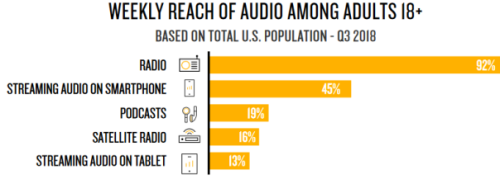
Tunkel pointed out that when it comes to total media usage in America today, the ten and a half hours of daily media use has remained unchanged year-over-year. However, Nielsen is seeing shifts in what and how media is being used during the day. The big increase is in the use of internet connected devices, with almost seven out of ten homes now having a device capable of streaming audio content.

RADIO is King of All Audio Media

92% of adults in America today listen to radio each week according to Nielsen’s Q3 2018 survey. That’s more than twice the reach of streaming audio on smartphones It’s almost five times the reach of podcasts, and virtually six times the reach of satellite radio.

Yes, there’s more competition for the ear than ever before, but broadcast radio is “the load bearing wall of audio media.”

I love that description!

A load bearing wall in a building is the one wall you can’t take down without having the entire structure collapse. And so, it is with reach via the medium of audio. If your advertising buy doesn’t include radio, you’re missing the masses with your message.

Nielsen’s New Research on the Impact of Radio on Light TV Viewers

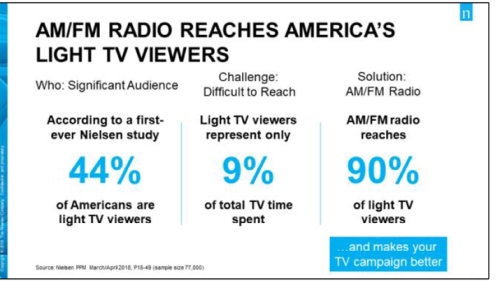
When it comes to reaching America’s light TV viewers, radio dominates. (see below)radio_reaches_light_TV_viewers

Light TV viewers are most of us in today’s world. We are commuting, busing our kids and grandkids to their activities, leading active lives ourselves and are now spending less time home in front of the tube.

Rich Tunkel showed a real-life demonstration of how taking an advertiser’s TV budget and diverting 50% of it to radio, the advertising campaign increased its reach by over a 100,000 people without increasing the dollars the advertiser spent. In this case it was a 45% lift in reach.

I’ve known Rich for years and have never seen him deliver more impactful data on the power of radio advertising.

‘Nielsen Media Impact’ brings together consumer media behavior information data Nielsen Media Impactacross TV, digital, and print media into one easy to use planning interface. It’s a product that should have everyone in radio sales salivating to get their hands on.
Radio #1 in Reach

Reach, for the advertiser, has never been more important. Radio’s 92% reach of adults in America is unchanged year-over-year and that’s a statistic worth shouting about, especially with huge losses in reach of television and newspapers.

Radio’s ability to reach the masses is why Proctor & Gamble has returned to radio as a major advertiser since the summer of 2017. Over the course of the year in 2018, P&G virtually tripled its radio advertising. 2019 could see P&G become radio’s biggest advertiser.

Why Radio

One of the panelist’s on Rich Tunkel’s NJBA panel was Stuart Burkhoff. Stu is the Senior Director of Media Strategy and Planning for Altice USA (4th largest cable provider in the US). He shared with the audience why radio is important to him using a clever acronym called RADIO, which stands for:

 Relevant

Authentic

Delivery

Impact

Original

Radio is relevant for all kinds of people, whether they want sports, news or entertainment. Radio has authenticity with listeners because of its radio personalities who are stars in their communities and have earned their love and trust. Radio delivers an advertiser’s message with impact, and radio is the original, it’s the audio medium that’s been around for almost a hundred years and still works. In fact, radio may be entering its finest hour.

Each of Tunkel’s panelists stressed the importance of the local radio personality to powerfully deliver their message and endorse the product. Radio personalities have never been more important to advertisers.

In today’s world, reach continues to be the most important factor when deciding which medium to use to get an advertising message out.

Radio is the undisputed reach & frequency leader.

It’s the…

Load Bearing Wall of Audio Media.

9 Comments

Filed under Education, Mentor, Radio, Sales

Convention Time in Atlantic City

NJBA 71st ConferenceI’m off again. This time I’m back to New Jersey for the 71st Annual New Jersey Broadcasters Association Conference & Gala to be held at the Tropicana Resort & Casino in Atlantic City.

This year’s conference theme is “The Majesty of Radio.”

The conference is expected to attract over 500 broadcasters and over 70 broadcast students from around the mid Atlantic region.


Harry Hurley

I’m especially excited that Harry Hurley will be honored as “Broadcaster of the Year.”


Tom Taylor

Tom Taylor

And that Tom Taylor will be honored with a “Lifetime Achievement Award.”

NJBA President/CEO Paul Rotella puts on a conference as impactful as the NAB annual shows in Las Vegas.

I’m proud to be a lifetime member of the New Jersey Broadcasters Association.


Next week, I hope to share with you, some of the highlights.

2 Comments

Filed under Education, Mentor, Radio, Sales

Is Radio Being Disrupted or Simply Lacking the Human Factor

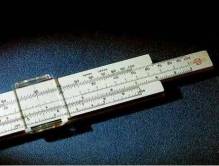
slide ruleI was a physics major in college. The slide rule was a necessary piece of equipment when I was going to school. Hewlett-Packard then came along and replaced it with a line of scientific pocket calculators.
When I began my radio sales career, I adopted the DayTimer written system for keeping track of my schedule and appointments. Then Palm came along and I replaced it with their Palm Pilot Digital Assistant.

When I became a general manager, I wore a pager. That soon was replaced by a Motorola flip phone.

Then Research In Motion (RIM) came along with the Blackberry and suddenly my flip phone and Palm were replaced by a single device.

I loved the size of my Blackberry Pearl smartphone and it wasn’t until I realized that the iPhone4S was the same size as the Pearl and more versatile that I switched to my first iPhone. I also saw Blackberry phones were clinging to life and wanted to adopt an ecosystem that would be around as long as I would be.

Today, I’m fully immersed in the Apple ecosystem and could not imagine what would ever get me to leave it.

Disruptive Innovation

I thought for years that these disruptive changes were due to mechanical innovation. But was that the core reason? Could it be something else?

In 1943, Thomas J. Watson of IBM is credited with saying, “I think there is a world market for maybe five computers.” And Ken Olson of Digital Equipment Company (DEC) while acknowledging the growth of people using personal computers, said he couldn’t understand why.

The Human Factor

How important is the Human Factor in the future of a company, or even an industry?

October 6, 1997: Michael Dell makes an infamously bleak appraisal of Apple’s fortunes. Asked what he would do with Apple, the founder of Dell Inc. says he would “shut it down and give the money back to the shareholders.”

Where do you think Apple would be today if Michael Dell had been put in charge? What did Steve Jobs, who had just returned to lead Apple say to Dell’s assessment? “We’re coming after you buddy!”

Jobs gave Apple a vision, backed it up with management fortitude and people with the technical skills to make the Apple vision a reality. It was those human factors that carried Apple to become one of the most valuable companies in the world.

Apple’s market value (at the time I was writing this article) was $948M and Dell’s was $27M.

Radio’s Human Factor

Which brings me around to the industry I loved for over 50-years, RADIO. The aspect of radio that first captured my attention was the radio personality. These were the people who built the relationship with the listener.

Then there was the dedicated radio programmer who created the stationality, the promotions and like a good sports coach, kept the radio stars playing together as a winning team.

While it appears, too much of the radio industry is focused these days on mechanical things, blaming it for disruptive innovation, maybe the real culprit is radio’s loss of the “Human Factor.”

“Absolutely everything begins with imagination.”

-George Johns

Howard Stern was never really replaced when he left OTA radio for Satellite Radio. Howard Stern, like him or not, has a vivid imagination. For his listeners, he creates a style of radio that they have to hear.

My favorite part of the Stern movie, “Private Parts,” is dialog between the audience researcher and Stern’s WNBC program director Kevin Metheny, aka Pig Vomit.

RESEARCHER: The average radio listener listens for eighteen minutes. The average Howard Stern fan listens for – are you ready for this? – an hour and twenty minutes.

PIG VOMIT: How can that be?

RESEARCHER: Answer most commonly given? “I want to see what he’ll say next.”

PIG VOMIT: Okay, fine. But what about the people who hate Stern?

RESEARCHER: Good point. The average Stern hater listens for two and a half hours a day.

PIG VOMIT: But… if they hate him, why do they listen?

RESEARCHER: Most common answer? “I want to see what he’ll say next.”

Does anyone want to listen to your radio station to hear what comes next?

“Radio only needs to move @ the speed of life.”

-George Johns


24 Comments

Filed under Education, Mentor, Radio, Sales

The Voice Interface

Siri Voice InterfaceThis week I sat in on the Fred Jacobs webinar “Mobile Strategy for Radio: What we learned from Techsurvey 2019” and the #1 take away was “voice (not just smart speakers) is the next important user interface at home and in the car.”
I wasn’t surprised.

The Lowest Common Denominator

Here’s where we can expect technology to be headed to accommodate the next billion users that will be joining the digital media party. The next internet addicted people are those living in the developing world, the ones that will be shaping the internet over the next five years or less. They will be impacting ALL internet and mobile users.

What are the characteristics of these folks?

  • Literacy: lower levels of literacy will require different interfaces.
  • Language: a greater variety of language needs will inspire new content formats.
  • Technology: varying devices & connections will impact content format.
  • Motivations: new wants, needs, and desires will inspire new products & services.

Most of today’s internet is text based, but as populations of lower literacy levels sign-on, that will change this. Voice commands, image search and video content will become more dominant in the near future.

Economies of Scale

Technology companies are already working to have all devices and interfaces operate the same way on a global basis. Everything will be designed to cater to the lowest common denominator because it makes fiscal sense. It’s already happening on Google, Facebook, Apple and Amazon.

Why Apple won’t ever put FM receivers into their iPhones.

FM, HD Radio, DAB and DAB+ are all different standards for broadcasting OTA radio signals and do not meet the test of a global standard.

The Next Internet Revolution is Coming

Look for the next billion to drive the next internet revolution in the areas of:

  • Search: SEO will look very different for voice-centric search.
  • Social: People’s social media interactions will be more video than text.
  • Shopping: E-commerce orders will depend on spoken word.
  • Addressing: URLs & Hyperlinks will move from text to image.

Convergence

Something I researched back when I was an undergrad, convergence, is coming to fruition in my lifetime. Every form of media will be delivered over the same pathway and received on the same type of device plus it will be on-demand and on our schedule, not the creator’s schedule.

Fred’s latest webinar shows that were deep into this transition.

If you’d like to take a Deep Dive into this subject, watch this Hootsuite webinar from 2018 HERE

6 Comments

Filed under Education, Mentor, Radio, Sales

Great Expectations

OR FMI read with great interest the five part series by Matt Bailey on “The Alexa Effect.” In the 5th and final installment Matt shared what he called the “radio weapon Spotify will never have.” What is it? The radio personality. He wrote:

 

  • “A radio personality can tell you the backstory of a breakthrough artist that makes you want to hear her work.”

  • “A radio personality can point out that crazy line in the second verse to stay tuned to hear.”

  • “A radio personality can engage you to smash or trash a song on the station’s social media.”

  • “A radio personality can give you the chance to be among the very first to hear a new song by a star artist.”

“A radio personality can add context that will make listeners excited to hear a song that otherwise would simply be weird and unfamiliar. It’s a deeply personal and emotionally engaging weapon no algorithm can match. When we stifle their voices and their role in introducing new music simply to avoid potential tune-out, we might win a few tenths of a point in the PPM battle, but we will lose the new music war to Spotify.”

Consolidation & Voice Tracking

I don’t disagree with Matt, but I lived through the ramifications of the Telcom Act of 1996 and the consolidation of radio stations, along with the rollout of voice tracking.

Clear Channel called it “Premium Choice,” and we were told it would replace our local personalities with big market talent.

I watched in market after market as radio personalities, who were like members of the radio listener’s family, were sent to the unemployment lines. Relationships that took years, even decades to establish, wiped out in an instant.

Early Media Expectations

I grew up at a time when the family television set received a signal from a couple of antennas on the roof. We had two channels, which meant we received two television networks, CBS and NBC. If you wanted to change the channel, you had to get off the couch and change it. There was no remote control.

Our radios had both the AM and FM bands, but I remember wondering why. I often scanned the entire FM band to hear nothing at all with only the AM band picking up radio signals.

My early media expectations were two TV channels and AM radio stations. The radio provided a lot more variety, plus I had a radio in my room and our family had a single TV located in the living room. I controlled my radio, my parents controlled the family TV.

Media Expectations Change

In time, I would come to expect television to be in color, to be connected to a cable and have a remote control to easily change the multitude of channels I could now receive, from the comfort of my couch.

Radio would expand to the FM band and a whole new type and style of radio was born. The one thing that connected AM and FM radio was the radio personality. Every station had them and the decision to listen to one station over another was because of the radio personality.

In fact, I wrote an article on the power of the radio personality back in 2015 entitled “We Never Called It Content.”

I wrote this article after reading about the latest round of “forced retirements” in the radio industry.

And if you thought this type of downsizing was only occurring in large radio metros, the movie “Corporate FM” told the story of how in the 80s, ninety percent of mass media in America was owned and controlled by about fifty different companies, but after the Telcom Act of 1996 it was down to just six corporations.

New Media Brings New Expectations

Let’s fast-forward to today. I cut the cord on cable TV two years ago and all of my television viewing is streamed. Netflix, Amazon Prime, Sling TV and YouTube provide me with more hours of television entertainment and information than I could ever have time to watch, and I’m retired.

Amazon Echo provides me with all of my audio entertainment and I do mix it up between stations via TuneIn and the pureplays like Pandora and Amazon Music.

I also read a lot and subscribe to several online newsletters that all link to the original source of the material.

Which leads me to this conclusion, my calendar age did not cement my media habits. They’ve been fluid all of my life.

My 21st Century Great Expectations

  • I expect NPR to open up my world to things I should be aware of, that I might not have been. I expect them to also provide me with more depth to the stories in the news. I expect them to have all of this posted online for almost immediate access. They don’t disappoint.
  • I expect my television viewing to be On Demand and commercial free.
  • I expect my music listening to match my mood and be there by simply asking Alexa to play my favorite channels when I want to hear them.
  • Finally, I expect I’m not alone in these “21st Century Great Expectations.”

Rewound Radio DJ Hall of Fame

On Saturdays, I enjoy asking Alexa to play Rewound Radio so I can hear another fabulous radio personality featured in the weekly “DJ Hall of Fame.” The other weekend they featured WOR-FM out of New York City and the air personality was Johnny Donovan. OR-FM air checks are all in stereo and the music mix has plenty of variety. It was a time when Music Radio 77 – WABC dominated the world’s airwaves on the AM band. But the one thing I notice in these weekly trips down memory lane is how integral the radio personality was in the total program. They were a constant companion. They really were radio’s “secret weapon” to attracting faithful listeners.

The question I ponder often is, was this period of radio history akin to the vaudeville period of theater. It filled the right hole at the right time but won’t ever be coming back again.

I welcome your thoughts.

17 Comments

Filed under Education, Mentor, Radio, Sales

Mind the Small Stuff

Booking.comSue & I are taking a vacation and this blog will be on hiatus for the next couple of Sundays while we’re traveling. That got me to thinking about travel, and hotels, and the like.

What’s Most Important in Booking a Hotel Room?

Expedia Group put this question to consumers, and the answers, in this order were, price, guest ratings and brand value.

For years I was a valued member of a big hotel chain. I had worked myself up to Gold status. I never even looked at another hotel chain. I had their App on my phone and many times, my phone served as my room key in addition to keeping all of my stays organized. Until…

How to End a Customer Relationship

Then Sue & I were using some of her time share points up in Virginia Beach and I wanted to treat her to an elegant dinner on the beach. I found the highest rated restaurant in Virginia Beach and reserved an ocean window table for our meal one evening.

When we had made our dinner selection, we noticed a dessert that sounded intriguing so, we ordered it at the same time we ordered our meal, as it would take 20-minutes to prepare.

Is Everything OK?

Frequently throughout the evening different people in this elegant restaurant stopped by our table to see if everything was OK or if we needed anything. I wasn’t surprised, as this restaurant was operated by the same big hotel chain that I was a gold member with. I expected nothing less.

Till it Wasn’t

When we had finished our meal, our waiter came over to see if we wanted dessert and we said, we ordered dessert at the time we ordered our meal. “Oh, that’s right,” he exclaimed. “I forgot. I’ll be right back.”

And then we sat there for what would seem like a lot longer than 20-minutes, and for what would turn out to be a dessert that was terrible.

By now, the restaurant was filling up with people who were attending an office Christmas party and we just wanted to leave. We settled our check for several hundred dollars and proceeded to get our checked coats and our parking ticket stamped.

And Then It Just Fell Apart

As we pulled up to the garage parking attendant to hand in our parking ticket and parking voucher, the attendant informed us another $10 was due. I said that the restaurant had picked up our parking and that the voucher was supposed to cover our parking fee.

The attendant said the voucher was only good for two hours of parking and it was now twenty minutes past three hours’ time.

I asked if he could call over to the restaurant and get a waiver, but the attendant said he didn’t have a phone to call them. So, I put my car in park and turned off the engine and proceeded to get on my cellphone to call the restaurant.

First, I was told the manager was not on duty tonight and there was no one there who could help me. Then, I was told that on-duty manager was busy and could not come to the phone. When I called back the third time, I reached a person who said they were the manager but they could not come across the street to help me with my parking ticket. The fact that we had just spent several hundred dollars in their restaurant, that I was a gold member or the reason it took us over three hours to dine was their fault, seemed to make no difference.

By this time, parking attendant’s manager came into the booth to hear what my problem was and why I was parked with the engine off in the only exit lane at the parking garage.

This Virginia Beach city employee reached into his own wallet and paid the parking fee and opened the gate. I told him, I did not want him to do that, but he said he wanted to be sure we had a good experience in Virginia Beach and wished us a Merry Christmas.

100% Satisfaction Guarantee

First, I have a lot of praise for the City of Virginia Beach and whatever training they provide to their employees in building good relationships with tourists. However, that big hotel chain never ever provided any real satisfaction in my later email encounter with the problem I had at their restaurant property and with their employees. They really missed the mark in delivering on their “100% Satisfaction Guarantee.”

The result was in 2018, I booked more hotel nights in one calendar year than I’ve ever done in my life. Sue & I did a cross-country road trip that covered over 11,000-miles in eight-weeks. And this year, we’re doing even more traveling, because sightseeing has become our new passion in life.

However, that big hotel chain didn’t see a single dollar, all because of a $10 parking ticket. Everything for our cross-country trip was booked through Booking.com and this site has opened our eyes to better prices, real-time guest ratings and introduced us to new brands.

It’s ALL Small Stuff

I learned early in my radio career that no matter what, keep the listener and the advertisers happy. Even if you know that they are wrong, treat them as if they are right.

Why?

It all comes down to the lifetime value of a customer. One transaction is minuscule when you think of the big picture and return business.

In radio, keeping the listener happy will show up in what they tell their friends, post on social media and what they do when they participate in a ratings survey.

Keeping the advertiser happy means enjoying repeat business for years to come. Good radio advertising is about building a relationship that delivers a win-win outcome. Plus, it’s harder to develop a new radio advertiser than to keep a current one.

My purpose in sharing this story was not to cast aspersions on a major hotel company, but to take from this situation a learning moment to make you successful in your media career.

14 Comments

Filed under Education, Mentor, Radio, Sales

Fin d’une Époque (End of an Era)

Notre Dame on fireOn this Easter Sunday morning, I’m still processing the pictures etched into my brain of Notre Dame Cathedral, in flames. This 856 year old church, is the most visited structure in Paris, eclipsing the Eiffel Tower.

Like many people around the world, I sat in front of a video screen watching the efforts of 400 French firefighters trying to contain the inferno.

In a world that seems out-of-control, the raging flames destroying this icon seemed like a metaphor for our lives.

“Built in the Gothic era, destroyed in the social-media era.”

-Rachel Donadio, The Atlantic

This quote by Rachel resonated with me because it made me think of some similarities between the radio industry and the history of this great cathedral.

A Short History of Notre Dame

Notre Dame was a masterpiece of French Gothic architecture. It was built in the middle ages with the structure largely completed in 100-years. It would take another 100-years to see the cathedral take on more of the shape we had most recently known.

Over the centuries, Notre Dame would be badly damaged, first by the Huguenots, and then again during the French Revolution. Napoleon would order the church’s restoration and hold his coronation there as Emperor in 1804.

By the 19th Century, Notre Dame was again half-ruined inside and badly battered. It was even used as a warehouse, and there was talk of just tearing it down. A novel by Victor Hugo titled “Notre-Dame de Paris” (published in English as “The Hunchback of Notre-Dame”) would bring the cathedral new attention, and in 1844 King Louis Phillippe ordered the church’s restoration.

Notre Dame would survive two world wars, but during the 20th Century the cathedral would be battling air pollution and a lack of interest in funding the maintenance of this aging structure.

In late 2010s, it was estimated that $113 million in renovations was needed to preserve the cathedral. Only late last year had work begun on the spire.

A Short History of Radio

Radio was a communications masterpiece. The spoken word and musical art forms of radio broadcasting would spread knowledge, culture and entertainment like the world had never seen.

Commercial radio born in 1920, would quickly become the must have device in every American household. It was the “Golden Age of Radio.”

Radio was first challenged by the birth of television in the 1950s and the migration of its talent and programs over to TV. Like Notre Dame, there were many who thought radio had come to an end and that television had replaced it. But radio broadcasters with vision, renovated radio broadcasting from its block programming and national broadcast networks into a variety of formats that would be curated by the radio personality, known as the Disc Jockey or more simply the “DJ.”

Radio was now in what would be called its second “Golden Age.”

Like the great cathedral of Notre Dame, radio would be challenged by its own particular battles over its life. Things like the 8-track tape, cassette tape, compact discs and the ubiquitous CB radios of the 1970s, all these challenged radio in a place it had long enjoyed dominance, the automobile.

As Rachel Donadio so prophetically observed, radio and Notre Dame were seeing their own type of destruction in a social-media 21st Century world.

Money for Disasters but Not for Maintenance

One of the things we have learned from the fire at Notre Dame is that while it was near impossible to find donors to fund needed maintenance and restoration of the cathedral, the disaster of April 15th has secured hundreds of millions of dollars for the full restoration of this great iconic church.

I’m sure that Notre Dame will be restored to a glory even greater than before the fire.

Radio & Cooking Frogs

On the other hand, radio isn’t going up in flames. There will be no live, continuous television coverage of radio’s destruction. Most people don’t even realize there’s a problem. 9 in 10 people still are counted as weekly radio listeners.

Radio’s situation is more akin to the way you cook a frog. Throw a frog into a pot of boiling water and it will immediately jump out, but put the frog in a pot of water and slowly raise the temperature and the frog will be cooked without realizing it.

Radio’s Restoration

My heart sinks as I read how important the radio personality is to the future success of the radio industry, and at the same time read about how decades long radio people are being eliminated with job reductions on almost a weekly basis.

If all radio stopped tomorrow, people would spring into action to save it, just like they are doing for Notre Dame.

Radio, like all local, independent media, plays a vital role in our lives, our democracy, and our future.

Can you feel the water getting hotter?

13 Comments

Filed under Education, Mentor, Radio, Sales

Seniors & Technology Adoption

old hands using high techTraditional habit patterns used to be that as people grew older, they grew into the same habit patterns as their parents. Things like reading a newspaper, watching the evening television news, becoming involved in their children’s schools, the community and listening to radio. But new research says, those patterns have been upended by what else but, the internet.

Connected Seniors

Perhaps the fastest growing segment of new users on Facebook are seniors. Over half of the people aged 50 to 64 use Facebook, but people over 65 have almost doubled their use of Facebook with now over 32% of them on the social media juggernaut.

It may be why younger generations are moving to other social media platforms, to get away from us oldsters.

You Can’t Turn Back the Hands of Time

Pew Research says seniors who become engaged in social media say they would find it very hard to give up. I’m one of those seniors and yes, I would find it hard to give up. How about you?

Social Media, according to the Consumer Technology Association (CTA) helps seniors to remain independent. Adoption of new technology by seniors goes against the conventional wisdom that only the young want the latest new thing, but these shiny, new, high tech devices attract kids of all ages; even us “big kids.”

Us Baby Boomers were the biggest market segment for all of my life. Only recently have Millennials outnumbered us, but expect Boomers to change the concept of retirement and technology use. Broadcasters take note: Once people discover new technology, it’s unlikely they will return to the days of old.

Social Media Addiction

I don’t remember anyone ever sending out alerts about radio or television addiction, but with social media the world is seeing addictive properties akin to alcohol, tobacco or drugs.

Consider that the average adult now spends nearly 2 hours a day on social media. We can access it on our home computers or away from home on our smartphones. Of the 3.1 billion social media users globally, it’s estimated that almost 7% have a social media addiction problem. This form of addiction is defined as “a proposed diagnosis related to overuse of social media, similar to Internet addiction and other forms of digital media overuse.”

71% of us now sleep with or next to our mobile phone. I know I do and it also is my alarm clock. Worse are those people who check their social media before going to sleep or wake-up during the night to check their social media, estimated to be about 45% of us, making getting a good night’s sleep challenging.

Maybe even more alarming is the fact that 90% of drivers say they use their smartphones while driving. Half to check social media while behind the wheel. (I DO NOT) And according to the Center for Disease Control & Prevention, 9-people are killed and more than a thousand are injured daily by people using their smartphones while driving.

I can’t think of any reports of people suffering the same amount of death or injury listening to their car radio. Can you?

Apple even now tells me how much my weekly screen time is on each of my Apple devices in an effort to make me more aware of how much time I spend with them. I can even set-up my devices to force me to limit my time with them. That’s how different these platforms are from the traditional media of the 20th Century.

If you’d like to do a deep dive into “The Future of Well-Being in a Tech Saturated World,” here’s a link to a long report on all of this by the Pew Research Center.  Click HERE

Reader Question

I share all of this for radio broadcasters, the first social media, to consider the challenge of today’s new communications media. It’s addictive. Broadcast not so much.

A reader wrote to me asking this question: ‘Was radio the dominant media because it truly was a companion or because it was pre-internet, consumers had a lot fewer choices for basic full service information and music?’

Reaching Our Time Limit

Back in the early 90s I was living in New Jersey and AT&T did a presentation for my Rotary Club on a future of infinite capacity in communications. Just to be clear, these scientists defined “infinite” as having more transmission capacity through their wires than they could conceive of what to transmit over them.

I remember asking the question if the future was going to make available so much media product, how would a viewer or listener know what to consume? The answer they gave me was, ‘the media would pay the listener or viewer to listen or watch their program.’

It feels to me like we’re approaching that point in time now.

What are your thoughts?


9 Comments

Filed under Education, Mentor, Radio, Sales

You’re Not Talking to Me

DAKRSkVkQwumvq7Zd9aTUwI sat on a webinar the other day and when it ended the first thought that crossed my mind was, they’re not talking to me. Their demographics in the study capped at 55-years of age. Really? No one over 55 matters to radio or to radio advertisers?

65+ People

Then I read this World Economic Forum article that was headlined, “For the first time ever there are more people over 65 than under 5.” Think about that for a moment. Economists point out there’s widespread consequences for productivity, inflation and global growth by this demographics shift, to which I would add, consider the impact on ad supported media.

65+ People are Renters

While millennials are buying homes – if they aren’t weighed down with student loan debt and minimum wage level jobs – seniors are becoming renters. People 65+ are empty nesters and find they simply don’t need a McMansion and all the work/expense that goes into living in one. I know that’s certainly been the case for me when I sold my home in 2003. I have been a renter since. Renting is much more economical than owning.

Market Watch reports that Americans will find they will need to spend nearly $9,400 in “hidden costs” to own and care for a median-priced home, based on the latest analysis from Zillow.

Millennials Abandon Brick & Mortar Stores

Tethered to their smartphones and comfortable with buying online, those millennials aren’t necessarily the best customers for their advertisers that radio might have thought.

Millennials are the largest generation in American history, and their shopping habits are worlds away from those of their parents. Thanks to the rapid pace of digitalization and new shopper-friendly tools, like browser extensions and voice assistants, retailers must be ready to embrace significant change.

PR Newswire, March 19, 2019

Only 18-months ago, research indicated that millennials were still going to brick & mortar stores, but that’s changed dramatically, and in a very short time. You can download the full report HERE.

$164.55 a Day

Jessica Dickler reporting on CNBC writes, “Between housing, food, cellphone bills and other expenses, Americans shell out $164.55, on average, in a given day.” Punching that number into my calculator, I quickly saw that’s over $60,000/year, but averages are funny things and you can be sure ‘your mileage may vary.’

Putting that number aside for a moment, we find that the bulk of that money is spent on housing. That fabled ‘American Dream’ can be a boat anchor on the pocketbook.

While seniors are moving from being home owners to renters, you might be surprised to learn how similar the senior household expenses are to the average household according to the Bureau of Labor Statistics.

Item

Food
Furniture
Major Appliances
Small Appliances
Household Textiles
Apparel
Transportation
New Vehicles
Old Vehicles
Health Care
Drugs
Entertainment
Insurance
Other ExpensesTotal
Senior Household

$13,432
​$401
​$196
​$88
​$113
​$1,640
​$7,781
​$2,052
​$1,611
​$2,416
​$467
​$2,060
​$4,055
​$4,093$40,817
Avg.  Household

$14,403
$460
​$200
​$81
​$108
​$1,870
$8,354​
​$2,055
​$1,904
​$1,758
​$266
​$2,142
​$4,505
​$3,956​$42,631

Source: Advertising Age’s American Demographics, based on Bureau of Labor Statistics’ Consumer Expenditure survey. (1) Includes social security contribution (excludes health insurance, which is classified as health-care expense).

Not all that different, is it.

And far from that other analysis of the average adult spending over $60,000 a year. So why aren’t more radio companies focusing at least one of their radio signals on seniors?

Retirement Epiphany

All my life, the focus was on planning for and saving for retirement. I’d like to say I did everything right, but the reality is far from that.

The great wealth destroyers are divorce, moving and changing jobs.

In my personal life, I’ve gone through two divorces. As the radio industry was dramatically changed by the Telcom Act of 1996, I would spend a decade moving around the country about every two years. That communications act also found me changing companies with just about every move too.

The final chapter of my working life, as a university professor of broadcasting, gave me seven years of stability and an opportunity to save as much as I could for retirement.

Now I’m retired. The goal is no longer to save for retirement, but to spend in retirement. My wife and I are in good health and taking zero medications, which affords us the opportunity to spend on our new found passion of traveling. Spoiling the grandkids, eating out, and redecorating are also high on our list of things to do. I’m sure we’re not alone.

The irony is, the radio media seem to ignore us. And they do so at their peril.

We’re retired, not dead.

27 Comments

Filed under Education, Mentor, Radio, Sales