
 In his play Romeo & Juliet, William Shakespeare wrote “A rose by any other name would smell as sweet.” Gertrude Stein in her 1913 poem Sacred Emily wrote “Rose is a rose is a rose is a rose.” It is one of her most famous quotes and has been interpreted to mean “things are what they are.” In other words, the fact that simply using the name of a thing invokes the imagery and emotions associated with it.
Podcasting
Which brings me to a follow-up on last week’s blog post “Podcasts & Homework.” This past week, Jacobs Media Strategies in their blog asked the question “Is the Name ‘Podcasting’ Hurting the Medium’s Growth?” Jacobs’ resident podcaster, Seth Resler, said there are basically two types of people: “Those who think the word ‘podcasting’ is preventing the medium from reaching its full potential, and those who think that idea is silly.”
Where Did the Name Podcasting Come From?
The term “podcasting” came from a portmanteau of the words broadcasting and the Apple device known as the iPod. The iPod was the first device to make using MP3 files simple and easy to download, organize and use. Its ubiquitous use made it the name people used for all such devices, much like Kleenex came to represent all tissues and Xerox came to represent all paper copies.
Is Podcasting the Correct Name For This Type of Content Delivery?
The debate is whether a name that is so tied to a device, the iPod, and to a single company, Apple, a good thing? Well, if you own an iPhone, you now have an App for podcasts. Likewise if you own an Android phone you also have many Apps for listening to podcasts. So the Alphabet Company isn’t fighting the use of the term on their platform. The name podcast is also the way the big internet content aggregators like Pandora, TuneIn, Stitcher and others refer to this type of programming.
As I read through the various comments from the podcasting gurus Seth had put the question to, one concept seem to rise above the others and that was podcasts were really “On Demand Audio.” They are the TiVo of audio. (TiVo is the digital video recorder that allows people record and watch video content on demand.)
What’s the dictionary say?
David Plotz, CEO of Atlas Obscura and co-host of Slate’s Political Gabfest said in Seth’s blog post
“Podcasting is (a) dreadful name. No one uses iPods anymore. Podcasts are not broadcast. The only part of the word that’s accurate is the ‘ing.’”
So that got me to thinking about what Merriam Webster had to say about this. Turns out that the word “casting” is defined as “1: something (as excrement of an earthworm) that is cast out or off. “ Depending on what your experience has been with either broadcasting or podcasting, you might think old Webster got it right with the excrement part. So “casting” is appropriate in the name “podcasting.” But how about the “pod” part? If you remember, the theme that was heard over and over being said by the gurus in Seth’s blog was that podcasts were really “On Demand Audio.” So, if the “pod” were to stand for “Programs On Demand,” then the word Podcasting is absolutely the perfect word for this type of programming.
Radiotelephone License
And since most people who listen to podcasts, do so on their mobile phone, that signal is arriving through the ether, just like radio and television signals do, to your mobile device.
In fact, my very first FCC 3rd Class Operators License was called a Radiotelephone license because when this whole wireless communications world was born, no one knew what it would become. Initially some, like Nathan B. Stubblefield, felt it would be one-to-one wireless telephony. Others, like David Sarnoff and Edwin Howard Armstrong, would see it as a one-to-many form of communication that would become broadcast radio.
 On the surface these two things appear to have nothing in common. Right? But stay with me as I explain. I follow Duke Professor, celebrated author and student of human nature Dan Ariely. Dan writes a regular
  Before I get into the meat of this week’s post, I first need to walk you through a bit of a preamble. Also, this week’s post is a continuance of last week’s post about Millennials vs. Baby Boomers, so if you missed it, you might want to read that first
 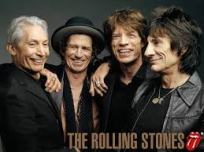 The radio world was all a buzz this week when it was announced that Millennials now out-number Baby Boomers.
 The Broadcast Education Association (BEA) meets every year in Las Vegas concurrently with the National Association of Broadcasters (NAB) annual convention. In forty-plus years of being a professional broadcaster I never attended an NAB convention. In six years of being a university professor, I’ve attended six conventions. I know, like that’s insane, right?
 Lady Macbeth says this line in Act 5, scene 1. The line has made for ironic jokes and marketing schemes. The Bard’s lady, where the blood spot becomes dyed into her conscience and where the king and queen persist in imagining that physical actions can root out psychological demons, Shakespeare’s Macbeth is an exposition of how wrong they are.
 You remember HAL? The HAL 9000 is a fictional character from Arthur C. Clarke’s Space Odyssey series. HAL’s name stood for Heuristically programmed Algorithmic computer. HAL was the future of artificial intelligence. HAL always spoke in a soft, calm voice and in a conversational manner. HAL was born in the 90s according to Clarke.
 I remember the first radio station I worked for doing an experiment with one of their best clients, a men’s clothing store, to prove the power of radio advertising. Back in the 60s the dominant advertising vehicle in my hometown was the newspaper. This clothing store used both radio and newspaper, but felt it was the paper that drove their sales.
 I’ve been reading all the opinions about the FCC’s proposal to change the rules regarding America’s 77 Class A (formerly known as clear channel) licensed radio stations. Supposedly, all being done to “revitalize” the AM broadcast band. Like giving AM radio stations an FM translator does nothing to revitalize AM radio listening, neither – in my honest opinion – does this bright idea either.
 DickTaylorBlog