
 Today’s blog was written by the love of my life & pandemic partner, Sue Towley
When Dick asked me to walk with him in today’s Easter blog, my first thought was in the conundrum of “why.”
Dick’s knowledge of radio comes through joy – a fulfillment in his life and his mastery in a talent with astute proficiency of his craft. (I could be very biased, but this I believe.)
My second thought was, our thoughts run in a totally different orbit. (My degrees and competence embrace Religion, Family Life, Guided Imagery, Grief Counseling, and the Art of listening.)
My third thought was – Ahh, I’m not listening — he said “Easter” not “Radio” – so this is my contribution to a most beautiful day.
Recently, I hear us all singing the children’s song “This is a Song that Doesn’t End” (Sherri Lewis), with the movie “Groundhog Day” playing in the background, and wondering if Bill Murray will be the delivery person for the mail or Amazon.
We, as a global unit, have run into a very steep wall of mountains. We all are questioning, we can’t believe that ‘this’ is happening, we’re not sure what to do, we, have lost the essence of who we are now. But even more confusing, who were we?
Wherever your steadfastness is at the moment, we are all asking for help in the impossible. With wanting to socialize on a Friday night, attend a graduation, a wedding, just a simple visit with children, grandchildren, a neighbor. But as the weeks, and now months pass by, and some not being able to provide food or shelter for their family, by the loss of a job, or the visitation of a relative in a nursing facility, only able to see them through a window – or – a death of a loved one, not being able to be by their side during their final breaths, these and more scenarios are prompting a deep crisis emerging in our faith.
During these powerful and uncertain times, we have been given a beautiful gift, a spiritual gift, through new found wisdom, and a trusted knowledge.
As Dick and I have taken walks, FaceTime called with family, gone for drives and changed our whole agenda, I’ve seen in these weeks, a teaching tool, something new that each one of us has learned, something that we have not learned from a college education, books, or even a human teacher. We have seen a beauty in the everyday around us. Walkers, joggers, families actually playing with children and children loving the outside, people sitting and reading, people making life saving masks for health care workers; these people, all of us, are becoming centered.
We are now seeing our quiet side, a side that had been forgotten for so many years. But because of “our” new quiet joy, we can also see a “quiet” in our animals, animals that are truly a part of the family, and our children, that now feel the love, so long denied.
We the people, even the smallest of children have lost ourselves in becoming a follower, judging ourselves with how many friends we have, becoming a bully to be accepted, how much money and status we have acquired and even how we look at ourselves in the mirror. We were making all of this our “GOD” defying the 1st Commandment.
Here is a question, Why, when someone, anyone, talks about God and Christ or spiritual beliefs the tone of a conversation becomes uncomfortable, but not the same when in that same conversation the talk is about themselves, their money, their beers. Why is that? God is our heavenly Father, our confident, our cheerleader, He gives us true HOPE, He gives us true LOVE. And what do we give back when things don’t go our way, we give our anger, our animosity, our attitude. How often do we thank Him? How often do we give our love as He so freely gives of His? How often do we pray as a family?
We can emerge from anything—negative or positive with HOPE that comes through our FAITH.
The stress which was becoming our legacy has released us and brought us back to our heritage, and our inheritance, bringing us back to the truth of where we should be.
Now, ask yourself this question, why is this pandemic happening?
The answer is: We have been given this time to change direction and to make a heart comfort decision for who we really are.
“Happiness can be found, even in the darkest of times,
if one only remembers to turn on the light.”
J.K. Rowling
As adults, so much of what is real and true can be learned through the eyes of children, getting inside their little minds of “truthful and honest.” Even Jesus said, “Let the little children come unto me, and forbid them not, for the kingdom of Heaven belongs to such as these.” Matthew 19:14
We all need to come home, we all need to listen to the silence, for in this silence is the heart of God. God cannot be found in noise and RESTLESSNESS. God is the friend of our Silence.
Look at the images of tulips blooming in the fields across the globe, in Amsterdam, in Texas, in Oregon, in Washington State, in Norfolk, in Michigan, all over the world. A Tulip is significant of a “Perfect Love. A promise of a new beginning. “Hope Springs Eternal through the Human Soul.. article by Saul Levine M.D.
Easter is one of the chief tenets of the Christian faith. The resurrection established Jesus as the Son of God. For those who trust, death is swallowed up in victory, a new birth into a living hope.
“Wonder can be found wherever we are open to searching for it.”
Joshua Foer
Jesus said “Peace I leave with you; my peace I give you. I do not give to you as the world gives, DO not let your hearts be troubled and do not be afraid.” John 14:27
Why Easter? Because these Holy Days have been given to us all as a Gift. And it is up to us to find, choose and delight in this Gift and this day.
This day, this Easter, more than any other Easter or Passover celebrated in our lifetime, keep the softness that you have discovered, and when our new normal blooms, welcome that new you.
Amen

 We are living in a surreal time. The birds are singing, the trees and flowers are blooming and yet, life is anything but what we used to call normal.
 “These are the times that try men’s souls,” wrote Thomas Paine on December 23, 1776. What Paine was writing about in his essay “The Crisis” was about how Americans were being tested in their ability to stand up for their country and their newly won freedom.
 Switching from a ten-year run as an air personality and operations manager, America was headed towards a brief recession, when I began in radio sales in 1979.
 Bill Thomas, a media and branding idea expert and broadcast & radio veteran (@BillThomas), shared a link on Twitter to an Ad Week
  it’s been illuminating learning about our city and the way it operates. The other evening, we had a session with the city’s Emergency Management and E-911 departments.
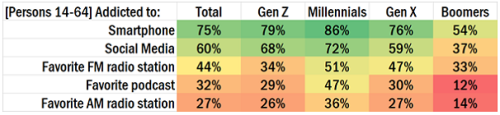


 I’ve been thinking about these two forms of audio for some time now. With each new article published about streaming, we see how more and more people are listening to music in this way. The smart speaker has certainly contributed to the growth of music listening via streams, and the smart speaker growth is exploding.
 I sat in on Radio World’s presentation about “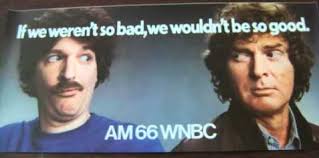
 I was reading an article in Medium about “
 Christopher Comstock, aka “Marshmello,” signed with the Palms Casino Resort in Las Vegas taking up residency at their Kaos Dayclub and Nightclub.
 with them, touching their hands. In fact, the host said, when Brucie showed up at NBC4 to do the
  From my earliest days, I knew what I wanted to do in life. Drive a car, fly a plane and be a disc jockey.
 radio station with local traffic reports during beach season. When I took over the job, everything was already in place for flying lessons and I took advantage of the arrangement and learned to fly.
 Whenever people would ask me what I wanted to do next with my life, my answer was always the same, teach. Yes, I wanted to teach at a college or university the very profession that I had spent my entire working life doing, radio.
 Castle of the South
 I had not been behind the mic on a radio station in 35-years. I had a 10-minute lesson in how to run the control board from Joe and then was off on my own to do the next
  DickTaylorBlog