Tag Archives: 650AM WSM

Best of the Blog 2024

2024 marked my 10th year of writing this blog, and while I reduced the number of articles I would write this year to focus more on faith, family and friends, here are the Top 5 Most Read articles from the past year.

To date, 508 articles have been published over the decade since the blog began, with over 314,215 views from folks around the world; maybe you missed them or perhaps you’d like to read them again.

Most Read Article of 2024

In 2016, Winchester, Virginia’s WINC AM/FM celebrated its 75th anniversary; eight years later this historic radio station and its 37-year morning man, Barry Lee, would be “Gone in a WINK.

As the radio industry continues to eliminate radio personalities that have become a part of the fabric of the communities they broadcast to, this story about the end of one local radio station resonated with readers.

Second Most Read Article of 20214

How important is it to have AM radio in cars, if the majority of the people on the roads don’t listen to any AM radio stations, with the subject of “Use It or Lose It.”

While I became attracted to a career in broadcasting due to AM radio and even had the opportunity to be an air personality on “The Air Castle of the South, 650AM-WSM” the reality in the 21st Century is that AM radio is the past and digital is the future.

Third Most Read Article of 2024

In the 1970s, listening to FM radio stations was pretty much equal to that of AM radio stations. However, FM radio gradually surpassed AM in popularity throughout the late 1970s, with the shift largely attributed to the introduction of FM stereo broadcasting and the FCC’s “non-duplication rule” that encouraged FM stations to offer unique programming compared to their AM counterparts.

The article “Are We Helping or Hurting by Giving AM Radio a Piggyback Ride on the Power of FM Radio” did a deep-dive into the subject of why AM radio stations can’t compete for ears with FM radio stations.  

Fourth Most Read Article of 2024

Radio station operators – commercial, public and religious – don’t play by the same rules. Readers were surprised to learn that the largest radio broadcaster deals with fewer regulations in “What If Every Radio Station in America Could Operate Like EMF?

Fifth Most Read Article of 2024

It became quite clear as I reviewed the list of articles written in 2024 and what most readers both read and shared (over 13,000 times), that AM radio stories dominated the list.

While the National Association of Broadcasters (NAB) tried to get Congress to pass the “AM Radio in Every Vehicle Act” – and failed to do so – the number of AM radio stations in America (and indeed around the world) continued to sign-off. That was the subject of “AM Radio in Retreat.”

Why I Blog

I blog for broadcasters, educators and students, to provide media mentorship and to pay-it-forward to the broadcasting industry that I have been a part of for over 56-years. I’m grateful for the more than 233,000-people from all over the world who have visited this blog (https://DickTaylorBlog.com) and have read articles that have caught their interest.

Also, every article I’ve written is archived on my blog site and easily accessible.

As I begin my 11th year of blogging, I plan to continue writing new articles when I feel I can add a different perspective to how our media world is changing and evolving; but just not on a weekly schedule.

If you’re a subscriber to my blog – IT’S FREE – you will automatically receive new articles as they are published.

8 Comments

Filed under Education, Mentor, Radio, Sales

Are we helping or hurting by giving AM radio a piggyback ride on the power of FM radio?

In 1984, when I was hired as a general manager in Atlantic City, New Jersey, Pierre Bouvard was my first sales representative from the Arbitron Company. I’ve known Pierre for forty years and have great respect for him. But his latest research presentation “Nielsen: AM/FM Radio Expands Its Ratings Lead Over TV And Smashing AM/FM Radio’s Drive Time Myth” https://www.westwoodone.com/blog/2024/03/04/nielsen-am-fm-radio-expands-its-ratings-lead-over-tv-and-smashing-am-fm-radios-drive-time-myth/ does something that really troubles me. It combines AM listening with FM listening, as if they contributed equally to radio’s total listening pie. They don’t.

I first wrote about this uneasiness in an article six years ago titled “AM/FM or just FM?” I felt it was worth re-sharing what I wrote as this blog has now broken through the 300,000 views level. I think you will find what I wrote is even more pertinent in the 21st Century.

 AM/FM or just FM?

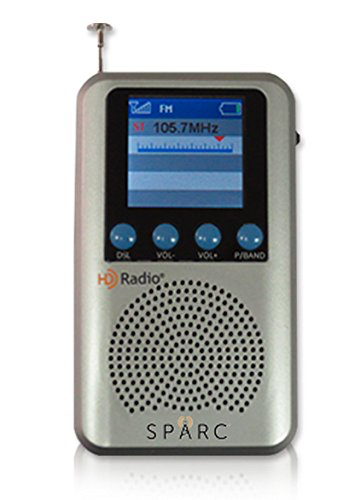
SPARC HD RADIO with FM, but no AM

There’s something that’s been troubling me for some time. It’s the radio industry’s habit of reporting radio listening results by calling it “AM/FM” versus what it really is, virtually all FM radio listening.

Nieman Lab

Who could not be buoyed by this headline from Nieman Lab: “AM/FM radio holds strong for American listeners.” ( http://www.niemanlab.org/2018/07/am-fm-radio-holds-strong-for-american-listeners/ )

But is it true?

When I read the ratings reports from both PPM and diary markets, I see an FM world.

Don’t get me wrong, I grew up on AM radio and recognize that almost every market has a heritage AM radio station that still garners a big audience. I’m not blind to the wonderful ratings of 1010 WINS in New York City for example.

But there are only 26 all-news terrestrial radio stations left in America according to Nieman. This popular format is missing from the majority of America’s radio markets.

WTOP

WTOP was built on AM radio. It moved its entire operation over to the FM band and grew its audience, revenues and lowered its listener demographic. People who never heard this radio station on its AM dial position were suddenly newly minted fans of their all news format.

The FCC Saves AM Radio

The FCC’s mission to save AM radio is to give these radio stations an FM dial position using a translator. What are we really saving? The AM band or a particular format that a radio operator created on the AM band and now, to survive, needs to move it, like WTOP, to the FM side of the dial.

WIP

From my blogging, I get lots of feedback about a variety of things concerning broadcasting. One reader wrote to me about his father, a sports fan, who turned on WIP-FM to hear the latest chatter. WIP-FM was broadcasting a game of no interest to his father, so his son said to him, why don’t you turn on WIP AM610. Sadly, this person wrote the audio was unlistenable. He wrote: “You’d think the FCC would mandate that AM have standards for audio quality in receivers.”

WSM

When I was living in Bowling Green, Kentucky, I couldn’t receive 650AM WSM in my office, even though my office looked south and my antenna was able to enjoy a full wall of windows. The noise floor both inside my university office as well as around town while driving in my car made the station unlistenable. WSM was once listened to all the way to Louisville in northern Kentucky. Instead, I downloaded WSM’s app and could enjoy the radio station in crystal clear stereo. (I see WSM has stopped subscribing to Nashville Nielsen Audio ratings.)

BBC

The British Broadcasting Corporation (BBC) did a review of the range of services it offered on the AM band (called medium wave across the pond) and it included a financial review of all its services too. They concluded the ROI (return on investment) in AM was not there and announced they would be turning off some 13-AM radio stations in January 2018 according to Radio Business Reports.

WHVO

There’s a great radio operator in Cadiz, Kentucky by the name of Beth Mann. WHVO is her AM radio station at 1480, but if you go on her website, you won’t find any mention of this station being on the AM radio dial. It’s promoted as WHVO 96.5 & 100.9 FM. ( http://www.whvoradio.com/ )

Bottom Line

It’s time to face the fact that AM radio needs to be re-deployed for a new service. Current radio station owners should be given a viable FM dial position that replaces their AM service area, and doesn’t require multiple translators to attempt to accomplish this task. (Note: WHVO needs two translators to deliver the signal of its AM 1480.)

It’s time to allow those same dedicated radio broadcasters to sell off their expensive AM tower sites and turn off their AM stations that consume electrical power with no real ROI.

Ecclesiastes 3

“To everything there is a season, and a time to every purpose under heaven…”

AM radio’s time has come and gone as the mass communication delivery system it was from the 1920s to the 1970s, much as radio replaced vaudeville.

To put things in perspective, at a time in America’s radio history when the number of FM signals equaled the number of AM signals on the air, 75% of all radio listening was to FM. So, you can only imagine what it’s like today for AM radio listening.

That’s why I believe we do no service in promoting radio as “AM/FM” and not being honest about where virtually all of the radio listening is really taking place.

Sadly, AM radio is to broadcasting as coal is to power generation. ( https://dicktaylorblog.com/2017/08/20/coal-aint-coming-back-neither-is-am-radio/ ) It was the perfect solution in its day.


11 Comments

Filed under Education, Mentor, Radio, Sales

Use It or Lose It

How important is it to have AM radio in cars if the majority of the people don’t listen to any AM radio stations?

I loved AM radio and my five decades plus career started on AM radio back in the 60s, but if I’m being honest, I can’t remember the last time I listened to any AM radio station, even though both of my older cars have decent AM radios in them – and I’m a “radio guy.”

Can we get real about AM radio’s problems? Mandating AM radio in all vehicles won’t cause more people to listen this radio service.

650AM – WSM

When I worked at Western Kentucky University in Bowling Green, Kentucky, the only way I could listen to 650AM – WSM broadcasting from Nashville, Tennessee was via their stream. My office had a huge picture window that looked south towards the WSM tower site, but the interference from the fluorescent lights and the steel structure of the building made AM reception impossible.

Inviting radio professionals into my Capstone Class to talk about radio, one of those professionals was the program director of WSM who told my students that more people listened to his radio station via the WSM App & stream, than did via their AM 50,000-watt FCC licensed clear channel frequency on the AM radio dial in Nashville.

Monthly Radio Ratings

Every month, when the radio trades publish radio ratings, you’re lucky to find a single AM radio station listed; in market after market. Often you find no AM radio stations listed at all, and on rare occasions you might find two.

If you go deep into the weeds, you might find an all religious station or foreign language AM radio station with a small listener base.

WIIN – AM1450

Back in the early 80s, WIIN-AM1450 in Atlantic City had a news/talk format with a local news team, sports director and even a plane in the sky doing traffic reports during the busy summer tourist season. Its sister FM radio station was 50,000-watt WFPG that featured a beautiful music format. WFPG was rated #1 by Arbitron and WIIN never showed up in the ratings.

WFPG, on the FM band, was fully automated and made all the money. WIIN-AM was fully staffed and lost a great deal of money. The owners of WIIN once said it would be more cost effective to mail the station’s few listeners a news sheet than broadcast the news to them.

AM Radio or AM Programming

Every radio format, once only associated with AM radio – like news or sports programming –today can now be heard on an FM signal.

18-years ago WTOP-AM 1500 moved its excellent news format to FM and yet, do you recall anyone being up in arms that Washington, DC area residents had just been “unserved” with important news and information, because this format moved from the AM band to FM? Quite the opposite, many FM only listeners discovered WTOP for the very first time and became avid listeners.

Revenue wise, WTOP-FM has been the nation’s top billing radio station and has won all the major radio awards year after year. In fact, our nation’s capital is dominated by FM signals. The first AM radio station doesn’t show up until you get to #24 and it only managed a 0.4 audience rating – it also is connected to an FM translator where I’m guessing, the audience is listening.

The reason AM radio formats have moved to the FM radio band is that most people today only listen to FM radio.

I rob banks, because that’s where the money is.

-Willie Sutton, bank robber

Corollary:

We broadcast emergency information on FM, because that’s where the listeners are.

-Dick Taylor

The AM Exceptions

The Big One, 700AM-WLW in Cincinnati is just one of the notable exceptions to the problem with AM radio listening. It operates on what the FRC (Federal Radio Commission, which predated the FCC or Federal Communications Commission) called a clear channel frequency. It was in November 1928, under provisions of the FRC’s General Order 40, that 700kHz was one of 40 frequencies designated as “clear channels”, allowing WLW to operate exclusively on this frequency in both the United States and Canada.

Then in early 1933, WLW would begin building the largest broadcasting transmitter in the world with 500,000-watts of AM broadcast power, at a cost in today’s dollars of $11.3 million. It would sign-on its new half-million watt transmitter on May 2, 1934 with President Franklin D. Roosevelt pressing a golden telegraph key to ceremonially launch the new signal. WLW truly became “The Nation’s Station.”

Saving AM Radio

It seems to me that if AM radio is deemed such a critical service for the nation in times of emergency, maybe it’s time to re-think the entire AM radio band and once again establish a network of high powered AM radio stations that cover the entire continental United States, and are manned 24-hours a day, 7-days a week, providing all Americans with this type of radio service. There could even be a special circuit in all radios that would automatically switch the radio to these emergency channels when warranted; much as cellphones so effectively alert their owners of an impending emergency situation.

Likewise, current local AM stations should be allowed to sunset their AM signals and continue serving their communities via their FM signals (translators), just as they are currently doing, often with much better coverage than their original AM license permits.

Saving AM Radio via FM Translators

Giving AM radio stations an FM translator signal in order to save its AM signal – would be like trying to save Ford by giving everyone a Chevy. It was a ludicrous of an idea that the FCC never fully thought out before implementing.

The FCC was also derelict in its duties by not protecting the AM band from all kinds of noise interference, for example the kind generated by the electronic ballast in fluorescent lighting and by not standardizing AM stereo along with not setting audio quality standards for AM broadcasting.

The “AM Radio in Every Vehicle Act” currently before Congress says nothing about mandating a certain quality standard for AM radio in vehicles, leaving open the possibility that vehicle manufacturers will install the cheapest and lowest quality AM receivers, if such a law is passed?

Longtime agricultural broadcaster, Max Armstrong, loves AM radio, but admits that broadcasters are part of the blame for AM radio’s decline. Some examples are:

  • Sold the land that was needed for strong AM signals, and reduced power
  • Changed the format of their AM station, once they obtained an FM translator
  • Re-allocated resources for areas other than for AM broadcasting
  • Poorly maintained their AM transmitting facilities, in favor of their FM

“When the epitaph is written for AM radio, I think it will be

that AM radio killed itself. I think broadcasters have

neglected it to some extent.”

-Max Armstrong

19 Comments

Filed under Education, Mentor, Radio, Sales

What Makes Your Radio Station Unique?

In teaching broadcast sales at the university, one of the things I taught my students was to help their advertising clients to identify their unique selling position in the marketplace. In other words, what was the one thing that made them different than everyone else in their specialty.

Something For Everyone

The answer you most often hear when you ask an advertiser what makes them unique is, “well, we have something for everyone.”

Something for everyone is nothing special for any one. To the radio listener, it’s like blah, blah, blah. It’s meaningless. Why? Because every other advertiser selling everything from soup to nuts says the same thing and the listener has become trained to tune out these advertising clichés.

Plumbers

Plumbers are probably not something you ever give much thought about, UNTIL you need one. That’s true for lots of repair services when you think about it.

What’s the one thing you hate about calling a home repair company? Knowing that you will be kept waiting and waiting and waiting for their arrival at the time when they said they would.

“It takes many good deeds to build a good reputation and only one bad one to lose it.”

Benjamin Franklin

Benjamin Franklin Plumbing could have said a lot of things about the services they provide, but instead they decided what would make them unique in the ears of future customers would be being punctual.

Benjamin Franklin

The Punctual Plumber

They built their whole franchise around the realization that people hate to be kept waiting. In fact, they promise when you don’t have time to wait around, you can count on them to be punctual plumbing professionals, but if they are ever late, they will pay YOU for every minute they’ve made you wait. Doesn’t that resonate with you? It does for me.

Give Your Radio Station a Diagnostic

When is the last time you pulled out the Advertiser Diagnostic sheet and used it on your own radio station(s)?

What makes your station unique? Not the music, that’s for sure. The songs you play were carefully crafted by composers, producers and talented artists, who have record labels that have worked relentlessly to get those songs played on as many radio stations, pure play streamers, movies, TV shows and any other place that uses music to entertain people.

Is your brand name unique? Well, if you branded your radio station KISS you are one of 78 radio stations in America that call themselves that, along with radio stations in Ireland, United Kingdom, France, Italy, Poland, Ukraine, Romania, Moldova, Iceland, Greece, Spain, Sweden, Germany, Brazil, Canada and Australia. It’s no different than calling your radio station HOT, Jack, Bob, Alice or some other cute name that dozens upon dozens of other radio stations are doing, especially in a world where voice commands increasingly are the way people are accessing audio on their smart devices.

But if your brand is 650AM -WSM, you are the only one in the world that has that brand. You have set yourself apart from the estimated 44,000 radio stations currently on-the-air in the world. WSM is the Home of the Grand Ole Opry. I don’t expect this historic radio station to ever call itself by any other name, but by the one it owns exclusively: WSM.

Streaming Radio

In a world where you can receive virtually any radio station on an App like TuneIn, being unique and one-of-a-kind has never been more important.

If a person tries asking Alexa, Siri or Google to play the KISS radio station, I have no idea which one she will play. However, I don’t have to wonder for a second, if I ask my smart speaker to play WSM, I will hear any other radio station, but the one from Music City USA, in Nashville, Tennessee.

What Makes Your Radio Station Unique?

If you stake your radio station’s future on things created by others, like music, talk shows, network news, syndicated programs, jingles – things every other radio station in America has access to – then your radio station is NOT unique.

When other providers are able give your listeners more of what they want while eliminating the things they dislike, your days as a broadcaster are numbered.

Another way to think about this is, if you were to eliminate all of your commercials – the thing radio listeners say they object to most – would you be able to sustain your radio station by listener support, like public radio and Christian radio does? Or the way that Netflix or SiriusXM does?

If a listener hasn’t heard of your radio station,

wouldn’t choose your station or recommend it,

your brand is dead.

<Picture: The Fuse Vert is a premium vertical vinyl audio system which can also play FM radio>

5 Comments

Filed under Education, Mentor, Radio, Sales

Why I Stream ALL My Radio Listening

Twelve year ago, radio broadcast engineer Tom Ray, penned these words: “Unless we give Joe Consumer a reason to go out and purchase an HD Radio for his car – until he can obtain it easily and at a reasonable cost, and a device that works – I fear HD Radio is going to go the way of FM quad and AM stereo, relegated to the scrap pile of history.”

Tom Ray wrote his article for Radio World when he was the vice president/corporate director of engineering for Buckley Broadcasting/WOR Radio in New York City. He was a strong and vocal supporter of HD Radio and his WOR was one of the first AMs on the air with an HD Radio signal. So, any broadcaster that read Tom’s article, “HD Radio Shouldn’t Be This Hard,” should have taken it as a wake-up call about steps the radio industry needed to take to stay relevant in their listeners’ lives.

Buying a New Car in 2010

Tom is a loyal Ford customer, so when his Explorer went to the automobile graveyard with 230,000-miles on it, Tom wanted to get a new Ford Escape, equipped with HD Radio. The only problem was, Ford wasn’t putting HD Radios into their Escapes, instead, they were pushing Satellite Radio. (Tom noted that his wife listened only to Satellite Radio in her car, saying “in her opinion there is nothing worth listening to in New York’s Hudson Valley, 50 miles north of New York City.)

This should have been yet another radio industry wake-up call about its future.

I encourage you to click on the link and read what Tom Ray wrote a dozen years ago about how difficult it was to put an HD Radio into a new car which, at that time, didn’t offer OEM HD Radios and how he, as a broadcast engineer, was totally frustrated trying to install an aftermarket one.

Streaming Radio at Home

Since Christmas 2017, when my wife gave me my first Amazon Echo smart speaker, our Echo family has quickly grown to four of these devices. There is nowhere you can be in our home and not ask Alexa for something.

Since 2017, all of our in-home radio listening is via streaming.

While we also occasionally streamed radio in the car, on all of our road trips from 2018-2021, SiriusXM always seemed to be offering a 3-month free listening trial that I can honestly say we enjoyed the listening to. But, I’ve never been a subscriber, because other than road trips I spend very little time in the car.

Streaming Radio in the Car

In October, while enjoying my latest free 3-month trial for SiriusXM radio, I decided it was time to bring my in-house streaming radio habit into both of our cars. We own a 2006 Subaru Forester and a 2009 Honda Accord.

The Subaru doesn’t have an AUX input, the Honda does.

Streaming in the Subaru was accomplished with a Blue Tooth receiver that will broadcast on any FM frequency (88.1 works best). In the Honda, this same device’s output was plugged into an AUX receptacle.

The result is, as soon as either my wife or myself enters one of our cars, the Nulaxy KM18 immediately pairs with our iPhones. I installed the AINOPE Car Phone Holder Mount to hold our phones, and keep them easily assessible to control whatever we would like to listen to.

Total cost for each car: $33.43. Time to install, virtually nil. I just plugged the Nulaxy KM18 into a power port and it was operational. The AINIOPE holder easily clamps to an air vent on the dashboard and holds any smartphone.

Unlike the nightmare that Tom Ray experienced back in 2010 trying to put HD Radio into his car, this installation by me, a non-engineer, was a piece of cake.

A Call to Action

I recently sat in on a Radio World webinar called “A Call to Action, radio’s existential battle for the dash.” Paul McLane, Managing Director of Content/Editor in Chief of Radio World at Radio World/Future U.S., hosted the webinar and did an excellent job. However, one particular piece of information shared during the presentation that I thought was crucial was, how Mercedes Benz was equipping their vehicles’ radio screens with the following pre-sets: SiriusXM, FM, AM and TuneIn Radio.

TuneIn Radio is the App I use for most of my radio listening, but why was it chosen by Mercedes Benz? Turns out the answer is, “TuneIn’s radio stations can be accessed worldwide in 197 countries on more than 200 different platforms and devices.” TuneIn says it “provides the displaced radio listener a connection to home with local, national, and international stations anywhere they go and on any device.”

In other words, why would any audio consumer need DAB, DAB+, Digital Radio Mondiale, HD Radio, AM or FM when they can receive any radio station in crystal clear audio via streaming?

With the exception of the proprietary content offered by SiriusXM, everything else is available via streaming at no charge.

Cellular Plan

Now it goes without saying, that streaming consumes data. Each cellphone service provider offers different plans and different price rates. My wife and I are on Verizon’s unlimited phone/text/data plan. We have no landline phone in our home and our iPhones are our lifeline to being connected with each other, our family, our community and the world.

I’ve found streaming radio in our cars provides us with audio quality that is pristine. There’s no buffering or dropout, and it’s been a more reliable signal than AM, FM or SiriusXM radio, especially when traveling through tunnels.

Streaming Apps

I thought you might be interested in knowing what streaming Apps I have on my iPhone, here’s the current list:

  • TuneIn Pro
  • Audacy
  • Pandora
  • Spotify
  • Amazon Music
  • NPR ONE
  • YouTube
  • Simple Radio
  • StreamS
  • Apple Podcasts
  • AccuRadio
  • 650AM WSM
  • Stitcher

Why I Prefer Streaming My Radio

We live far enough away from Washington, D.C. that radio signals for WTOP or WETA experience lots of noise and dropout, depending atmospherics, sometimes making them totally unlistenable. However, their streams are always crystal clear.

This fall Sue and I escaped to Cape Cod for a week and when I get on the peninsula, I love turning on WFCC – Cape Cod’s Classical station – 107.5 FM. Now with streaming radio, I can dial up WFCC on my TuneIn radio App and listen when we’re back home in Virginia.

Full disclosure, I am the midday DJ on WMEX-FM in Rochester, NH. But even if I weren’t on the station, WMEX-FM would be my #1 pre-set for streaming. Gary James, the station’s morning man and program director, puts together a music mix that I find absolutely fabulous. It’s the music of my life.

Which brings me to another important point, radio today is global. No longer is your radio station competing just with other local stations, but radio that is streaming from anywhere on planet Earth.

Streaming also makes it possible for ON DEMAND spoken word radio, also known as Podcasts, to be easily available in the car.

Simington on Streaming

FCC commissioner Nathan Simington recently addressed Ohio broadcasters saying, “content delivery power had shifted away from broadcasters – stations and networks – and toward ‘online platforms,’ something he thinks the FCC needs to recognize in its quadrennial review of media ownership regs.”

He warned that:

  1. “Online media platforms are growing rapidly and threaten dominance over traditional media platforms; and
  2. Broadcast advertising revenue has flatlined, having been siphoned off from higher margin online platforms.”

The Future is Streaming

88% of the world’s population now uses mobile broadband as its main source of internet access, and nearly 90% of homes in the United States now have internet streaming. 2021 saw an estimated 22% ad industry growth rate, which Magna Global said was “the highest growth rate ever recorded” by this agency, beating a 12.5% growth rate recorded in the year 2000. The caveat however is, digital dominated traditional advertising raking in 64.4% of the growth in ad spending.

RAIN reports “The U.S. recorded music industry will exceed a 48-year revenue record set in 1999 (based on current estimates),” all coming from revenues paid by streaming music services.

The Harvard Business Review recently published “4 Principles to Guide Your Digital Transformation,” by Greg Satell, Andrea Kates and Todd McLees. In it, the authors wrote, “digital transformation is not just about technology. We’re desperately in need of a shift in focus. Leaders must inspire and empower their entire organization to boldly reimagine their work environment, customer needs, product offering, and even the purpose of the enterprise.”

Tom Ray was the proverbial “canary in the coal shaft” back in 2010, with few paying attention. Sadly, based on the early news coming out of the 2022 CES in Las Vegas, nothing has changed.

We’re living in a communications revolution,

bringing about changes that will be both

permanent and irreversible.

Revolutions never maintain or preserve the status quo.

43 Comments

Filed under Education, Mentor, Radio, Sales

Why Make Radio Advertising Harder to Buy?

The headline in Radio Ink proclaimed, “No More Free Ride For Non-Subscribers.” It was a news story about how Nielsen Audio was no longer going to provide buyers with any data pertaining to non-subscribing radio stations through their ratings service.  It will be as if these radio stations vanished from their markets.

Ratings Gathering Costs Money

I can understand the perspective of both Nielsen Audio subscribers, as well as Nielsen itself as an audience ratings provider. If there weren’t subscribers there would be no money to pay Nielsen to gather this data in the first place. Subscribers don’t wish to see those radio companies not paying and then enjoying the benefits of data gathered. Likewise, Nielsen wants to be able to garner the biggest bang for their ratings gathering dollar by trying to force all radio operators to be a participant in the process.

So, on the surface, why would anyone object to this change coming in January 2021?

Winners & Losers

The reality is that even if everyone pays to have access to the data, only the very top performing radio stations will enjoy the benefits. Stations placing out of the top five or ten– often any station not rated number one or number two – will be paying for data that in the end only helps the market’s “big dawgs.” For many stations, it’s paying big money for nothing.

Nielsen vs. Eastlan

In those markets where both Nielsen and Eastlan measure radio listening, we see all the stations in the Eastlan report’s cover page giving a total radio listening perspective for that  market, but with a Nielsen Audio report, we only see subscribing stations. In 2014, Nielsen ceased reporting non-subscribing radio stations from the “topline” numbers it provides to the radio trade publications and newspapers.

For anyone who grew up in radio, having radio stations that are impactful in their market not be listed seems sacrosanct; like not seeing 650AM WSM appear in the ratings for Nashville. When this became Nielsen’s policy, I stopped looking at their ratings reports, since I knew they were incomplete and I’m sure I’m not alone.

Eastlan Ratings, on the other hand, includes every radio station in their topline numbers in every market they do audience measurement. However, if anyone wanted to drill down the data to a more granular level, then they would need to subscribe to the report, and that seems fair.

Of these two radio ratings companies, I find Eastlan’s philosophy to be more valuable to the radio industry and the selling of radio advertising.

Subscriber First

Nielsen is calling their new policy “Subscriber First.” But will the result be a positive for Nielsen subscribers if it makes radio advertising more difficult for people to buy?

Radio ratings are, after all, only estimates. Estimates of what people ages 6 and older are listening to on their radios, smartphones and other audio devices.

Unlike my subscription to Netflix, Amazon Prime, PBS, or The Washington Post, where I am actually counted as paying for a service that I receive, radio ratings are attempting to estimate listening based on a small sample of people, and then extrapolate those results as the habits of an entire marketplace population.

Radio listening estimates  are not perfect, and as a radio manager, some of my radio stations have taken a “ratings bullet” and seen a precipitous drop in reported listening, even when nothing in the market changed to cause such a drop. History taught me that patience was in order and that things would return in the next ratings period; which they always did.

Radio Station Owners vs. Radio Advertising Buyers

It’s radio’s buyers who really want to know who’s listening to what, and when, and for how long etc. And it appears that radio buyers, as a group, are none too pleased with this change in ratings reporting. I’m reading quotes like “as a long-time client, not being consulted before a final decision was made is quite troubling,” and “ we feel like we will no longer be receiving the data we originally contracted for – a full view of radio listening in measured markets.”

Radio station owners, on the other hand, feel that non-subscribing radio stations should not have anyone know the true impact their radio station is having in a measured market. Those stations should be made to “pay to play,” or simply disappear.

Customer Friendly?

It seems like the timing of this change could not come at a worse time for the radio industry. With so much of its business impacted by COVID-19, making radio’s reach more transparent instead of opaque should be the order of the day.

I’ve read that Nielsen estimates two thirds of its agency subscribers won’t have access to any data regarding non-subscribing radio stations. Might these agencies just also cease being subscribers to radio ratings? Is this really the direction we want things to head in?

I think not.

Nielsen’s change, from my vantage point, will potentially reduce the level of confidence buyers will have about buying radio advertising. It’s a path of erosion that could negatively impact the entire radio industry.

The Better Advertising Mousetrap

Ralph Waldo Emerson is said to have coined the phrase: “Build a better mousetrap, and the world will beat a path to your door.” When it comes to advertising, social media has built the better mousetrap, and you and I are helping them to improve it every day.

I wrote a blog article on social media’s ability to manipulate our attention, wants and desires for the benefit of their advertisers. It should give any radio broadcaster pause. You can read that article HERE

The reality is, today the internet is a more efficient way to sell our attention to advertisers.

When radio makes buying the medium more difficult, buyers have other choices, and once they invest more heavily in them, they may never return.

“There are only two industries that call their customers ‘users’:

illegal drugs and software.”

-Edward Tufte

14 Comments

Filed under Uncategorized

We Are the Choices We Make

WSM(15)From my earliest days, I knew what I wanted to do in life. Drive a car, fly a plane and be a disc jockey.

I know, they don’t seem like big hairy audacious life goals, but to an eight year old, they were.

Disc Jockey

You might be surprised to learn that the goal of becoming a professional disc jockey on an AM radio station came first. I actually had to have my mom drive me to the radio station and pick me up after my shift and I’m sure it was a kick for both of my parents to hear their youngest son on the radio.

My mother was a radio listener. My father never was.

Driver’s License

By the time I got my driver’s license and was graduating from high school, my radio work had earned me enough money to buy my first car and head off to college.

My course of study in college was in physics and education. I was on the path to becoming a teacher. My parents didn’t feel that becoming a full-time disc jockey was a career with any future and wanted me to have a college degree and a career I could fall back on.

While pursuing my undergraduate degree, I worked to get an FCC license for an FM radio station for my college and became the first general manager of WJJW 91.1FM. Between classes I DJ’d on my college radio station, and on weekends, holidays and summers, earned money working in professional radio.

I never had a student loan and between my radio work and playing a trombone in professional marching and concert bands, I not only paid for my college education but saved some money too.

1968 was when minimum wage paid the most money per hour in the history of the minimum wage law in America. You can’t do what I did on minimum wage today.

Airborne

Flying a plane wouldn’t happen until 17-years later. I was promoted to general manager of WIIN-AM/WFPG-FM in Atlantic City, New Jersey. The previous general manager had worked out a trade deal with our local airlines, which also provided our news/talk AM planeradio station with local traffic reports during beach season. When I took over the job, everything was already in place for flying lessons and I took advantage of the arrangement and learned to fly.

Soloing a plane over the South Jersey Shore Beaches in the summer time on the weekends was such a thrill.

Teaching

IMG_3351Whenever people would ask me what I wanted to do next with my life, my answer was always the same, teach. Yes, I wanted to teach at a college or university the very profession that I had spent my entire working life doing, radio.
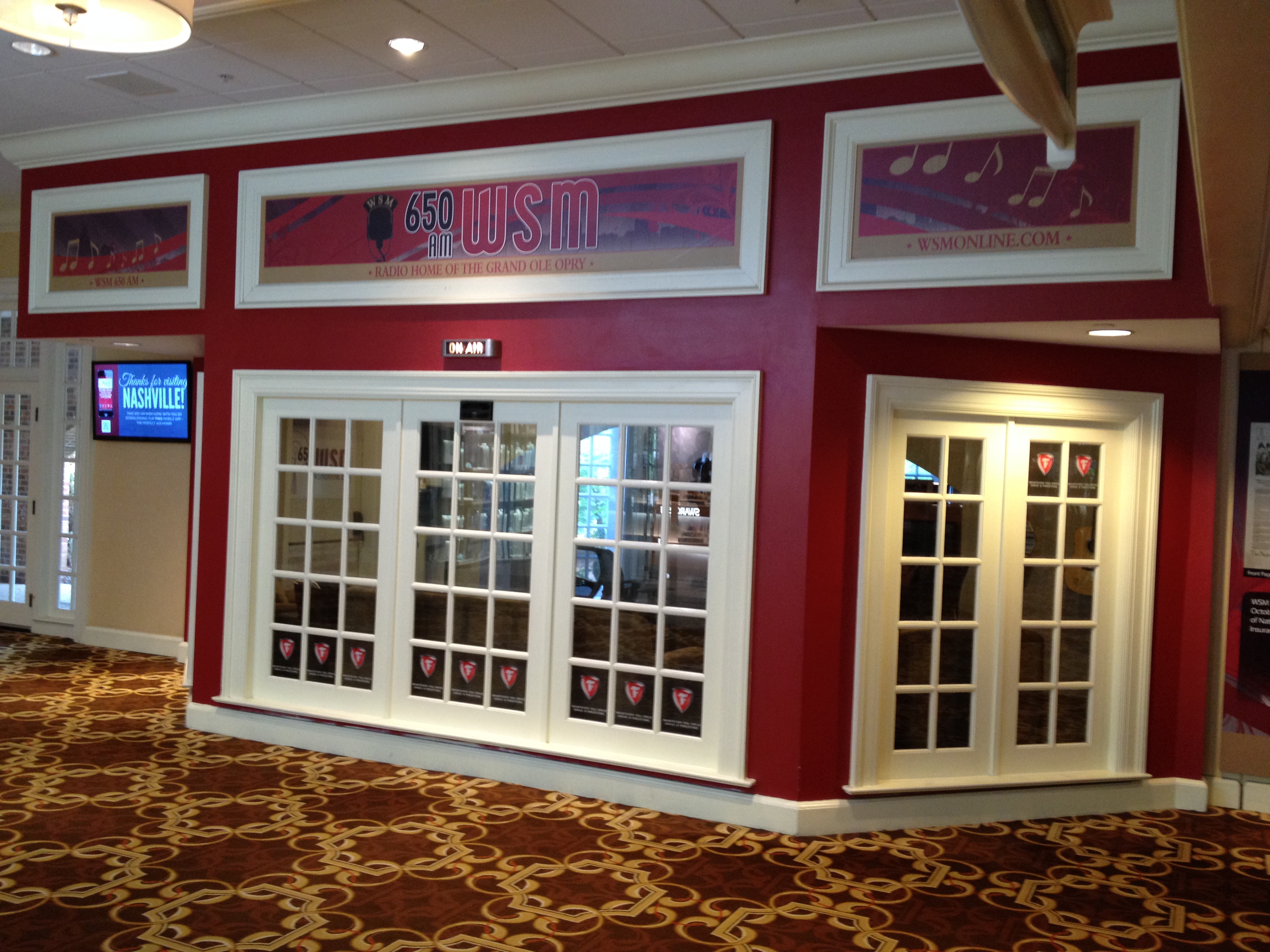
When Clear Channel was doing major RIFs (Reduction In Force) in 2009, I one day found myself with a surprise visit from my Regional Vice President. For the past year, I had spent being told who I needed to terminate next in my radio stations and I knew this time it was me. It was the worst year in radio I ever had.

The good news was, I saw in Radio Ink that Western Kentucky University was looking for a broadcast professor to teach sales, management, history and other radio/media courses. The position perfectly described my background and because of my two college degrees, both in education, I knew I had found the final path of my professional life.

I moved to Kentucky. Helped Dan Vallie to create the KBA/WKU Radio Talent Institute and over the course of seven years did research on the future of radio, along with creating this very blog, that I’ve been writing weekly for over five years.

Disc Jockey, Second Act

Before retiring from the university, Joe Limardi, then operations manager for WSM 650AM in Nashville, invited me to come to Music City and do a radio shift on The Air IMG_2368Castle of the South. Joe Limardi had been a guest professional broadcaster in my Capstone Class at WKU and it was during his lectures with my students that I learned that Joe had grown up listening to me on the radio back in our hometown of Pittsfield, Massachusetts on WBEC 1420AM. Joe always thought of me as a disc jockey and little did I know I inspired him to pursue a radio career.

IMG_2352I had not been behind the mic on a radio station in 35-years. I had a 10-minute lesson in how to run the control board from Joe and then was off on my own to do the next four hours on The Legend WSM.

Soloing on WSM that day was a thrill, one I had not had since my flight instructor got out of the plane one day and said, “Take it around by yourself.”

But my disc jockey second act didn’t end that day, I continue to do a VT midday shift (EST) on WMEX-LP out of Rochester, NH and heard worldwide on TuneIn Radio.

One thing is clear, we are the choices we make.

Don’t let anyone tell you, you can’t do it.


12 Comments

Filed under Education, Mentor, Radio, Sales

Dream Along With Me…………………. (My Plan to Save AM Radio)

26I’ve been reading all the opinions about the FCC’s proposal to change the rules regarding America’s 77 Class A (formerly known as clear channel) licensed radio stations. Supposedly, all being done to “revitalize” the AM broadcast band. Like giving AM radio stations an FM translator does nothing to revitalize AM radio listening, neither – in my honest opinion – does this bright idea either.

The FCC’s plan is to allow AM radio stations to retain their daytime power at night, politically correct though it may be the laws of physics play by no such rules. And we don’t have to wonder about the consequences, because to some extent this type of thing has already been initiated with 1,000/250 licensed stations maintaining a full 1,000 watts day and night, and it didn’t work.

First, I don’t have a dog in this fight. So what I’m about to say is not to benefit one side or another. These are my own opinions.

My first GM job was running a daytime 1,000 watt radio station with no pre-sunrise or post-sunset authorization. We signed on with local sunrise (7:15am in the winter) and signed off at local sunset (4:15pm in the winter). I was at my desk before my radio station went on the air about half the year and I remember writing commercial copy for an advertiser I’d sold that day as my radio station was playing the Star Bangle Banner to sign-off for the day.

When that carrier was turned off, WBT from Charlotte, NC would come booming in.

I know the pain of being a small radio operator.

Today, such a radio station has probably obtained a 250-watt FM translator and has its programming appearing on local FM radios in addition to their AM signal. Ever listen to any of these radio stations? I have, when I take road trips. I’m listening to their AM signal but they only identify themselves by their FM dial position.

The History of Clear Channel Signal Radio Stations

The clear channel signal designation goes back to the Radio Act of 1927 and the creation of the Federal Radio Commission (FRC). The FRC immediately went about creating a number of national “clear channel” AM radio stations that would be superior in quality broadcast content and with enough power to be heard over an entire region. Their signal would be on a frequency that would have no competition. Lower power AM radio stations would be relegated to a complex system of frequency sharing.

The FRC was later replaced by the Communications Act of 1934 and the establishment of the Federal Communications Commission (FCC). The FCC was put in place to be the “cops” of the people’s airwaves and protect those airwaves from being misused or interfered with in any way.

Less Is More

The FRC operated under the belief that it would be better for America to have fewer radio stations of higher quality than lots of radio stations that were mediocre.

The FCC, mainly through deregulation, has lost that mission. For broadcasters it meant less oversight – which they didn’t mind – but it also meant that the FCC wasn’t looking out for their interests when it came to policing things that might interfere with the AM broadcast band. You see the FCC regulates (or not) those things that now are the bane of AM radio. Things that, like Mother Nature’s lightning, interfere with AM radio signals – light bulbs, power lines, computers etc.

I Grew Up On AM Radio

By the way, it was lightning’s interference with AM radio that was the impetus for Edwin Howard Armstrong to invent frequency modulation or FM radio. FM is how the audio gets to your TV set.

It was AM radio that I grew up on. It was AM radio that attracted me to a radio career that spanned over forty years. And I believe that AM radio should be preserved, because it is low tech and is the signal most likely to be around after some event that takes out everything digital – which today is just about everything.

However, I also ran a news/talk AM radio station once that people depended on in emergencies and that was the problem. They didn’t think about it any other time. So I’m very aware that to be viable, a radio station needs to program something that people want/need even when there’s no emergency affecting their lives.

How To Save AM Radio

So here’s my “bright idea” to save AM radio. Eliminate Class B, C and D AM radio stations, sign these signals off and let them make their current FM translators their whole radio station. First, they will be able to liquidate the land their AM antenna farm sits on and at the same time reduce their operational costs. They already are identifying by their FM translator’s dial position and local residents have most likely made the switch.

For America’s Class A (formerly known as clear channel class stations), I proposed a HUGE power increase, like to 250,000, 500,000, 750,000 or a million watts for these current 77 stations. I would also propose a study be done of AM radio stations, not currently licensed as Class A being reviewed for such a designation, but with a power of say only 50,000 or 100,000 watts to deal with specific geographies and locations of America.

I’m Not a Radio Engineer (But I’ve Stayed at a Holiday Inn)

There’s simply no way to put the “noise genie” back in the bottle that causes AM radio such grief. My hope would be (and you radio engineers feel free to weigh in here and set me straight) is that by removing a lot of the AM radio clutter caused by other AM radio stations and increasing the power of the few remaining stations, we might cause these stations to be really listenable in more (most?) situations.

I would also regulate these new high power radio stations in the same way that the FRC proposed when they established them. These would be stations that would create original programming. They would be operated by entities that would operate in the public interest, convenience and necessity. They would be a low tech backup in a high tech world. They would have the scarcity of competition that should make them economically viable because of their attractiveness to advertisers. They would tie the country together in the event of a disaster. If a local dominant AM radio station was taken out by a disaster, the other high power stations, not similarly affected would be able to be heard and assist the affected area.

This situation happened years ago in Kentucky when floods put Louisville under water and Nashville’s 650AM-WSM stepped in to provide residents with the information they needed.

AM radio that provides solid information and yes, even entertainment, would get listeners. But even more importantly, it would provide America with a life-line in times of emergencies that digital communications has been shown to fail.

35 Comments

Filed under Education, Mentor, Radio, Sales, Uncategorized