
 Growing up telling mom or dad that I wanted something now, got the usual response of “you will have to work for it” or “you’ll get it when it’s ready.” Learning that good things come to those who wait was part of my maturing process.
But not any longer.
I remember when I wanted to know about something, I either had to spend some time going through our family’s World Book Encyclopedia or take a trip to the library. But not any longer, I just Google it.
Alexa
I’ve been able to stream radio around the world for years, but it never became easier than when Alexa entered my world. Now, anything I want to know or hear, I simply ask Alexa, and that little genie in my Echo serves it up. My wish is Alexa’s command.
FOX TV
Remember when we used to have television seasons? Every fall, I couldn’t wait for TV Guide to arrive to plan out my TV viewing strategy. ABC, NBC and CBS would introduce lots of new shows every fall and it was a big deal.
Then FOX changed things up while working to become America’s fourth television network. FOX began introducing new shows during the summer, and winter break, while ABC, NBC and CBS were showing re-runs.
Now new television programs are a year-round affair. Gone are pilots, re-runs and the fall season being the only time networks introduce brand new shows.
Netflix
But the most dramatic change to the introduction of a new television series happened five years ago when Netflix started releasing an entire season’s worth of shows, all at the same time. Netflix now gave viewers a choice in how you could watch a new season. You could watch on a weekly basis, watch a new episode every night, or binge watch the entire season.
Binge watching became the preferred method.
Disney+
Which is why I was surprised to hear Disney+ announce that it would be releasing its new shows an episode a week. History has shown with many different products and services, that you can’t go back to the way things used to be. I wish the mouse house good luck.
Knowing Your Audience
Netflix spends a lot of time trying to understanding what their subscribers want and like. They’re adamant that releasing an entire season all at once won’t ever change. They cite two reasons for this:
- TV viewers have moved away from appointment viewing in droves, preferring to watch shows ON DEMAND, often by binge watching, and
- 2) Netflix has found that people tend to watch only one show at a time. In other words, once a Netflix viewer finds a television series they like, they will watch all the episodes of that program before moving on to another show.
Netflix knows a happy customer remains a paying customer.
Reflecting on my own Netflix viewing habits, I would have to agree that I’m hooked on the concept of ON DEMAND television viewing and when I start a Netflix TV series, I watch the entire series, usually several episodes a night, until I’ve finished it. I’ve watched Downtown Abbey that way twice now.
Radio vs Podcasting
 Is there a lesson for radio broadcasters from what I just shared about television viewing habits? I think there is. Programmer Steve Goldstein puts it this way, “Traditional radio – by design – is a lean-back business. Podcasting is a lean-in business.” That perfectly describes the difference between Netflix (lean-in) and broadcast (lean-back) commercial television.
These changing media habits are not just a temporary thing.
These changes in how people want to access and use media are the future, and we can’t wish the past back, no matter how much we might want to.
Goldstein says a podcast needs to be “thumb stopping.” By that he means the listener doesn’t exit the program and move on to something else with a press of their thumb.
Because of push button pre-sets, radio stations know all too well how easy it is for car radio listeners to change stations when something they don’t want or like comes on. Today, it’s in the car where most broadcast radio listening takes place.
Sadly, radio operators aren’t acknowledging this reality in the digital world.
Mad Men
Matt Weiner, the creator of the Mad Men television series that played on A & E, said that if he ever approached Netflix to run one of his shows, he would try to convince them to release the episodes on a weekly basis.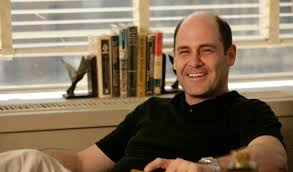
It’s the same kind of thinking old timers in radio might suggest when they talk about how to make radio great again.
What would Netflix tell Mr. Weiner if he pitched his idea of releasing his programs a week at a time?
“He would lose,” said Ted Sarandos, Netflix’s content chief.
Radio should think of this reality as its “canary in the coal shaft” moment.
 I’ve been thinking about these two forms of audio for some time now. With each new article published about streaming, we see how more and more people are listening to music in this way. The smart speaker has certainly contributed to the growth of music listening via streams, and the smart speaker growth is exploding.
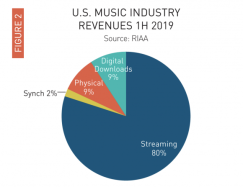 When this pie chart was posted on social media, it immediately captured my attention, by showing where the United States Music Industry is making its money. You can read the Mid-Year 2019 RIAA Music Industry Revenues Report
  In a lot of ways, the future is here, now.
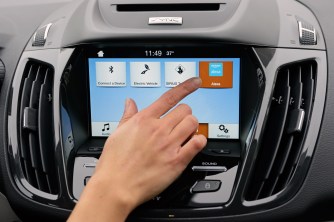 Radio’s last bastion of domination is the automobile (aka SUV, pickup truck etc.). In the home, voice activated devices are replacing AM/FM radios. I own 3 Echos, and Alexa has become a real friend of the family.
 I wasn’t at CES 2019. In fact, I’ve never been to CES.
 The other day, we took two of our grandchildren to a wildlife safari park here in Virginia. It was a simply magical day. But that’s not the part of the story I want to share. It is that both kids were wearing their Boston Red Sox baseball caps.
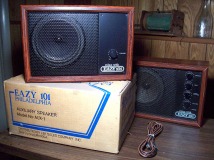 Jerry Lee recently sold his only radio station, WBEB in Philadelphia, Pennsylvania. It was 55-years ago this past May that Jerry and his partner David Kurtz put the station on the air. It signed on as WDVR. In the 1980s the call letters were changed to WEAZ and the station was branded as “EZ 101.” The station brand was not only well known, but fixed tuned FM radios were given out by the radio station to area businesses to play the station in their stores and offices.
 Most recently, Jerry rebranded his station as “101.1 MoreFM.” This change, like all the others, was promoted in every imaginable way and became familiar to listeners virtually overnight.
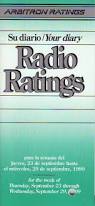 Once upon a time, all radio listening was recorded using a diary, kept by a listener for seven days. Years of diary reviews at the Arbitron headquarters in Maryland proved to me that the radio stations most familiar to their listeners got the most “votes” from their fans.
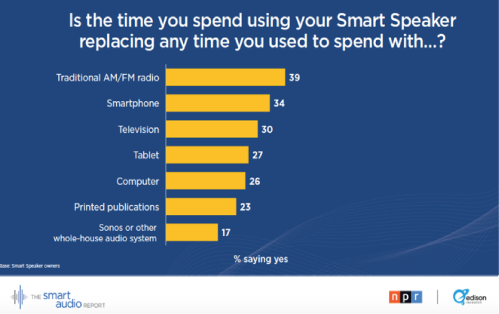 People in the survey said traditional AM/FM radio was the thing most replaced by audio listening via their smart speaker.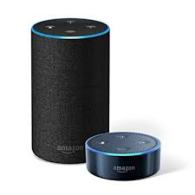
 “Brands now have a chance to behave like human beings, talking, understanding, guiding, empathizing…voice is the single biggest vector of emotion, emotion is the biggest driver of preference. This is a true 1:1 marketing opportunity and a chance to build relationships like never before.” -Mark Paul Taylor, Chief Experience Officer, Global DCX Practice, Capgemini
 I’ve been reading the trades, trying to grasp what is happening, and it is all so very confusing. Have you felt that way too? That’s what a period of disruption looks like. Black is white. Up is down. It’s enough to give you an Excedrin headache.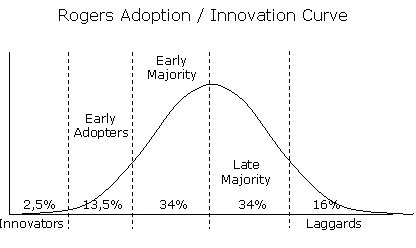
 at a time when AM/FM radio is no longer the entertainment focus of the vehicle dashboard, replaced by the entertainment center that resembles the touch screen on your smartphone.
 The other night I watched Jim Gaffigan’s 5th Netflix special called “CINCO.” In his standup comedy routine, he hit the nail on the head about why Netflix is more popular than cable TV. Here’s what Jim said:
 It’s only been about two months and Alexa has changed the way I interface with my devices.
 Remember when spot loads were small, rates were high, profit margins were 30% to 50%+ and revenue growth was double digit. I do.
 DickTaylorBlog