
 I was reviewing the last FCC report about the number of broadcast stations in America as of December 31, 2018 and in my head I found myself singing a parody of the Bellamy Brothers song, “Too much is not enough.” Only my version was “too much is way too much.”
FM Signals Continue to Proliferate
My editor at Radio World, Emily Reigart, recently wrote about how the total number of broadcast stations (radio & TV) grew in the past year by 3,150 stations, it would appear to not be an industry in decline. Unfortunately, while TV and FM stations increased, the number of AM radio stations continues to shrink.
Which again reminded me of that Bellamy Brothers song where they sang “I’m getting weaker, as the day goes by.”
How Much is Too Much
Back in the 1950s through the 1970s, John B. Calhoun, an American ethologist and behavioral researcher, studied what happens when an environment gets overcrowded. In Mr. Calhoun’s case, he studied what happens when you keep adding rats to a defined space. It was to learn about population density and its effects on behavior. Calhoun predicted that what he witnessed with his rats foretold of a grim future for the human race.
I believe much as what Everett Rodgers would learn in studying the adoption of new innovations of Iowa corn farmers that produced his famous Innovation Adoption Curve, that these things have universal applications and impact all areas of our lives.
Overpopulation is overpopulation.
Matters not whether we’re talking rats, people or radio stations.
In more recent times, researchers felt that Calhoun’s experiments didn’t so much predict the effects of overpopulation as much as the moral decay that arises with too much social interaction. Did he foretell of today’s internet connected world?
FM Signals
Breaking down the FCC’s latest report for just radio stations, we see that there are now 4,619 AM radio stations on the air. That’s 20 fewer AM radio stations than a year ago and 167 fewer than a decade ago. This is a trend that shows no sign of changing. That’s why I wrote, that “like coal, AM radio ain’t coming back.”
On the FM side, there were 25 more commercial and educational FM radio stations than a year ago, and compared to 2008, there were 1,422 additional FM radio stations added.
Translators & Low Power FM
Where things get really messy is the addition of translators and low power FM radio stations.
For those not fully versed in these two forms of broadcasting, they are basically the same, in that both occupy space on the FM radio band. The difference is that translators rebroadcast another signal, be it an AM, FM or HD broadcast, and low power FM radio stations originate their programs. Low power FM radio stations are non-commercial operations and limited to a maximum power of 100-watts. (Note: commercial and educational FM stations can have a maximum power of 100,000-watts) Translators or boosters are limited to a maximum power of 250-watts but it’s not surprising to find many operating at a lot less power due to other factors involved.
When we look at the number of these two additional classes of FM broadcasters, we find another 10,124 FM radio stations bringing the total number of FM signals on-the-air in America today to 21,013 FM radio stations. Over four and half times as many FM signals as AM signals.
Inversion Layers
Now while studies are done to determine what power and location an FM station can be located to prevent it interfering with another FM radio station on the same or adjacent frequency, all of these studies are done in a perfect world. By that I mean, one in which weather is behaving.
However, having operated radio stations along the Jersey shore for decades, I know that vertical layering of moisture content and temperature in the atmosphere (inversion layers) can cause an FM signal to travel hundreds or thousands of miles further than normal.
These weather conditions can affect radio signals from several hours to several days.
This weather phenomenon is called anomalous propagation and is usually likely to occur when weather conditions are hot and dry.
With the planet’s climate changing, expect to see even more, less than “normal” weather conditions going forward and therefore even more interference.
Automobile FM Radio
The place radio still dominates, is in the car, though all electric cars are excluding AM radios due to electrical interference, in favor of FM radios with internet and blue tooth capabilities in what manufacturers call “dashboard entertainment systems.”
I’ve traveled all over our great land this past year and what I find is, it is almost impossible to dial in an FM radio station and keep a clear, listenable signal for any great distance or period of time. It quickly turns into an interference situation with another FM radio station, either on the same frequency or an adjacent one.
Less Is More
The radio industry would greatly benefit from fewer signals, with the power to fully cover the area they are licensed to serve, and regulated to insure that they are properly operated in the community of license’s interests, convenience, or necessity.
The FCC can’t abolish the laws of physics.
The advertising base to support local radio is finite.
In Sydney, Australia, a city with about 5-million people, there are 48-radio stations. In Los Angeles, California, a city with about 4-million people, there are 114-radio stations.
The value of a broadcast license was that it was a limited commodity, and as such being granted spectrum on the public’s airwaves benefitted the community, the advertisers, the listeners and the broadcasters.
The Infinite Dial
The internet has created an infinite radio dial and has challenged the value of an FCC broadcast license.
The FCC’s inability to protect the AM spectrum from the myriad of electrical devices that produce an ever increasing noise floor has doomed the future of the senior band as it closes in on a century of service.
Unless something is done, I fear the FM band will suffer a similar fate.
In many ways, it already is.
 It was only 11-years ago that Steve Jobs took the stage and held in his hand the future. It was an iPhone.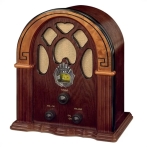

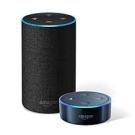 Most research today indicates that since the introduction of the smart speaker, the device that’s getting a little less use is the smartphone. I would concur that is the case in my home as well. Our 3 Amazon Echoes are the way we access at home radio listening, get flash briefs, find out the time and latest weather forecast.
 What the smart speaker and the smartphone have in common, are both devices give the user what they want, when they want it. On Demand is the real game changer of the 21st Century communications world.
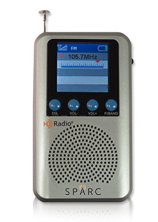 There’s something that’s been troubling me for some time. It’s the radio industry’s habit of reporting radio listening results by calling it “AM/FM” versus what it really is, virtually all FM radio listening.
 WTOP was built on AM radio. It moved its entire operation over to the FM band and grew its audience, revenues and lowered its listener demographic. People who never heard this radio station on its AM dial position were suddenly newly minted fans of their all news format.
 From my blogging, I get lots of feedback about a variety of things concerning broadcasting. One reader wrote to me about his father, a sports fan, who turned on WIP-FM to hear the latest chatter. WIP-FM was broadcasting a game of no interest to his father, so his son said to him, why don’t you turn on WIP AM610. Sadly, this person wrote the audio was unlistenable. He wrote: “You’d think the FCC would mandate that AM have standards for audio quality in receivers.”
 When I was living in Bowling Green, Kentucky, I couldn’t receive 650AM WSM in my office, even though my office looked south and my antenna was able to enjoy a full wall of windows. The noise floor both inside my university office as well as around town while driving in my car made the station unlistenable. WSM was once listened to all the way to Louisville in northern Kentucky. Instead, I downloaded WSM’s app and could enjoy the radio station in crystal clear stereo. (I see WSM has stopped subscribing to Nashville Nielsen Audio ratings.)
 The British Broadcasting Corporation (BBC) did a review of the range of services it offered on the AM band (called medium wave across the pond) and it included a financial review of all its services too. They concluded the ROI (return on investment) in AM was not there and announced they would be turning off some 13-AM radio stations in January 2018 according to Radio Business Reports.
 There’s a great radio operator in Cadiz, Kentucky by the name of Beth Mann. WHVO is her AM radio station at 1480, but if you go on her website, you won’t find any mention of this station being on the AM radio dial. It’s promoted as
  On this last Sunday of 2017, it’s a good time to look back at the year just past and share with you The Top 5 Most Read and shared blog articles from 2017. Maybe you missed them or perhaps you’d like to read them again.
 If you’re in sales, this is probably the question that haunts you most: Why do people do the things they do?
 Then Houston was hit by Hurricane Harvey and KTRH zoomed to #3, but soon after the impact of the storm began to fade and life in Houston began its long road back to “normal,” KTRH sank back to #15.
 an FM translator for their AM station.Putting your programming content on an FM translator is NOT saving AM radio. Period.Saving Fax MachinesI remember the day I got a fax machine for my radio stations in Atlantic City. It was the day one of our biggest client's ad agency called about the next month's orders for their casino client and told me that if I wanted to be on the buys going forward, I needed a fax machine. Only those radio stations with fax machines would be bought.Holy Batman! I got a fax machine that same afternoon.Soon a dedicated phone line was installed just for the fax machine.How important is faxing these days? I still see fax numbers on business cards and websites but really, does anybody send faxes anymore?There’s no effort that I know of to save the fax machine.AM RadioI spent over four decades of my life in radio broadcasting because of AM radio. I remember my first radio, a Zenith transistor radio (120.jpg)
 I write about radio in most of these weekly articles. Recently, an article that compared
  that came with a single ear piece. I remember sneaking it into school to hear the Red Sox playing in the world series. I don’t remember what the teacher said in those classes.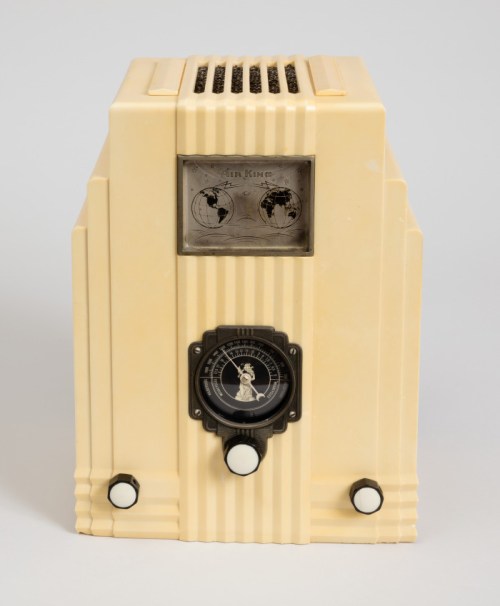
 I lived in Kentucky for 7-years.
 You’ve probably heard the old saying “you can’t make a second first impression.”
 There are some things in life you can’t have too much of.
 That was the headline that appeared in the
  DickTaylorBlog