
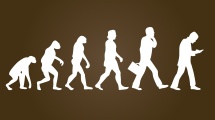
 In two months, the world’s largest radio meeting will once again be taking place in Las Vegas; the 2016 NAB Show. Ironically, since leaving the radio industry and entering academia at Western Kentucky University, I attended my very first NAB show in 2011 and have every year since. So as visions of massive crowds and very sore feet dance in my head, I thought I’d look back over those past years and see how the theme of these meetings has evolved.
In 2011, the NAB highlighted that media consumption had become more digital and connected. TV everywhere strategies, mobile TV, the connected TV and the use of social media dominated the show.
In 2012, everyone was shouting about 4K video, ISP content delivery and the evolution of special effects technology. Everywhere you went you were shown 3DTV (I didn’t care for it, personally.)
In 2013, the NAB show hosted its first ever 2nd screen Sunday and the impact of more than one screen (the television set) vying for the viewer’s attention was fully recognized if not totally embraced by broadcasters.
In 2014, the NAB show wasn’t so much memorable for what it had but for what it didn’t have 3DTV. What had once been prolific throughout all the convention halls was now nowhere to be seen. 4K video & TV was now all the rage with Japan’s NHK demonstrating 8K video & TV. NHK said they will be recording the Rio Olympics in 8K and plans to televise (in Japan only) the 2020 Olympics in 8K. When you see TV pictures this detailed, you can instantly see why 3DTV bit the dust. 4K and 8K feels three dimensional and you don’t need any funky glasses.
Which brings me up to last year’s NAB show in 2015 where the theme was “Evolve or Lose Relevance” voiced by NAB President/CEO Gordon Smith. Smith urged broadcasters to embrace the new technologies like ASTC 3.0 & 4K for TV, and NextRadio’s mobile app for FM radio on mobile devices. Smith also talked about the spectrum auction which begins in March 2016 and characterized the auction as both “exciting and daunting.”
What may have been most daunting and certainly not exciting was to have been an AM broadcaster at this meeting – or any of the meetings of the last five years. Move along guys and gals, there’s nothing for you to see here. HDRadio was there every year and I think they had more cars outside of their convention hall than any previous year featuring their spiffy HDRadios, a technology that has been better embraced by the automakers than radio broadcasters for the most part. And of course, there were drones. Lots & lots & lots & lots of drones. Big drones, little drones…a drone for every size and budget. I’m wondering if the FAA will start coming to these meetings along with their friends from the FCC.
The only thing I haven’t seen addressed over these past five years is what seems to me to be the elephant in the room. Everything is supported on a business model that has been around since commercial broadcasting began in 1920, that being the selling of advertising. The covenant with the consumer of radio/TV programs was we will give you the programming for free if you allow us to expose you to our advertisers; a business model that worked extremely well through the birth of the Internet and dial-up connections. It would be the introduction of broadband and its rapid expansion that would challenge everything.
Blockbuster vs. Netflix is a good example. 2004 Blockbuster has 9,000 stores and almost $6 billion in revenue and only 4.4% of American homes had broadband. Netflix was mailing DVDs to its customers. 2010 Blockbuster files for bankruptcy, 68% of American homes have broadband and Netflix had been streaming to their customers for three years. Today Netflix has a market cap of almost $33 billion.
That really brings home the concept of “evolve or lose relevance” doesn’t it?
So what will the business model for media be evolving to? That’s the billion dollar question. Nobody knows. But what we do know is that Apple gave up its free iTunes music streaming at the end of January 2016 and now will only offer a paid subscription model. Disney’s ESPN is suffering the “agony of defeat” as more consumers cut their cable bundle (for which it’s reported that ESPN gets $7 per sub) and is causing this revenue stream to dry up while the cost of bidding for live sports events continues to escalate. Everything appears to be moving in a direction of asking the consumer to pay for what they want – like they do for HBO, Showtime, and Netflix etc.
So what’s the plan Stan for broadcast radio and TV? Or for any advertising supported medium for that matter? I think about this a lot.
 Fred and Paul Jacobs are prolific bloggers; they blog five days a week. Recently, their blog asked four questions about the future of radio. I found them interesting and thought I’d give you my answers to their questions. I’ve provided a link to their original blog post
 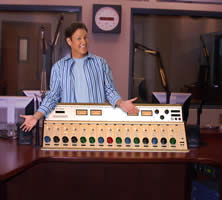 Crank it up means turning a knob. Radio people are going to have to make sure their car dealers demonstrate, or even set-up for their new car customers, how to find and lock in their local radio stations on these new digital dashboards. If the radio listener can easily find their favorite hometown companion, then they will default to what they know and love best. The reason radio has retained over 92% of its listeners is because all those new media devices mostly took out the new media device that came before it. Free over-the-air radio is unique and special. Let’s all work to keep it that way.
 There’s an old saying “Nothing lasts forever.” Do you remember flying on TWA or Pam Am? How about shopping at Woolworths? Broadcasters will remember names like Group W Westinghouse Broadcasting, or Taft Broadcasting, or Nationwide, or RKO General that would put the successful Bill Drake Top 40 format (with the non-stop innovations & promotions of 93-KHJ’s Ron Jacobs) in major cities across North America. They’re all now a memory.
 I recently wrote an article for Radio World about the impact of colleges that sold their student radio station’s FCC license had on the pedagogical program at those institutions. You can read that article in Radio World
  I had the opportunity to sit in on a
 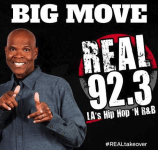 When iHeartMedia wooed away Kurt Alexander aka “Big Boy” from Emmis’ Power106 to their Real92.3 it was a big deal in more ways than one.
 Have you heard about the latest management movement? It’s called “Agile” (but it can also be called “
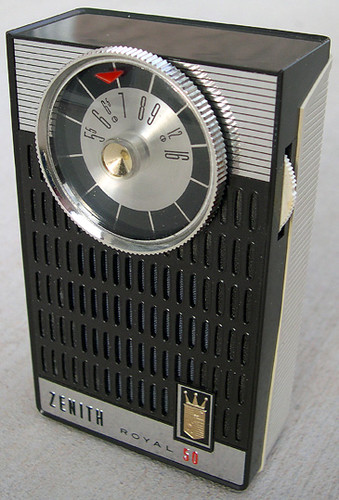 Growing up in western New England, the transistor radio would impact my life and career. Radio has been in my blood as long as I can remember, but it would be my Zenith transistor radio that would first allow me to explore new stations, new music, new personalities and new ways of delivering content without the supervision of my parents. My transistor radio and ear piece would make me the master of my own radio dial.
 When radio was first introduced, to listen to it, you needed to wear headphones. Radio was one-to-one and very intimate. As the technology evolved the radio speaker would change the medium from one-to-one to group listening. Radios were expensive. If you owned a radio you shared it. A family would gather around the radio and listen together. Families would transfer this together media habit to TV and the transistor radio would become the refuge of teenagers who wanted to go in a different direction.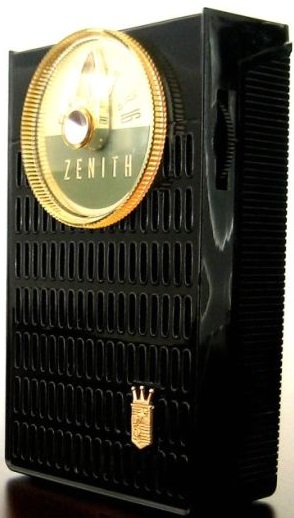



 DickTaylorBlog