

I can’t help but be struck by the headlines I read each morning when I log onto my computer or pickup my smartphone to read the latest news.
Here’s just a few recent ones:
- More audio is now consumed in the U.S. through mobile devices than through traditional radio receivers. -Edison Research
- 83% of U.S. Homes have enabled smart TVs or streaming media players. -Hub Research
- 49% of registered voters don’t have traditional TV, 80% stream. -Samba TV & HarrisX
- The steady climb of podcasting’s reach in the U.S. -Edison Research
- Why mobile first is radio’s road back. -Jacob’s Media
- Survey finds older adults are slowly warming to streaming audio. -Broadbeam Media
This last headline flies in the face of traditional wisdom that people over the age of 55, who grew up with AM/FM radio, won’t abandon the medium. However, the COVID pandemic has caused rapid shifts in media habits, even among older Americans.
Not surprising, it has been the shift to streaming video that’s taught people how easy it is to stream audio content as well.
Traditional Radio vs. Digital Audio
For twenty years, we’ve seen this day coming. With each passing survey, research study or anecdotal observation it’s clear that listening to audio content is moving from the world I grew up in, AM/FM radio, to digitally streamed audio.

The trend line is clear, everything is moving in one direction and there’s no signs of it reversing. Today 53% of audio time spent listening is to digitally streamed audio.
I started off this year of blogging with an article about how ALL of my radio listening is digitally steamed, whether I’m at home or in one of our cars. You can read that article HERE
Hallmark Christmas Movies
My wife Sue and I love watching Hallmark Christmas Movies. One of the things I’ve noticed about today’s movies, is how ubiquitous the smartphone has become in storylines. Everyone is constantly texting or video chatting with others in these movies.
But what really struck a nerve with me, was a scene in a recent Christmas film where a character in the movie tries to explain to another character what radio is:
Actor 1: It’s like TV without pictures.
Actor 2: You mean it’s a podcast?
It’s clear that we are living in the future that was predicted decades ago.
Life Is Change
It doesn’t have to be all doom and gloom. Both public radio and Christian radio have found audiences that will listen and support them whether they are received by traditional radio broadcasting or via a digital stream on a smartphone or smart speaker.
Many of our country’s smallest radio markets are also some of the most successful radio operations. Why? Because they know their listeners, and engage with them on a very personal level.
It’s only when the tide goes out that you learn who has been swimming naked.
-Warren Buffett
In other words, everyone looks like they know what they’re doing when business is good, it’s only when things become challenging, that we know who is prepared to not just survive, but thrive.
How many years must a mountain exist
Before it is washed to the sea?
-Bob Dylan
Radio broadcasting, like the mountain in Bob Dylan’s song “Blowin’ In The Wind,” is dealing with its own type of climate change, a change in people’s habits for how they receive and consume their media.
Let’s hope the answer to radio’s future isn’t “Blowin’ In The Wind.”


 I recently sat in on the Edison Research webinar about people born between 1996 and 2012, known as GEN-Z.
 OK, that’s not exactly new news. The latest New York City PPM Ratings show that WPLJ, now airing EMF’s Christian Contemporary K-Love format, went from a 3.1 (6+ Mon-Sun, 6a-12mid) before the format change to a 1.5 rating.
 in the 1950s and simulcast 770AM-WABC. In the late 1960s it became one of the early album-oriented rock radio stations in America. On February 14, 1971 it was renamed WPLJ to clearly separate it, and its programming, from its Top 40 sister, Music Radio 77 – WABC, at that point in time the most listened to radio station in the world.

 The only constant in life is change.
 Remember when spot loads were small, rates were high, profit margins were 30% to 50%+ and revenue growth was double digit. I do.
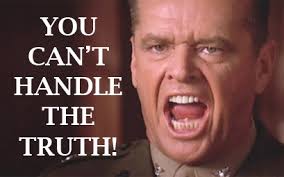 Jack Nicholson famously said in the movie A Few Good Men “You want the truth? You can’t handle the truth!”
 DickTaylorBlog