
 There are lots of items in the news these days about what the radio industry should be doing. Streaming, podcasting, smart speaker accessible etc. The one thing I hear little talk about is, improving the core product and focusing on what the listener is seeking.
The Radio Ecosystem
If you think about it, the radio ecosystem, AM/FM radios, have not seen any real changes in decades. Oh, there was the introduction of HD Radio – introduced around the same time as Apple introduced the iPod (R.I.P. 2001-2014), but listeners never really understood the need for it. HD Radio was embraced by commercial broadcasters when they learned they could feed analog FM translators from HD Radio signals and have more FM radio stations in a single marketplace. This was hardly listener focused and actually chained the radio ecosystem to old analog technology.
What IS Radio?
In the beginning, radio was a way to wirelessly communicate with other people using Morse Code on spark gap transmissions. Guglielmo Marconi built a radio empire on this technology.
David Sarnoff, a skilled Morse Code operator and a Marconi employee envisioned a “radio music box” and wrote a memo about developing a commercially marketed radio receiver for use in the home. It wasn’t until after World War I, when Sarnoff proposed the concept again, this time in his new position as general manager of the Radio Corporation of America (RCA), that it would see the light of day.
Sarnoff would demonstrate the power of radio by broadcasting a boxing match between Jack Dempsey and Georges Carpentier. In just three years, RCA sold over $80 million worth of AM radios, and not soon after created the National Broadcasting Company (NBC).
Federal Radio Commission
America’s first attempt at regulating radio transmission was the Radio Act of 1912, that was enacted after the sinking of the Titanic. This law didn’t mention or envision radio broadcasting.
As radio broadcasting began to grow in the 1920s, then Secretary of Commerce Herbert Hoover would begin the process of trying to regulate the limited spectrum that everyone now wanted a piece of.
The Radio Act of 1927 was America’s first real attempt at regulating radio broadcasting. The Federal Radio Commission (FRC) was then formed by this act.
It should be noted that the FRC operated under the philosophy that fewer radio stations, that were well funded and provided live original programs, were better for America than a plethora of radio stations providing mediocre programming. It was an idea that the major radio receiver companies championed.
Federal Communications Commission
In 1934, the Congress took another attempt at regulating broadcasting (radio & TV) as well as all the other forms of communication that now existed. The Communications Act of 1934 created a new regulatory body called the Federal Communications Commission (FCC). By 1934, radio broadcasting had evolved into a highly profitable business. Broadcast educator, Fritz Messere, writes: “Many of the most powerful broadcasting stations, designated as ‘clear channels’ were licensed to the large broadcasting or radio manufacturing companies, and the Federal Radio Commission’s adoption of a rigid allotment scheme, under General Order 40, solidified the interests of the large Broadcasters.”
The biggest and most well-funded broadcasters have been favored since the very beginning. What kept things in check until 1996 was the limit on the number of AM, FM and TV stations a single company could own.
Telcom Act of 1996
Those limits would evaporate with President Clinton’s signing of the Telcom Act of 1996. Radio, as America had known it, would be over.
Now, for the most part, a single owner could own as many radio stations as their pocketbook could afford. Lowry Mays and Red McCombs, founders of Clear Channel Communications, would grow their portfolio of radio stations to over 1200 from the 43 radio stations they owned before the act was signed.
In 2003, Mays testified before the United States Senate that the deregulation of the telecommunications industry had not hurt the public. However, in an interview that same year with Fortune Magazine, he remarked, “We’re not in the business of providing news and information. We’re not in the business of providing well-researched music. We’re simply in the business of selling our customers products.” (Mckibben, Bill (2007). Deep Economy. San Francisco: Ignatius Press. p. 132.)
Radio Zoning The FCC is now considering whether to further loosen up the ownership limits of radio and TV stations in America. FCC Attorney John Garziglia recently wrote:
“If radio stations could be erected like fast-food establishments and grocery stores, with no numerical limits imposed other than a businessperson’s risk tolerance, it would be difficult to argue for FCC-imposed ownership limits on radio. Indeed, a regulatory agency enacting numerical limitations on restaurants and grocery stores would likely not pass legal muster.
But there are widely-enacted municipal limitations on just about every type of local business. The limitations are called “zoning” – the permitting or prohibiting of certain uses in certain areas to protect the character of the community.
The FCC’s radio ownership rules can be thought of as a kind of radio zoning. In the same way as land-use zoning protects a community’s character, the FCC’s ownership rules permit or prohibit certain radio station combinations protecting the amorphous concept of the public interest.
With land-use zoning, communities maintain a distinct character, livability, aesthetic, and economic success by not bowing exclusively to the profit motive of land developers. Allowing several or fewer owners to own virtually all of the radio stations in the country would doom the specialness of our radio industry.”
I think John makes some excellent points and I would encourage you to read his complete article HERE.
Biting Off More…
Radio operators today can’t properly staff and program the stations they already own. What makes them think that will change if they own even more of them? Most radio stations are nothing more than a “radio music box” run off a computer hard drive, an OTA (over-the-air) Pandora or Spotify.
Former Clear Channel CEO, John Hogan, introduced the “Less Is More” concept when I worked for the company. While it actually introduced more on-air clutter, not less, the idea was neither new or wrong.
If owning more radio stations was the answer in 1996, then why in 2018 are we worse off than we were then?
Why was Jerry Lee able to own a single station in Philadelphia and dominate that radio market?
Why are many locally owned and operated radio stations some of the healthiest and most revered in America today?
Radio not only needs zoning on the number of radio stations a single owner can control in a market, but the total number of radio station on-the-air in a market. And it needs radio stations that are neglected to be condemned like property owners who let their land go to seed.
The FRC wasn’t perfect, but the concept of “less is more” served America well for many decades. Fewer radio stations that provided high quality, live programming, operating in the ‘public interest, convenience and necessity’ and by virtue of that diversity of ownership, provided diversity of voice and opinions, as well as healthy competition.
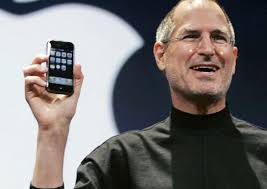 It was only 11-years ago that Steve Jobs took the stage and held in his hand the future. It was an iPhone.

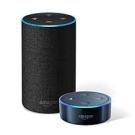 Most research today indicates that since the introduction of the smart speaker, the device that’s getting a little less use is the smartphone. I would concur that is the case in my home as well. Our 3 Amazon Echoes are the way we access at home radio listening, get flash briefs, find out the time and latest weather forecast.
 What the smart speaker and the smartphone have in common, are both devices give the user what they want, when they want it. On Demand is the real game changer of the 21st Century communications world.
 I’ve been reading the trades, trying to grasp what is happening, and it is all so very confusing. Have you felt that way too? That’s what a period of disruption looks like. Black is white. Up is down. It’s enough to give you an Excedrin headache.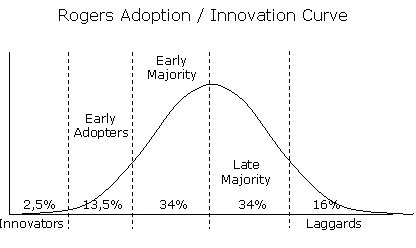
 at a time when AM/FM radio is no longer the entertainment focus of the vehicle dashboard, replaced by the entertainment center that resembles the touch screen on your smartphone.
 The other night I watched Jim Gaffigan’s 5th Netflix special called “CINCO.” In his standup comedy routine, he hit the nail on the head about why Netflix is more popular than cable TV. Here’s what Jim said:
 Remember when spot loads were small, rates were high, profit margins were 30% to 50%+ and revenue growth was double digit. I do.
 Apple recently introduced the iPhone 8, iPhone 8 Plus & iPhone X (it’s 10th anniversary iPhone). Each of these new iPhones have an FM chip in them, I’ve read, that if turned on, could receive OTA FM radio signals, but these chips are not activated.
 I read with interest what the new Radio Board Chair of the National Association of Broadcasters, Randy Gravley, had to say in a
  I’m writing the follow-up to last week’s blog article while comments are still flowing in but I sense I have enough of a cross-section of comments to draw some conclusions; over fifteen type-written pages of comments to date. Not all commenters actually post their thoughts on my blog, but instead post them on the various social media platforms where they came in contact with my article. I try to monitor as many of those as possible to gauge the feedback on any week’s article.
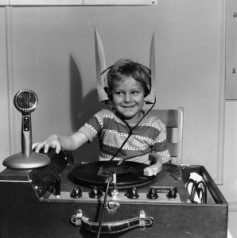
 When radio was first introduced, to listen to it, you needed to wear headphones. Radio was one-to-one and very intimate. As the technology evolved the radio speaker would change the medium from one-to-one to group listening. Radios were expensive. If you owned a radio you shared it. A family would gather around the radio and listen together. Families would transfer this together media habit to TV and the transistor radio would become the refuge of teenagers who wanted to go in a different direction.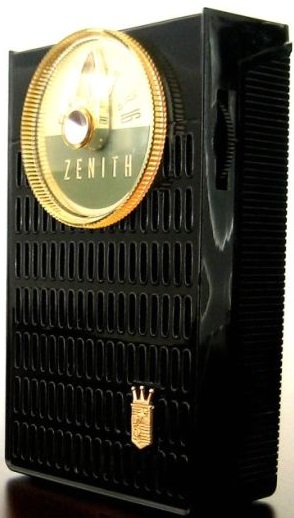



 DickTaylorBlog