
 I was reading an article in Medium about “How Platform Capitalism Devalued the Music Industry,” when I came to this comment from electronic pop artist Grimes – currently dating Elon Musk – “DJs get paid more than real musicians.”
As the blowback continues to reverberate from the recent “employee dislocations” by iHeartMedia, of hundreds of their disc jockeys across America, I wondered who were these highly valued DJs Grimes was talking about.
World’s Highest Paid DJs
Turns out that Forbes published a list in July of what Forbes called “The World’s Highest-Paid DJs of 2019.”

The #1 highest paid DJs are “Chainsmokers” earning $46 million in pre-tax income over the past year.
Who?
If that was the first thought that flashed across your brain, you’re not alone. The Chainsmokers are made up of Drew Taggart and Alex Pall.
#2 was “Marshmello” at $40 million, #3 was “Calvin Harris” at $38.5 million, #4 was “Steve Akoi” at $30 million and rounding out the top 5 was “Diplo” at $25 million. Forbes actually ranked the top 15 and you can see the whole list HERE.
None of these DJs are on your local radio station. They are all club DJs.
The Chainsmokers signed a three-year exclusive residency deal with Wynn Nightlife in Las Vegas that has the pair performing only in nightclubs at XS and Encore Beach Club in Vegas in 2017. The pair is such a draw, that agreement has been extended until 2021. The group also records EDM albums and released their first single in 2013.
Club DJs
 Christopher Comstock, aka “Marshmello,” signed with the Palms Casino Resort in Las Vegas taking up residency at their Kaos Dayclub and Nightclub.
Marshmello entertains from a rotating DJ booth shaped like his signature cylindrical marshmallow mask. If you’d like to see him in action, here’s a link to a YouTube video
This year coming in at #3, “Calvin Harris.” He previously had been the #1 highest paid DJ for six consecutive years.
Absent from the list are over-the-air radio DJs.
Radio’s Highest Paid
It should come as no surprise that Howard Stern reigns in the top spot with an income north of $90 million. But he’s on satellite radio.
The top earner on terrestrial radio is Rush Limbaugh, who recently announced he’s battling advanced lung cancer. Then comes Ryan Seacrest, Sean Hannity and Glen Beck, all syndicated talk radio hosts.
What’s the attraction of all of these personalities?
Grimes puts it this way, “It’s kind of like Instagram or whatever. [Listeners] don’t want the real world.” Great personalities give us an escape from our world and make us feel like we are a part of their lives.
Great Radio
Radio provides the listener with community and companionship through the stories it tells and music it plays.
Harry Harrison, New York City’s Morning Mayor, recently passed away at age 89. He was a New York City DJ Legend, broadcasting over WMCA, WABC and CBS-FM for the majority of his radio broadcasting career.
Cousin Brucie was invited to share his memories of Harry and why he was so loved by Big Apple radio listeners. Brucie said it was all about making the members of the radio audience feel like family. It’s all about talking to people and being out in the community  with them, touching their hands. In fact, the host said, when Brucie showed up at NBC4 to do the segment, people who work at the TV station came to see him and gave Brucie a hug. Something that rarely happens when guests appear on the program.
I know how they feel because, one Saturday night, that’s exactly what I felt like when I had the opportunity to spend a night in “Cousin Brucie’s Place” at SiriusXM.
The Power of the DJ
The common thread, whether we’re talking about a popular club DJ or radio DJ, is their ability to bring people together, engage in the same thing at the same time and make us feel like we are welcome and belong.
Harry Harrison told his listeners that “every brand new day should be unwrapped like a precious gift” and he always wished his listeners the very best, “because that’s exactly what you deserve!” Ron Lundy greeted his listeners with “Hello Luv,” Dan Ingram called his listeners “Kemosabe,” and everyone was a “cousin” with Brucie.
The biggest casino operators know how important the DJ is in bringing people into their dance clubs. A great club DJ can read the room and know exactly the right mix of music to play to get everyone involved and have a good time.
That same magic built great radio on thousands of local radio stations across America. It can’t be replaced by artificial intelligence and algorithms.
Real local radio knows how to read the community and provide exactly what it needs at that moment. All great radio is local and relevant.
DJs become your best friend.
Is there anything better than hanging out with your best friend?
 From my earliest days, I knew what I wanted to do in life. Drive a car, fly a plane and be a disc jockey.
 radio station with local traffic reports during beach season. When I took over the job, everything was already in place for flying lessons and I took advantage of the arrangement and learned to fly.
 Whenever people would ask me what I wanted to do next with my life, my answer was always the same, teach. Yes, I wanted to teach at a college or university the very profession that I had spent my entire working life doing, radio.
 Castle of the South
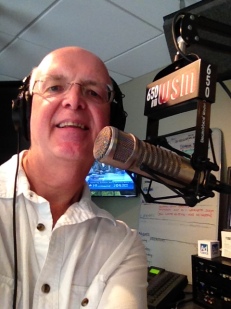 I had not been behind the mic on a radio station in 35-years. I had a 10-minute lesson in how to run the control board from Joe and then was off on my own to do the next
  A lot of people think that a new decade began in 2020, but the reality is, it’s the last year of the current decade. 2021 begins the next decade.
 If your job can be replaced by a mathematical equation, a logarithm if you will, consider your future employment to be at risk.
 I was reminded of this important statement the other day when I read an article in Radio Ink penned by Larry Rosin, President of Edison Research. Larry’s article was titled “Stop Saying ‘Still’” and you can read it
  For many of you, this past week has been a very stressful one. The world’s largest radio owner/operator, iHeartMedia, announced a countrywide Reduction In Force or RIFs. However, reading an
  “There are some things that will scare you so bad, that you will hurt yourself,” said Molly Ivins. And that’s exactly what I believe the radio industry has been doing to itself for most of its 100-year history.
 When television came along and took away radio’s people and programs that were attracting its large listening audience, it was forced to re-invent itself.
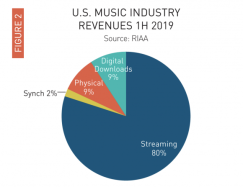 When this pie chart was posted on social media, it immediately captured my attention, by showing where the United States Music Industry is making its money. You can read the Mid-Year 2019 RIAA Music Industry Revenues Report
  On this last Sunday of 2019, it’s tradition to look back at the year just past and share with you the Top 5 Most Read and shared blog articles of 2019. Maybe you missed them or perhaps you’d like to read them again.
 It’s not unusual for little boys and girls to ask the question “Why?” They ask it a lot.
 By definition, a commodity product lacks a unique selling point. Two examples of what I mean are lettuce and pencils. No one has a brand favorite of either. To the consumer of both, they’re all the same. Commodities are interchangeable with other products or services, widely available, and therefore undifferentiated except maybe by price.
 DickTaylorBlog