
 I started my professional radio career in the 10th grade of high school. However, I started dreaming about being a disc jockey for as long as I can remember. I built my own AM/FM radio station in the basement of my parent’s home and broadcast to about a three block radius around my house.
Lots of People
In my early professional days, radio was people, lots of people!
Every aspect of running a radio station required people to make things happen. Sales, bookkeeping, reception, disc jockeys, copywriters, news anchors, reporters, engineers, production and promotions people with layers of management on top of every department, up to the general manager who oversaw the entire operation.
As an example, CKLW a stand-alone AM radio station in the Detroit metro, had 23-people just in their news department. Today that’s about double the total number of people running a cluster of AM/FM radio stations in any metro.
Was radio efficient back then? No.
Was radio effective? YES!
Did radio make money? Tons of it!
The Gatekeepers
What traditional media had back then, were gatekeepers. Newspapers, magazines, radio and television had people charged with making sure there was a good flow of information and entertainment. These people acted as filters, and overtime they developed standards and ethics that all Americans could rely on.
It wasn’t perfect and mistakes were made, but it got us through the 20th Century and unified us as a nation.
The New Gatekeepers
The birth of the internet ushered in a new gatekeeper, the algorithm. Now lines of code would replace people as the filter for what Americans read, see and hear. Unfortunately, these lines of computer code lack transparency in how they filter the flow of information.
Have they been encoded with a sense of civic responsibility? Who knows?
Is the flow of information the same for everyone? No, it has been personalized to our likes and dislikes. It has put each of us in our own information silo.
Bowling Alone
In 1995, Robert D. Putnam wrote an essay entitled “Bowling Alone: America’s Declining Social Capital”. The essay chronicled the decline in all forms of in-person social interchange. What Putnam saw in his research was that the very foundation Americans had used to establish, educate and enrich the fabric of their social lives was eroding. People were now less likely to participate in their community, social organizations, churches, and even their democracy.
This trend has only been accelerated by social media and the internet. The unintended consequences of the internet are, that it has isolated each of us to a web of one. Algorithms have taken what Putnam saw happening in the last century and put it on steroids in this century. All in the name of driving more efficiency.
Efficiency Bubble
The “efficiency bubble” means that efficiency is valued over effectiveness in today’s world. It’s a term coined by Will Lion of BBH advertising.
Rory Sutherland, Vice Chairman of Ogilvy in the UK, recently shared this personal experience that demonstrated the efficiency bubble.
“The absurdity of the efficiency bubble was brought home to me in a recent meeting with an online travel company. The conversation repeatedly included the mantra ‘the need to maximize online conversion.’ Everyone nodded along. Clearly, it is much more efficient for people to book travel through the website than over the telephone, since it reduces transaction costs. But then someone – not me, I’m ashamed to say – said something revelatory: ‘Ah, but here’s the thing. Online visitors to the site convert at about 0.3%. People who telephone convert at 33%. Maybe the website should have a phone number on every page.”
“Perhaps the most efficient way to sell travel is not the most effective way to sell travel. What, in short, is the opportunity cost of being efficient?”
“Nobody ever asks this question. Opportunity costs are invisible; short-term savings earn you a bonus. That’s the efficiency bubble at work again.”
Consolidation is Just Another Word for “Efficiency”
During radio’s massive consolidation, Excel spreadsheets produced by new minted MBAs screamed a multitude of ways to have radio stations become more efficient. Unfortunately, the fast-lane involved the elimination of tens of thousands of radio jobs.
And it’s still going on as I write this article.
I don’t ever remember anyone asking about “opportunity costs” being sacrificed in the process.
In the last radio property I managed before entering higher education as a broadcast professor, I would spend my final year going to corporate meetings about Reductions In Force (RIFs) and coming home with a thumb drive that had dates to open new pages in an Excel spreadsheet, that listed what people and what departments were to be eliminated next.
It’s my belief that efficient radio chases away listeners, effective radio creates them.
Blame It on Competition
Tech Guru Pete Thiel blames the efficiency chase on competition. “More than anything else, competition is an ideology – the ideology – that pervades our society and distorts our thinking,” says Thiel.
When all radio companies chase the same efficiency metrics, they all end up sounding the same, their websites end up looking the same, and in essence, they’ve turned the creative medium of radio into a commodity.
Deregulation of broadcast, as I wrote about in The Birth of Radio in America article, now has virtually all of the radio stations in a radio market owned by one or two companies.
Radio always stole great ideas from other radio stations around the country, but most often those stolen ideas were massaged and improved upon in the process. Everyone was upping the game through their own creativity lens, and each radio station had its own unique sound.
Unfortunately, along with corporation radio came the concept of “Best Practices”. This would be yet another contributor to the end of personal creativity at radio stations, all in the name of more efficiency.
Emotions
Roy H. Williams, the Wizard of Ads, says we buy things emotionally and justify those buying decisions rationally. The pursuit of efficiency is a rational answer to an emotional problem.
The radio business was never built on Excel spreadsheets and doing what was most efficient, it was built by creative people who touched others emotionally. Be it station imaging, air personalities, promotions, contests, community events, advertising or marketing, radio always went for people’s hearts.
The successful radio stations today still foster those emotions in their listeners and advertisers.
They’re just becoming harder and harder to find.
 That headline graced the cover of the final edition of Express, the free commuter paper published by The Washington Post. It was created only 16-years ago, as a free paper for commuters in the DC area to read on their daily metro commute into Washington. It all came to an end on Thursday, September 12, 2019.
 Amazon.com. It was so popular the line was taken over by Cisco in 2009. Fifteen improvements were made to the Flip video camcorders, until in 2011 when Cisco shut down the entire Flip Video division.
 Following World War I, America saw a future in long-distance wireless telegraphy using high-power radio stations. In the United States, British owned Marconi Wireless Telegraph Company of America ruled the airwaves, but in order to stay competitive, it needed the new equipment for broadcast, manufactured by General Electric Company.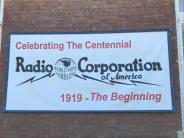
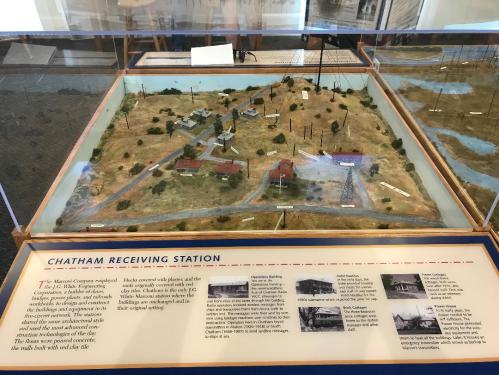

 Radio is a business.
 When World War I ended, it didn’t go unnoticed what a powerful role radio communication had played in the outcome. Led by the General Electric Company, the Radio Corporation of America (RCA) was formed in October of 1919. With guidance from the federal government, RCA brought together GE, Westinghouse, and AT&T to develop the radio broadcasting industry in the United States.
 A recent news item caught my attention. The English Cricket Board says “There are 200 million players of Fortnite…that is who we are competing against.” Welcome to the 21st Century and the attention economy, where everyone – yes, EVERYONE – is competing against everyone else. This blog competes for attention against not just other blogs, but everything else in our over mediated, world. It is our
  Fact: the number of people working in the advertising industry is in decline. What makes this noteworthy is that America has been in an economic expansion.
 The other evening, I watched the Netflix documentary “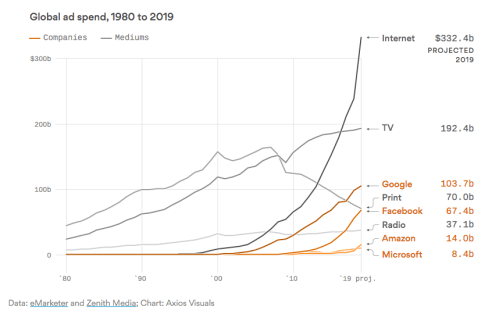
 OK, that’s not exactly new news. The latest New York City PPM Ratings show that WPLJ, now airing EMF’s Christian Contemporary K-Love format, went from a 3.1 (6+ Mon-Sun, 6a-12mid) before the format change to a 1.5 rating.
 in the 1950s and simulcast 770AM-WABC. In the late 1960s it became one of the early album-oriented rock radio stations in America. On February 14, 1971 it was renamed WPLJ to clearly separate it, and its programming, from its Top 40 sister, Music Radio 77 – WABC, at that point in time the most listened to radio station in the world.

 The only constant in life is change.
 Ron Robinson is a Canadian radio curmudgeon that writes a weekly column in Radio Ink. A recent column asked the question, “
 DickTaylorBlog