Rest and Relaxation Part 1

Taking a little time off for some sea & salt air.

Back with a new blog article in two weeks.

Leave a comment

Filed under Uncategorized

The Biggest Threat to Local Radio

The latest survey from the RTDNA (Radio Television Digital News Association) shows how precarious the advertising revenue stream that sustains your local radio station is during these global pandemic times.

Of 350 radio managers surveyed, declining revenues were cited by almost 40% of them as the biggest threat to their continued existence.  

Ad Market Recovery Coming in 2021

We’re a little over six months into a global shutdown caused by a novel coronavirus, that is expected to impact our world directly for almost two years, and have lasting impacts that may stay with us for the rest of our lives. It could be very tenuous for local radio stations to be able to survive until a recovery starts sometime in 2021.

As you can see, MAGNA sees most of the recovery occurring with online videos, mobile, social media and search. Traditional media like radio, print and local TV will still find themselves in the fight of their lives.

Last week, I wrote about “The Better Advertising Mousetrap” and how, due to the internet, combined with powerful computers and algorithms, social media was able to sell advertisers, “certainty.” I wrote how the internet had created a new marketplace, that of human futures, at scale, and this was producing trillions of dollars for these internet companies, making them the richest companies in the history of humanity. The real advantage social media has over traditional media is their development of persuasive technology that exploits a vulnerability in human psychology, which even when you know how it works doesn’t inoculate you from its power to change you.

You can read that article HERE

Other Threats to Radio

Radio people, both past and present, bemoan how corporate cuts and consolidation have cut deep into the industry’s ability to innovate its programming. Also, the plethora of media options available to today’s radio listener is overwhelming, especially with the advent of the smart speaker and audio streaming.

Expect that growth in advertising will be in the digital realm, while traditional media like AM/FM radio and TV, barely stabilize.

Gordon Borrell and his associates concur with this outlook in their latest sneak peak of their research.

Social Media

Hootsuite and Altimeter just published their latest report titled: “The Social Transformation.” In it, they say “executives often underestimate social’s economic, cultural, and transformational value. Understanding the true value and potential of social media has become more imperative as organizations look for new possibilities in the post-pandemic economy.”

  • 77% of CEOs report digital transformation efforts have significantly accelerated
  • 70% of CEOs are prioritizing changes to customer behavior as the most important factor setting their future direction (Source: Deloitte)

This report lists three main areas that businesses need to focus on to truly realize the value of social media:

  1. Learn how to tap into social media’s unique ability to develop and deepen relationships across multiple stakeholders.
  2. Realize and extend social media’s ability to drive efficiency and value beyond marketing and communications.
  3. Leverage social media’s existing organizational structure and processes to catalyze digital transformation.

Radio personalities were the industry’s “secret sauce” that help local radio to build deep relationships with its listening audience. Likewise, tenured sales people built similar relationships with local radio advertisers. Sadly, both areas of the business have seen a Reduction In Force (RIFs) that has severed these important relationships forever. Into that vacuum has come social media and its addictive powers to build strong relationships with its users.

Deep Relationships Require Sustain Engagement

The report also reveals that respondents (64%) using social media have found it helps their business to build strong relationships with their customers. Through in-depth interviews, Hootsuite and Altimeter found that “relationships develop with sustained engagements that lead to conversations across multiple channels, not just on social media.”

Holding All the Aces

Traditional media is looking down the barrel of an advertising juggernaut. It’s hard to win when your opponent is holding all the aces.

In 50-years of working in the radio industry, not one of my favorite radio stations knows anything about me. After just 10-years on social media, there’s virtually nothing that these companies don’t know about me.

See the problem?

6 Comments

Filed under Uncategorized

The Better Advertising Mousetrap

Ralph Waldo Emerson is said to have coined the phrase: “Build a better mousetrap, and the world will beat a path to your door.” When it comes to advertising, social media has built the better mousetrap, and you and I are helping them to improve it every day.

The Social Dilemma

There’s a new documentary on Netflix called “The Social Dilemma” about how social media is impacting our lives, and is truly eye-opening. I encourage you to watch this documentary if you subscribe to Netflix, but especially if you’re in advertising and marketing. In fact, it would pay you to subscribe to Netflix just to view this documentary; it’s that important!

This blog won’t be about many of the important social issues raised in the documentary, but instead I plan to focus on how traditional media, like AM/FM radio broadcasting, is fighting a battle for advertising with the internet companies that isn’t a fair fight. Broadcasters are in essence coming to a gun fight, wielding a knife.

This shouldn’t come as a surprise to regular readers of my blog, because back on February 25, 2018, I wrote an article titled “Radio Has an Addiction Problem,” that quoted MIT professor Sherry Turkle’s 1995 book “Life on the Screen, Identity in the Age of the Internet” saying “computers don’t just do things for us, they do things to us, including ways we think about ourselves and other people.” Turkle said that computers weren’t just a tool, but were sneaking into our minds and changing our relationship with the world around us.

Monetizing Social Media

Social media quickly realized that in order to sustain itself it needed to monetize its service. Google’s search engine business was a Silicon Valley marvel for not only harnessing the power of the internet but simultaneously building a revenue engine that grew right along with it. Tim Kendall, now CEO of Moment, was one of the early people at Facebook, charged with coming up with a way to make money. He said that he decided that the “advertising model was the most elegant way.”

Advertising

The advertising business has always been about selling exposure to the people who use the product. Newspapers sold access to its readers, radio sold access to its listeners and television sold access to its viewers.

“Half the money I spend on advertising is wasted;

the trouble is, I don’t know which half.”

-John Wanamaker

Businesses have always wanted to get the biggest bang for their advertising buck, but realized that in the world of advertising, there were no guarantees, that is until social media came along. Mel Karmazin, former broadcasting and satellite radio CEO put it this way when he met with the founders of Google: “You’re messing with the magic of sales.”

Jaron Lanier, who wrote the book “Ten Arguments for Deleting Your Social Media Accounts Right Now,” explains that what social media is doing more effectively than traditional media is “changing what you do, how you think and who you are…it’s a gradual, slight, imperceptible change in your behavior and perception.” It’s similar to a magician performing slight-of-hand tricks, and making you believe things that aren’t real.

“This is what every business has always dreamt of, to have a guarantee that if it places an ad it will be successful. That’s (social media’s) business, they sell certainty. In order to be successful in that business you have to have great predictions. Great predictions begin with one imperative, you need a lot of data.

The internet has given us a new kind of marketplace that never existed before, a marketplace that trades exclusively in human futures. Just like there are markets for pork belly futures, or oil futures, we now have markets that trade in human futures, at scale, and those markets have produced the trillions of dollars that have made the internet companies the richest companies in the history of humanity.”

-Shoshana Zuboff, PhD, Harvard Business School

Author of “The Age of Surveillance Capitalism”

“Any sufficiently advanced technology

is indistinguishable from magic.”

-Arthur C. Clarke

Getting Your Attention

Every company whose business model is to sustain itself through the selling of advertising is competing with other companies for your attention. Traditional media is competing with every social media company to get as much of your time and attention to their platform as they possibly can. Remember, when you’re not paying for the product, you are the product.

The advantage social media has over traditional media is their development of persuasive technology. It’s designed to intentionally apply to the extreme behavior modification in the user, and cause them to take a desired action. It does this through the use of positive intermittent reinforcement, just like a casino slot machine lures you into thinking the next pull of the handle will release its fortune. Social media works to create an unconscious habit, programming you for a deeper level of control than you even realize is happening.

Social media has learned how to exploit a vulnerability in human psychology, which even when you know how it works doesn’t inoculate you from its power to change you.

No longer is social media a tool we use, but is a tool that uses us, creating this technology based environment designed for mental addiction through psychological manipulation.

“There are only two industries that call their customers ‘users’:

illegal drugs and software.”

-Edward Tufte

Most concerning about this change is that it’s being driven by a technology that’s advancing exponentially. In contrast, our human brain has not really advanced at all over the same period of time. The rate of change is beyond our human comprehension, even for the very people who are designing and building these computer networks.

“The race to keep people’s attention by social media isn’t going away. Our technology is going to become more integrated into our lives, not less. The AI’s (artificial intelligence) are going to get better at predicting what keeps us on the screen.

How do you wake up from the matrix when you don’t know you’re in the matrix?”

-Tristan Harris, Center for Humane Technology Co-Founder

“Whether it is to be utopia or oblivion

will be a touch-and-go relay race

right up to the final moment…”

-Buckminster Fuller

Today, the internet is a more efficient way to sell our attention to advertisers.

Now you know why.

16 Comments

Filed under Uncategorized

What Will a Post-COVID-19 World Be Like?

While this global pandemic has caused everyone a lot of heartache, due to missed family events, vacations, employment and educational disruptions, it has also forced us to make some changes we might want to keep when COVID-19 is in the rearview mirror.

Work From Home (WFH)

Working from home, for those whose job permitted it, eliminated daily commutes. Just this one change has meant giving those families more time together, more money to save or spend on other things and more life satisfaction overall. For our environment, the reduction in fuel consumption has been a plus as well.

Home: The Place for Dinner & a Movie

Staying at home has meant that our giant screen TVs have become our movie screens. This hasn’t been lost on film makers, as they are now making movies more readily available to watch at home.

Additionally, retailers and food providers are now competing to deliver their goods to your home as fast as Amazon Prime does.

Road Trip America

Since COVID-19 has seen countries around the world take down their “Welcome Americans” signs, we’re discovering America’s great outdoors. RVs & camper sales are up, and the nation’s parks and campgrounds are full, as we take to the woods where social distancing has always been part of the experience.

Restaurants & Broadband

While dining al fresco is fun and provides social distancing for diners, many cities are closing down their main streets to vehicle traffic in order to make them both pedestrian and dining friendly.

Much like we are using our smartphones to order restaurant take-out, high speed internet service is now essential for work, education and entertainment in our homes.

Small Business Survival

Dion Rabouin, author of Markets, writes that “small businesses are losing confidence in their survival.” We’re six months into this global pandemic and American small business is nowhere near returning to “normal.”

The current unemployment situation reveals that in every state, more people are unemployed than jobs available. That means moving to another state won’t make a difference for an unemployed person because the same problem has hit every single community in the country.

K-Shaped Recovery

Maybe more worrisome is that we are seeing a K-Shaped Recovery, taking place due to COVID-19. Which means a recovery where the rich become richer, the big become bigger, the poor become poorer, and the small become extinct.

We’re seeing this now with Wall Street’s growth, versus Main Street’s demise.

Following the “Great Recession” of 2008, we saw something similar happen as America went through recovery. Though it happened gradually and occurring almost unnoticed by many,

This global pandemic is the equivalent of pouring gasoline on a fire, it acts like an accelerant. Things that were going to come to pass in time, are now happening at warp speed.

While big box retailers and Wall Street are dancing with delight, mom-and-pop shops and local service establishments are fighting for their very survival.

Local Radio & Newspapers

Having a K-Shaped Recovery means that local media enterprises, that depend on Main Street for their advertising revenue, will suffer the same consequences.

Big media companies having more access to the technology that’s playing a role during COVID-19 will shape the recovery. Big media companies are less dependent on Main Street, as the bulk of their revenues originate on a regional and national level.

The same inequality that has been bifurcating American society since the early 80s and has made achieving revenue goals for local media companies more difficult with each passing year, is reaching a tipping point with COVID-19. The very rapid evolution of society during this global pandemic is exacerbating inequality; of people, businesses, health, education, and opportunities.

Even after we have discovered therapeutics and/or a vaccine to deal with COVID-19, the way the world was pre-COVID won’t be returning.

The answers to the challenges of the future will not be found in the past.

The truth is that we need to continually innovate how we innovate if we expect to ever return to an era of renewed productivity growth.

-Gregg Satell

2 Comments

Filed under Uncategorized

Car Radios & The Future

AM Car RadioThe first mass-market car radio premiered in June of 1930, but due to a second World War it wouldn’t be until the 1950s that car radios became common.
Another factor that slowed their growth was cost. Those early six vacuum tube car radios cost around $130.

To put that into perspective, you could buy one of Henry Ford’s model A’s for $450.

Motorola

The Galvin Manufacturing Corporation, founded by brothers Paul and Joseph Galvin, were early pioneers in car radios. Paul Galvin realized their radios needed a brand name and came up with the name of “Motorola,” a portmanteau (a word blending the sounds and combining the meanings of two others, for example motel (from ‘motor’ and ‘hotel’) or brunch (from ‘breakfast’ and ‘lunch’) of the words motor car and ola. “Ola” back then was a slang word for anything audio.motorola car radio installation

Motorola introduced the first dash-mounted AM car radios in the 1930s. It wasn’t until 1952 that a German company, Blaupunkt, would introduce the first FM car radio. AM/FM car radios followed the next year.

1952

I was born in 1952, and like other Baby Boomers my age, radios and cars have always been one.

While transistor car radios were introduced in 1955, it wouldn’t be until the 1960s that they became affordable. It should also be noted that dashboard radios were still an option in 1963, however, they were a very popular option and more than 60% of all cars on the road in America had one.

Rear Speaker & 8-Track Tape Player

I can still remember the time my parents were buying a new car and one of the decisions that they had to make was whether or not to add the new car radio option that had just come out, adding a rear speaker to the dashboard radio.Car 8-track player radio

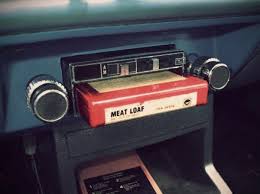
The first aftermarket option I remember my parents adding was that of an 8-track tape player. I loved this device because it allowed me to listen to air checks of my weekly radio show on my daily commute to college. I wanted to improve my style and presentation.

Cassettes & CDs

The 8-track tape players in cars would soon be replaced by cassettes, allowing people to make up their own “mix tapes” of songs they loved to hear most.

Compact Discs (CDs) eventually replaced cassette players in the car dashboard, and for those of us that didn’t want to change CDs, one at a time, it was a thrill having a six-CD changer located in the trunk that allowed for even more variety with the touch of a button.

iPods & Smartphones

Steve Jobs once said he wanted to be able to have a 1,000-songs in his pocket, and from that vision, came the Apple iPod. iPods could eventually be plugged into the car’s audio system and now offered a virtually unlimited supply of music and audio books at the touch of a button.

The iPhone would offer all that any iPod ever could, plus so much more. It became the computer in our pockets replacing a multitude of single use devices, including the car radio.

Entertainment CenterDigital Car Radio

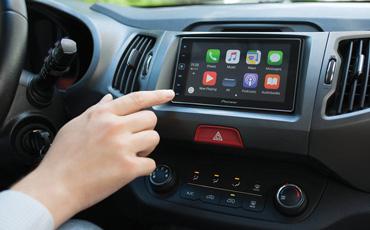
Today’s automobile dashboard offers occupants a complete entertainment center that immediately connects to a person’s smartphone via either Apple’s CarPlay, Google’s Android Auto, or a manufacturer’s proprietary system. Today the vehicle’s onboard entertainment system plays a big role in people’s car buying decision and it can also add from a thousand to two thousand dollars more to the price of a vehicle.

Self-Driving Cars

TV Car RadioWith the evolution of self-driving cars, you can expect that more and more vehicles will come with video capabilities as well as audio, and also that the competition for who can provide the best in-car entertainment will be fierce and passionate.

Traditional radio programming staples, like Two-fer Tuesdays, ten-songs-in-a-row and no-repeat workdays aren’t going to cut it.

The global pandemic has caused two markets to significantly heat up:

1) suburban house sales and

2) new car sales.

Today’s reality is that people who now find themselves working from home, don’t want to be stuck in a little urban apartment and are moving to homes that offer more space to enjoy. Likewise. those individuals whose work demands they still commute, no longer feel safe on mass public transportation and are upgrading their ride.

Understanding how these changes will impact the future of your media enterprise is critical.


5 Comments

Filed under Education, Mentor, Radio, Sales

First Things, First

covid-19If someone had asked you, “Where do you see yourself in 5-years?” I seriously doubt anyone could have imagined they would be smack dab in the middle of a global pandemic. But that’s where we find ourselves at this moment in time.

No matter what you may think will return us to the life we had before COVID-19, nothing even begins to change until we have two things: therapeutics to cope with this novel coronavirus and a better understanding of how this dastardly disease can be squashed like a bug. In the meantime, everything else we try is merely a Band-Aid on the problem.

TRUST

A good radio friend posted on LinkedIn a graphic from the Radio Advertising Bureau (source: Kantar 2017)  “Trust in News” purporting radio to be the medium, Americans turn to for trust.

Radio & Trust

Well, we are now half-way through 2020, and I wonder what relevance that this research conducted in 2016 and published in 2017 has in a COVID-19 world. Probably, slim and none.

In fact, the NRRC (Network Radio Research Council) is recommending that all network/national buying and selling be based on the Fall 2019 Nationwide survey, and not those surveys conducted since the start of COVID-19, saying “the impact of the COVID-19 pandemic has caused unprecedented divergence of traditional patterns of media consumption, including AM/FM listening and the streaming of audio.”

If we can take to the bank anything from the world we are living in now, it’s that anything pre-COVID-19 is now FUBAR*.

How COVID-19 Has Changed Our Media Consumption

Since the onset of this global pandemic, the home broadband bundle has significantly been changed. Most consumers are adopting a stand-alone broadband service and not bundling it with Pay-TV or home phone or even their mobile phone. Why is this happening? Researchers say with another recession looming, people are watching all of their pennies.

With people working from home (WFH) and driving less, Out-Of-Home (OOH) media has been clobbered. Revenue projections for the Billboard industry show it will be down over 19% in 2020, compared to radio (down 13.7%) and local television (down 12.4%), according to MAGNA. Before COVID-19 hit, OOH was one of the fastest-growing and most stable linear media channels. Zenith thinks that OOH revenue will be down even more, predicting it to be down 25% in 2020.

Nieman Lab writes “Radio listening has plummeted. NPR is reaching a bigger audience than ever. What gives?” And the answer is, 2020 is the year that NPR will make more money from underwriting on its podcasts than it will from its radio programs.

Follow the Money

Local radio is very dependent on Main Street, but Main Street is in the cross-hairs for defaults, bankruptcies and evictions due to COVID-19.

Much like NPR is experiencing with its online products, retailing is becoming an online activity with American consumers. Economists knew that many cities had a retail footprint that was too big for the local consumer economy to support. COVID-19 merely accelerated things.

In fact, COVID-19 has created a quantum leap for e-commerce in 2020. What was projected to take place over years, has been compressed into a few months.

The United States Census Bureau reports that in the second quarter of 2020, e-commerces retail sales in America rose 31.8% from the first quarter and were 44.5% above the same period in 2019. The Census Bureau says that compared to the share of total retail sales, e-commerce sales grew as much in three months as it had over the past five years.

We are living a period of rapid technological change. Columbia Business School economist Laura Veldkamp says, “We are changing the way business is getting done, we’re changing the way we’re shopping and the way we’re eating – we’re changing the way we’re having meetings.” She points out that:

“the pandemic, like the Depression and World Wars I and II, is fundamentally altering people’s tastes. Some businesses will be left behind, as consumers get accustomed to videoconferencing instead of commuting, and buying groceries and other goods online instead of braving stores, malls and restaurants.”

Unemployment Tsunami Ahead

Economists are worried what’s ahead when it comes to unemployment in America. They see exponential growth in claims for the Pandemic Emergency Unemployment Compensation (PEUC) program and a weakening U.S. labor market. The PEUC has grown from 27,000 people on April 11, 2020 to 1.3 million as of August 1, 2020. Worse, the number of PEUC recipients has stayed at over 1 million people for four straight weeks and has actually been increasing each week.

“The real tsunami is coming,” says Mark Zandi, chief economist at Moody’s Analytics. “My guess is at this point hiring in the industries that have been hit hard is going to abate.” Plus we know that United Airlines plans to furlough 3,900 pilots, Delta 2,000 pilots and American Airlines are alerting their employees to furloughs of 19,000 companywide.

The Conference Board Consumer Confidence Index declined in August for the second consecutive month hitting a new pandemic low. Consumer optimism, along with their financial prospects also declined. Both are continuing on a downward path.

The Long Road Back

Economists see a long road back for the United States economy. A National Association for Business Economies (NABE) survey of 235 members July 30-August 10, 2020 showed that 60% predict that it will not be until the second quarter of 2022 (or later) that our economy may finally rebound to where it was in 2019, pre-COVID-19.

Economy Rebound

The Party’s Over

When you’re having a good time, it’s hard to call it a night and leave a party. Sometimes it’s due to FOMO (Fear Of Missing Out) and other times, it’s because no one likes to see good times come to an end.

The Oracle of Omaha – Warren Buffett, puts it this way:

‘They know that overstaying the festivities — that is, continuing to speculate in companies that have gigantic valuations relative to the cash they are likely to generate in the future — will eventually bring on pumpkins and mice. But they nevertheless hate to miss a single minute of what is one helluva party. Therefore, the giddy participants all plan to leave just seconds before midnight. There’s a problem, though: They are dancing in a room in which the clocks have no hands.’

Commercial broadcasters, by and large, have enjoyed the radio broadcasting party of the 60s a little too long. So many of the programming models haven’t really changed since the days when I was still a disc jockey, yet the world has changed, and changed exponentially.

Radio broadcasters, like NPR, that have embraced a vision of where media consumption is headed, are seeing their investments paying off.

Those that haven’t changed, are finding today’s environment extremely challenging.

Local radio’s fortunes have always been tied to Main Street, not Wall Street.

COVID-19 has disrupted Main Street’s business model.

The old rules don’t apply any longer, but, we don’t really know yet if this is another giant bubble or the future of our world.

Realizing that the time horizon for answers could be two years out, one wonders, will you be able to survive till we have the answers?


*A military term defined as F’d Up Beyond All Recognizability

1 Comment

Filed under Education, Mentor, Radio, Sales

Radio’s Moment in Time

Fleming

Sir Alexander Fleming

Like it or not, we’re making history. 2020 will be a year studied by future generations when it comes to, what to do and what not to do, when faced with a global pandemic.

History only gives us two prior events that don’t even come close to what we’re going through today, the 1918-1919 flu pandemic and the 2008 financial crisis. COVID-19 is so much more than either one of those for a multitude of reasons.

1920 Commercial Radio is Born

Following the two-year 1918 flu pandemic, commercial radio would be born in November 1920 with the licensing of Westinghouse’s KDKA in Pittsburgh.

Beside radio, the list of inventions that would shape America in the 1920s were the automobile, the airplane, the washing machine, assembly lines, refrigerators, electric razors, instant cameras, jukeboxes and television.

TV wouldn’t really take hold until after the end of World War II.

Transistor Radio

In the 1950s when TV invaded American homes, and pushed the radio out of the living room, there were many who prophesied about radio’s demise. What would give radio new life was the invention of the transistor radio and the placement of radios in the dashboard of automobiles.

One of the songs of my youth was by Edwin Starr, a song called “War.”

War, huh, yeah
What is it good for
Absolutely nothing
War, huh, yeah
What is it good for
Absolutely nothing
Say it again, why’all

War, huh, good god
What is it good for
Absolutely nothing, listen to me

While I can’t say I disagree with the inhumanity of war, saying it was good for “absolutely nothing,” is to not acknowledge the volume of technology we enjoy today that was developed as a direct result or evolved from military conflict.

War accelerates technological developments on a global scale.

Penicillin

One of the most important inventions of the 1920s was the development of penicillin by Sir Alexander Fleming, a Professor of Bacteriology at St. Mary’s Hospital in London. Sir Fleming’s studies of bacteria led to the creation of an antibiotic that kills bacteria and prevents them from growing and multiplying.

Because Sir Fleming wished to get penicillin into the hands of as many of the sick who desperately needed this antibiotic, Fleming never applied for a patent.

One sometimes finds, what one is not looking for. When I woke up just after dawn on September 28, 1928, I certainly didn’t plan to revolutionize all medicine by discovering the world’s first antibiotic, or bacteria killer. But I suppose that was exactly what I did.

— Alexander Fleming

Ironically, it wasn’t until after the bombing of Pearl Harbor that mass production of penicillin would occur. By D-Day in 1944, penicillin production had been ramped up to produce enough of the antibiotic to treat all the wounded in the Allied forces.

Prioritizing People

If history teaches us anything, it’s that Americans win when policy makers prioritize people. The GI Bill for example, gave returning veterans a chance to acquire skills, and seize educational opportunities that would have been difficult for them to pursue on their own.

Herb Kelleher, co-founder of Southwest Airlines and its first CEO, built his airline on the principle of prioritizing people. Forbes wrote:

For almost 30 years we’ve been asking, “What if you could build a company that is as human as the human beings in it? What if you could create a culture that inspires passionate people to come to work fully awake, fully engaged, firing on all cylinders because they know they are doing epic work?” 

What if you could create a culture that inspires people to come to work, fully engaged, firing on all cylinders?

Herb did it.

Kelleher said, “I’d rather have a company bound by love than a company bound by fear,” and for 46 consecutive years Southwest Airlines growth and profitability showed what that can produce. Sadly, Herb Kelleher passed away at age 87 in 2019.

If there’s any industry that’s been hard hit by COVID-19, it’s the travel and leisure industry. So, how is the current management of Southwest handling this business crisis? On July 26, 2020 Southwest management announced it will not furlough or lay off any workers on Oct. 1, the first day it is allowed to, per its CARES Act terms saying, “We have no intention of seeking furloughs, layoffs, pay rate cuts or benefits cuts through at least the end of the year.”

Where Are We Headed?

No matter what business or industry you’re in, we’ve reached that moment in history where it’s time to focus on where we want to go and not where we’ve been.

The COVID-19 global pandemic is a war on our health. Like military conflicts, it is causing the world to change at an accelerated pace.

The challenge for all of us is to seize the moment and not be afraid to reimagine every aspect of our lives. How and where we live, how we educate the next generation, what our business models should look like, and how we embrace diversity and talent on a global scale. It’s our moment in history to let go of the past.

100 Years of Commercial Radio in America

2020 marks the 100th Anniversary of America’s Radio Broadcasting Industry. In the 1950s, television forced radio to re-invent itself and become the industry that many people, like myself, grew up with and made our career.

I’m sure the radio people of the Golden Age looked down their noses at how radio was changed by my generation, but we created a communications  product that reached virtually every American.

COVID-19 and the internet are forcing radio to do that once again.

As Walt Disney famously said, “If you can dream it, you can do it.”

What’s your dream for this moment in time for radio?

4 Comments

Filed under Education, Mentor, Radio, Sales

Radio’s GEN-Z Challenge

GEN ZI recently sat in on the Edison Research webinar about people born between 1996 and 2012, known as GEN-Z.

If you read about this webinar in the radio trades, you would have learned that 55% of these young people listen to AM/FM over-the-air radio. What’s not to like about that?

The reality was, this daily radio listening was only to Over-The-Air FM radio, none of these GEN-Z people ever mentioned listening to AM radio. That’s still a positive, right?

It is, if your only focus is on the immediate future, not future trends.

Generation Z

Today, people aged 8 to 24 make up over 65-million Americans. They are the first truly digital natives, not having known a world without full digital access to content. GEN-Z people are also often called “ZOOMers.” They would rather create their own content than curate other people’s content.

Edison Research points out that Generation Z has only known a world where everything is ON DEMAND, and it’s the growing up in an ON DEMAND world that makes ZOOMers a challenge for OTA radio.

ZOOMer Trends

  • Their smartphones are the center of their media world.
  • 53% of ZOOMers listen to audio streaming daily.
  • They spend 98% more time than the rest of the population watching videos and listening to music on YouTube.
  • Spotify is their go-to music streaming service.
  • Their radio listening is mostly in the car, some at work, but none of it occurs in the home.
  • If they listen to OTA radio, it is on a device that only receives OTA radio signals, not with a digital streaming device.

When Edison Research ran clips of people in this age group talking about their media habits, it was clear FM radio wasn’t their first choice, but the fact that it was available in the car they were riding in or it was playing on a radio that everyone listened to while they were working.

Things Radio Can Do to Attract ZOOMers

Edison suggested that these programming ideas might be a way to attract the GEN-Z audience:

  • News & Information is important to GEN-Z, it’s their social currency.
  • Remind ZOOMers that radio is available on their digital streaming device.
  • GEN-Z wants to change the world, their local communities for the better and OTA radio could be a catalyst for helping them do this.
  • Surprise and delight ZOOMers with your content.

This last point is really about engaging the listener, and showing them you really care. In reality, 74% of your listeners probably don’t care* if your FM radio station disappears, because they don’t think you really care about them. Radio needs to create shared experiences for this age group. Radio needs to show they care.

Shared Values and Shared Purpose

Christian broadcasters and NPR both understand the shared values and purpose of their listeners and base their programming decisions on them. These broadcasters understand that their mission is not to attract everyone to their programming, but to build a loyal audience with those who share their vision of the world.

Using the Edison Research on GEN-Z, how can your radio station inspire and empower the ZOOMers in your community?

How do you learn what the shared values and purposes of the GEN-Z listeners are?

Ask them.

Form a GEN-Z advisory board to learn what’s on their minds and what their vision for the future is. Be willing to focus every aspect of your radio station on what’s important to THEM.

Change doesn’t begin with a slogan, it begins with shared values and purpose, which then inspires people to come together and create a world that is better than they found it.


*based on book “Know What You’re For” by Jeff Henderson

10 Comments

Filed under Education, Mentor, Radio, Sales

Would You Like to Participate in Radio Research?

nielsen familyNuVoodoo does some really wonderful research about radio listening. They particularly focus on reaching people who are most likely to keep a radio listening diary or wear a Nielsen Portable People Meter, aka PPM.

During their last webinar, a slide came up quickly in the jam-packed presentation that made me choke on my coffee. It showed how small the pool of radio listeners is that would participate in Nielsen Radio ratings research. An astounding 82% say they would never wear a PPM device and even more listeners say they wouldn’t keep a ratings diary. Ratings Likies 2020

I Was a Nielsen Family

When I was a radio broadcaster, it wasn’t unusual for Arbitron Ratings to ask me about keeping a radio listening diary for a week. Each time I declined because I was actively working in radio.

When I was a broadcast professor at the university in Kentucky, I was approached about keeping a television ratings diary and Nielsen said that being a broadcast teacher was not a disqualifier, so I said “yes.”

I knew that the experience of keeping a ten-day television viewing diary would be one I could share with my students in covering the topic of radio/TV ratings. I was thrilled to be a “Nielsen Family,” even though that thrill quickly dissipated once the survey diary and instructions arrived.

The few dollars Nielsen sent to me with the materials seemed small potatoes for the amount of information they wanted to extract from my viewing habits.

By the end of the ten days, I was sure I’d never want to do this again, and it made me sad because I was a person who should be passionate about doing such work.

A Relative’s Family Wore PPMs

A member of my family living outside of Boston was asked to participate in PPM radio research. The rewards being offered enticed them to say “yes.”

The members of the family ranged in age from 44 to 6.

I remember looking at this 6-year old playing on his swing-set and thinking, Boston radio 6+ radio ratings depended, in part, on little kids like this. It sent a chill down my spine.

Well, the family grew tired of participating very quickly. In the nutshell, they didn’t feel the inconvenience was worth the small reward paid for wearing the PPM devices.

They said the experience hardened them from ever participating in future radio or TV ratings research, besides now they rarely listen to radio anymore with Spotify being the family choice for streaming. The Spotify App keeps track of each member of the family’s listening habits, serving up just what they want to hear.

Ratings Likelies: Rare & Vital

In late June 2020, NuVoodoo fielded their sixteenth Ratings Prospects Study and they write: “we drilled down to the small segment of radio listeners likely to accept a meter or diary from Nielsen. As has been the case in every past NuVoodoo study, when we model for the subset of respondents who would say ‘yes’ to Nielsen, the opt-in rate even among our already research-inclined sample is staggeringly low – with the percentage of likely ratings respondents who spend an hour or longer with radio each day even rarer still.”

That’s pretty disturbing to hear.

Share of Ear

Then the news breaks that COVID-19 has tipped the consumer listening habits to digital streaming. Now 53% listen to on-demand/digital devices versus 47% who listen to linear/non-digital devices, like AM/FM radio. Edison Research began tracking audio consumption on digital devices in 2014 and now, only six years later, people over the age of 13 spend more time with these devices than traditional OTA radio.  Digital Devices Cross 50%

It’s another case of the inevitable happening anyway, but COVID-19 is causing changes to occur on an accelerated time frame.

Edison Research also found in their latest Infinite Dial research that new music seekers are using YouTube for music discovery versus AM/FM radio, 68% to 46%.

Dan Ariely Explains

Dan Ariely is a psychology and behavioral economics professor at Duke University. I first became aware of Dan’s work with his book Predictably Irrational.

Dan explains that “the interruption of everyday life has been an experiment showing that habits aren’t just desires; they’re behaviors cued by reminders in our environment. When we change the way we interact with our environment, a lot of seemingly ingrained habits fade away. Some of them we are better off without, like thoughtless consumption and spending.”

Since the pandemic more people who used to commute to work, began working from home. The AM/FM radio cue for listening was their vehicle’s dashboard radio, but since they were spending less time in the car and more time at home, the device for audio consumption used in the home now became dominant.

While one hopes that once people begin to commute to work again, if that even happens, the old routines – including listening to the car’s radio – might return.

However, many companies, especially the high tech ones like Google, Amazon, Twitter, and Facebook, are moving to a permanent WFH (Work From Home) model.

Dr. Ed Cohen

One of the most recent high profile layoffs was that of Dr. Ed Cohen from Cumulus as its VP for Ratings and Research.

Radio Ink asked him about the future of AM/FM radio to which he responded:

“It’s a question of whether (the radio industry is) cutting bone and muscle rather than fat. If the radio industry continues to cut, can we put our best foot forward to not only keep current listeners spending as much time with the medium as they have in the past, but can we also convert light listeners to spend more time with radio? Commercial radio is not a charity and faced with the revenue challenges of (COVID-19), layoffs and furloughs are inevitable, but listeners don’t understand that and don’t likely care. They want to be entertained and informed. If they perceive a degradation of what they expect from us in a world of increased competition from other sources (streaming, podcasts, etc.) some will go elsewhere, accelerating a downward spiral. I hate to sound pessimistic about a medium where I’ve spent nearly my entire career (even my Ph.D. dissertation was about radio) and have no claims to be Nostradamus, but that’s the logical conclusion. I hope I’m wrong.”

Sadly, Dr. Cohen, I think you’ve got it right.

11 Comments

Filed under Education, Mentor, Radio, Sales

The Times They Are A Changing

Bob DylanIn 1963, Bob Dylan wrote the song “The Times They Are A-Changin” which would become an anthem for frustrated youth who were anti-establishment and wanted change. This marked the beginning of the upswing of a “Me” cycle. 1963 was the rise of the Baby Boomers, a generation that would grow to seventy-four million teenagers at its peak. A generation raised on radio.

The Rosetta Stone

Before Napoleon Bonaparte discovered the Rosetta Stone in 1799, no one had a clue how to read Egyptian hieroglyphics. But that four foot tall stone had engraved on it the same story in three different languages, two of which scholars knew how to read.

Today, we live in a world where everyone is concerned about the rapid changes being brought on by the COVID-19 global pandemic. But our world is changing in ways that go beyond the impact of a novel coronavirus, it’s also a societal time of change in America, change that will continue even after a vaccine has been discovered that will quell this out-of-control virus.

Come gather ’round, people
Wherever you roam
And admit that the waters
Around you have grown
And accept it that soon
You’ll be drenched to the bone
If your time to you is worth savin’
And you better start swimmin’
Or you’ll sink like a stone
For the times they are a-changin’

The “We” Zeniths

In 2012, Roy H. Williams and Michael R. Drew came out with a book titled “Pendulum, How Past Generations Shape Our Present and Predict Our Future.

The essence of the Pendulum hypothesis is that society follows a predictable oscillation, meaning a pendulum that swings between a “We” zenith and a “Me” zenith. Understanding this oscillation will give us insight into the forces that drive the decisions the public makes.

“Predictable, rhythmic attractions are what move our society. Rhythm is intrinsic to the human experience. Feet patter, hearts beat, lungs breathe, planets circle, and seasons cycle to a rhythm. Music, poetry, and dance are built upon it.”

-Roy H. Williams & Michael R. Drew

Some of the “We” zeniths the book Pendulum describes:

  • 1783 America wins Revolutionary War
  • 1863 American Civil War
  • 1943 Adolph Hitler – The Holocaust

{Each “We” zenith is 80-years apart}

Pendulum points out that “virtually every instance of widespread viciousness in Western society has happened within ten years of the Zenith of a “We.” It should be noted that a complete oscillation of the pendulum takes 80-years and that 2023 will mark the zenith of the current “We” period in the Western world.

“We” periods can be defined as “I’m OK, You’re Not OK,” and “Me” periods as “I’m Not OK, You’re OK.” “We” periods are times of witch hunts, “Me” periods are times of hero worship.

According to this book, marketing becomes very easy as we approach the zenith of the “We,” and all one needs to do is “choose what and who you will demonize, and then start tossing fear-soaked words as though they were longneck beer bottles full of gasoline with fiery rags stuffed down their throats.” Does any of this sound like the world we’re experiencing today?

Human Change vs Other Change

We live in a world where the speed of change feels like it is constantly accelerating, and on a technology level it is, but deep human change does not; like the speed of change of the trees, which is not controlled by technology.

Plant a tree and monitor its growth, it appears to not change by the day, but come back in 10-years, 20-years or 40-years and the changes will be obvious. Technology and the internet have done nothing to change the natural cycle of change.

What we can hope for is that the 21st Century’s instantaneous global communication might mitigate the negativity and viciousness as we approach the zenith of the current “We” cycle.

Come writers and critics
Who prophesize with your pen
And keep your eyes wide
The chance won’t come again
And don’t speak too soon
For the wheel’s still in spin
And there’s no tellin’ who
That it’s namin’
For the loser now
Will be later to win
For the times they are a-changin’

What Does It All Mean for You?

We’re seeing people demanding authenticity and transparency in all things. We’ve given up our liberties for the perception of security and given up our privacy for convenience.

The future of education will be about creating new pathways to wealth, and re-creating a middle class, as our current world has been bifurcated in to “haves” and “have-nots.”

How Do You Market in a WE Cycle?

You write “pull” messages, rather than “push” messages from now until 2043 for all of Western society, Williams and Drew write. What’s the difference you ask? Push messages are based on a ‘needs analysis’ and ‘over coming objections,’ where as pull messages build relationships through positive attraction. Social media via the internet is a relationship-building tool. The internet by serving up only what’s requested, is in essence a “pull” medium. Radio, television, newspapers, magazines, and outdoor are all “push” mediums.

People who attempt to “push” their messages with pop-ups and other methods on the internet are met with anger by the consumer.

How could your radio program attract an audience with seduction? How could you romance your listeners to want to spend more time with your radio station, its website and/or podcast?

Time is money is the name of the game in a “We” cycle. As Williams and Drew put it, “Whoever wins their time is the one most likely to win their money.”

The line it is drawn
The curse it is cast
The slow one now
Will later be fast
As the present now
Will later be past
The order is rapidly fadin’
And the first one now
Will later be last
For the times they are a-changin’

We Me Sales Strategies

Pendulum by Roy H. Williams & Michael R. Drew


2 Comments

Filed under Education, Mentor, Radio, Sales