
 If you’re in sales, this is probably the question that haunts you most: Why do people do the things they do?
Daniel Pink recently wrote a book “To Sell is Human” and in the book, he tells us, we are all in sales today. In fact, we may not even be aware that we are selling all the time. Daniel told the Harvard Business Review:
“I’m obviously selling books because that’s a part of my business. But if you go beyond that, I (also spent my) time trying to convince an editor to abandon a stupid idea for a story. I tried to get an airline gate agent to switch his seat. I’ve got kids. So, I’m trying to persuade my kids to do things. I have various people I do business with. And I’m trying to get them to see it my way, rather than their way, to go my direction, rather than their direction.”
“And when you actually tease it all out, I’m spending an enormous amount of time selling.”
We’re All in Sales
Looking at this from a broadcaster point of view, we too are all in sales, NOT just the people in the sales department.
Programmers are selling their ideas to management and if management gives them enough rope, they then have to sell those ideas to their air staff who then has to sell the concept to the listeners.
Events Change Our World in a Heartbeat
Sometimes events change the dynamics of what people want, need and do. The recent hurricanes have certainly had that effect on broadcasting.
In Houston, KTRH was ranked #11.  Then Houston was hit by Hurricane Harvey and KTRH zoomed to #3, but soon after the impact of the storm began to fade and life in Houston began its long road back to “normal,” KTRH sank back to #15.
I ran a news-talk-information AM radio station back in the 90s in Atlantic City and in spite of our big commitment to local news and information, research showed that people would rather spend their day with one of the many FM music stations. However, they knew in times of coastal storms or other emergencies, our AM radio station was the one to turn to.
Radio cannot live waiting for the next emergency.
iPhones vs Androids
We all know that iPhones have not activated the FM chip to receive OTA FM radio broadcasts in their older iPhones. Plus Apple’s newest iPhones (7, 8 & X) don’t even have an FM chip in them to activate. So, if having an FM chip in their smartphone was important to Apple’s customers, why do people keeping buying iPhones? Maybe it is because they use them for other things.
In the USA Google’s Android and Apple’s iOS mobile operating systems are sharing the market about evenly says John Koetsier writing in Forbes. However what we’ve seen over the last couple of years is that what they don’t share equally is commerce. iOS is used to make more online purchases than Android. If you’re selling stuff, that’s an important distinction and its why Apps are usually first developed for the Apple Store and then later for Android devices.
Digital Cameras
I recently read an article that said if digital cameras were to stay relevant, they should connect to the internet. Guess what, they now can. Here are seven of the best WiFi cameras on the market according to Lifewire.
Should they also be able to make & receive calls, texts? Contain an FM chip?
As everything becomes connected to the internet should they also be able to receive OTA broadcast?
Electric Cars
BMW was the first car company I was aware of, that when it introduced its all electric car said it would not contain an AM radio. BMW said they couldn’t isolate the noise interference it would cause to the AM signals.
Funny, but I remember when cars used to have only an AM radio and that isolating an alternator was often necessary to not get horrific noise through the speakers. Is this really that much of a problem or has BMW carefully defined its customer’s wants, needs and desires?
Tesla in introducing their new Model 3 also said AM radio would not be part of the center stack options.
Do you think this will give people pause in buying an electric vehicle?
Go with the Flow
None of these things really represent a change in why people do the things they do. Roy H. Williams, the Wizard of Ads, has been writing about these things for decades.
In his book “Secret Formulas of the Wizard of Ads” in Chapter 70 “Better Jewelry, Better Jeweler,” Roy poses this question: “If you had to choose between selling what you wanted to sell, or what the majority of people wanted to buy, which would you choose?” Your future success is determined largely by your answer to that very question says Roy.
Bringing this back to broadcasting, AM, FM, digital, TV, cable, streaming is really nothing more than a display case in a jewelry store. It’s what you put into that display case that matters.
Your success comes down to serving your viewer or listener in the very way they want to be served.
If you’re in sync with the people of your broadcast property’s service area, then you will enjoy their business and they will demand you be easily accessible on the latest device.
The curve ball today is connecting your programming to the internet. The internet is a global community. You can’t be all things to all people. If you try, you will fail.
Define your market, know what they want, then serve it up to them. It’s OK to put it on the internet as long as you stay true to the people’s wants and needs that you aim to serve.
 For most of my life I was a radio manager. Then I had the opportunity to be a university professor. What those two professions had most in common was the training of others, employees in the work place and students in higher education.
 I was just reading an article about car buying and it said that buying a car is one of the largest financial decisions most consumers will make in their lifetime. Really? I thought that was buying a house.
 Back before the turn of the century, radio station owners often did market research to find viable programming “holes” in a market. Often it didn’t even take research, just an experienced radio nerd with a sense of what was to be popular. Once identified, the task was simply to put it altogether and hit the air.
 It’s why they forked over hundreds of millions of dollars to have Howard join their team.
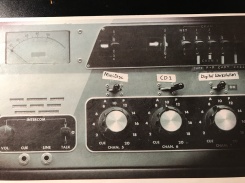 I’ve been attending a lot of radio meetings these past years and one refrain I’ve heard over and over and over and over is that the power of radio is it’s “live & local.”
 When I was growing up, kids when asked “What do you want to be when you grow up?” would respond with things like: Actor, Postman, Astronaut, Scientist, TV Star, Pilot, Explorer, Teacher, Disc Jockey etc. The answers would be as varied as the career choices out there.
 I just recently moved to Virginia from Kentucky.
 I think if I were a student in elementary school today, I would probably be diagnosed as being ADHD (Attention-Deficit/Hyperactivity Disorder).
 an FM translator for their AM station.Putting your programming content on an FM translator is NOT saving AM radio. Period.Saving Fax MachinesI remember the day I got a fax machine for my radio stations in Atlantic City. It was the day one of our biggest client's ad agency called about the next month's orders for their casino client and told me that if I wanted to be on the buys going forward, I needed a fax machine. Only those radio stations with fax machines would be bought.Holy Batman! I got a fax machine that same afternoon.Soon a dedicated phone line was installed just for the fax machine.How important is faxing these days? I still see fax numbers on business cards and websites but really, does anybody send faxes anymore?There’s no effort that I know of to save the fax machine.AM RadioI spent over four decades of my life in radio broadcasting because of AM radio. I remember my first radio, a Zenith transistor radio (120.jpg)
 I write about radio in most of these weekly articles. Recently, an article that compared
  that came with a single ear piece. I remember sneaking it into school to hear the Red Sox playing in the world series. I don’t remember what the teacher said in those classes.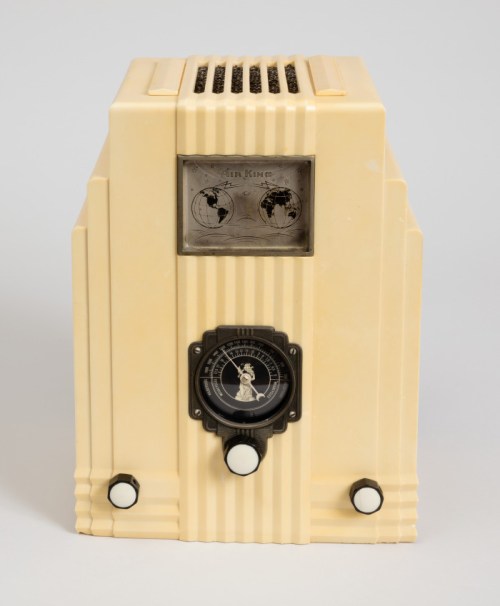
 Apple recently introduced the iPhone 8, iPhone 8 Plus & iPhone X (it’s 10th anniversary iPhone). Each of these new iPhones have an FM chip in them, I’ve read, that if turned on, could receive OTA FM radio signals, but these chips are not activated.
 DickTaylorBlog