“We Never Called It Content” EXTRA

1My latest blog post has gone viral.  Plus it’s been picked up and re-published by the radio trades, other blogs and today I just finished appearing on a podcast – along with Colin Cowherd – talking RADIO.

The podcast ends with a really interesting segment on why broadcasters use funny voices. It’s FABULOUS!

You can hear this podcast here:  https://soundcloud.com/radio-stuff-podcast/radio-stuff-113

You can read the blog post that started it all here:  https://dicktaylorblog.com/2015/09/06/we-never-called-it-content/

1 Comment

Filed under Education, Mentor, Radio

We Never Called It Content

Larry Lujack, The Real Don Steele, Robert W. Morgan, Dale Dorman, Ron Lundy, Salty Brine, Bob Steele, and so many, many more. These names I’ve dropped are all no longer on the radio. Terrestrial radio anyway. We radio geeks like to think they are now Rockin’ N Rollin’ the hinges off the pearly gates.

Everyone can understand the circle of life. People retire, people pass on.

But this past week saw the “forced retirement” of more big names in radio. Two of them that were on Los Angeles radio have a star on the Hollywood Walk of Fame. They delivered, according to what I’ve read in the trades, excellent audience ratings. So what happened?

Bill Gates once famously announced “content is king” as we entered the Internet age. Microsoft would give businesses WORD, EXCEL, PowerPoint etc. The business schools graduated a whole gaggle of spreadsheet nerds who excel at these computer tools. The Telcom Act of 1996 was the beginning of the consolidation of radio and when Wall Street would jump into this wonderful new investment opportunity.

When you look at radio stations via spreadsheets, you primarily are reducing everything to numbers. It completely eviscerates the human element from the decision making process.

Nobody turned on Steele, Lujack, Morgan, Dorman, Lundy, Brine, Steele and the rest of radio’s iconic personalities and said, “I’m going to get me some great content.” We turned on our favorite radio station because the people behind the microphone were members of our family. We enjoyed spending time with them. We knew that what we were experiencing, they were experiencing right along with us. They were local & live.

Radio is an art form. When you remove the artists, there’s not much left.

Radio is a pretty simple business. You play recordings people want to hear, you keep your hand on the pulse of the community you’re licensed to serve and report on what’s going on that people need to know and you hire personalities that become the audio glue that keep it all together running smoothly and engage the listener.

To support the expense of doing all of this, you work with businesses to expose their products and services to the audience you’ve attracted to your radio station.

The irony with today’s radio is that more radio stations operate out of a single location than at any time in radio’s 95 year history, but with less people per station than at any time in that same history. I wouldn’t be surprised to see Rick Moranis (Honey, I Shrunk the Kids) return to make a new movie about today’s radio called “Honey, I Shrunk the Staff.”

Frederick Allan “Rick” Moranis, a native Canadian, was a disc jockey on three Toronto radio stations back in the mid-70s performing on the radio under the name “Rick Allan.”

No one has a clue how much the employment in the radio industry has shrunk as the industry rushed to consolidate. What we do know is when you walk into any of these huge clusters; there are rows of empty cubicles, offices that are no longer occupied – it can be depressing.

I’m not saying that radio, like every other business, shouldn’t be running more efficiently and taking advantage of technology to control the costs of operation. But the buzz you hear is that the fat cutting has become cutting the bone.

As Ken Levine wrote in his blog about the state of the radio industry:

“In the past when a great disc jockey got fired he would simply show up elsewhere. But who knows today? Nobody is hiring. They’re all just firing.”

Today’s radio is being driven by Excel spreadsheets and PowerPoint presentations trying to put a pretty face on the new strategy. But radio is more than just studios, transmitters, and now websites/social media, radio is made up of people, albeit fewer of them by the day.

Radio was never a just a job. Radio was a mission inspired by people who were passionate about all the medium could be. Everyone inside a radio station worked towards this common goal, just like the people at Google, Apple, Southwest – to name a few – do.

People didn’t get into radio, radio got into people.

74 Comments

Filed under Education, Mentor, Radio

The End of Facebook…

…is about as likely as the end of radio. I’m sure I got your attention with that headline. But you might be surprised to learn that Facebook and radio have a lot more in common than you ever gave much thought to.

A study by two Princeton researchers in 2014 created quite a stir when they announced that Facebook would undergo a rapid decline in the coming years. They predicted that Facebook would lose 80% of its peak user base between 2015 and 2017.

Facebook folks, using the same flawed research techniques as those used in the study predicted that Princeton University would only have half of its current enrollment by 2018 and zero students by 2021. They were making a point, those fun folks at Facebook.

This whole dust-up reminded me of all that we in radio have been going through of late; everyone predicting our demise.

Gawd, I feel old to tell you how many end times of radio I’ve lived through. The 8-track tape player was going to put us out of business, then the cassette player, then the CB radio (never happened good buddy, but are CB radios still around?) then the CD player & CD changer, then the cell phone, then the iPod, then the Smartphone, then satellite radio and now Internet radio.  It never happened, but oh, did folks worry that it might.

Let’s face it, there are times we like to listen to our own music; our favorite tunes. I’m a radio guy and I do it. Nothing to be ashamed of. And how did all those tunes get bought and loaded into my digital music playing device? I heard them on the radio, that’s how.

Now I would like to say to Facebook, welcome to our world, the world of radio. Both over-the-air radio and Facebook are ubiquitous and when you get that big you suddenly find that your users take you for granted. They simply expect you to always be there when they want you, but they no longer talk-you-up all the time because you’re no longer the shiny, new thing in the world.

Radio appears to be losing its younger audience these days. Facebook is reported to be hemorrhaging fresh faced teens as well. Welcome to the consumer group of former leisure suit wearers.

Did you know that 45% of of Internet users over 65-years of age use Facebook?*  That means they’ve been AARP members for 15 years now; minimum.

Facebook likes to tell the world they have 1.4 billion users, but when we roll that back to just the USA it only amounts to around 56% percent of the population of 316 million Americans. Radio reaches 92% of Americans over the age of 12 and that number is only down 2% in the last decade. So radio reaches more people every week than use Facebook, but from the advertising world perspective, radio might as well be Rodney Dangerfield. We don’t get no respect.

Facebook likes to combine the USA stats with the Canada stats. We’re all family right? Wrong. Canada, as it turns out, is the country with the most active Facebook users. When you combine Canada’s users with those “lazy Americans” it makes the USA performance appear to be a little more robust.

I have 393 friends on Facebook. The average number of Facebook friends a person has is 245, so I’m above average (not that I care). My radio stations had tens of thousands of “friends” (we called them listeners) and that I DID care about!

The average radio listener listens to radio over 2 hours a day. In that amount of time, they might come in contact with about 20 to 30 ads. The average amount of posts that a Facebook book user is confronted with when they log on is around 1,500 and that’s in about 20-minutes time.

And while I’m talking about time spent with radio and Facebook, the average amount of time a Facebook user spends on Facebook per month is 8.3 hours. Now compare that with the amount of time a radio listener spends with radio in a month; 66 hours.

That’s over 8-times as much time spent listening to radio as browsing Facebook.

Radio is 93 years old. Facebook is just a teenager and like a teenager it really doesn’t know what it wants to be when it grows up.

Once upon a time, radio stations tried to be all things to all people. Then it began to specialize into various formats, demographics and lifestyles. Facebook is still in that mode of trying to be all things to all people. Good luck with that!

So am I telling you Facebook is over? Not at all. But if perception is reality, then Facebook is feeling the pain of radio.

Radio is the most impactful medium in the world today. In the history of innovation, the History Channel ranked radio as the #2 most important invention of all time (the Smartphone was #1). However, when you look at how it’s treated by the “Mad Men” it sure doesn’t feel that way.

At the moment those ad guys think things go better with Facebook. But like the soft drink Coca Cola that started out with a single beverage product (today it’s over 3,500) Facebook was created by Mark Zuckerberg to provide a simple and easy way for college students to connect with other college students. Today, that concept feels like ancient history.

By the way, the social media innovation for college students to communicate with other college students – Facebook – today only sees 11% of US college student social network users posting to Facebook daily.

Wall Street says you’re worth $128 to Facebook.

I’m here to tell you, that to your local radio station, you’re worth so much more than that.

You’re family.

-0-

*Earlier version said: “Did you know that 45% of Facebook users are over 65 years of age?” which was incorrect.  Source: http://expandedramblings.com/index.php/by-the-numbers-17-amazing-facebook-stats/4/

12 Comments

Filed under Education, Mentor, Radio, Sales

Celebrating A Reunion

PHS 45th Reunion InviteIt was 45 years ago that I graduated from high school.  It’s really hard to believe that much time has passed, but this weekend I’m back in my hometown of Pittsfield, Massachusetts – in the “Heart of the Berkshires” – celebrating that teenage milestone.

This invitation has been on my refrigerator for months.  The anticipation has been building steadily and now it’s almost over.

Friday night we all went to the wonderfully restored Colonial Theater to see Mary Poppins.  Saturday night was our big reunion dinner/dance.  This morning we will meet one more time for Sunday brunch before we depart, all hoping we’ll be able to make it to the 50th reunion in 2020.

2020 is the year that commercial RADIO will become 100 years old.DT WBEC (1970s)  I was fortunate to start in radio back in 1967 while just starting high school.  I earned my 3rd class Radio Telephone FCC Operators License in February 1968 allowing me to professionally start working in radio shortly thereafter.  Radio would help me pay for my college education; bachelors and masters degrees.

My first radio station was WBEC – AM1420 in Pittsfield.

I had visions of being a big time disc jockey working at one of the major market 50,000-watt clear channel signal radio stations like WBZ in Boston or WLS in Chicago or WABC in New York.

But that never happened.  Instead I would move into radio sales and very quickly into radio station management.  It is in this senior management position that I would spend over thirty years of my radio life.

WSM(15)But never give up on your dreams.  Because when I began teaching at Western Kentucky University’s School of Journalism & Broadcasting, I invited radio & TV professionals into my capstone class.  One of those professionals, the operations manager & program director of Nashville’s legendary 650AM – WSM invited me to be a guest disc jockey on this 50,000-watt clear channel signal radio station.

Those high school dreams really can come true!

For four hours on Sunday, July 13, 2014 I was in the air chair doing “The Dick Taylor Show” on this iconic radio institution.

This weekend we all remembered the good times, like the price of a gallon of gas (35-cents) or the price of a 1st class postage stamp (6-cents).  But 1970 was also the year that the Beatles broke up and four students were slain by National Guardsmen at Kent State University in Ohio.

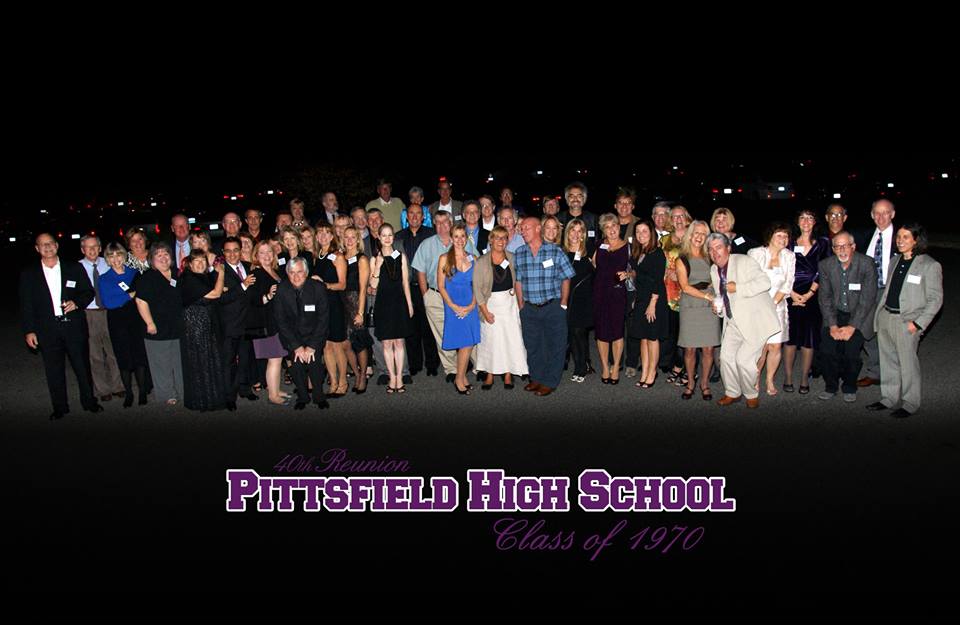
The movies featured: M*A*S*H, Patton, Love Story and Airport.PHS 40th Reunion Picture

The record of the year was “Aquarius/Let the Sunshine In” by the 5th Dimension.  The song of the year was “Games People Play” by Joe South and the album of the year was the self-titled album by Blood, Sweat & Tears.

Five years ago, we all stepped out of the dinner/dance hall for a group photo.  We looked FABULOUS!

We’re Baby Boomers.  A generation that was so big that the city had to handle our class size over three high schools – Pittsfield High, Taconic High and St. Joseph’s High.

We may have been separate back then and even competitive, but today we celebrate as one big high school class.

We’re the high school Class of 1970.

6 Comments

Filed under Education, Mentor, Radio, Sales

Radio: Landmark or Beacon

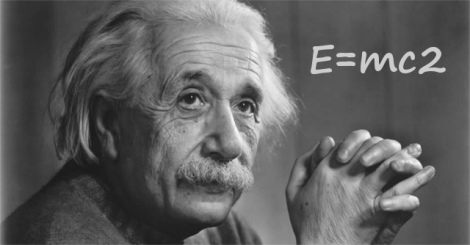
albert-einstein-2Even though it was 110-years ago that Albert Einstein would disrupt the world with how we saw the universe and how we saw time, space, mass, energy and light, we still invoke his name when a person does something brilliant. We say they’re an “Einstein.”

Unfortunately for Einstein, his groundbreaking 1905 theory that would be the foundation for a new way of thinking in physics – quantum mechanics (which gave us things like lasers, microprocessors and iPhones) – wasn’t embraced by this genius. It would be his undoing for the rest of his life.

In the world of higher education, the importance of publishing in an academic journal is more revered than publishing on LinkedIn (where other forwarding thinking professionals hangout) or on a personal blog that’s available to the world. What once was – really isn’t anymore, except to those who cannot accept that today we live in a world made up of platforms, not products.

Radio suffers from a similar dilemma. To traditional broadcasters, radio is something that needs an FCC license, radio tower, antenna and transmitter that sends a signal out over the AM or FM radio bands. I always smile when I look at my old Radio Telephone Third Class Operator Permit that I earned taking a test administered by the Federal Communications Commission at the Customs House in Boston back in 1968. Notice it had the world “telephone” in the name.

Kentucky melon farmer Nathan Stubblefield was an early experimenter in radio broadcasting. Only Nathan wanted his wife to be able to talk to him while he was driving his car from their farmhouse. For you see, in those early days no one was quite sure what this new technology would or could be used for.

“The next big thing always starts out looking like a toy,” says Chris Dixon.

So when people started streaming over the Internet and calling it “radio,” traditional broadcasters looked down their noses at it in much the same way that journalists looked down their noses at the new media platforms like Buzzfeed and Vice Media invading their world.

Einstein teaches us something more than E=mc2, it’s that we need to learn to accept the new platforms that disrupt the world as we knew it and are creating the world that will be. Radio, higher education – most likely your business too – cannot afford to be Einstein-like in our future thinking. The world is moving faster and faster. 50% of today’s jobs won’t exist in ten years.

The iPhone, the Connected Car, Buzzfeed, Bitcoin etc are all platforms.  Radio, colleges, newspapers etc. are all products. Understanding this dichotomy is critical.

In Abraham Pais’s book “J. Robert Oppenheimer: A Life” he writes that Einstein’s inability to adapt to new platforms failed him and that he became a “landmark, but not a beacon.”

And so the choice in our world today is to adapt or die.

Welcome to the age of disruption created by the Internet.

5 Comments

Filed under Education, Mentor, Radio

Why is so much of television so bad?

That’s the question that Newton Minow asked on May 9, 1961 when he addressed the National Association of Broadcasters in Washington, DC.

In his first public address after he took over as chairman of the Federal Communications Commission (FCC) Mr. Minow didn’t pull any punches. He made it clear that in his role at the FCC he was going to make darn sure that broadcasters operated in “the public interest.”

What is meant by operating in “the public interest?” That’s been open to interpretation since those words were written down. Here’s how Mr. Minow defined them:

“Some say the public interest is merely what interests the public. I disagree. And so does your distinguished (NAB) president, Governor Collins, who said ‘Broadcasting to serve the public interest, must have a soul and a conscience, a burning desire to excel, as well as to sell; the urge to build the character, citizenship, and intellectual stature of people, as well as to expand the gross national product….By no means do I imply that broadcasters disregard the public interest…But a much better job can be done, and should be done.’ I could not agree more with Governor Collins.”

Mr. Minow also told the radio broadcasters in the room that the FCC wasn’t going to go to sleep at the switch on them; they were still listening, but that most of the controversies and cross-currents in broadcast programming were swirling around TV and that’s what he planned to address in this speech.

“When television is good, nothing – not theater, not the magazines or newspapers – nothing is better. But when television is bad, nothing is worse,” said Minow.

He then threw out this challenge to television broadcasters:

“I invite each of you to sit down in front of your television set when your station goes on the air and stay there, for a day, without a book, without a magazine, without a newspaper, without a profit and loss sheet, or a rating book to distract you. Keep your eyes glued to that set until the station signs off. I can assure you that what you will observe is a vast wasteland.”

Mr. Minow is 89 and living in Milwaukee, Wisconsin. On the 50th anniversary of his famous speech, he was interviewed by James Warren of the Chicago Tribune. Minow was 35 years old when he took over as chairman of the FCC under President Kennedy. He told Warren that he couldn’t have anticipated the impact his speech would have. Minow’s severe censure of TV’s “procession of game shows, violence, audience participation shows, formula comedies about totally unbelievable families, blood and thunder, mayhem, violence, sadism, murder, western badmen, western good men, private eyes, gangsters, more violence and cartoons” remains highly “radioactive” to this day.

If you’re a fan of the television show “Gilligan’s Island” you might not have realized that the boat that sank was coyly named after the FCC chairman; however spelling it S. S. Minnow. Does that give you some idea of how distasteful having their medium called “a vast wasteland” was to the TV men of that day?

Mr. Minow’s own daughters joke that their dad’s tombstone might be inscribed with the words “On to a vaster wasteland.”

In 1998, President Clinton appointed a commission to review “the public interest” on the eve of the arrival of Digital Television. That commission issued a 160-age report on December 18, 1998.

In 2015, “the public interest” issue has been addressed with respect to the Internet.  Again, the FCC under its current chairman Thomas Wheeler has come forward with a plan that has been as well received by the “Internet men” of today as Mr. Minow’s assessment of TV back in 1961. Here’s what the FCC decided:

Adopted on February 26, 2015, the FCC’s Open Internet rules are designed to protect free expression and innovation on the Internet and promote investment in the nation’s broadband networks. The Open Internet rules are grounded in the strongest possible legal foundation by relying on multiple sources of authority, including: Title II of the Communications Act and Section 706 of the Telecommunications Act of 1996. As part of this decision, the Commission also refrains (or “forbears”) from enforcing provisions of Title II that are not relevant to modern broadband service. Together Title II and Section 706 support clear rules of the road, providing the certainty needed for innovators and investors, and the competitive choices and freedom demanded by consumers.

The new rules apply to both fixed and mobile broadband service. This approach recognizes advances in technology and the growing significance of mobile broadband Internet access in recent years. These rules will protect consumers no matter how they access the Internet, whether on a desktop computer or a mobile device.

The public interest standard has long provided guidance for promoting greater diversity in content, political debate, access, service to local communities, education, diversity and equal employment. The communications revolution will continue to challenge policymakers to ensure operating in “the public interest” remains.

Leave a comment

Filed under Education, Mentor, Radio

What if…

I had the opportunity to sit in on a webinar on “The Creative Economy” that is considered to be the direction the future of business is headed in compared to the traditional business methods of the past. What is meant by the term “The Creative Economy?” It’s one where business revolves around the customer versus the past where the customer revolved around the business.

The Creative Economy also breaks from tradition in the sense that it means the goal of a company is no longer about making money for the stakeholders but about delighting customers. But, you ask, isn’t “maximizing shareholder value” the mantra of Wall Street? Good question. Listen to what these CEOs have to say about that mantra:

            Jack Welch former CEO of GE: “the dumbest idea in the world”

            Vinci Group Chairman/CEO Xavier Hulliard: “totally idiotic”

            Paul Polman, CEO of Unilever: (has denounced) “the cult of shareholder value”

            Marc Benioff, CEO of Salesforce declared this still-pervasive business theory “wrong”

I guess it’s quickly losing favor with those who should know.

The Internet and “The Cloud” are enabling “The Creative Economy.”

Which brings me back to my initial question, “What if…”. What if radio stations were supposed to be small operations? What if the radio industry wasn’t meant to scale?

When I entered the radio business, companies were limited in the total number of radio stations they could own; in the entire USA. It was known as the 7-7-7 rule. A single company could own not more than 7 AM, 7 FM and 7 TV stations in all of America.

What this created was competition between owners of radio stations in a market. Each station was a team of people working as hard as they could to win the audience in that market. The focus was all about the listener or the viewer. Win the most listeners/viewers and advertisers would soon follow to showcase their wares on that radio or TV station’s airwaves.

Hearing “The Creative Economy” described on this webinar was like radio déjà vu.

In 1996, President William Jefferson Clinton signed the Telcom Act of 1996 into law. That was the moment that the “land rush” for broadcast properties began and Wall Street became heavily invested in the radio industry. Wall Street would bring its “maximize shareholder value” mantra to broadcasting.

This point was really brought home to me in 1999 when my stations were sold to a large radio consolidator. The head of this “big box” radio operator told us that we needed to “sell, sell, sell” that it was all about making money for the company and “maximizing shareholder value.”

This “pump up the troops” speech left me cold. I was brought up in a radio world that was about operating “in the public interest, convenience and/or necessity.” I was brought up in a world where if we treated the members of our team well, our team focused on delighting the listener, the advertisers would flock to our station and the owners would be rewarded for doing everything right. That view of life served me well my entire radio career.

Needless to say, I opted not to remain with this new company.

However, I would find myself playing “musical chairs” going forward as it was getting impossible to not be working for a company that hadn’t adopted this modus operandi.

Steve Denning, who writes for Forbes, lead this webinar and pointed out that economics was driving the change for companies worldwide. He told us that no company is doing it all right. Companies like Apple, Amazon, Google and Salesforce are moving in the right direction. In fact, Tim Cook is better at navigating the change to this style of management than Steve Jobs ever was and it no doubt is contributing to Apple being the most valuable company in the world. To give you an example of what it means to focus on the customer first, consider Tim Cook telling an investor in Apple this:

“If you want me to do things only for ROI reasons, you should get out of this stock.”

That was kind of radio world I grew up in. We always tried to do the right thing for our employees, our listeners, our advertisers and the money would follow.

I’m encouraged that radio people who sold out when Wall Street was buying, are now getting back into the radio business with that same ethic, spirit and sense of innovation that seduced me into a four decade long radio career. They understand the concept of “The Creative Economy” because that’s how they built their radio companies the first time around. They also understand that today, radio is more of a concept of operation than a method of delivery.

I’m excited to be working with the next generation of radio broadcasters at my university knowing that radio’s future has never been brighter.

7 Comments

Filed under Education, Mentor, Radio, Sales

A War on Talent

When iHeartMedia wooed away Kurt Alexander aka “Big Boy” from Emmis’ Power106 to their Real92.3 it was a big deal in more ways than one.
The top performing radio station for Emmis was their one station in Los Angeles, KPWR. That is until Alexander departed for KRRL-FM across the street. His leaving impacts both ratings and revenue.

It reminds me of the walking across the street of Scott Shannon in New York City. Shannon left WPLJ where he had been a morning fixture at the station for 23 years to take over mornings at WCBS-FM. Unlike Alexander in LA, Shannon didn’t go head-to-head with his former radio station but to a different format than the one he had just left. However his impact on both stations is much the same. WPLJ went down and WCBS-FM captured the #1 position beating WLTW for the first time.

At a time when the major radio companies are saying things like “flat is the new up” the only way for a company to grow its revenues when the revenue pie isn’t growing is to re-divide how the existing pie is being cut up. To do that means to raid another company’s talent in an effort to increase their ratings while decreasing market competition.

If we look at how talent gets created we find it’s not a quick process. In the case of Alexander, Emmis spent 20 years and millions of dollars turning him into a morning radio star. Shannon has been at the radio game since his army days, tenaciously practicing his craft to become the hall of fame legend he is today.

Radio is not about transmitters, buildings, music etc. it’s about people. People make the radio business fun; personalities behind the microphone and personalities on the street selling the ads. Strong personalities on both sides of the mic are what make for a winning radio station. Neither can be taken for granted.

Emmis didn’t think they were taking Alexander for granted. Heck they were paying this former body guard $1.45 million along with some sweeteners, but iHeartMedia was willing to up the ante to $3.5 million (which Emmis reportedly was willing to match). But what evidently Emmis couldn’t match were the other perks that a company the size of iHeartMedia could create that a company the size of Emmis could not.

The BBC has also been subjected to a talent raid. Apple enticed presenter Zane Lowe to join their iTunes Radio division which led to several more following Lowe to the Cupertino based company. The BBC has a worldwide reputation for great programming, programming talent and the discovery of new music.

The audio entertainment world is like the animal kingdom where the small animals get eaten by the bigger animals in the food chain of life.

Competition for talent that has proven it draws a big audience, not just on-the-air but also online and through social media has never been more sought after. Competition for talent that can package, present and close advertising sales also has never been in more demand.

It’s a war on talent. Good for talent, but an Excedrin headache for small operators battling the big boys; made all the more difficult in a lackluster advertising environment for many radio operators and an ever increasing amount of radio signals vying for that shrinking advertising pie.

The radio dial – including online streamers – may have become infinite, but the revenues that support it have not.

Radio Darwinism has escalated to the global village.

3 Comments

Filed under Education, Mentor, Radio, Sales

The KBA WKU Radio Talent Institute

KBA WKU NRTS LogoOn Monday, July 20, 2015 we will be kicking off the 3rd annual KBA WKU Radio Talent Institute on the campus of Western Kentucky University at the School of Journalism & Broadcasting’s Mass Media & Technology Hall.

Students apply for and are accepted into the institute that comprises ten intensive days of instruction on all things radio. Taught by 38 radio professionals, whom are the best in the business in their area of specialization in the field of radio.

This year the President/CEO of the Radio Advertising Bureau, Erica Farber, will be one of those professionals. Farber leads radio’s advocacy efforts by helping to drive business, grow advertising revenue and communicate radio’s digital transition.

We’re excited to have Erica join us this year, as a major component of the institute is radio sales. Each student will study the modules of the Radio Marketing Professional program taught by radio sales management professionals. Students take the RMP certification exam at the end of the first week.

The KBA WKU Radio Talent Institute has not one, but two National Radio Award recipients who teach each summer at WKU: Steve Newberry, President/CEO of Commonwealth Broadcasting Corporation and Bud Walters, President/Owner of Cromwell Radio Group.

Broadcasters embrace and see the importance of bringing young talent into the industry and see the institute as a talent incubator.

Radio is the #1 REACH MEDIUM in the United States today, beating TV, online and smartphones according to Nielsen.

So this is an exciting program for both students and broadcasters.

I wrote more extensively about the program in Radio World and you can read that article here: http://www.nxtbook.com/nxtbooks/newbay/rw_20150520/index.php#/18

3 Comments

Filed under Education, Mentor, Radio, Sales

The Choices We Make

You are what you are; you are who you are, by the choices you have made. You can change what you are, you can change who you are by changing the choices you make going forward.

To make things simple, let’s break down the choices into large choices and small choices. Large choices would be things like changing careers, getting married or divorced, having kids, picking a college/course of study etc. Small choices are exercising or sitting on the couch watching TV, having that extra cookie or not, going to the football game or listening to it on the radio etc.

Both large and small choices impact our lives. The difference is immediate with large choices but the small choices, over time, can be just as impactful. We just don’t see the change all at once, so they give the appearance of not having any impact, but that’s what makes them so deceptive. The reality is both are as important.

So what does this have to do with radio and TV? Listening to the radio or watching a TV show is a choice we make. We do it often to feel good. Feeling good releases endorphins in the brain that stimulate the pleasure center. It can become an addiction.

Today’s entertainment consumer has lots of choices. They also want to feel good. So it’s only natural that they are going to seek out those entertainment choices that stimulate their brain’s pleasure center.

Netflix and YouTube are two video services that are doing a better job of providing this video pleasure than broadcast TV. YouTube and Pandora are two audio services that are doing this better than broadcast radio (in the opinion of their users). YouTube, as you can see is a double threat, as it is strong in two different media areas and is a real force to be reckoned with. New habits are being formed; new entertainment addictions.

Once upon a time, people jumped through lots of hoops to receive a radio or TV broadcast. Today, all of those choices are quickly and easily available on their smartphone or tablet. Mobile is the fastest growing segment of media in the world. Mobile advertising holds unlimited potential for those service providers that get chosen and make themselves a habit.

The consumer is making little choices each and every day. Broadcasters have ignored them because they seem small and insignificant. But I’m here to tell you that those little choices are just as impactful to your future as if they were of the large variety.

Broadcasters too, have a choice. Accept the new reality and embrace change or let the change happen to you.

Remember, death by a thousand cuts is still dead.

1 Comment

Filed under Education, Mentor, Radio