

By definition, radio is, a: the wireless transmission and reception of electric impulses or signals by means of electromagnetic waves. b: the use of these waves for the wireless transmission of electric impulses into which sound is converted, according to Merriam-Webster’s dictionary.
Your cell phone sends signals to (and receives them from) nearby cell towers (base stations) using Radio Frequency (RF) waves. This is a form of energy in the electromagnetic spectrum that falls between FM radio waves and microwaves.
My First FCC License
When I studied for and passed the Federal Communications Commission (FCC) test to obtain my 3rd Class Radio-Telephone License, I initially wondered why it said “telephone” on it.

Telephones in 1968 were all wired devices, like in my parent’s house in which our family phone was connected by a copper wire and bolted to the kitchen wall.
When I began to study the history of radio, I learned that an early experimenter in radio broadcasting, Kentucky melon farmer Nathan Stubblefield, wanted to be able to talk to his wife while he was driving his automobile while away from their farmhouse. In those early days, no one had a clue what this new technology would become.
Radio’s Metamorphosis
The podcast “Local Marketing Trends” hosted by Corey Elliot and Gordon Borrell, recently featured an interview with the Radio Advertising Bureau’s (RAB) President/CEO Erica Farber in which she said the radio industry’s sales arm was going through a metamorphosis; today the RAB thinks more broadly, to include all things audio.
Gordon asked Erica if she meant podcasting and streaming audio like Spotify and Pandora, to which she said “Yes.” When might this happen, Gordon asked, to which she responded, “maybe today.”
Farber explained how she feels radio is ahead of the curve in not just delivering content, but in delivering services too. Radio is no longer just about selling thirty and sixty second spots but it’s a very different business now, with radio’s core product today being “delivering results.”
Audio Advertising Bureau
Might the Radio Advertising Bureau change its name to become the Audio Advertising Bureau?
I hope not. Here’s why I say that.
Radio suffers from traditional broadcaster thinking that it needs an FCC license, radio tower, antenna and transmitter which sends a signal out over the AM or FM radio bands. But if you ask a young person, what is radio, they will tell you about their favorite stream or podcast which they listen to through their smartphone.
Radio is not a dated identifier, it’s very much in vogue in the 21st Century, but what imagine comes to mind when one says the word “RADIO” will differ depending upon a person’s age.


Apple Music Radio
You might have missed Apple’s August 2020 Press Release about how they were changing the name of their radio service from Beats 1 to Apple Music Radio. In spite of trying to invent a new name for their streaming music offerings, their users called it “RADIO.” And now, so does Apple.

Beats 1, has been Apple’s flagship global radio station since its launch in 2015. Five years later, it’s been renamed Apple Music 1. Oliver Schusser, vice president of Apple Music, Beats and International Content, explained
“Apple Music Radio provides an unparalleled global platform for artists across all genres to talk about, create, and share music with their fans, and this is just the beginning. We will continue to invest in live radio and create opportunities for listeners around the world to connect with the music they love.”Beats
Now is NOT the time for AM/FM Radio broadcasters to abandon the sonic brand known as “RADIO.”
Adapt or Die
When people started streaming over the Internet and calling it “radio,” traditional broadcasters looked down their noses in much the same way that print journalists looked down their noses at the new media platforms like Buzzfeed and Vice Media invading their world.
Traditional media survivors will learn to accept and embrace the new platforms that disrupt the world as we knew it and are creating the world that will be.
An inability to adapt to new platforms is what causes both people and industries to fail.
AM, FM, internet streaming, smartphones, connected cars are all platforms. Radio, newspapers, magazines and the like, are all media products. Understanding this dichotomy is critical.
And so, the challenge for radio is not changing its name, but adapting its product to today’s platforms.

 I recently sat in on the Edison Research webinar about people born between 1996 and 2012, known as GEN-Z.
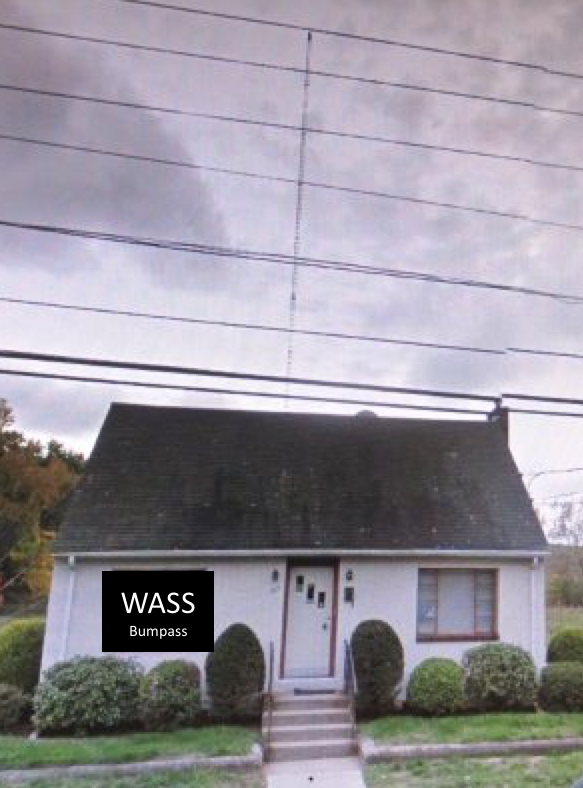 South from where I live, is a little community by the name of Bumpass, Virginia. As far as I can tell, the FCC have never licensed a radio station to this little community of 8,792 people.
 and perspectives. It also works with some of the country’s largest newspapers, magazines and television networks to broaden its scope of news coverage.
 Two such operations that come to mind are: “yourKawarthaOLDIES.com” and “1059WMEX.com” that are filling a gap left by Big Box broadcasters. WMEX-FM
  recently added an LPFM to its operation, this allows locals in Rochester, NH to hear the station easily when in their cars.
 “It ain’t over, till it’s over,” one of the many phrases made popular by Yogi Berra kept popping into my mind as I sat in on several webinars these past few weeks. COVID19 is not over, so why are people acting like it is? We can expect that we will be living with this virus through all of this year and through most of 2021.
 Bill Thomas, a media and branding idea expert and broadcast & radio veteran (@BillThomas), shared a link on Twitter to an Ad Week
  it’s been illuminating learning about our city and the way it operates. The other evening, we had a session with the city’s Emergency Management and E-911 departments.


 On this last Sunday of 2019, it’s tradition to look back at the year just past and share with you the Top 5 Most Read and shared blog articles of 2019. Maybe you missed them or perhaps you’d like to read them again.
 I often wonder if today’s youth would gravitate to the style of radio that attracted me to make radio broadcasting my career for five decades. Would they be attracted to a Dan Ingram, Robert W. Morgan, Dave Maynard, Ron Lundy, The Real Don Steele, Big Ron O’Brien, Larry Lujack or any of the countless other personalities that so influenced me as I was growing up?
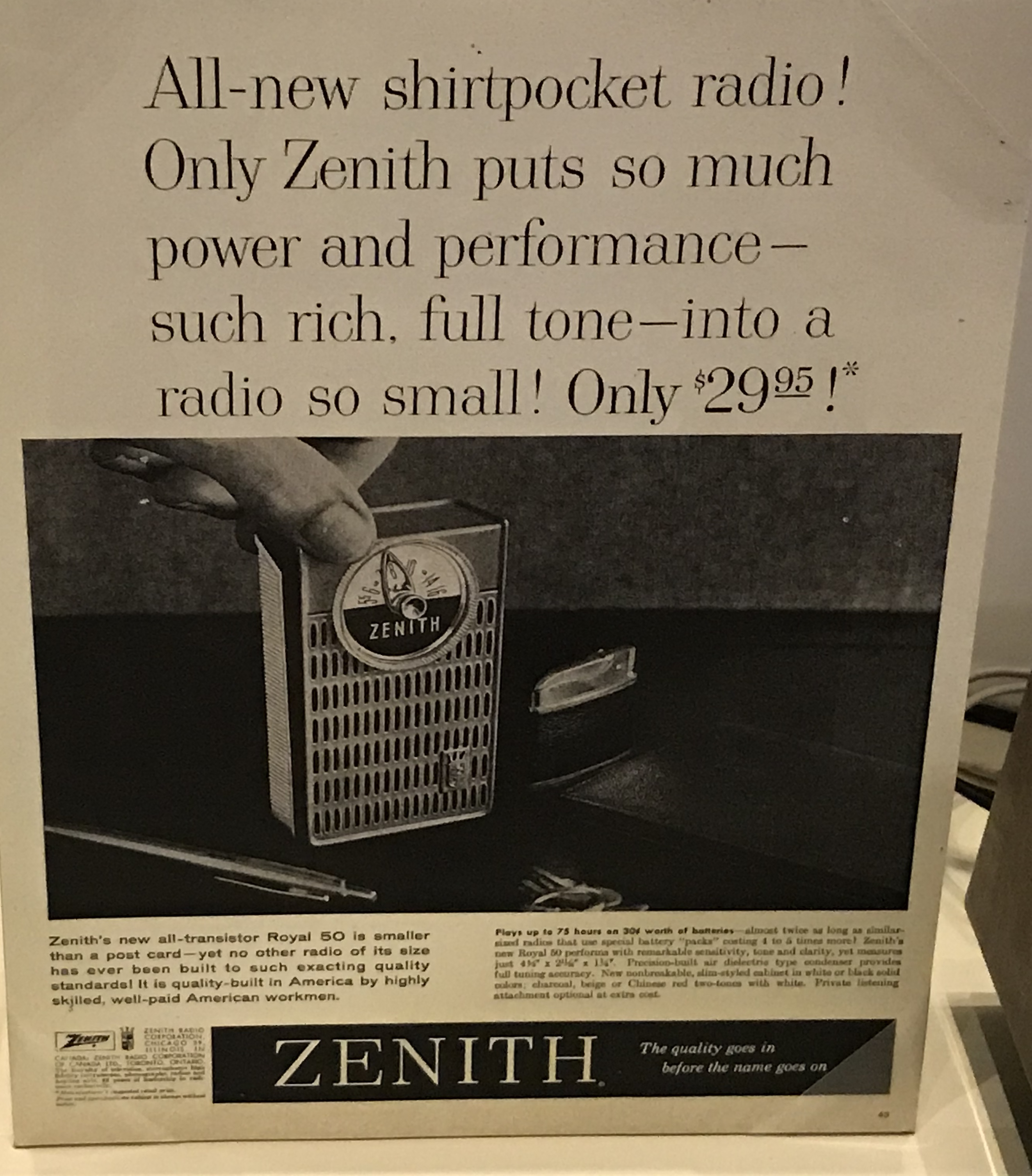 AM radio. Mine was a Zenith Royal 50 that came with an ear phone, that allowed me to listen to the Red Sox while in elementary school or to radio stations from far, far away after it was ‘lights out’ and I was supposed to be asleep.
 That got me to thinking that maybe a new radio format could be created bringing back deceased personalities like Robert W. Morgan, Dan Ingram, The Real Don Steele, Big Ron O’Brien, Ron Lundy, Larry Lujack among other greats by using the power of artificial intelligence. These incomparable radio personalities would “live again” via talented writers and programmers who would tell them what to say. Can you imagine how it might sound?
 I was reviewing the last FCC report about the number of broadcast stations in America as of December 31, 2018 and in my head I found myself singing a parody of the Bellamy Brothers song, “Too much is not enough.” Only my version was “too much is way too much.”
 On this last Sunday of 2018, it’s a good time to look back at the year that just past and share with you the Top 5 Most Read and shared blog articles from 2018. Maybe you missed them or perhaps you’d like to read them again.
 DickTaylorBlog