Category Archives: Mentor

Make it Memorable

114aI recently just returned from my first real vacation in many years. I joined some of the members of my high school class for an 8-day Caribbean Cruise.

We sailed aboard Carnival’s Splendor and it was wonderful.

Behind The Fun

Carnival offers a special behind the scenes tour of the ship on the last sea day of a cruise. It’s a very extensive tour that starts on the bridge and time with the captain, Splendor’s Roberto Tine.

Next, we travel to the ship’s engine room and visit with Splendor’s chief engineer Mario Testa.

What we basically learn is that everything on today’s cruise ship can be fully automated, but a full staff of people man the controls and make the decisions.

The Carnival Splendor can carry 3,012 guests along with a crew of 1,150.

The Key People

One of the light boards on the ship had pictures of the key personnel on the Splendor and showed four people, the captain, the chief engineer, the head of hotel operations and the cruise director.

MarQ

The person just about everyone on the Splendor came in contact with was cruise director MarQ Anthony.114

His Facebook page really tells the story of this dynamic personality. People write on his page things like: We will definitely be returning just for MarQ and his funny, crazy self.  He blew it away. Truly an epic vacation. The most memorable moments of the cruise included the very talented, energetic, and hilarious MarQ, our cruise director.  I won’t forget this cruise anytime soon! Carnival has a jewel with MarQ and some other staff members on that ship. MarQ was fantastic, phenomenal, amazing, and overall the most energetic and fun person I’ve ever met. He made every single event my mom and I attended on the ship memorable and we had a great time. The best part was seeing how much he enjoyed everything he did and his effort to connect and build relationships with people throughout the cruise. We looked forward to hearing his wake-up calls and getting into any event he was involved in on the ship. We loved you MarQ and we look forward to (hopefully) seeing you again!!!

I have to say, I concur with everyone’s comments and MarQ IS Carnival in my mind.

People Attract People                                                                  

I wrote a couple of weeks ago about how it’s people that attract people. I wrote that article to emphasize how it was the radio personalities that put a fire in my belly to be a part of the radio business. I worked in radio for over four decades and then seven years ago I transitioned into teaching when I became a broadcast professor at a university. I wanted to light fires in the bellies of my students for the radio industry.

First Impressions

We never get a second chance to make a first impression. For my fiancé this was her first cruise. For me it was my second one but my first was about three decades ago, so it was like the first time for me too.

Good first impressions come from projecting a positive image and doing that comes from your attitude. MarQ led a team of people on the Carnival Splendor that had a positive attitude. Anna is the head of training and staff development on the Splendor and was the person who led our group of 16 people on our tour.  (Note: the Behind The Fun tour of the ship is limited to a maximum of 16 people)

The crew’s section of the ship is like a city within a city. It’s not as flashy as the guest accommodations but it is clean, comfortable and Carnival makes every effort to ensure that their team members are happy and well cared for. The hiring business model appears to put hiring people with the right attitude first. Everyone on the Carnival Team was upbeat, positive and fun to be around. They don’t just make a great first impression but reinforce that impression with every encounter.

8-Days, 4-Islands

The cruise was a wonderful vacation. We visited four islands over our eight-day cruise, we saw many wonderful and amazing things, we even rode a Segway, but what we will remember forever were the people of the Splendor and how they made us feel.

In the end, it’s not about stuff or things, but people-to-people encounters.

Automation

So much of the cruise experience could be fully automated, but it would pale with the experience we enjoyed because of the wonderful people on the Carnival team.

Almost every radio station impacts more people with their broadcast signal than the 3,012 guests aboard the Splendor, but they lose their advantage when they automate and voice track their product. Just because you can, doesn’t mean you should.

Clayton Christensen wrote in the “The Innovator’s Dilemma” that businesses are disrupted not because they ignored threats to their business but because they didn’t recognize the threats to their business.

Radio can’t dilute its core business while in pursuit of possible ancillary activities.

Radio’s core business are talented people totally engaged and focused on their service area, 24/7.


3 Comments

Filed under Education, Mentor, Radio, Sales, Uncategorized

I Cut the Cord

113I finally did it. I cut the cable cord in July 2017. It had been something that I had been thinking about for well over a year now.

Each time my local cable company was gobbled up by a larger cable company nothing really changed except that my bill went up. And up. And UP.

How Many Channels Do I Really Watch

I did an analysis of my TV viewing habits and found that most of my TV habit revolved around LIVE news programs, YouTube, HBO, Showtime and Netflix.

I can spend a whole evening sometimes just going through the viewing options on Netflix and call it a night without ever watching a single program sometimes. (I know if you have this service you’ve probably done it too.)

When I looked at the number of shows I was watching on HBO and Showtime, it came down to about one program per service each. So, I’m temporarily going without either of them for the time being. But I also know that if I access these services via OTT (Over The Top) TV, I can get full access to their library vs. only selected access via a cable bundle’s On Demand offering.

LIVE TV

The thing that had me staying connected to the cable bundle was access to LIVE TV, especially the news channels like CNN, MSNBC and FOX.

I also am a weather geek and so The Weather Channel often would be on my TV screen while I played the radio. My new set-up doesn’t access the live meteorologists on TWC but I have the TWC App on my iPhone7 and so I really have access to all the weather information I need at the touch of my screen.

SLING TV

My dilemma to accessing LIVE TV for news programming was solved when I learned about SLING TV. SLING offers CNN, MSNBC and FOX 24/7 LIVE. I bought the SLING BLUE package for $25/month. No contract to sign and I can terminate the service (though I serious doubt that will happen) at any time. I also added the news option to SLING BLUE for $5/month. My total TV package is now $30/month.

SLING TV now controls the lion’s share of subscribers according to comScore with more than 2 million users as of June 2017.

APPLE TV

I access SLING through a 4th generation AppleTV. AppleTV offers quite a few other options for news and entertainment viewing. One being CBSN, the new CBS 24/7 news channel that reminds me of the old Headline News.

AMAZON PRIME

My fiancé had Amazon Prime when I moved in with her in Virginia but was not taking advantage of her access to Amazon TV that comes with a prime membership. AppleTV doesn’t have a way to access Amazon TV (I don’t know why this is) but Amazon TV can be accessed on any Apple computer, iPhone, or iPad. So, I downloaded it to our iPad and now stream it to our large screen HDTV with excellent quality for both picture and sound.

USA OTT Viewing Time

In a report released by comScore the research company reports that SLING, AT&T’s DirecTV NOW and Sony’s PlayStation Vue garner around 3.1 million viewers. Those same services now command 54.6% of OTT usage.

Impact on Radio

Does any of this have an impact on radio? Well it just might when you consider what Amazon just introduced in June 2017, the Amazon Echo Show.

While the radio industry was just beginning to wrap its head around the Amazon Echo, Google Home, Apple HomePod and Microsoft/Samsung’s Cortana Voice Activated Devices (VADs), along comes the Echo Show with a touch screen. “In addition to its usual Alexa powers, the Echo Show is a phone, TV, karaoke machine, and digital photo frame. The screen stays on even when you’re not using it,” writes CNN tech.

The world of communications technology is changing at breakneck speed.

It’s a “Winner Takes it ALL” game.

“Just when I think I have learned the way to live,

life changes.”

-Hugh Prather

P.S. on Monday, August 7th, a great new book “Fired Up! SELLING” will be released. If you’re in sales or just a lover of inspiring quotes like me, this little book is a MUST HAVE for your library. 268 people are quoted in this book.

Full disclosure, I was one of the quote judges that worked on putting together this book. It was a labor of love and working on it made for a very inspiring year that truly fired me up.

Here’s a link to the book on Amazon: https://www.amazon.com/Fired-Up-Selling-TM-Energize/dp/1885167830/ref=sr_1_1?ie=UTF8&qid=1501771980&sr=8-1&keywords=fired+up+selling+quotes


17 Comments

Filed under Education, Mentor, Radio, Sales

NOT the Music of MY Life

112I read the transcript of the interview Mark Ramsey did with Gordon Borrell about how radio advertisers are less interested in audience and more interested in a buyer. It got me to thinking about my own radio sales experiences over my career.

Live by the Numbers, Die by the Numbers

Anyone who sells in a rated market has probably heard that phrase about what happens when all you sell are your ratings numbers. But what happens in unrated radio markets? How do these folks sell?

Cash Register Rings

Early in my radio career I landed my first general manager position at the age of thirty. It was as GM of an Al Ham formatted “Music of YOUR Life” thousand watt AM daytimer with no pre-sunrise or post-sunset authorizations.

In a market with no audience ratings measurement what we did was create a fan club for our listeners. We then created a fan club book of the names and locations our listeners lived. This book included state representatives, mayors, major business owners and even television & movie stars. It was a pretty impressive foot-in-the-door and helped us to close many sales.

But the way we measured the impact of our advertisers’ radio commercials were in cash register rings. That’s the real measure of R.O.I. (Return On Investment) for local owner/operators.

Does Anybody Really Listen to THAT Music?

I remember calling on the manager of our local Agway store as if it were yesterday. Rick Hurd was his name and he was about as old as I was at that time. He loved contemporary music and the big band selections my station played were definitely NOT his “cup of tea.”

“Does anybody really listen to THAT music?” he always asked. I said “YES, lots of people do and they are the very people who own the big country estates that you should be doing business with.”

After lots of weekly calls, Rick Hurd gave me my opportunity to show what my radio station could do.

Tell Our Advertisers You Heard About Them on “The Music of YOUR Life”

A key component of my marketing strategy was to air on a continuous basis how important it was for listeners of my radio station to tell our advertisers they were listening. We did this in a variety of ways and made sure to keep this type of messaging fresh.

Shortly after Rick began his Agway store advertising on my radio station, I stopped in to see how it was going. He said, “Dick, I still find it hard to believe that anyone enjoys the music you play over the radio, but WOW are those folks ever vocal and passionate about your radio station.” “I hear about your radio station at least once an hour from customers, some of whom I’ve never seen in the store before,” he told me.

How Many Listeners Do You Need to Be Effective?

I won’t ever know how many listeners we had to that radio station, but I do know how many were in our fan club.

The “secret sauce” of our marketing was making sure our audience understood how important it was for them to tell our advertisers they were listening and that they loved our programming and that in order to keep it on-the-air, they needed to patronize our advertisers and tell them what brought them into their place of business.

Bonneville Beautiful Music

Based on the sales success I had with an AM daytimer, my company’s President/CEO promoted me to general manager of his newly acquired Atlantic City radio stations. The AM station was a thousand-watt full-time news & information station and the FM was a 50,000-watt Bonneville Beautiful Music formatted radio station. Both stations appealed to a senior audience.

Atlantic City was a rated market and so Arbitron Ratings were important, especially for the advertising agencies out of New York, Philadelphia, Baltimore etc.

But what we really sold was the quality of our audiences and we worked very hard to build personal relationships with all of the buyers.

As general manager, I often went on out-of-town trips with my director of sales to call on the people who bought the advertising. We constantly heard “we’ve never met anyone from any of the radio stations in Atlantic City before.”

Relationships are VERY important in the radio business.

And as Simon Sinek likes to say “People don’t buy what you do, they buy why you do it.”

Age Wave

Another factor I employed in talking about the quality of our audience and the tremendous buying power they wielded came from the research of Dr. Ken Dychtwald that he conducted during the period of 1973 to 1979.

In 1986 Dr. Dychtwald coined the term “Age Wave” and formed a company to consult companies on how to market to a mature market.

I devoured Ken’s book and used it to market my Atlantic City radio stations to advertisers.

Key Factors to Consider

The Age Wave http://agewave.com/ website lists four key factors that will reshape supply and demand as the boomers move into maturity. The two that radio should be considering how to leverage are:

  • Boomers will have increasing amounts of discretionary dollars (for many) over the long-term as a result of escalating earning power, inheritances, and investment returns
  • Boomers will undergo a psychological shift from acquiring more material possession and towards a desire to purchase enjoyable, satisfying, and memorable experiences

The future is filled with challenges and opportunities, but then that’s always been the case for those who could see them and were willing to roll up their sleeves.

16 Comments

Filed under Education, Mentor, Radio, Sales

First Impressions

113You’ve probably heard the old saying “you can’t make a second first impression.”
It’s true.

In sales, in those first few seconds when you meet a new client, you are either going to continue forward progress or it will be full-stop.

Same goes for job interviews or first dates. This is what makes making a good first impression so stressful.

Attitude

Good first impressions start with projecting a positive image. Projecting a positive image comes from your attitude.

I won’t go all Norman Vincent Peale on you, but your attitude is formed by what you do every waking moment. You can’t just turn it on when you need to. That will project a faux image easily discerned by any human being that can fog a mirror.

Derry’s Dad

In my broadcast sales class on talent assessments, guest lecturer and professional sales trainer Chris Derry, shared with my students that his dad was a stickler for having a positive attitude by what you wore on your face.

Come down to breakfast without a smile and you were immediately sent back upstairs. His dad didn’t care if you were late for school, you were not going to start the day at breakfast with a frowny face or a grumpy attitude. Chris said his sister went back up stairs many a day, but he quickly learned how to play the game.

But it wasn’t a game. It was building a positive character trait that would lead to a life of success in every endeavor that Derry would take on. He quickly learned even on days when he didn’t feel like smiling that forcing a smile for breakfast with his dad very quickly had him feeling more exuberant.

Fake It Till You Make It

Zig Zigler tells the story of faking a smile on his face and voice when he wasn’t exactly feeling it. He said that by faking it, it quickly became genuine and his mood would reflect his face.

Therapists will tell you that logic cannot change an emotion but action will. That by doing something that gives you a feeling of accomplishment, you will enrich your spirit and improve your attitude.

HD Radio’s 1st Impression

HD Radio is 15 years old. It answered a question no listener was asking (and still isn’t).

But why was HD Radio such a bust?

First, it was introduced with very low power that made reception of HD Radio nearly impossible in the home, office or car.

It tried to fix the poor quality of AM radio and improve the quality of FM radio. It would destroy AM radio with increasing co-channel noise interference and really make a mess of the band’s sky wave at night. With FM its improvement was almost unnoticeable to the average listener.

Worse, the promotion of HD Radio on FM radio stations often drew the comment to a listener with an FM not an HD Radio set that the sound of the station did sound better in HD. The listener didn’t understand from the radio ads they needed to buy a new radio set to pick up the HD Radio signal and so they didn’t. And even if they did figure out they needed an HD Radio set, trying to find one to buy at Walmart, Target or even Radio Shack was an exercise in futility.

Media Life magazine reported that media buyers say things like “HD Radio doesn’t feel like a thing” or “there’s almost zero consumer interest” or “it’s the least-promising technology of the new ones introduced in radio in recent years” or “most people won’t be able to hear the difference between HD Radio and regular radio and that’s a problem.”

First Impressions are a Bitch

There are 19,778 FM radio signals on the air as of the end of 2016 according to the FCC. Of those, around 2,000 of them are broadcasting in HD, about ten percent.

The number one reason those 2,000 FM radio stations are broadcasting in HD is to feed an FM translator that is not broadcasting in HD.

Media Life magazine compared how New Coke was introduced after the Pepsi Challenge was promoting it was beating Coca Cola in taste tests. I remember those days well. I was in radio sales and the local Pepsi bottler was my account. (I was a Coke drinker.)

I took that Pepsi Challenge one time with the owner of the Pepsi bottling plant and yes, I said I liked the taste of Pepsi better. He beamed.

I could tell the super sugary taste of Pepsi easily and I preferred the less sugary, belching kick of Coke. But I wasn’t about to pick the wrong one. I was in sales after all. I knew which side my bread was buttered.

Coca Cola totally bummed out about the Pepsi Challenge introduced a high sugary version of its drink and called it New Coke. It was a disaster. In months Coke brought back the original formula as Coke Classic. Today all remnants of New Coke are gone.

The lesson Media Life tells us is that “you can introduce something new and improved, but you can’t make the public want it.

Which brings me back to HD Radio.

Classic Radio

Maybe it’s time to bring back the elements that make great radio, great.

A product that is focused on a defined listener 100% of the time.

A product that is curated from music to jingles to personalities to commercials.

Nothing is put on the air that is out-of-place.

I think FM radio sounds great sonically.

Listeners do too! It’s why radio still reaches over 93% of Americans every week. It’s the #1 reach and frequency medium in America. It beats everything else. Period.

FM radio doesn’t need to make a first impression. It already is embraced by its listeners.

Bring back the classic formula that made radio great and cement radio’s future with the next generations.

Being Human Never Changes with Technology

No matter how much the technology changes, the reason one human being is attracted to another human being will never change.

Radio has their ear.

What will you say to them?


18 Comments

Filed under Education, Mentor, Radio, Sales

People Attract People

110One of my favorite activities each Memorial Day Weekend is to listen to WABC Rewound streamed over Rewound Radio. What makes this weekend so special is that people from all over the world are listening to the stream at the same time. It’s a coming together of people of all ages to celebrate one of the greatest radio stations America ever produced.
Why WABC Rewound is So Popular

This year, I streamed WABC Rewound driving back to Virginia after spending a couple of weeks in my home state of Massachusetts. Over 7-hours and four states, the stream via my iPhone7 pumped through my Honda Accord’s premium 7-speaker, 270-watt audio system was rich, full and continuous without buffering or interference of any kind. That all by itself is something to note. Streaming audio today is becoming seamless.

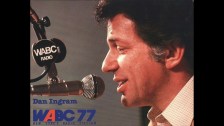
But it wasn’t the music that attracted me, though the records are the “music of my life” from my days in high school, college and as a disc jockey. No what attracts me – and everyone else that faithfully tunes in each year – are the personalities.

Herb Oscar Anderson, Bob Dayton, Dan Ingram, Ron Lundy, Bruce Morrow, Charlie Greer, Bob Lewis, Chuck Leonard, Johnny Donovan, Harry Harrison and George Michael, plus the newscasters that delivered news every hour.

We are attracted to the people. People we grew up with.

The New Yorker magazine wrote back in 1965 that listeners to WABC were part of the WABC family. We were “cousins” of Cousin Brucie. We were part of the Ingram tribe as he called us “Kemosabe.”

Mornings went “all the way with HOA” as New York’s morning Mayor Herb Oscar Anderson started our day before Harry Harrison moved from WMCA to WABC.

Contests, Features & Promotions About People

WABC invited listeners to vote for their “Principal of the Year” (16-million votes cast in 1964), mail in for a “Kissin’ Cousin Card” or a “Kemosabe Card” (drawing in 150,000 requests in a single week).

Herb Oscar singing “Hello Again” live on the radio and reading lost dog announcements, celebrating birthdays.

Each personality became a member of the family. Your family. And like a member of the family, you took them everywhere you went. To the lake, on a picnic, in your car, to wake up with or go to sleep with. They were companions and we were part of their community.

Father Peter Gregory

“Without people, there wouldn’t be a priesthood,” was the often-heard proclamation of Father Peter Gregory of St. Charles Church in Pittsfield, Massachusetts. Father Peter has been the pastor of St. Charles for nearly three decades. “The church is people,” he told a reporter who interviewed him on the eve of his retirement.

I bring up Father Peter because at a time when many churches in Pittsfield have closed their doors due to a lack of followers, St. Charles is doing quite well.

It’s not the most glamorous of structures – other churches in the city I might rate more inspirational – and it’s not in the best neighborhood, no what it has had is a spiritual leader that believed in people and whom people believed in right back.

A Mount Rushmore Sized Opportunity for Radio

I love reading the weekly Mid-Week Motivator articles from a good friend and former consultant of some of the radio stations I managed, Tim Moore.

Recently Tim asked “Why is Talent Development in Neutral?”

He wrote that his life’s education seems to have been about understanding the challenges and concepts of what it takes to be a winner. It meant he would constantly be looking for character and excellence in people who hadn’t found it yet.

The irony about today’s radio, Tim says, is “glaring opportunity, constricted by the inability or lack of will on the part of many companies and their leaders to insist on the culture of better.”

Air talent goes un-coached while radio has a huge opportunity to build relationships with its listeners. Building the same kind of bond, I had with the personalities of WABC, WKBW, WTRY, WPTR, WBZ, WRKO, WDRC, WBEC, WBRK, WLS, WCFL and so many more.

Focus Groups

Over the years, I’ve been to many diary reviews and a few focus groups. What you see are the attraction of radio listeners to radio personalities.

While a particular format may be what initially attracts a listener to a radio station, it’s the radio personality that is the glue that will cement the listener’s loyalty.

Tim says” It’s the personality of a station that locks-in listeners’ interest and daily habit.” “The implications are simple, obvious, yet largely ignored: without better talent (defined as more relatable, interesting, and reciprocal people on the radio) we are treading water,” says Tim.

Who Influenced Dan Ingram, The Real Don Steele, Dale Dorman or…?

Most radio people my age grew up with the most talented and engaging radio personalities to grace the airwaves of American radio. They were our teachers. They were available for us to listen to and mentor under 24/7, 365-days a year.

In addition to them, we had program directors – many of them off-air – who coached us and inspired us to be better.

I’ve often wondered about the iconic radio personalities that did it first. Who did they learn from? How did they become the engaging, relatable, interesting personalities that attracted our ears like metal to a magnet?

And can a talent voice-tracked over multiple radio stations ever be as compelling to not just listeners but to the next generation to want to pursue radio as a career?

Again, Father Peter understood his church’s most valuable asset, it’s youth. “It’s the kids and youth who are the future of our church,” he said. “I’m now dealing with kids whose parents I had as kids.”

The Community Band

Once upon a time, every community in America had at least one town band. Most of them are long gone.

When I was managing a radio cluster in Lancaster, Pennsylvania I came to know and love the New Holland Band of New Holland, Pennsylvania.

The band was not only strong and vibrant, but performed at a level that would have made John Phillip Sousa proud. Its concerts are very well attended and it’s produced some of this country’s finest musicians, some of whom now perform as part of the President’s band.

Why did the New Holland Band not just survive but continues to thrive? It understood it’s all about people. The band’s members are made up of a diverse group of professional, semi-professional and student musicians. The oldest member of the band has been a member since 1959 and the newest member since 2016. It’s this blending of youth with experience and wisdom that keeps the New Holland Band fresh, contemporary and relevant.

Junior Achievement

It was the initiative of one of my hometown radio stations (WBEC) that convinced the Junior Achievement to create a JA Radio Company.

Junior Achievement was founded in Springfield, Massachusetts in 1919 by Theodore Vail of AT&T, Horace Moses of Strathmore Paper Company and Massachusetts Senator Winthrop Murray Crane (who’s family paper company, Crane and Company make the paper all U.S. currency is printed on).

The JA website states: “Junior Achievement is the nation’s largest organization dedicated to giving young people the knowledge and skills they need to own their economic success, plan for their future, and make smart academic and economic choices. Junior Achievement’s programs—in the core content areas of work readiness, entrepreneurship and financial literacy—ignite the spark in young people to experience and realize the opportunities and realities of work and life in the 21st century. Our Purpose: Junior Achievement inspires and prepares young people to succeed in a global economy.”

WBEC’s management realized that getting high school students actively involved with the radio station would engage their parents, siblings, families and friends too. Many of them who owned local businesses. It was both mentoring a new generation of radio broadcasters as well as leveraging the people attract people principle.

Human Development

As Tim Moore says “Human development is the essence of life. Weak excuses such as ‘we don’t have the time to develop talent’ are just chin boogie.”

All my radio life, I’ve invested my energies in the development of people. Many of them today are owners and managers of their own broadcast operations.

I’m also proud to have spent the past seven years of my life as a broadcast professor paying-it-forward to a new generation of broadcasters.

Radio is a people business.

It will never attract people to its product like it once did without a serious commitment to talent development.

12 Comments

Filed under Education, Mentor, Radio, Sales

The Era of Stand-Alone Electronic Devices is Ending

111It was 10-years ago this past Thursday that the iPhone went on sale. On that fateful day, I was using a company issued Blackberry Pearl. It was such an amazing upgrade from my old Motorola flip-phone that I got a couple of years earlier.

Cell Phone Evolution

It was 1983 that Motorola introduced the DynaTAC 8000X Advanced Mobile Phone System. It was with the DynaTAC in his hand that Michael Douglas told the world “greed is good” in the movie “Wall Street.”

This phone could make and receive calls from almost anywhere. But that was it.

I never had one of those phones, my first cell phone was a bag phone that sat in the front seat of my car with a wire running out of a rear window connected to a magnetic antenna on my car’s roof.

Only six years later, the Motorola MicroTAC 9800X would become the first truly portable phone. Having this phone was a real advancement as it now fit onto a belt clip and went everywhere I went. However, I was still using a Palm Pilot to keep track of my calendar, contacts and other notes and a Nikon Coolpix to record radio station events for posterity.

In 2004, I got my first Blackberry and in 2007 I upgraded to a Blackberry Pearl.

None of these phones really changed my life other than they got better at making and receiving calls, sent & received text messages and company emails could be sent and received. I still relied on other single use devices to do the other things in my life.

My 1st iPhone

One of my problems with iPhones were how big they were. I grew to love the size of my Blackberry Pearl and didn’t want to go backwards to a larger phone. (Later I would learn it was the huge cases people put their iPhones into that made them so large, not the phone itself.)

My second Apple device, after my iPod Classic, would be an iPad2, purchased in November 2011. I wasn’t sure why I needed one, but since I was teaching at a university to the next generation of broadcast students, I thought I needed to stay up with the technology.

I quickly fell in love with my iPad and realized I now knew how to fully operate an iPhone.  So, in January 2012, I purchased the latest iPhone that had just come out, the iPhone4s. The iPhone4s was actually more compact than my Pearl and I would store it in a leather sheath just as I had with my Pearl.

The iPhone4s WOULD change my life!

The Beginning of the End

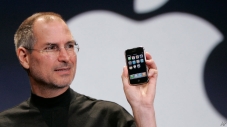
The day that Apple introduced the iPhone4s – October 4, 2011 – was one day before the death of former Apple CEO and co-founder Steve Jobs. The “s” stood for Apple’s new voice assistant Siri. (Siri would not be the first intelligent personal assistant but would be the one that would start a new round of innovation giving birth to Amazon’s Alexa and the Voice Activated Devices I wrote about last week.)

Equipped with my new iPhone4s, I quickly converted my entire contact file from Palm to Apple. My calendars – both personal & professional – were converted to my iPhone and iPad. My Nikon Coolpix began to gather dust as all of my pictures would be now taken with my new iPhone4s.

Being new to the Apple ecosystem, I signed up for the iCloud and iTunes match to connect my PC, iPad and iPhone all together. I was surprised to learn that many Apple devotees didn’t use these internet connected systems. But then I didn’t realize they only came on the scene a few months before I got my first iPhone.

Very quickly my iPhone4s replaced my camera, my video camera, my Palm Pilot, my cassette recorder, my note pad, my desk calendar, and even my iPod Classic. It became my way to email, text and make calls. My landline phone was discontinued the day I got my iPhone4s.

My unlimited data plan allowed me to stay connected to Facebook, LinkedIn, Twitter and Google Search. My phone became my resource for breaking news and if severe weather were imminent it would immediately alert me of pending danger.

Would bad weather cancel classes? My iPhone4s would alert me of any delayed opening or closing.

Very quickly my iPhone4s became one of three things I would not leave my house without: those being my wallet, my car keys and my iPhone.

Noteworthy is that Apple has made privacy “a fundamental human right” and is the only consumer-oriented technology giant with a business model not based on sucking up tons of personal data in order to target advertising to consumers, writes the Economist. In fact, this online business magazine says “the end of stand-alone electronic devices, however slick, is coming to an end.”

The End of Single Skill Students

What I’ve seen change in just the last seven years as a broadcast professor are the needs of the broadcasting industry in terms of what they want graduating students to know when they enter the workplace. In a word, EVERYTHING!

They need to be equipped with the “Swiss Army Knife” of skill-sets.

They need to be able to write for broadcast – online web-pages – social media, take pictures, take & edit videos, record & edit audio and so much more. Where once each one of these tasks was a single skill, today’s broadcaster needs to be able to it all. Much as we require of our electronic devices.

Cutting the Cord

When my laptop died, I replaced it with a MacBook Air. When it was time to replace my desktop PC, I bought an iMac. My iPhone4s has been replaced by an iPhone7 (that has as much memory as my MacBook Air) and AirPods. And when I moved to Virginia, I “cut the cord” on cable TV and went with AppleTV.

Everything is tied to the Apple ecosystem – iCloud, iTunes Match and to each other.

What I still enjoy using are my BOSE Wave Radios (I have two of them), my Garmin GPS and my car radio.

However, I know that my students have no such need for anything other than their smartphone.

And they are the people who will determine the future of broadcasting by the choices they make.

For radio the game will be less about numbers and more about attracting and engaging with a specific audience by super-serving their needs, wants and desires to such an extent they will find you on whatever device they choose to listen on.

16 Comments

Filed under Education, Mentor, Radio, Sales

The Winner Takes it ALL

108Everything old is new again. I’m sure you’ve heard the phrase. “Everything old is new again” was the title of a song in the movie musical “All That Jazz.” Part of the lyrics to this Peter Allen/Carole Bayer Sager song include:
 

Don’t throw the pa-ast away
You might need it some rainy day
Dreams can come true again
When everything old is new again

I might fa-all in love wi-ith you again

VADs

While I haven’t heard anyone call them this yet, I may be the first, I’m sure in time they will be referred to in this way, Voice Activated Devices.

You probably better know them as Amazon’s Echo, Google Home or Apple’s HomePod.

Amazon was first into this territory followed by Google and now Apple (their device will be available later in 2017). Microsoft recently announced they have partnered with Harmon Kardon to put the MS VAD “Cortana” into a smart speaker system. Harmon Kardon is a division of Samsung.

Fred Jacobs blogged about them in a recent article titled “Are Voice Commands the New Hi-Fi?” (Hi-Fi was introduced with the 33-1/3 discs introduced by Columbia 69 years ago this month – June 20, 1948.) In his article, he quoted Spotify’s Ian Geller who said voice commands allow people to “engage with music in ways they haven’t since the Hi-Fi stereo system became available.”

Fred feels that these new VAD’s are a “true moment for the radio industry – a chance to bring radio back to homes in a big way.”

The Old That’s New Again Part

As I study these new gadgets, I see a problem for radio of its own making, branding.

The radio I grew up with was very creative and prolific at branding itself with its listeners. It had to be because of the way radio ratings were conducted, either by aided or unaided recall. Billboards, bumper stickers, TV ads, t-shirts, putting your call letters and frequency on just about everything, everywhere it could be seen.

From virtually the beginning burning your call letters into the brains of your listeners was paramount.

Consolidation and PPM (Personal People Meter) would take the need to brand – or so the new Wall Street stakeholders thought – away. Consolidation did this through many signals in the hands of a few operators and the need to cut costs. Arbitron’s (now Nielsen Audio) PPM device did it by recording “listening” even when the listener was totally unaware of where the music or talk programming was coming from.

The new Voice Activated Devices now require a person to KNOW exactly what it is they want to hear when they say the activation words, like “Hey Alexa” or “Hey Google” or “Hey Siri” followed by a specific request.

Unaided recall is back.

Wi-Fi, Hi-Fi & Being Connected

While these new VADs maybe the new “Hi-Fi” for a 21st Century world, they require Wi-Fi to connect to the internet and their respective clouds.

While many of us today take access to a broadband connection for granted as our parents did a landline telephone line, many people in America were not so fortunate. Poor people or people in very rural areas depended on assistance from the Federal government to connect them up to a wired telephone line because private companies found doing so very unprofitable. The Universal Service Fund (USF) was established to provide the funding. Everyone who had a phone would pay a tax to help wire America.

As the need for internet broadband became as necessary in a 21st Century world as a phone line did in the 20th Century, the tax would continue to provide this telecommunications service in the United States.

To read about all of this more detail, click here

Various Ways to Listen

Public Radio in America is leading the way with directing people with the many ways they can be heard. A good example is WBAA AM & FM from Purdue University. Their “How To Listen” tab on their website informs the listener how to listen to their stations over-the-air, streaming online, via their App or via a Voice Activated Device.

This last VAD page also tells listeners how to listen to NPR One using voice commands, such as “Alexa, play NPR One.”

BRANDING Your Radio Station is IMPORTANT

Using a VAD is a return to the days of unaided recall for the radio industry. The need to brand your radio station is critical in a Voice Activated Device world.

How is your KISS, FROG, HOG, JACK etc. different than other such brands all over the world? How will your VAD know which one you want to hear?

Might the return of unique and one-of-a-kind FCC assigned call letters come back into fashion?

Coleman Insights just released a study on Public Radio that shocked programmers with the fact that fewer than one in four radio users can call to mind any Public Radio station.

It’s a Winner Take All World

When the elephants fight, it is the grass that suffers is an old African proverb. It means that the weak get hurt in conflicts between the powerful.

Today, the powerful are Microsoft, Google, Amazon, Apple and Samsung. Each one having their own voice assistant it hopes will dominate the field.

Our 21st Century technology is altering the structure of competition in America as never before. It encourages more monopolies, a “Winner Take All” world.

Natural monopolies are not new. Utilities are an example, but they were heavily regulated. The natural monopolies created by the internet crush competition and that could negatively impact the American economy. Internet innovation moves fast, the Federal government moves very slowly and regulation won’t stop them from occurring.

You can’t order from Amazon on Google Home. You can’t access your favorite iTunes podcasts on Amazon’s Echo. Each device requires a subscription to their music library, unless you request over-the-air radio streamed into your VAD.

War Chests

Apple as of May 2017 had cash reserves of $256 BILLION. In fact, Apple, Microsoft and Google own 23% of all U.S. corporate cash outside the finance sector according to Moody’s.

iHeartMedia is still wrestling with over $20 BILLION of debt. And Cumulus maybe even worse off.

Their challenges are not those of the entire radio industry and money is not always the determining factor in innovation. A perfect example is how the Wright brothers beat Samuel Pierpoint Langley in the race to create powered controllable flight. Langley had the financial support of the United States government and failed while the Wright brothers succeeded using their own resources from their bike shop.

Crisis

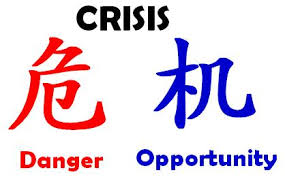
The Chinese language uses two symbols to represent the word crisis. One symbol means “danger” and the other means “opportunity.” 109Radio has been here many times in it’s almost 100-year history before.

Smart operators are already speeding down the path of opportunity.

Are you one of them?

8 Comments

Filed under Education, Mentor, Radio, Sales

What Does a Radio Look Like?

107When I was growing up, there were lots of examples of what a radio looked like. The instant we saw it, we immediately knew it was a radio.

My first radio was a Zenith Royal 50. It was red & white and came with a brown leather carrying case and a single ear phone. It opened up the world to me.

In high school & college my radio was a Grundig 2440 table radio with a 100-foot copper wire antenna running across my parent’s backyard from my second floor bedroom window. Another wire would run out that same window to the ground.

Once I got my license to drive, the radio that would get the most use would be the AM radio in my 1969 Chevrolet Biscayne.

My home radio of choice would be purchased after many years of longing and being brainwashed by the radio advertisements delivered by the one & only Paul Harvey during his daily news & commentary broadcasts over the ABC Radio Network. It would be the BOSE WAVE Radio.

When I bought my new MacBook Air, it came with a free pair of Beats Wireless Headphones.

100My new iPhone7 uses the Apple AirPods.

Wireless headphones outsold non-bluetooth headphones in the first half of 2016 (just a year ago). I wrote about this evolution in headphone technology this past March 2017 in a post about the MAYA principle.

Things Forecast to Kill Radio

Radio still dominates in the automobile.

Over my radio career I lived through so many technical innovations that were forecast to kill radio, especially in the car.

There was the 8-track player, cassette player, CB Radio, CD Player, CD Changer, iPod, thumb drive, iPhone and streaming audio.

In each case we would learn that all each of these innovations did was replace a previous innovation by that percentage of the audience that wanted to curate its own music or programming. It never really replaced what over-the-air AM/FM radio delivered.

Hotels Eliminate Radios

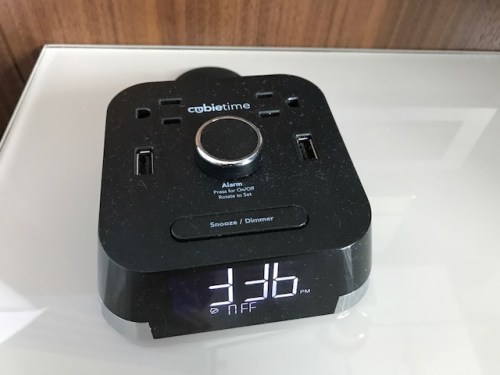
I’ve just recently stayed in two different major hotel chain hotels that were either recently remodeled or newly constructed. The analog TVs have long been replaced by HDTVs, and showers now replace bath tubs, LED bulbs replaced the old filament ones, but the big surprise was the complete elimination of the radio.

They have been replaced by something called “CubieTIME.”CubieTIME

This device will tell you the time and you can set an alarm to awake you at the appointed time you wish to start you day. But those little radios (that never could pick up crap in more recent times) are gone.

Atlantic City Maid Checklist

For over a decade I ran the beautiful music/easy listening radio station in Atlantic City, New Jersey. Most of the casino hotels had a standard checklist of things a maid would do when preparing the guest room for the next patron.

One of those things was setting the radio to a pleasant volume and tuning it in to 96.9 FM for the soothing music of WFPG (the radio station of the World’s Famous PlayGround).

Today’s Kids vs. 1980’s Technology

In my recent college capstone class, I asked the students when they got their first cell phone. All the students said when they were in elementary school. The smartphone, not a radio, was what they wanted next as they were growing up.

The technology we grew up with and enjoyed is alien to today’s youth.

This short video brings home how things have changed.

You can view it on YouTube here: https://www.youtube.com/watch?v=7v75QpvISUs

What Icon Represents Radio Today?

The big question for the radio industry today is what iconic symbol represents the medium today? Not a radio tower. John Hogan, former president of Clear Channel, said during all of my years working for the world’s biggest radio broadcaster that we were no longer about tall towers in big fields. Most radio sets look like something from the 20th Century or older, not the 21st Century world of today.

Should it be a microphone? A pair of headphones? A computer? A smartphone?

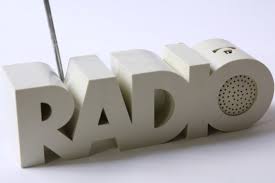
I think I will just turn on my RADIOradio while I ponder this question.106

16 Comments

Filed under Education, Mentor, Radio

Radio & the Consumer Driven American Economy

99This week produced some conflicting economic data. The stock market was setting new records and the unemployment rate dropped to 4.3% but the number of people filing for unemployment benefits beat analysis estimates. WTF?

The Surprising Threat to Radio

It’s estimated that two thirds of the American economy is driven by consumer spending. Don’t get hung up on the percentage, but know that a lot of our economy is driven by the buying and selling of stuff that is consumed.

Some things, like a Whopper are consumed quickly and other things, like the car you drive, are consumed over a longer period of time. Much of our spending is discretionary.

Radio is a strong driver of putting thoughts into people’s heads about things they should be deciding to consume. Radio is the word of mouth medium with the big mouth.

So what threatens radio today? Consumers are not spending.

Radio’s Role in Consumerism

Broadcasters can’t change the attitude of an apathetic consumer for the most part. Other factors in the world create consumer attitudes, uncertainty being one of the biggest.

Uncertainty causes consumers to hunker down and make do with what they already have. And today’s world is filled with lots of uncertainty that is being stoked 24/7 by the cable news networks, talk radio and social media.

Radio is excellent at directing consumers to different businesses, products and services when they are feeling confident and want to part with some of that discretionary cash.

Barron’s reports that year-over-year growth in U.S. retails sales peaked in mid-2011 at 8.3% and has since rolled back to 4.5%. The four biggest performing stocks are Amazon, McDonalds, Comcast and Home Depot.

A World of Debt

Radio people are very aware of the huge debt problems impacting iHeartMedia and Cumulus. But they may not be aware that American household debt in the last quarter reached a record $12.73 trillion and Barron’s says that just surpassed the debt American’s owed at the height of the housing bubble.

Student loan debt is now over $1.4 trillion, which is about $620 million more than U.S. credit card debt. Student loan debt rose six percent in the past year.

American credit card debt rose by $3 billion in February 2017, its highest level since 2008 according to The Motley Fool.

Market Watch says that U.S. households now have surpassed the amount of debt they had in 2008. Plus Americans are struggling with their auto loan debt with these sub-prime loans hitting their highest delinquency levels in December 2016. A pattern that Market Watch says was seen prior to the 2007-2009 great recession.

An Inconvenient Truth

During the 1960s and 1970s, the American economy expanded over 11%. In the 90s it couldn’t get above 9% and in the most current expansion it hit 5.9% and recently was only 3.6% according to Barron’s.

Many Americans no longer see consumption as being the “American Dream” but now are saving as much as they possibly can despite interest rates on savings sitting at anemic levels.

Income inequality is also playing a huge role in the current state of American consumerism. 76% of the wealth in America is now held by the top 10%. Only 1% is in the hands of the bottom 50% of American families in today’s America. CNN Money reported in December 2016 the wealth inequality in America is getting worse. “The rich are money making machines,” said CNN.

A 2016 study by Gallop senior economist Jonathan Rothwell found that the bulk of our national spending is eaten up by just three items – healthcare, housing and education.

What’s the impact on ad supported media in a world of enormous debt and haves vs. have-nots? I wrote about this after reading Thomas Piketty’s book “Capital in the 21st Century.” That article was called “The Future of Ad Supported Media” and you can read it by clicking on the link here .

Survival of the Fittest

What all of this is telling us, Spending is OUT and Frugality is IN.

A broadcaster friend of mine was sharing that in his PPM market TV ad time is now selling at “radio rates.” When the pie isn’t growing, media companies are forced to begin taking more from someone else.

Radio is the best value for the money when the economy goes soft.

I started my radio sales career at the beginning of the early 80s recession. I was very successful and it saw me enjoying a four plus decade long radio career before becoming a broadcast professor to pay-it-forward to a new generation of broadcasters.

As Warren Buffett says, “It’s when the tide goes out, that you know who’s wearing a bathing suit.” In other words, when the business changes from taking orders to really selling, we will learn which companies have trained their sales people to not just survive but thrive.

15 Comments

Filed under Education, Mentor, Radio, Sales