
 I hope you are enjoying this holiday weekend celebration of America’s independence 244-years in the making.
As I was thinking about what I’d write this week, I came across this radio item, dateline Fort Wayne, Indiana that said on July 5th in 1929 radio station WOWO returned to the air one day after its transmitter site burned down. Obviously, that wasn’t a very  joyous time for the staff and management at that radio station. It was only four years earlier that WOWO signed on the air for the first time in its storied broadcast history, March 25, 1925.
July 5, 1951
It was on this date, 69-years ago that Bell Labs, and primarily William Shockley, announced the invention of the junction transistor during a press conference the company held in Murray Hill, New Jersey.
July 5, 1956
William Shockley and three others were awarded a Nobel Prize in Physics on this date for “their research on semiconductors and their discovery of the transistor effect,” a discovery that allowed radio to be reborn in car dashboards and on portable, hand-held receivers.
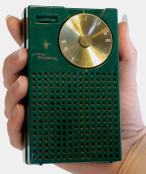 It was a joint venture between Texas Instruments and Regency Electronics that would produce the world’s first transistor radio, the TR1, in 1954. However, it wasn’t until three years later when SONY would introduce its smaller and cheaper TR-63 transistor radio that this new communication device would become the 1960s/70s mass market success story.
Steve Wozniak (Apple Computer Co-Founder) said he had a Regency TR1 transistor radio as a kid and was a big fan. “My first transistor radio…I loved what it could do, it brought me music, (and) it opened my world up,” said Woz.
July 5, 1963
The second Beatles song released in America which climbed to number 87 on the Hot 100 was “From Me to You,” and would mark a second “invasion” by the British kingdom.
It was the transistor radio that gave young people the opportunity to easily access “their music” without garnering their parents disapproval, being able to listen to the radio in their bedrooms, cars and anywhere they went.
The transistor radio opened up a world of new artistic expression along with the dissemination of new ideas. These hand-held radios played rock and roll, delivered the news, connected Americans to the Civil Rights Movement and kept citizens abreast of the ongoing Vietnam War.
I’ll come back to the transistor and William Shockley in a moment, but first, let’s look at some of the other things that changed our world on this day.
July 5, 1971

The 26th Amendment to the United States Constitution was certified, reducing the voting age in America to 18.
July 5, 1989
 The successful television sitcom “Seinfeld” debuted on the NBC television network. The show “about nothing” ran for nine years and has grossed more than $4 Billion, making it the most profitable half-hour television program in history.
July 5, 1994

Jeff Bezos begins a new venture in Bellevue, Washington. On this date, “Amazon.com” was born. In just 26-years, Amazon is only the fourth tech company to join the “$1 Trillion Club.” Jeff Bezos’ net worth is now estimated at $111 Billion.
July 5, 2003
On this date, the World Health Organization (WHO) declared that the SARS virus, known technically as SARS-CoV (coronavirus), was “contained” after affecting 26-countries and resulting in 774-deaths.
Transistor & Shockley
Getting back to William Shockley and his development of the transistor, he would not only change the way Baby Boomers would grow up, listening to their transistor radios, but he is also credited as being “the man who brought silicon to Silicon Valley.”
For you see, one of the key benefits of the transistor was the ability for electronics manufacturers to create smaller and smaller devices, that eventually gave us the computer in our pocket, better known as the smartphone.
1980s to Today
In time, these little transistor radios would be replaced by the Boom Box. Then along came the SONY Walkman (and headphones), followed by the Discman, iPod and today’s internet powered iPhone.
 Each new generation of technological development has moved media consumers away from traditional broadcast radio’s position as the leader for reaching the masses with new music, news and cultural trends.
The broadcast industry has been slow to adapt to the 21st Century. As greatest hockey player of all time, Bobby Orr might put it, to skate from where the puck is to where the puck will be.
Let’s hope it’s not too late.
“You have to change with the times
or
the times will change you.”
-Marv Levy, Buffalo Bills Coach
 “It ain’t over, till it’s over,” one of the many phrases made popular by Yogi Berra kept popping into my mind as I sat in on several webinars these past few weeks. COVID19 is not over, so why are people acting like it is? We can expect that we will be living with this virus through all of this year and through most of 2021.
 On November 9, 1965, around 5:21pm in the afternoon, WABC listeners heard something unusual coming through the speakers on their battery powered transistor radios. WABC was playing Jonathan King’s “Everyone’s Gone to the Moon,” but it sounded different. It sounded like it needed a shot of Geritol, as the recording turned slower and slower. Even WABC’s famous chime was off key, and popular afternoon personality Dan Ingram tried to make fun of what was happening. You can hear that moment by clicking
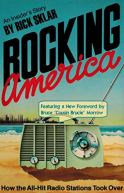 Rick Sklar wrote in his book “Rocking America” that the blackout helped him to focus his attention on technical reliability. “A station can have the best mix of music and the top jingles, but if the tapes break, the cartridges jam, or the music fidelity is off, the ratings (aka audience) begin to evaporate,” Sklar wrote.
 Would you invest more money in a company that takes your money and won’t refund it during a global pandemic, instead preferring to hide behind policies designed for the way things used to be before COVID19?
 In August 2015, the high school classes of PHS, THS and SJHS held their 45th class reunion. The weather was spectacular and members of all three high schools traveled back to The Berkshires to laugh, reminisce and enjoy good times together. We parted knowing that our next reunion, would be the milestone golden reunion.
 through a new Junior Achievement program, I would take my first steps into a commercial radio station. I would pass my FCC broadcast license exam six months later, landing a position as a commercial broadcaster.
 Growing up telling mom or dad that I wanted something now, got the usual response of “you will have to work for it” or “you’ll get it when it’s ready.” Learning that good things come to those who wait was part of my maturing process.
 Is there a lesson for radio broadcasters from what I just shared about television viewing habits? I think there is. Programmer Steve Goldstein puts it this way, “Traditional radio – by design – is a lean-back business. Podcasting is a lean-in business.” That perfectly describes the difference between Netflix (lean-in) and broadcast (lean-back) commercial television.

 A reader of this blog recently asked me if things would one day return to “normal.” They said that over the past ten years, they’ve moved beyond wondering “why” there have been so many massive changes and disruptions in our lives, pondering now if things will ever settle down.
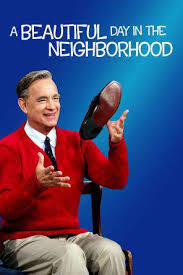 The other evening, I re-watched the excellent Tom Hanks movie about Fred Rogers, “

 COVID-19 will change our world in so many ways. Dr. Anthony Fauci said he hopes the world will end the custom of handshakes going forward. It’s a custom that dates back to the 5th century B.C. in Greece. It was a symbol of peace and a way to demonstrate that neither person was carrying a weapon.
 DickTaylorBlog