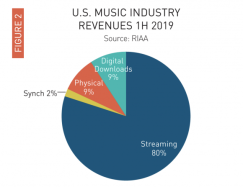
 When this pie chart was posted on social media, it immediately captured my attention, by showing where the United States Music Industry is making its money. You can read the Mid-Year 2019 RIAA Music Industry Revenues Report HERE.
Total revenues were reported to be growing at 18%, with 80% of the industry revenues coming from streaming. By comparison, the radio industry ended 2019 up 2% and the inflation rate for the United States for 2019 was 1.7%.
Going Apple
I’ll admit, I was late to the Apple party. When I was a broadcast professor at Western Kentucky University, Steve Newberry, EVP with the National Association of Broadcasters, and I were having lunch one day, Steve asked me if I had an iPad. I said “no, and I didn’t know why I needed one.” Steve said, well I can’t explain it, but once you get one you’ll wonder how you lived without one. So, I got one. It would be my second Apple device, the first being an iPod Classic. I purchased my iPad2 on Black Friday in November 2011.
Blackberry to iPhone
I had owned a Blackberry Pearl “smartphone” since my days as a Market Manager at Clear Channel, I loved all it could do and I loved its compact size. But in less than a month of owning and enjoying my iPad2, I would upgrade from my Blackberry to an iPhone4S in January 2012. In 2015 I would switch my university desktop computer from a Dell to an iMac, and today I have added Apple TV for streaming my video entertainment.
One of the wonderful things about the Apple operating systems are that once you know how to operate one, you can operate them all, and they are very intuitive.
iTunes Match
When I got my iPhone4S (the “S” stood for Siri and it was the first introduction of voice command, that has since been joined with offerings by other companies such as Amazon’s Alexa and “Hey Google”), I immediately added a couple of other Apple services like iCloud and iTunes Match.
iCloud backs up all my data and iTunes Match makes it easy for my music library to be available on all my Apple wireless devices, which in 2012 was my iPhone4S and iPad2.
iTunes Match is an annual subscription service, that for me, renews every November for $24.95.
This year after it renewed for 2020, I realized that since owning my Amazon Echoes, I really never use my music library on iTunes anymore. It so much easier to just say “Alexa, play…”
Streaming
I’m sure I own more AM/FM radios than you, unless you’re also a radio geek, then you might own as many as me or even more. But these days, the radios throughout my house broadcast whatever I stream via my Whole House FM Transmitter.
I may stream music from Amazon Prime or Pandora or from one of my favorite internet radio stations, but I never change the dial position on any of my radios because I simply need to tell Alexa to change what I’m streaming from virtually anywhere in my house. (That device has incredible ‘hearing.’)
When we go to bed, one of the things Sue and I especially enjoy is asking Alexa to play some of our favorite songs. Alexa’s the only “DJ” I’ve ever known to not only take requests but play them for you as soon as you ask her to.
You Are No Longer in the Radio Business
This year during Radio Ink’s Forecast 2020 this year, Scott Flick told the audience “Whether you like it or not, you are no longer in the radio business, but the audio business.” Today, the competition is not another radio station or even another media source, but the competitive landscape is for people’s time. We live in a world where a plethora of options can fill our time.
Relevancy Replaces Local
What is local to you? The price of gas at your local pump? The price of goods at the place you shop? The quality of the air you breath or the water you drink? I’m sure you answered, they all are. And chances are not any of them are produced locally, but somewhere else in the world.
Local today is planet earth.
What will make any media property worth a person’s time will be how relevant it is to the person accessing it.
Relevant radio will be one that is closely connected with its audience.
 On this last Sunday of 2019, it’s tradition to look back at the year just past and share with you the Top 5 Most Read and shared blog articles of 2019. Maybe you missed them or perhaps you’d like to read them again.
 It’s not unusual for little boys and girls to ask the question “Why?” They ask it a lot.
 By definition, a commodity product lacks a unique selling point. Two examples of what I mean are lettuce and pencils. No one has a brand favorite of either. To the consumer of both, they’re all the same. Commodities are interchangeable with other products or services, widely available, and therefore undifferentiated except maybe by price.
 I often wonder if today’s youth would gravitate to the style of radio that attracted me to make radio broadcasting my career for five decades. Would they be attracted to a Dan Ingram, Robert W. Morgan, Dave Maynard, Ron Lundy, The Real Don Steele, Big Ron O’Brien, Larry Lujack or any of the countless other personalities that so influenced me as I was growing up?
 AM radio. Mine was a Zenith Royal 50 that came with an ear phone, that allowed me to listen to the Red Sox while in elementary school or to radio stations from far, far away after it was ‘lights out’ and I was supposed to be asleep.
 That got me to thinking that maybe a new radio format could be created bringing back deceased personalities like Robert W. Morgan, Dan Ingram, The Real Don Steele, Big Ron O’Brien, Ron Lundy, Larry Lujack among other greats by using the power of artificial intelligence. These incomparable radio personalities would “live again” via talented writers and programmers who would tell them what to say. Can you imagine how it might sound?
 Radio, like all traditional media, is in the economic fight of its life.
 I started my professional radio career in the 10th grade of high school. However, I started dreaming about being a disc jockey for as long as I can remember. I built my own AM/FM radio station in the basement of my parent’s home and broadcast to about a three block radius around my house.
 That headline graced the cover of the final edition of Express, the free commuter paper published by The Washington Post. It was created only 16-years ago, as a free paper for commuters in the DC area to read on their daily metro commute into Washington. It all came to an end on Thursday, September 12, 2019.
 Amazon.com. It was so popular the line was taken over by Cisco in 2009. Fifteen improvements were made to the Flip video camcorders, until in 2011 when Cisco shut down the entire Flip Video division.
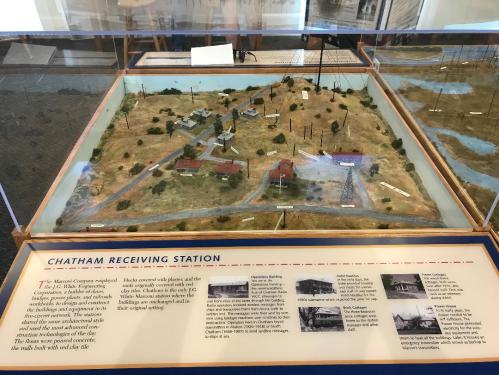
 Following World War I, America saw a future in long-distance wireless telegraphy using high-power radio stations. In the United States, British owned Marconi Wireless Telegraph Company of America ruled the airwaves, but in order to stay competitive, it needed the new equipment for broadcast, manufactured by General Electric Company.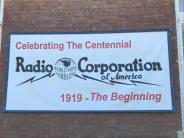

 Radio is a business.
 When World War I ended, it didn’t go unnoticed what a powerful role radio communication had played in the outcome. Led by the General Electric Company, the Radio Corporation of America (RCA) was formed in October of 1919. With guidance from the federal government, RCA brought together GE, Westinghouse, and AT&T to develop the radio broadcasting industry in the United States.