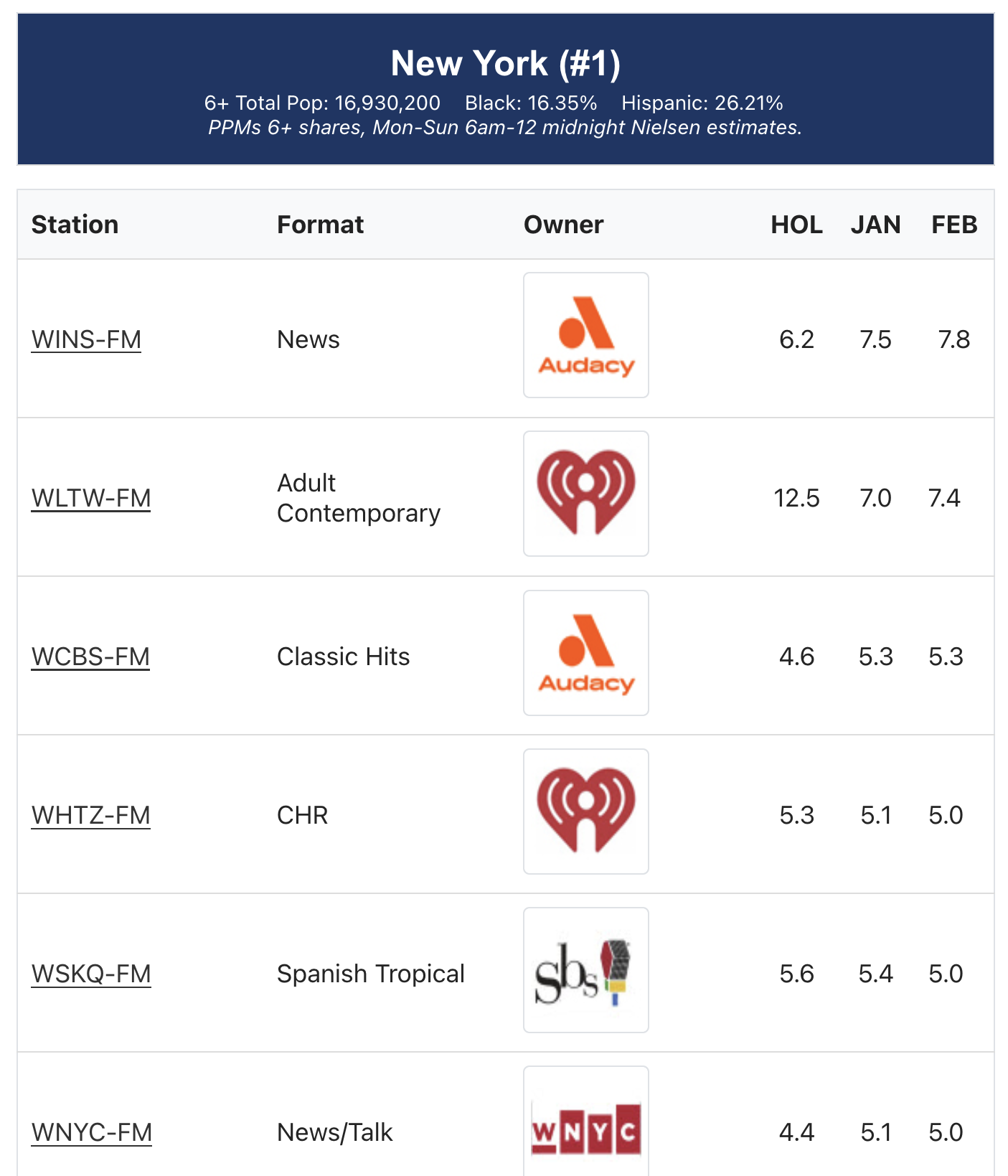
And on Long Island, WINS-FM is #1 again with a 10.6-share.
News On FM
In fact, the news leader in Los Angeles is KNX-FM.
In Chicago, it’s WBBM-AM/FM (which is #1).
In Dallas-Fort Worth, it’s KERA-FM.
In San Francisco, it’s KQED-FM (which is #1).
In Atlanta, the news leader is WSB-AM/FM.
And in Philadelphia, the news leader is KYW AM/FM.
AM Radio
The reality in the 21st Century is that radio listeners know they can get their news, sports, and entertainment on FM, or on their smartphone, smart speaker or computer.
The device they use the most, will be the one they depend on when an emergency strikes.
Ratings from Inside Radio’s First Look: Nielsen Audio Ratings (3/23/2026, 5:02pm)
Audience estimates are derived in part using Nielsen Audio’s Persons 6+/12+ Shares, Monday-Sunday, 6 am-12 Midnight estimates, under license. Copyright (c) 2026 Nielsen Audio. All rights reserved. Nielsen Audio no longer releases audience estimates for stations that do not subscribe to their services. Therefore, the audience estimates on this website include ONLY those stations that pay Nielsen Audio for this data. This website may not include all the radio stations that serve each market.
I became addicted to radio by listening to great nighttime radio personalities. But those hours are now filled by anything but inspiring, innovative personalities and that makes me sad.
Great Radio Delivered
Great radio stations delivered personality, stationality, promotions, jingles, and FOMO (Fear Of Missing Out). Today, the difference between one radio station and another is about as different as one fast food restaurant from another. Not all that much.
On-Air radio production was exciting when I was growing up. Radio stations were tight and focused. Every programming element that was allowed to hit the air was overseen by a program director that was obsessed with maintaining his/her radio station’s mission.
Those days are history.
SiriusXM
The other day, one of my daughters was complaining that SiriusXM was tripling her current rate of $5/month. She said she called to complain and was told there was nothing that could be done, so she cancelled the satellite service.
That’s not the shocking part of this story however.
What she said next was sad. She said that the local radio stations “sucked,” and that there was nothing on her car radio worth listening to.
The following week, SiriusXM sent her a $5/month for a year offer in her snail mail. She quickly returned to the satellite service.
We’re Creatures of Habit
There are so many things we do in our daily lives without thinking. We’re creatures of habit, and our habits are like being on autopilot; we do them without giving them any thought.
For example, you might be able to remember the last time you showered, but do you know which hand you always grab the shampoo with? Which armpit do you wash first? Which foot do you always put your socks on first? These are just a few examples of the many things we do every day without giving them any conscious thought.
Radio Listening Is A Habit, or It Isn’t
What my daughter learned, without thinking about it, was, listening to SiriusXM had become a habit. A habit that she had become addicted to. Only when forced to listen to today’s broadcast radio did she realize that it had changed from the days when she was growing up. Sadly, broadcast radio no longer served her listening needs.
Spotify, Pandora, RadioTunes etc.
My wife’s favorite music listening habit is Pandora’s “Secret Garden Radio.” In my case, RadioTunes serves up the best music mix of instrumental Smooth Jazz music.
What streamers offer the listener is the ability to match the genre of music to their mood of the moment. A broadcast radio station is a one flavor option, while streamers offer a myriad of flavors like Ben & Jerry’s.
CES2026
The other day I sat in on the first of many CES2026 (Consumer Electronics Show) recaps. What struck me was that the potential of AI (Artificial Intelligence) to sense our mood and serve up a stream of music that matches our mood.
Even more concerning for commercial broadcasters, AI may also be able to sense when a commercial break starts and switch a listener’s audio source to continue the genre of music they are listening to, avoiding the commercials.
Broadcast radio depends on its commercials as the primary source of its revenue.
That’s scary!
Yet, it is something I don’t hear any commercial radio broadcasters being concerned about. Instead, they are focused on keeping a century old radio service (AM radio) in the dashboard of every vehicle. (And like coal, it ain’t coming back, as I wrote in August 2017. You can read that blog article here: https://dicktaylorblog.com/2017/08/20/coal-aint-coming-back-neither-is-am-radio/ )
Is this really the best place for commercial broadcasters to be focusing their time and money lobbying Congress?
You most likely have heard how the radio industry in America is trying to get Congress to pass a law requiring that all cars sold must have an AM radio installed in them. Radio folks say this is necessary so emergency information will be available to the general public in times of a crisis.
The AM Radio for Every Vehicle Act is bipartisan legislation aimed at ensuring AM radio remains accessible in all new vehicles sold in the United States. It would require automakers to include AM broadcast radio as a standard feature, without any additional cost to consumers. The bill also addresses transparency by requiring automakers to disclose if a vehicle lacks AM radio access before the rule takes effect.
But is this really necessary, if we’re being honest with one another?
When Sue and I are on one of our many road trips, and a weather emergency or some other crisis occurs in the area that we are traveling in, our iPhones go crazy with that critical information.
Redundancy
Today, we live in a world with a lot of redundancy when it comes to communication. It’s not like a hundred years ago where radio provided the only means of immediate information to the public. In addition to broadcast radio/TV, we have computers, tablets, and smartphones filling the role of delivering emergency information quickly.
I won’t ever forget the day a tornado alert was issued for Bowling Green, Kentucky, including the campus of Western Kentucky University; every electronic device my students carried with them went off with the tornado warning.
The sound was deafening.
Obviously, as I was teaching a class at the time, no one was listening to a radio or watching TV but we all immediately knew of the imminent danger and sought protective cover.
AM Radio
From my earliest years as a listener, it was AM radio that caused me to want to pursue a career in the radio industry.
The first ten years of my radio career were spent on-air, in programming and operations. The next thirty years would see me move in to radio sales, sales management, general management and finally as a market manager of radio station clusters.
Over that period of time I watched as AM radio listenership grew older and declined, while FM radio amassed a large audience and the lion’s share of the advertising revenue.
The point I’m trying to make is, that AM radio was always available in cars and trucks, but people had moved on; to FM radio, satellite radio and portable music playing devices.
Reach people where they are, not where you want them to be.
Where Did All Radios Go?
Pete Seeger wrote a song that is applicable to the radio issue today, “Where Have All the Flowers Gone?” This song could be radio’s battle cry, by changing “flowers” to “radios.”
If you go into any retailer today, you’ll feel like Harrison Ford in Raiders of the Lost Arc trying to find a radio receiver.
Recently, Sue and I road tripped to Gainesville, Florida for another one of our grandchildren graduating from high school. During our two weeks of travel, every hotel we stayed in no longer had a radio in our room. Instead they had a large screen TV (up to 85 inches) and by our bed a charging block for plugging in our smartphones, tablets and computers.
So, should the radio industry be adding to the “AM Radio for Every Vehicle Act” as well as hotel rooms too? I think not! Have you ever tried to listen to AM radio on one of those cheap radio’s that hotels used to put into their rooms?
The Francis Marion Hotel
On our way home from Florida, we stayed a couple of nights in Charleston, South Carolina at The Francis Marion Hotel. The hotel was named after a revolutionary war hero and built in 1924. The Francis Marion hotel was early to include an AM radio in every room and even housed the city’s first radio station on an upper floor of the hotel.
The 1920s was the Golden Age of railroads, radio and grand hotels, and the Charleston Renaissance was in full bloom.
That was then, this is now.
Today, our room at The Francis Marion featured one of those clock charging cubes by our bedside, two flat screen TVs and excellent WiFi. Oh, and there is no longer a radio station broadcasting from the hotel; that’s been gone for years.
Radio Today
James Cridland reported in his latest newsletter that he read in Radio Today that the UK’s first commercial radio station is switching off two of its FM frequencies. The owners claim that DAB (Digital Audio Broadcasting) and online streaming serves its audience well enough. Cridland believes they won’t be the last either.
The Future is here, NOW!
What Do We Listen To When We Road Trip?
Everything we want to hear when we’re on-the-road comes from our smartphones. They automatically connect to our Honda’s audio system via Apple CarPlay. For music we can choose from my own music library, RadioTunes or Pandora. If we want to hear any radio station, we can listen to it via TuneIn Radio, StreamS, myTuner Radio, or Simple Radio. Plus, any time I want a quick check of the latest news, I click on my Hourly News app which streams the latest news from NPR, CBC, AP, ABC, CBS, FOX, and the BBC in succession. By the time I’ve finished listening, I not only have a good sense of what’s going on in the world, but how each news service ranks each story’s importance to its listeners.
The amazing thing about all of this is, the streaming of audio content we’ve found, is stable; with no dropouts, static or disruption of any kind. Unlike satellite radio which drops out under bridges, streaming audio does not.
In fact, my blog of January 9, 2022 titled “Why I Stream ALL of My Radio Listening,” goes into detail about how and why I started doing this. https://dicktaylorblog.com/2022/01/09/why-i-stream-all-my-radio-listening/ While we still own the 2009 Honda Accord talked about in that article, we recently upgraded to a 2018 Honda Accord for our road trips, which makes everything even easier. Mind you, this vehicle is seven years old and has an AM radio in it; somewhere, I just haven’t spent any time looking for it. The touch screen does have a button at the top that says FM Radio, even when I’m in Apple CarPlay mode, which is ALWAYS.
The Bottomline
Today we live in an ON DEMAND world. People want what they want, when they want it, and where they want it. The focus of today’s radio owner/operators should be on that reality, not on trying to keep a 20th Century technology alive by forcing it on people.
Five years ago, the Radio Advertising Bureau’s Senior Vice President Jeff Schmidt was telling radio sales people,
“If you’re selling the way you were five years ago,
you’re in trouble because the world is changing
and we need to change with it.”
And he’s right, but not just about radio sales, about the entire radio industry. It can’t try and hold back the massive change that is occurring in the world of communications. That’s the message.
When my wife Sue & I are driving, locally or on one of our road trips, we’ve noticed that drivers have no idea how fast they’re going. Speed Limit signs are no longer even considered a suggested “speed limit,” but more like something that should be considered a minimum speed.
Speedometers
In 1902, German engineer Otto Schulze patented the speedometer and Oldsmobile would be the first American car company to factory install them into their vehicles. However, speedometers were originally considered an option, that owners could buy.
It wasn’t until 1910 that speedometers started becoming standard equipment in American automobiles.
How to Become a Road Hazard
If you really want to put your life in jeopardy, try traveling the posted speed limit. We have, and there’s not a single vehicle that will follow us. NOT ONE.
The Drive Rite Academy says: Speed limit signs serve as a guide for drivers to maintain a safe and appropriate speed, based on the type of road, traffic, and environmental conditions. They are designed to protect both drivers and pedestrians by reducing the risk of accidents and ensuring smooth traffic flow.
KEY POINTS:
The number on the sign represents the maximum speed you’re legally allowed to drive, under ideal driving conditions.
Ideal driving conditions include clear weather, dry roads, and low traffic.
It’s important to note that the posted speed limit is NOT a target speed. Drivers should adjust their speed based on traffic and weather conditions, even if it means driving below the posted limit.
Does Your Car Have a Speedometer?
The question posed at the beginning of this section is rhetorical. Every vehicle built and sold for use on our highways and byways in America comes equipped with a speedometer, but we’re beginning to wonder if today’s drivers know how to use them.
Speed Limit signs are the law on our roadways.
Once upon a time, Americans believed no one was above the law. But those days are now in the rearview mirror. 99% of today’s drivers believe that speed limit signs don’t apply to them.
And don’t get me started on drivers who don’t come to a full-stop at STOP SIGNS.
AM Radio
It’s why I chuckle when the National Association of Broadcasters (NAB) will try again in the 119th Congress to pass their “AM Radio in Every Vehicle Act.”
Personally, I believe, it’s more important that every vehicle come equipped with an FM radio, as that’s what the majority of Americans use – if they listen to broadcast radio at all.
Just Because…
Just because a vehicle has an AM radio – or speedometer for that matter – doesn’t mean anyone will use them for their safety, or that of their passengers.
2024 marked my 10th year of writing this blog, and while I reduced the number of articles I would write this year to focus more on faith, family and friends, here are the Top 5 Most Read articles from the past year.
To date, 508 articles have been published over the decade since the blog began, with over 314,215 views from folks around the world; maybe you missed them or perhaps you’d like to read them again.
Most Read Article of 2024
In 2016, Winchester, Virginia’s WINC AM/FM celebrated its 75th anniversary; eight years later this historic radio station and its 37-year morning man, Barry Lee, would be “Gone in a WINK.”
As the radio industry continues to eliminate radio personalities that have become a part of the fabric of the communities they broadcast to, this story about the end of one local radio station resonated with readers.
Second Most Read Article of 20214
How important is it to have AM radio in cars, if the majority of the people on the roads don’t listen to any AM radio stations, with the subject of “Use It or Lose It.”
While I became attracted to a career in broadcasting due to AM radio and even had the opportunity to be an air personality on “The Air Castle of the South, 650AM-WSM” the reality in the 21st Century is that AM radio is the past and digital is the future.
Third Most Read Article of 2024
In the 1970s, listening to FM radio stations was pretty much equal to that of AM radio stations. However, FM radio gradually surpassed AM in popularity throughout the late 1970s, with the shift largely attributed to the introduction of FM stereo broadcasting and the FCC’s “non-duplication rule” that encouraged FM stations to offer unique programming compared to their AM counterparts.
Radio station operators – commercial, public and religious – don’t play by the same rules. Readers were surprised to learn that the largest radio broadcaster deals with fewer regulations in “What If Every Radio Station in America Could Operate Like EMF?”
Fifth Most Read Article of 2024
It became quite clear as I reviewed the list of articles written in 2024 and what most readers both read and shared (over 13,000 times), that AM radio stories dominated the list.
While the National Association of Broadcasters (NAB) tried to get Congress to pass the “AM Radio in Every Vehicle Act” – and failed to do so – the number of AM radio stations in America (and indeed around the world) continued to sign-off. That was the subject of “AM Radio in Retreat.”
Why I Blog
I blog for broadcasters, educators and students, to provide media mentorship and to pay-it-forward to the broadcasting industry that I have been a part of for over 56-years. I’m grateful for the more than 233,000-people from all over the world who have visited this blog (https://DickTaylorBlog.com) and have read articles that have caught their interest.
Also, every article I’ve written is archived on my blog site and easily accessible.
As I begin my 11th year of blogging, I plan to continue writing new articles when I feel I can add a different perspective to how our media world is changing and evolving; but just not on a weekly schedule.
If you’re a subscriber to my blog – IT’S FREE – you will automatically receive new articles as they are published.
At the beginning of 2024, I read an article from Rolling Stone.com that I can’t get out of my head. It was titled “Why Is the Radio Full of Christian Rock? Thank This Nonprofit.” It’s a long article, that I encourage you to read, but if you’re short on time, I will summarize its most important content for the commercial radio industry.
What is EMF?
EMF stands for the “Educational Media Foundation,” a name that does not immediately convey that they are a religious broadcaster.
On their website, the foundation states their mission this way:
“Educational Media Foundation (EMF) is a nonprofit, multi-platform media company on a mission to draw people closer to Christ. Founded in 1982 in Santa Rosa, CA, with a singular radio station, EMF today owns and operates the nation’s two largest Christian music radio networks (K-LOVE and Air1) with over 1,000 broadcast signals across all 50 states, streaming audio reaching around the world, and a growing family of media ministries including podcasts, books, films, concerts, and events. EMF employs nearly 500 team members between its offices in Nashville, TN, Rocklin, CA, and field locations around the country.”
Today, I believe, EMF is the largest radio station owner in America, with more radio signals in its control than iHeartRadio, estimating that it reaches a weekly audience numbering over 18-million listeners. It’s those listeners – and their donations – that fund EMF’s operations, much like the listeners support at public radio stations. EMF’s radio stations are licensed as non-commercial educational (NCE) radio stations and the foundation receives the majority of their donations during their twice annual pledge drives; usually held in the spring and fall.
What is iHeartRadio?
iHeartRadio is America’s largest commercial radio broadcaster and owned by iHeartMedia, which was rebranded by CEO Bob Pittman from Clear Channel Radio in 2014.
Full-disclosure, I worked for Clear Channel Communications from 2004-2010, a time when the company operated in a decentralized manner, allowing each of its radio station’s general managers to make their own decisions based on local market conditions and to deliver what was forecast by the radio station’s annual budget. That would change after I left the company to a centralized management model.
At its peak, Clear Channel owned and operated more than twelve hundred American radio stations. Today, the iHeartMediawebsite says:
“With over 860 live broadcast stations [with 781 employees] in 160 markets across America, there’s an iHeartRadio station where you live. Discover how our stations can deliver your message live and local to your community.”
Wikipedia says ”iHeartRadio’s main radio competitors are Audacy, TuneIn and SiriusXM,” which I found interesting in that TuneIn owns no radio stations, and while SiriusXM is licensed to operate by the Federal Communications Commission (FCC) and does employ land-based transmitter sites in addition to its satellites, it is basically a subscription service.
Its real competitor, like that of the rest of the commercial/public radio industry, is flying under the radar.
EMF versus Commercial/Public Radio
Rolling Stone writes: The big difference between EMF and other commercial broadcasters is that it operates without a local presence and unmanned transmitters.
“Almost every new EMF station operates as a repeater
with no local voices, few local jobs and barely any overhead.”
Rolling Stone says that as of 2022, this “little-known organization had just shy of a billion dollars in net assets (a number that grows steadily year after year), with an annual revenue of nearly a quarter billion. (National Public Radio, by comparison, had net assets of less than $150 million and operated near the break-even mark.)”
The EMF business model has few operating costs – unlike commercial and public broadcasters – where every new radio station they acquire becomes a new source for donations. It’s estimated that about ninety-seven cents of every dollar comes from listener donations.
“Nonprofit EMF has built an unassuming money-making machine.”
-Rolling Stone
The genius of the EMF business model is that it exploits loopholes that the FCC created to help small nonprofits.
“in my own heart, I know God was involved
[in the decision to form a 501(c)(3)]
because being a not-for-profit has paid off for us
many, many times.”
Mike Novak, EMF CEO
The decision to incorporate as a “not-for-profit” entity allows EMF to enjoy many benefits:
Avoid paying taxes
Waves FCC applications costs and other fees
No requirement to maintain a local broadcast studio
Legally accept tax-deductible donations from their listeners (a revenue stream not available to commercial broadcasters)
The acquisition of translators* that are made more easily available to entities such as religious broadcasters
Access to lower FM band frequencies (88.1 – 91.9) that the FCC reserved for use by colleges, community and public-radio organizations and tribes; entities that the FCC envisioned would have limited funds to acquire these frequencies, and commercial broadcasters were banned from bidding on, but didn’t exclude a not-for-profit giant like EMF from buying up.
Sadly, true community broadcasters find this unlevel playing field almost impossible to compete with, when EMF’s billion-dollar foundation can offer iHeart-level prices for neighborhood radio stations. It’s something I personally witnessed happen in my city of Winchester, Virginia when EMF bought 50,000-watt WINC-FM. All local community programming vanished, along with its employees and building.
While the FCC still maintains a policy of not allowing a single radio broadcaster from owning more than five AM or five FM stations in any one city, it left open a loophole for noncommercial broadcasters by never applying its ownership cap to nonprofits. There’s also no ownership cap on the number of translators a nonprofit may own in a single radio market.
Soft Conservatism
While nonprofits can’t legally engage in any political campaign activity, don’t think EMF isn’t using its fortunes to influence its point-of-view; through lobbying and legislation. Those in the Contemporary Christian Music (CCM) industry knowthat the genre is a punchline for most Americans;it’s something that actually works to EMF’s advantage, by keeping them low profile.
Unfortunately, this unlevel playing field is negatively impactinglocal commercial and public radio stations to profitably operate,which impacts the communities these stations once served withvital local news, sports, weather and community information.
*Translators are small FM radio signals that rebroadcast a parent radio station into an area the original signal couldn’t reach.
While the National Association of Broadcasters (NAB) is still pursuing its goal of getting Congress to pass the “AM Radio in Every Vehicle Act*,” the number of AM radio stations on-the-air continues to shrink.
How Many Radio Stations Are There?
Inside Radio published the latest FCC radio station count and the number of AM radio stations on-the-air continues to shrink.
In 1968, I passed my 3rd Class Radiotelephone FCC License, Broadcast endorsed, it was also the year that the Federal Communications Commission (FCC) began publishing its Broadcast Station Totals reports.
At that time the FCC said that 4,236 AM radio stations and 2,306 FM radio stations were on the air.
In December 1990, the next report the FCC published became available showing 4,987 AM radio stations and 5,832 full power FM radio stations were now on the air; plus, another 1,866 FM translator/boosters.
It’s worthy to note that the general public cannot tell the difference between a:
Full power FM
FM booster
FM translator signal
as to the FM listener they all are received on a standard AM/FM receiver. Only broadcasters, broadcast engineers and the FCC are concerned about such distinctions.
So, in just the first two decades of my radio career, FM signals outnumbered AM signals by 2,711.
Telecommunications Act of 1996
On February 8, 1996, President William Jefferson Clinton signed into law what is commonly referred to as “The Telcom Act of 96.” The intent of the legislation was to allow more companies to operate in the communications space, but what actually happened was a flurry of mergers and acquisitions as corporate media giants bought out small, local broadcasters.
The FCC reported that as of February 29, 1996 there were:
4,906 AM stations
7,151 FM stations
2,527 FM translators/boosters on-the-air
almost two FM signals beating the airwaves to every AM signal.
A year after the Telcom Act of 96, the number of AM signals began its decline to:
4,840 (a loss of 66 AM signals in one year)
full power FM signals increased to 7,295 (up 144 FM signals)
FM translator/booster signals grew to 2,744 (up 217 FM signals)
While AM radio signals were signing off, FM radio signals were growing by an additional 361.
Ten Years After Passage of the Telcom Act of 96
On March 31, 2006, ten years after the Telcom Act became law, and the consolidation of the radio industry began, the FCC Broadcast Station Totals report listed:
4,759 AM signals
8,989 full power FM signals
4,049 FM translator/booster signals
and now something new began appearing, Low Power FM signals (LPFM) which numbered 712, meaning the radio listening consumer could now access 13,750 FM signals versus 4,759 AM signals.
Wall Street investors were clearly showing more interest in FM signals than AM signals as their money poured into the radio industry.
Twenty Years After Passage of the Telcom Act of 96
Twenty years after President Clinton signed the Telcom Act and consolidation continued squeezing out the mom and pop broadcasters, the FCC Broadcast Station Totals report listed:
4,680 AM signals (down 307 signals from the day I began my broadcast career)
10,811 full power FM signals
6,582 FM translator/booster signals
1,516 LPFM signals
AM signals totaled 4,680 and FM signals totaled 18,908.
Radio Broadcast Signals 2024
Which brings us to the present day report, March 31, 2024. The FCC Broadcast Station Totals report now lists:
4,427 AM signals
10,983 full power FM signals
8,913 FM translator/booster signals
1,960 LPFM signals
Remember, the radio listening public DOES NOT distinguish between the different classifications of FM signals, as they all appear on the same FM radio receiver they are using.
To the radio listener, they have
4,427 AM signals compared to 21,856 FM signals
they can access. Almost 5 times as many FM signals as AM signals, and each year we witness those AM signals either reducing their power or just signing off-the-air and turning in their FCC broadcast license.
Radio Dominates in Vehicles
The latest research from Quu ( www.quureport.com ) shows that in 2023 model vehicles:
100% of them have an FM radio
98% of them have an AM radio
98% of them have Android Audio
98% of them have Apple CarPlay
92% have SiriusXM
70% have HD Radio
What surprised me about this research report, was that this was the first time I’ve ever seen separate AM and FM numbers listed. All reporting about radio usage should list AM and FM listening separately. I feel it is disingenuous to give the false impression that AM and FM broadcast signals contribute equally when that’s clearly NOT the case.
Having access to an audio service does not equate to usage.
Fred Jacobs in his TechSurvey 2023 for example, revealed how HD Radio was only listened to by 16% and SiriusXM was only listened to by 28%, which shows that despite their high availability numbers in vehicle dashboards, usage is still low. Unfortunately, AM/FM is never broken apart, but listed together so can they can garner 86% of the listening.
I’m thinking that both HD radio and SiriusXM usage might eclipse AM radio listening, if we were allowed to see AM and FM usage shown separately.
Vehicles On The Road in America Today
According to S&P Global Mobility, there are 284 million vehicles on our roadways and the average age of them continues to rise to a new record of 12.5 years. About 23% of all passenger cars now are 20 years or older with the bulk of them made between 2015 and 2019.
By 2050, when electric vehicles are projected to make up 60% of new sales, the majority of vehicles on America’s highways will still be powered by gasoline, because most vehicles today last twenty years meaning AM radio will still be in most cars, but the bigger question is how many AM radio stations will still be on-the-air.
Radio Needs To Look Forward
In ten to twenty years, AM radio will be at best a niche way to listen to audio.
Where the radio industry and the National Association of Broadcasters should be focusing their time is keeping FM radio viable, in all vehicles and FREE!
Sadly, the FM band is becoming overcrowded with signals and this, I believe, needs to be seriously addressed.
Finally, I would like to believe, as does Scott Shannon, that radio can still succeed in the 21st Century if it will just be “authentic, local, magical, and deliver an audio product with passion.” Or as radio programming consultant and author Valerie Geller puts it:
Great radio is interesting people communicating with listeners
by telling the truth, making it matter and never being boring.
In 1984, when I was hired as a general manager in Atlantic City, New Jersey, Pierre Bouvard was my first sales representative from the Arbitron Company. I’ve known Pierre for forty years and have great respect for him. But his latest research presentation “Nielsen: AM/FM Radio Expands Its Ratings Lead Over TV And Smashing AM/FM Radio’s Drive Time Myth” https://www.westwoodone.com/blog/2024/03/04/nielsen-am-fm-radio-expands-its-ratings-lead-over-tv-and-smashing-am-fm-radios-drive-time-myth/ does something that really troubles me. It combines AM listening with FM listening, as if they contributed equally to radio’s total listening pie. They don’t.
I first wrote about this uneasiness in an article six years ago titled “AM/FM or just FM?” I felt it was worth re-sharing what I wrote as this blog has now broken through the 300,000 views level. I think you will find what I wrote is even more pertinent in the 21st Century.
AM/FM or just FM?
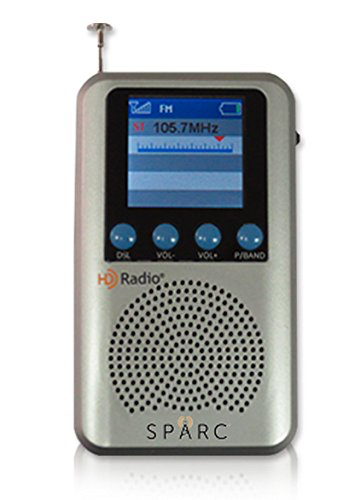
SPARC HD RADIO with FM, but no AM
There’s something that’s been troubling me for some time. It’s the radio industry’s habit of reporting radio listening results by calling it “AM/FM” versus what it really is, virtually all FM radio listening.
When I read the ratings reports from both PPM and diary markets, I see an FM world.
Don’t get me wrong, I grew up on AM radio and recognize that almost every market has a heritage AM radio station that still garners a big audience. I’m not blind to the wonderful ratings of 1010 WINS in New York City for example.
But there are only 26 all-news terrestrial radio stations left in America according to Nieman. This popular format is missing from the majority of America’s radio markets.
WTOP
WTOP was built on AM radio. It moved its entire operation over to the FM band and grew its audience, revenues and lowered its listener demographic. People who never heard this radio station on its AM dial position were suddenly newly minted fans of their all news format.
The FCC Saves AM Radio
The FCC’s mission to save AM radio is to give these radio stations an FM dial position using a translator. What are we really saving? The AM band or a particular format that a radio operator created on the AM band and now, to survive, needs to move it, like WTOP, to the FM side of the dial.
WIP
From my blogging, I get lots of feedback about a variety of things concerning broadcasting. One reader wrote to me about his father, a sports fan, who turned on WIP-FM to hear the latest chatter. WIP-FM was broadcasting a game of no interest to his father, so his son said to him, why don’t you turn on WIP AM610. Sadly, this person wrote the audio was unlistenable. He wrote: “You’d think the FCC would mandate that AM have standards for audio quality in receivers.”
WSM
When I was living in Bowling Green, Kentucky, I couldn’t receive 650AM WSM in my office, even though my office looked south and my antenna was able to enjoy a full wall of windows. The noise floor both inside my university office as well as around town while driving in my car made the station unlistenable. WSM was once listened to all the way to Louisville in northern Kentucky. Instead, I downloaded WSM’s app and could enjoy the radio station in crystal clear stereo. (I see WSM has stopped subscribing to Nashville Nielsen Audio ratings.)
BBC
The British Broadcasting Corporation (BBC) did a review of the range of services it offered on the AM band (called medium wave across the pond) and it included a financial review of all its services too. They concluded the ROI (return on investment) in AM was not there and announced they would be turning off some 13-AM radio stations in January 2018 according to Radio Business Reports.
WHVO
There’s a great radio operator in Cadiz, Kentucky by the name of Beth Mann. WHVO is her AM radio station at 1480, but if you go on her website, you won’t find any mention of this station being on the AM radio dial. It’s promoted as WHVO 96.5 & 100.9 FM. ( http://www.whvoradio.com/ )
Bottom Line
It’s time to face the fact that AM radio needs to be re-deployed for a new service. Current radio station owners should be given a viable FM dial position that replaces their AM service area, and doesn’t require multiple translators to attempt to accomplish this task. (Note: WHVO needs two translators to deliver the signal of its AM 1480.)
It’s time to allow those same dedicated radio broadcasters to sell off their expensive AM tower sites and turn off their AM stations that consume electrical power with no real ROI.
Ecclesiastes 3
“To everything there is a season, and a time to every purpose under heaven…”
AM radio’s time has come and gone as the mass communication delivery system it was from the 1920s to the 1970s, much as radio replaced vaudeville.
To put things in perspective, at a time in America’s radio history when the number of FM signals equaled the number of AM signals on the air, 75% of all radio listening was to FM. So, you can only imagine what it’s like today for AM radio listening.
That’s why I believe we do no service in promoting radio as “AM/FM” and not being honest about where virtually all of the radio listening is really taking place.
How important is it to have AM radio in cars if the majority of the people don’t listen to any AM radio stations?
I loved AM radio and my five decades plus career started on AM radio back in the 60s, but if I’m being honest, I can’t remember the last time I listened to any AM radio station, even though both of my older cars have decent AM radios in them – and I’m a “radio guy.”
Can we get real about AM radio’s problems? Mandating AM radio in all vehicles won’t cause more people to listen this radio service.
650AM – WSM
When I worked at Western Kentucky University in Bowling Green, Kentucky, the only way I could listen to 650AM – WSM broadcasting from Nashville, Tennessee was via their stream. My office had a huge picture window that looked south towards the WSM tower site, but the interference from the fluorescent lights and the steel structure of the building made AM reception impossible.
Inviting radio professionals into my Capstone Class to talk about radio, one of those professionals was the program director of WSM who told my students that more people listened to his radio station via the WSM App & stream, than did via their AM 50,000-watt FCC licensed clear channel frequency on the AM radio dial in Nashville.
Monthly Radio Ratings
Every month, when the radio trades publish radio ratings, you’re lucky to find a single AM radio station listed; in market after market. Often you find no AM radio stations listed at all, and on rare occasions you might find two.
If you go deep into the weeds, you might find an all religious station or foreign language AM radio station with a small listener base.
WIIN – AM1450
Back in the early 80s, WIIN-AM1450 in Atlantic City had a news/talk format with a local news team, sports director and even a plane in the sky doing traffic reports during the busy summer tourist season. Its sister FM radio station was 50,000-watt WFPG that featured a beautiful music format. WFPG was rated #1 by Arbitron and WIIN never showed up in the ratings.
WFPG, on the FM band, was fully automated and made all the money. WIIN-AM was fully staffed and lost a great deal of money. The owners of WIIN once said it would be more cost effective to mail the station’s few listeners a news sheet than broadcast the news to them.
AM Radio or AM Programming
Every radio format, once only associated with AM radio – like news or sports programming –today can now be heard on an FM signal.
18-years ago WTOP-AM 1500 moved its excellent news format to FM and yet, do you recall anyone being up in arms that Washington, DC area residents had just been “unserved” with important news and information, because this format moved from the AM band to FM? Quite the opposite, many FM only listeners discovered WTOP for the very first time and became avid listeners.
Revenue wise, WTOP-FM has been the nation’s top billing radio station and has won all the major radio awards year after year. In fact, our nation’s capital is dominated by FM signals. The first AM radio station doesn’t show up until you get to #24 and it only managed a 0.4 audience rating – it also is connected to an FM translator where I’m guessing, the audience is listening.
The reason AM radio formats have moved to the FM radio band is that most people today only listen to FM radio.
I rob banks, because that’s where the money is.
-Willie Sutton, bank robber
Corollary:
We broadcast emergency information on FM, because that’s where the listeners are.
-Dick Taylor
The AM Exceptions
The Big One, 700AM-WLW in Cincinnati is just one of the notable exceptions to the problem with AM radio listening. It operates on what the FRC (Federal Radio Commission, which predated the FCC or Federal Communications Commission) called a clear channel frequency. It was in November 1928, under provisions of the FRC’s General Order 40, that 700kHz was one of 40 frequencies designated as “clear channels”, allowing WLW to operate exclusively on this frequency in both the United States and Canada.
Then in early 1933, WLW would begin building the largest broadcasting transmitter in the world with 500,000-watts of AM broadcast power, at a cost in today’s dollars of $11.3 million. It would sign-on its new half-million watt transmitter on May 2, 1934 with President Franklin D. Roosevelt pressing a golden telegraph key to ceremonially launch the new signal. WLW truly became “The Nation’s Station.”
Saving AM Radio
It seems to me that if AM radio is deemed such a critical service for the nation in times of emergency, maybe it’s time to re-think the entire AM radio band and once again establish a network of high powered AM radio stations that cover the entire continental United States, and are manned 24-hours a day, 7-days a week, providing all Americans with this type of radio service. There could even be a special circuit in all radios that would automatically switch the radio to these emergency channels when warranted; much as cellphones so effectively alert their owners of an impending emergency situation.
Likewise, current local AM stations should be allowed to sunset their AM signals and continue serving their communities via their FM signals (translators), just as they are currently doing, often with much better coverage than their original AM license permits.
Saving AM Radio via FM Translators
Giving AM radio stations an FM translator signal in order to save its AM signal – would be like trying to save Ford by giving everyone a Chevy. It was a ludicrous of an idea that the FCC never fully thought out before implementing.
The FCC was also derelict in its duties by not protecting the AM band from all kinds of noise interference, for example the kind generated by the electronic ballast in fluorescent lighting and by not standardizing AM stereo along with not setting audio quality standards for AM broadcasting.
The “AM Radio in Every Vehicle Act” currently before Congress says nothing about mandating a certain quality standard for AM radio in vehicles, leaving open the possibility that vehicle manufacturers will install the cheapest and lowest quality AM receivers, if such a law is passed?
Longtime agricultural broadcaster, Max Armstrong, loves AM radio, but admits that broadcasters are part of the blame for AM radio’s decline. Some examples are:
Sold the land that was needed for strong AM signals, and reduced power
Changed the format of their AM station, once they obtained an FM translator
Re-allocated resources for areas other than for AM broadcasting
Poorly maintained their AM transmitting facilities, in favor of their FM
“When the epitaph is written for AM radio, I think it will be
that AM radio killed itself. I think broadcasters have
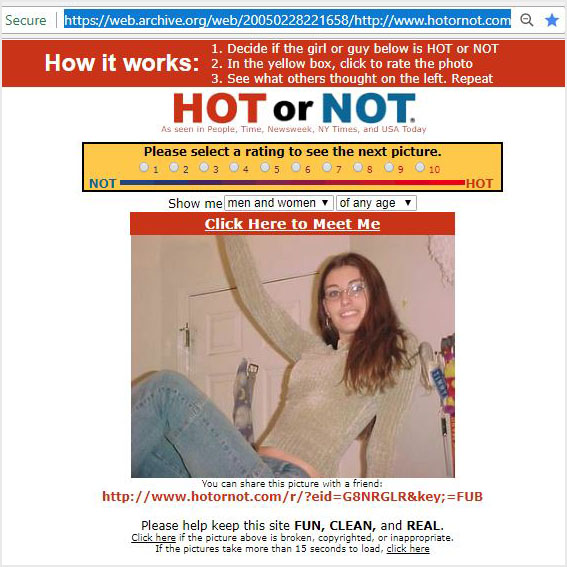
Twenty-four years ago, in October 2000, a new relationship website launched called “Hot or Not.” The premise of the site was for people to submit photos of themselves (or others) to have users of the site rate them on a scale of 1 to 10 on their attractiveness.
Within a month of launching, the site reached around two million page views per day.
Mark Zuckerberg’s original idea was to do something similar with a site he created called FashMash, which became TheFacebook.com in 2004 (now just Facebook.com). Likewise, the founders of YouTube said they originally set out to create a video version of “hot or not” before developing a more inclusive site.
HOT or NOT
It was based on this site that Fred Jacobs presented, the things he did and saw at this year’s Consumer Electronics Show in Las Vegas, aka CES 2024, as being “Hot or Not.”
During the webinar, I asked the smarmy question “Is AM Radio HOT?” in the chat box. (No, I didn’t get an answer.)
However, the bigger question really is, “Is RADIO Hot or Not?”
The answer from everything I’m reading is “Not,” at least in the way things are going.
When it came to radio audience ratings, I never concerned myself with individual ratings, but preferred to study audience trends. Here’s the latest trend lines for both broadcast radio and digital streaming:
Not A Viable Business Anymore
In Canada this month, the chief legal and regulatory officer of Bell Media grabbed the headlines worldwide, when he explained the reason Bell was selling off 45 of its radio broadcast properties, was they were “not a viable business anymore.”
“One man’s trash is another man’s radio stations.”
-Fred Jacobs
So, what do you think the buyers of these radio stations must have thought, after the seller tells the world they think the radio stations they just sold are not a viable business?
Harker Bos Group https://harkerbos.com/ released new research on the state of media today and here are some of the key takeaways.
What are radio listeners looking to hear?
54% highlight the importance of local coverage
67% sound quality
54% station availability
53% ease of use
When the researchers compared broadcast radio to digital streaming of music, they found that usage of broadcast by younger audiences was losing out to streaming services. Those that are frequent users of streaming music tend to access it via smartphones, computers, smart speakers and tablets preferring on-demand music services with personalized playlists and recommendations. Streaming also provides users global access that is not bound by geographical limitations.
Is The Media Prepared For An Extinction-Level Event?
That headline in the New Yorker caught my attention! The author, Claire Malone, cites “ads are scarce, search and social traffic is dying, and readers are burned out, [which means] the future will require fundamentally rethinking the press’s relationship to its audience.”
The way to become a millionaire in radio,
is to start with a billion dollars.
That’s not something new, that witticism has been around since the end of the 20th Century. I was reminded of it when Claire shared the words of a late-career writer’s advice to the newbies: “You want to make it in journalism, marry rich.”
Last year, 2,681 people were laid off in broadcast, print and digital news media.
In February of this year, after the record-setting viewership to the CBS broadcast of Super Bowl 58, that very network announced it would be cutting 800 jobs.
Significant job cuts have taken place at:
NBC News
Vox Media
Vice News
Business Insider
Spotify
theSkimm
FiveThirtyEight
The Athletic
The New Yorker
Sports Illustrated
And some other media outlets closed down:
BuzzFeed
Gawker
Pitchfork
The Messenger (this endeavor lasted less than a year)
“Publishers, brace yourselves – it’s going to be a wild ride.
I see a potential extinction-level event in the future.”
-Matthew Goldstein, media consultant
I share these stories with you, not to depress you, but for you to better understand what’s going on, and that it’s not just a radio problem, but a media problem.
As Netflix, Amazon Prime Video and others add advertising to formerly ad-free streaming channels, where will those ad dollars come from; radio, TV, cable, newspapers, magazines? The advertising dollar pie is not infinite; to grow your piece of the pie, means eating someone else’s.
“It’s time for a new revolution.”
-Mark Thompson, CNN’s new CEO/Editor-in-Chief
Sadly, many media folks working in the industry today, have only been part of the culture of decline – where cutting expenses has been the only plan to achieve future success.
What’s always been true, is it takes money to make money.
Netflix, for example, invests a billion dollars in research and development – mostly on data scientists, engineers, and designers who help Netflix subscribers discover content that they will love.
How’s that working out for Netflix? Here’s the latest data:
In 2024, media companies will find media users making decisions on which services they really want – and can afford – to continue subscribing to.
For radio operators, who operate a subscription-free service, the challenge will be:
to understand what your listening area’s population wants, needs and desires, and
to deliver for your underwriters or advertisers the best R.O.I. (Return On Investment)










 DickTaylorBlog