

The National Association of Broadcasters (NAB) submission to the Federal Communications Commission for the FCC’s 2018 Quadrennial Regulatory Review is eye-opening. You can read it for yourself HERE. It left me shaking my head.
The NAB told the commission that “’local radio stations’ Over-The-Air (OTA) ad revenues fell 44.9% in nominal terms ($17.6 billion to $9.7 billion) from 2005-2020.” Local 2020 digital advertising revenues by stations only increased the radio industry’s total ad revenues by $0.9 billion bringing them to $10.6 billion.
The NAB’s solution to the problem is for the radio industry to become more consolidated.
The definition of insanity is doing the same thing over and over
and expecting different results.
-Albert Einstein
Say What?
Back in the mid 90s, the radio industry was telling anyone who would listen that the problem with the state of radio broadcasting in America was that the industry was made up of little “ma and pa” radio stations/groups which could not scale and if the ownership caps weren’t lifted the radio industry would perish.
Excuse me, but I’ve already seen this movie and how it ends. So, why would doing more of what didn’t work, result in a different outcome.
The Media World Has Changed
I don’t think anyone would contest that the media world we live in has changed dramatically since 2005. Facebook, the world’s largest social media company with over 1.84 billion daily active users, opened its doors on February of 2004. YouTube began in 2005 and Twitter in 2006.
Google, the dominate search engine on the internet, began in 1998 and internet retailing behemoth, Amazon, began in 1994.
The new internet kids on the block that dominate our day are WhatsApp (2009), Pinterest (2009), Instagram (2010), Messenger (2011), SnapChat (2011) and TikTok (2016).
The Top 10 internet companies at the end of 2020 raked in 78.1% of the digital ad revenue ($109.2 billion).
All Ad Dollars Are Green
While we like to break money spent on advertising into distinct categories like digital media, traditional media etc. the reality is the total number of advertising dollars is a finite number and in the end you can’t tell a dollar from digital from a dollar from analog advertising.
“You can’t handle the truth!”
–Colonel Jessup
(played by Jack Nicholson in the 1992 film “A Few Good Men”)
Since 2005, many young entrepreneurs have created a better mousetrap to capture those advertising dollars. No one ever made a regulation or a law that prevented the radio industry from doing what any of those internet companies did. The passenger railroad industry never thought of themselves as being in the transportation business but only the railroad business. That’s why it found itself challenged by other means of people transportation, namely the airlines.
The radio advertising industry was born by entrepreneurs that learned how to create a product that attracted a large listening audience, which in turn enabled them to sell audio advertising to companies wishing to expose their product or service to these consumers.
Unfortunately, we found ourselves challenged by new media competition. Initially, it was television, but transistor portable radios, along with car radios, allowed our business to reinvent its programming and flourish once again.
With the advent of the internet, radio was caught flat-footed.
If that were its only problem.
Radio Stations (2005-2020)
In 2005, America had 18,420 radio signals on the air.
- 13,660 AM/FM/FM Educational radio stations on the air
- 3,995 FM translators & boosters
- 675 Low Power FM stations.
By 2020, those numbers increased to 26,001 radio signals.
- 15,445 AM/FM/FM Educational radio stations
- 8,420 FM translators & boosters
- 2,136 Lower Power FM stations
18,330 vs. 26,001
That’s a 41.8% increase in the number of radio stations.
While radio folks were busy trying to steal radio advertising from the station across the street or consolidating with their former competition, the internet folks were focused on selling more advertising. From 2005 to 2020, the sale of digital advertising grew from $12.5 billion to $139.8 billion. That’s an increase of 118.4%.
But during that same time, radio grew its digital advertising footprint by $0.9 billion.
Quantity vs. Quality
When radio regulation began in America under the Federal Radio Commission (FRC) the decision was made by that regulatory body to focus on the quality of radio programming versus the quantity of radio stations they allowed to broadcast. Only people or companies with the economic capital to operate a radio station in the “public interest, convenience and/or necessity” would be allowed to obtain a radio broadcast license.
I believe you could say that the radio industry’s downfall began when we ceased worrying about quality and went with the more signals we license, the better for radio listeners mantra.
Sydney, Australia
Sydney is a major city in the country of Australia with a population of 5.312 million people. There are 74 radio stations on the air in Sydney.
By comparison, Los Angeles (America’s second largest city) has a population of 3.984 million people and 158 radio stations serving its metro.
In July 2021, radio revenues in Sydney were up 11.3% year-on-year according to Milton Data.
The Benefits of Pruning
Gardeners know that pruning is the act of trimming leaves, branches and other dead matter from plants. It’s by pruning a plant that you improve its overall health.
A beautiful garden is one where the plants have been trained to grow properly, to improve in their health/quality, and even in some cases to restrict their growth. Pruning is a great preventative gardening and lawn care process that protects the environment and increases curb-appeal.
The irony of gardening is, the more fruit and flowers a plant produces, the smaller the yield becomes. Pruning encourages the production of larger fruits and blooms.
Why do I share this with you?
I believe that everything in the world is interconnected. You can’t for a moment think that what makes for a bountiful garden would not also make for a robust radio industry.
Today’s radio industry is so overgrown with signals and other air pollution, that it has impacted its health.
Doing more of the same, and expecting a different result is insane.
It’s time to get out the pruning shears.
Less Is More
I believe that the way to improve the radio industry in America, to have more advertising revenues to support quality local services including news, sports and emergency journalism, along with entertainment by talented live performers, is by reducing the number of radio signals.
AM radio is the logical first place to start.
Elsewhere in the world we are seeing that not only the AM band being sunset but the analog FM band as well. The world has gone digital.
American radio has one final chance to get it right by correcting for past decisions, hurtful to radio broadcasting, in creating a new and robust digital broadcasting service.


 I hope you are enjoying this holiday weekend celebration of America’s independence 244-years in the making.
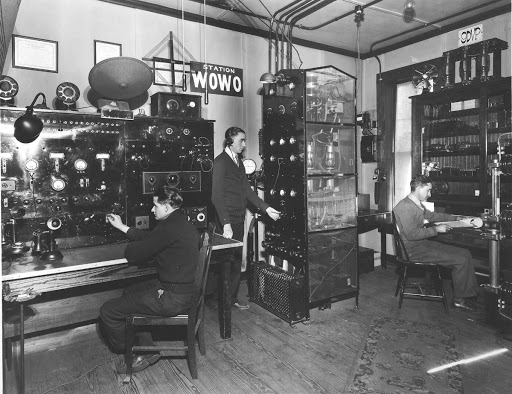 joyous time for the staff and management at that radio station. It was only four years earlier that WOWO signed on the air for the first time in its storied broadcast history, March 25, 1925.
 It was a joint venture between Texas Instruments and Regency Electronics that would produce the world’s first transistor radio, the TR1, in 1954. However, it wasn’t until three years later when SONY would introduce its smaller and cheaper TR-63 transistor radio that this new communication device would become the 1960s/70s mass market success story.

 The successful television sitcom “Seinfeld” debuted on the NBC television network. The show “about nothing” ran for nine years and has grossed more than $4 Billion, making it the most profitable half-hour television program in history.
 Each new generation of technological development has moved media consumers away from traditional broadcast radio’s position as the leader for reaching the masses with new music, news and cultural trends.
 Bill Thomas, a media and branding idea expert and broadcast & radio veteran (@BillThomas), shared a link on Twitter to an Ad Week
  it’s been illuminating learning about our city and the way it operates. The other evening, we had a session with the city’s Emergency Management and E-911 departments.


 When World War I ended, it didn’t go unnoticed what a powerful role radio communication had played in the outcome. Led by the General Electric Company, the Radio Corporation of America (RCA) was formed in October of 1919. With guidance from the federal government, RCA brought together GE, Westinghouse, and AT&T to develop the radio broadcasting industry in the United States.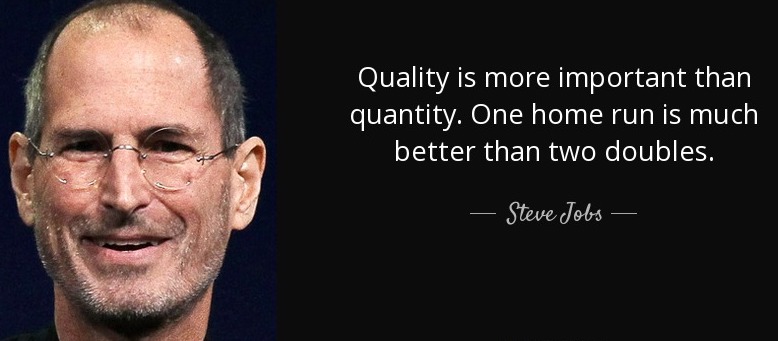
 Fact: the number of people working in the advertising industry is in decline. What makes this noteworthy is that America has been in an economic expansion.
 The other evening, I watched the Netflix documentary “
 In a lot of ways, the future is here, now.
 It was the radio commercial that planted Motel 6’s “We’ll keep the light on for you,” in your brain. The frequency and repetition of that phrase, along with a well-crafted and ever changing script always kept you wondering what
  DickTaylorBlog