

When I was a market manager for Clear Channel, the company president introduced a new concept for reducing our commercial load, he called it “Less Is More.” It sounded good on the surface, however instead of reducing on-air clutter it introduced shorter length commercials. Each of my radio stations now aired ads that were as short as 5-seconds down to 1-second in length. This meant more ads could be run in a spot break. For example, the time it would take to run four minute length commercials, with Less Is More stations could now run six half-minute commercials or twelve 15-second commercials etc. Listeners don’t consider the length of a commercial break, but the number of different elements that air in a break.
Radio Commercials
If there’s one thing radio listeners tend to always agree on, when it comes to improving the radio listening experience, it’s reducing the number of commercials. That means the number of ads that air in a single commercial break, as well as the total number ads broadcast each hour.
Clear Channel recognized this listener issue, but by introducing shorter length ads, the “Less Is More” initiative added more elements to each stop-set. To the radio listener, the amount of clutter increased and in essence, made their favorite radio stations less listenable.
Commercial Free Radio
It was in 2008, when New York’s CD 101.9 WQCD dropped its Smooth Jazz format to switch to playing rock music with the new call letters WRXP. Not finding any radio station in the greater New York City area that programmed the Smooth Jazz format, I would search online and discover Sky.FM.
They offered more than one flavor of Smooth Jazz music programming and it quickly filled my appetite for this musical genre. They only stopped the music twice an hour, once to tell me that I could hear this music without interruption by becoming a premium subscriber and the other announcement was about how they were looking to hire more IT personnel.
Those were the only two announcements and they lasted about 30-seconds in length, but over time, it was like Chinese water torture; so, I went online to find out how much it would cost to become a premium subscriber, learning it would cost me only $49/year. But that wasn’t all, that fee also increased the audio quality of the stream .
I was hooked and remained a subscriber, only leaving the service when I got my first Amazon Echo and Radio Tunes (formerly known as Sky.FM) wasn’t available on the service.
Recently a reader of this blog, told me that he listened to commercial free Radio Tunes on his Amazon smart speakers and I’m a subscriber once again.
My wife Sue loves Pandora and for Valentine’s Day 2022, I bought her Pandora Premium. This is their top service, it’s commercial-free and offers listeners the ability to ask for any song and immediately hear it. Plus she still can listen to any of Pandora’s wonderfully curated channels and skip any songs she doesn’t like.
Repetition Breeds Acceptance
I often hear people say they get tired of hearing the same songs over and over. Yet, successful radio stations often employ strategies that can seem counter-intuitive. They achieve the more variety music position by playing fewer songs. They reach a larger audience by targeting and focusing on a more narrowly defined audience.
By subscribing to Pandora and Radio Tunes we didn’t eliminate music repetition, we eliminated the programming elements that interrupted the music. It’s the music repetition of our favorite songs that actually attracts us.
In fact, I remember when Sirius and XM were still two separate subscription satellite radio entities, the most listened to commercial free music channels on both of them were HITS 1 and Top 20 on 20; both of which had the highest music repetition.
Dave Van Dyke, the President & CEO at Bridge Ratings Media Research, said that globally there are 3.6 music streamers for every paid subscriber. So, don’t completely count commercially supported radio out yet.
Great Radio Ads
When I was managing radio stations in Iowa back in 1999, my two sons came to visit. Before they left, they made what you might think is an unusual request, they wanted to know if I could make copies of the radio commercials my stations aired and put them on a cassette to bring back with them to New Jersey.
I also remember being at a house party and the radio station providing the music entertainment was largely background, until they stopped the music to play some commercials, and everyone would hush the conversation so they could listen. Yes, the radio ads this station created were that good.
I’m a graduate of The Wizard of Ads Wizard Academy in Austin, Texas. Roy H. Williams has been teaching radio folks for years about what makes an effective radio ad. Following Roy’s lessons, my advertisers have been very successful.
Radio commercials aren’t bad.
Bad radio commercials are.
Radio’s secret ingredient is the radio personality. Great radio talent has been effectively telling their listeners about all types of businesses, products and services for decades.
I need go no further than radio’s greatest salesman, Paul Harvey.
I own two BOSE Wave Radios because of Paul Harvey. What makes this so amazing is that I listened to him broadcasting on an AM radio station, but Paul was selling me a radio that would play FM stereo and CDs with the highest fidelity.
While Paul Harvey was a news commentator, he called himself a salesman. His audience knew that he used the products and services he advertised. Harvey personally wrote the radio commercials he would broadcast.
Among his many accolades, the one Paul Harvey was most proud to have received was being named “Salesman of the Year.”
Paul Harvey loved his advertisers, saying “I am fiercely loyal to those willing to put their money where my mouth is.”
Creating great radio, means leveraging the power of the medium to deliver an engaged audience for its advertisers. That means reducing the number of ads in a commercial cluster and reducing the number of ads per hour, making sure every ad is about the listener and their life.
Tomorrow has always been better than today.
And it always will be.
-Paul Harvey

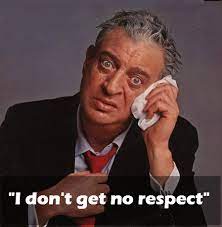
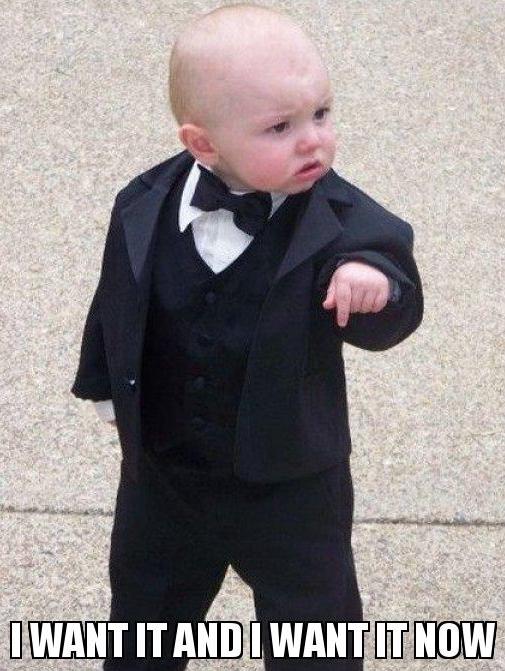 Growing up telling mom or dad that I wanted something now, got the usual response of “you will have to work for it” or “you’ll get it when it’s ready.” Learning that good things come to those who wait was part of my maturing process.
 Is there a lesson for radio broadcasters from what I just shared about television viewing habits? I think there is. Programmer Steve Goldstein puts it this way, “Traditional radio – by design – is a lean-back business. Podcasting is a lean-in business.” That perfectly describes the difference between Netflix (lean-in) and broadcast (lean-back) commercial television.
 I’ve been thinking about these two forms of audio for some time now. With each new article published about streaming, we see how more and more people are listening to music in this way. The smart speaker has certainly contributed to the growth of music listening via streams, and the smart speaker growth is exploding.
 When this pie chart was posted on social media, it immediately captured my attention, by showing where the United States Music Industry is making its money. You can read the Mid-Year 2019 RIAA Music Industry Revenues Report
  I often wonder if today’s youth would gravitate to the style of radio that attracted me to make radio broadcasting my career for five decades. Would they be attracted to a Dan Ingram, Robert W. Morgan, Dave Maynard, Ron Lundy, The Real Don Steele, Big Ron O’Brien, Larry Lujack or any of the countless other personalities that so influenced me as I was growing up?
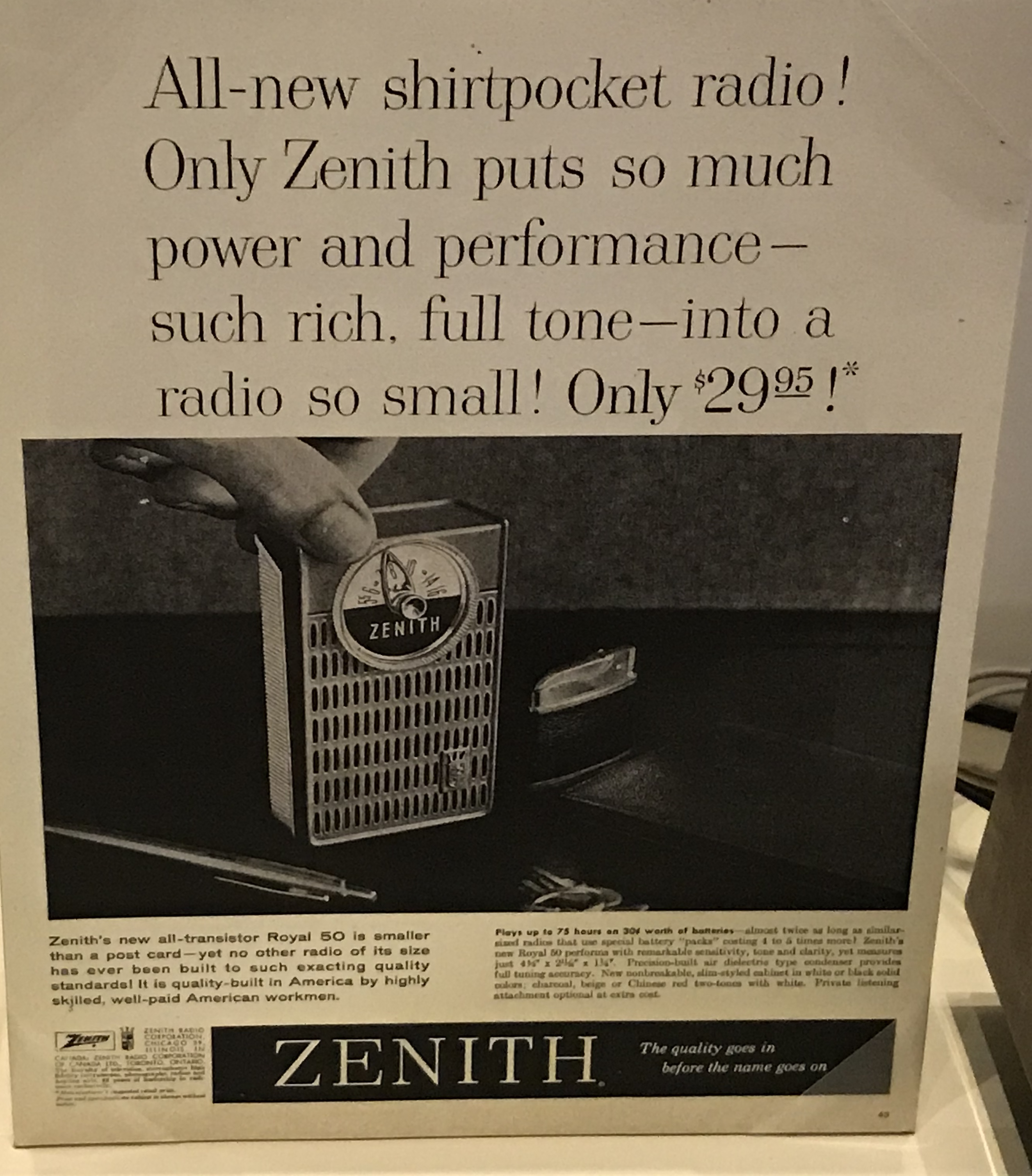 AM radio. Mine was a Zenith Royal 50 that came with an ear phone, that allowed me to listen to the Red Sox while in elementary school or to radio stations from far, far away after it was ‘lights out’ and I was supposed to be asleep.
 That got me to thinking that maybe a new radio format could be created bringing back deceased personalities like Robert W. Morgan, Dan Ingram, The Real Don Steele, Big Ron O’Brien, Ron Lundy, Larry Lujack among other greats by using the power of artificial intelligence. These incomparable radio personalities would “live again” via talented writers and programmers who would tell them what to say. Can you imagine how it might sound?
 In a lot of ways, the future is here, now.
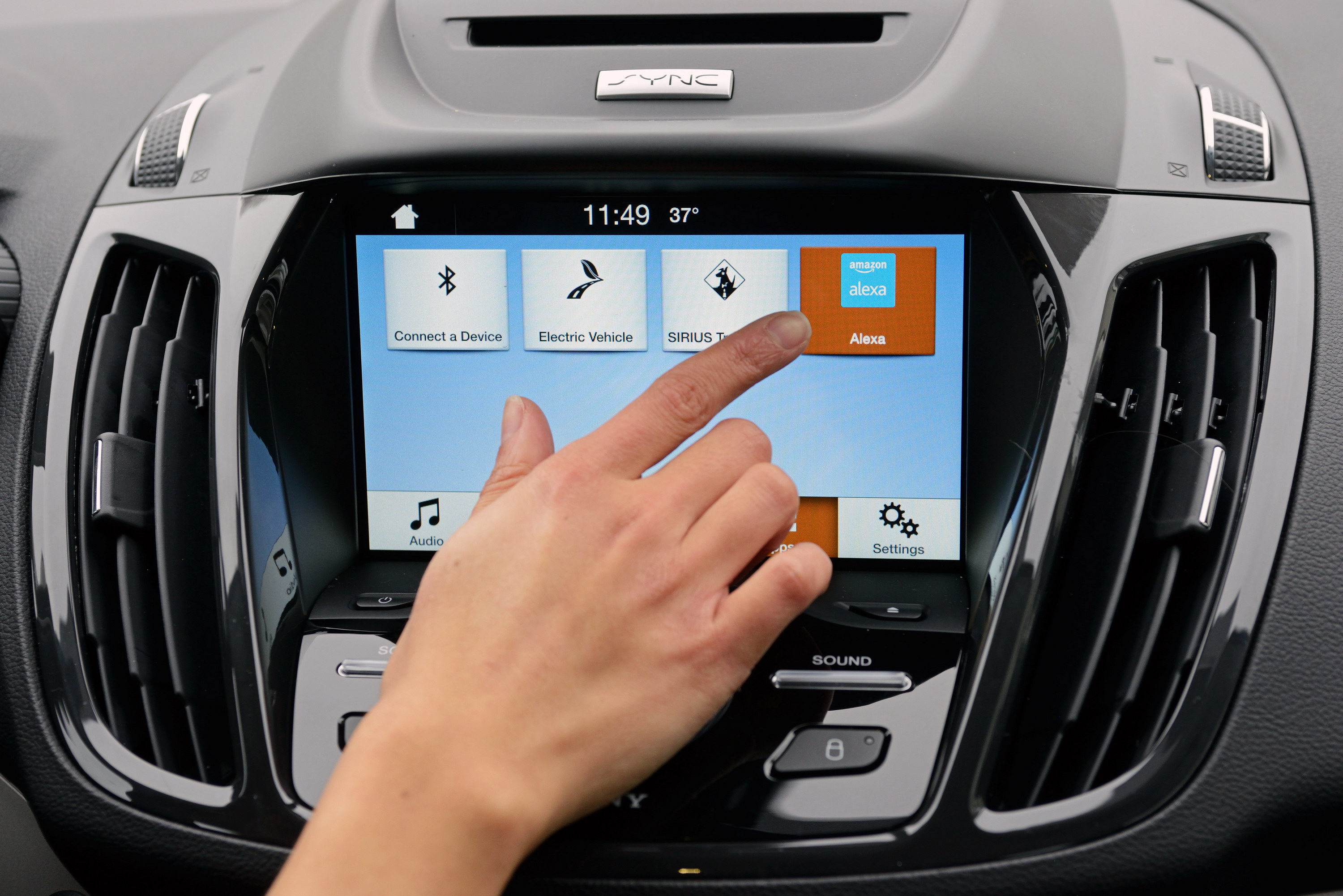 Radio’s last bastion of domination is the automobile (aka SUV, pickup truck etc.). In the home, voice activated devices are replacing AM/FM radios. I own 3 Echos, and Alexa has become a real friend of the family.
 I wasn’t at CES 2019. In fact, I’ve never been to CES.

 DickTaylorBlog