Tag Archives: Edison Research

Is AM Radio “Hot or “Not”?

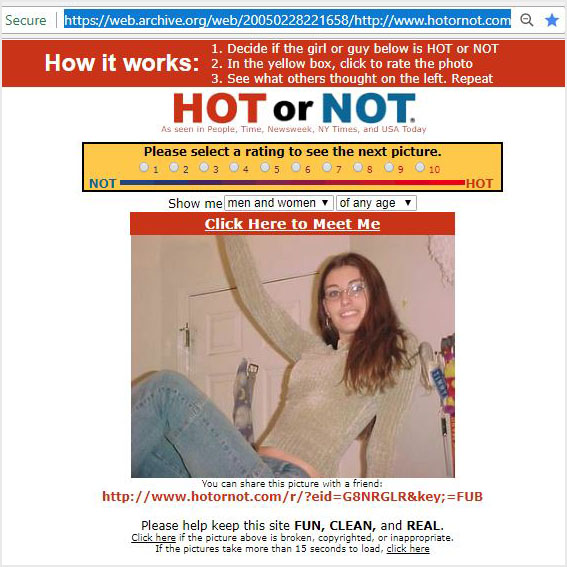
Twenty-four years ago, in October 2000, a new relationship website launched called “Hot or Not.” The premise of the site was for people to submit photos of themselves (or others) to have users of the site rate them on a scale of 1 to 10 on their attractiveness.

Within a month of launching, the site reached around two million page views per day.

Mark Zuckerberg’s original idea was to do something similar with a site he created called FashMash, which became TheFacebook.com in 2004 (now just Facebook.com). Likewise, the founders of YouTube said they originally set out to create a video version of “hot or not” before developing a more inclusive site.

HOT or NOT

It was based on this site that Fred Jacobs presented, the things he did and saw at this year’s Consumer Electronics Show in Las Vegas, aka CES 2024, as being “Hot or Not.”

During the webinar, I asked the smarmy question “Is AM Radio HOT?” in the chat box. (No, I didn’t get an answer.)

However, the bigger question really is, “Is RADIO Hot or Not?”

The answer from everything I’m reading is “Not,” at least in the way things are going.

When it came to radio audience ratings, I never concerned myself with individual ratings, but preferred to study audience trends. Here’s the latest trend lines for both broadcast radio and digital streaming:

Not A Viable Business Anymore

In Canada this month, the chief legal and regulatory officer of Bell Media grabbed the headlines worldwide, when he explained the reason Bell was selling off 45 of its radio broadcast properties, was they were “not a viable business anymore.”

“One man’s trash is another man’s radio stations.”

-Fred Jacobs

So, what do you think the buyers of these radio stations must have thought, after the seller tells the world they think the radio stations they just sold are not a viable business?

Surprise, they are very positive about the radio business. Take a moment to listen to this very positive view from the CEO of My Broadcasting Corporation, one of the seven local broadcast companies that purchased radio stations from Bell.  You can here that CBC interview here: https://www.cbc.ca/listen/live-radio/1-100-ottawa-morning/clip/16041778-local-bell-media-radio-stations-owner

The State of Media 2024

Harker Bos Group https://harkerbos.com/ released new research on the state of media today and here are some of the key takeaways.

What are radio listeners looking to hear?

  • 54% highlight the importance of local coverage
  • 67% sound quality
  • 54% station availability
  • 53% ease of use

When the researchers compared broadcast radio to digital streaming of music, they found that usage of broadcast by younger audiences was losing out to streaming services. Those that are frequent users of streaming music tend to access it via smartphones, computers, smart speakers and tablets preferring on-demand music services with personalized playlists and recommendations. Streaming also provides users global access that is not bound by geographical limitations.

Is The Media Prepared For An Extinction-Level Event?

That headline in the New Yorker caught my attention! The author, Claire Malone, cites “ads are scarce, search and social traffic is dying, and readers are burned out, [which means] the future will require fundamentally rethinking the press’s relationship to its audience.”

The way to become a millionaire in radio,

is to start with a billion dollars.

That’s not something new, that witticism has been around since the end of the 20th Century. I was reminded of it when Claire shared the words of a late-career writer’s advice to the newbies: “You want to make it in journalism, marry rich.”

Last year, 2,681 people were laid off in broadcast, print and digital news media.

In February of this year, after the record-setting viewership to the CBS broadcast of Super Bowl 58, that very network announced it would be cutting 800 jobs.

Significant job cuts have taken place at:

  • NBC News
  • Vox Media
  • Vice News
  • Business Insider
  • Spotify
  • theSkimm
  • FiveThirtyEight
  • The Athletic
  • The New Yorker
  • Sports Illustrated

And some other media outlets closed down:

  • BuzzFeed
  • Gawker
  • Pitchfork
  • The Messenger (this endeavor lasted less than a year)

“Publishers, brace yourselves – it’s going to be a wild ride.

I see a potential extinction-level event in the future.”

-Matthew Goldstein, media consultant

I share these stories with you, not to depress you, but for you to better understand what’s going on, and that it’s not just a radio problem, but a media problem.

As Netflix, Amazon Prime Video and others add advertising to formerly ad-free streaming channels, where will those ad dollars come from; radio, TV, cable, newspapers, magazines? The advertising dollar pie is not infinite; to grow your piece of the pie, means eating someone else’s.

“It’s time for a new revolution.”

-Mark Thompson, CNN’s new CEO/Editor-in-Chief

Sadly, many media folks working in the industry today, have only been part of the culture of decline – where cutting expenses has been the only plan to achieve future success.

What’s always been true, is it takes money to make money.

Netflix, for example, invests a billion dollars in research and development – mostly on data scientists, engineers, and designers who help Netflix subscribers discover content that they will love.

How’s that working out for Netflix? Here’s the latest data:

In 2024, media companies will find media users making decisions on which services they really want – and can afford – to continue subscribing to.

For radio operators, who operate a subscription-free service, the challenge will be:

  • to understand what your listening area’s population wants, needs and desires, and
  • to deliver for your underwriters or advertisers the best R.O.I. (Return On Investment)

The best ratings for advertisers

will always be increased cash register rings.

6 Comments

Filed under Education, Mentor, Radio, Sales

The Future is ON-DEMAND

I just finished reading the public radio research report “An Audience Growth Strategy for Public Media” prepared by Jacobs Media and Mark Ramsey Media for Maine Public radio service. What really stood out to me was how clearly this report shows where the future is for all traditional linear media.

Linear Is In The Rear-view Mirror

Broadcast radio and television – traditional media – was built on a linear program schedule, delivering to the media consumer, information and entertainment on a schedule determined by the broadcaster. The VCR (video cassette recorder) developed in 1956 became widely available in the late 70s and by the early 2000s was in virtually every American household, giving  television consumers the ability to now watch shows on their schedule, not the program provider’s.

“It is painfully obvious neither broadcast radio nor television is growing, especially as it concerns traditional (terrestrial) usage and linear program schedules,” writes Jacobs/Ramsey.

Today’s Media Consumer

America continues to become more diversified: 72% of Baby Boomers are white but only about half of Millennials are white and four-in-ten of Gen Zs are white.

Millennials were born between 1981 and 1994, so VCRs have always been a part of their life and Gen Zs were born 1995 and 2009, which means also having an iPod type device has always been part of their life. Both of these devices contributed to the habit of having what you want, ON-DEMAND.

In 2007, the iPhone introduced us to a media device that made ON-DEMAND media consumption ubiquitous.

Listening Options

Today’s non-radio listeners have a plethora of media options:

  • Spotify
  • Pandora
  • Apple Music
  • Amazon Music
  • Radio Tunes
  • SiriusXM
  • Podcasts
  • Audio Books
  • YouTube
  • Social Media

…just to name a few.

Jacob/Ramsey says “Linear program schedules common to over-the-air [broadcast] stations are not in alignment with new media consumption habits.” Today’s consumer is in control, not the media provider.

ON-DEMAND Digital

In today’s world, the future is “Go Digital, or Go Home.”

Today’s traditional broadcasters (Radio & TV), must take advantage of digital’s ability to serve their audiences with what they want, when they want it and on the media platform they want it on. The same attention given to over-the-air broadcasts will need to be given to all the other ways of content distribution; as each is of equal importance to the media consumer.

“Broadcast radio and television will remain the core business for years to come, but a focus on traditional media can no longer be considered a growth strategy,” writes Jacobs/Ramsey.

Peacock & Netflix

NBC’s Peacock streaming service paid $100 million dollars to exclusively stream the wild-card playoff game between the Kansas City Chiefs and the Miami Dolphins, setting a record for the most-streamed live event in American history. Comcast Chairman & CEO Brian Roberts considered the streaming gamble a success and a very proud moment for the company, but for consumers it will mean having to pay for playoff games in the future.

This week Netflix announced it had struck a 10-year deal with WWE to air “Monday Night Raw” on its streaming service. This program has been on linear television since 1993; 31-years ago.

Peak Listening On Audio Platforms

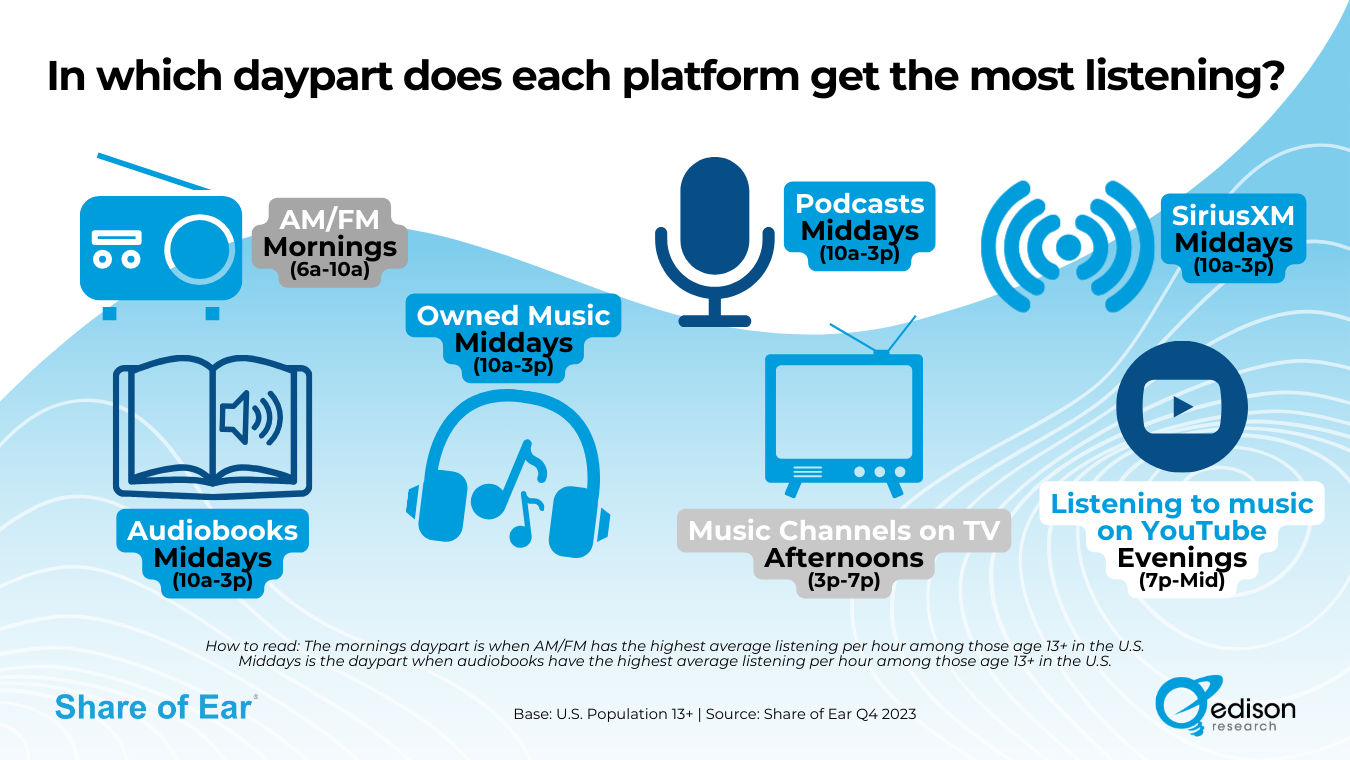
This pat week, when Edison Research published their article on which media platform commands the most listening in different dayparts, it was eye-opening.

The only daypart that broadcast radio commands is morning drive (6-10am), which just happens to be the one daypart the broadcast radio industry still invests in live air personalities. For the rest of the dayparts, consumers utilize streaming audio or previously downloaded content to their media device.

My favorite time to listen to radio growing up was 7pm to midnight. Some of the best known and loved air personalities broadcast during this daypart; Big Ron O’Brien, John Records Landecker, Wolfman Jack, Cousin Brucie among others. However, today the research shows that YouTube is what people listen to at this time of day.

Just before the end of last year, SiriusXM announced the debut of its new streaming App. It offers “discoverability and personalization at the forefront, [so] listeners can quickly and easily find and dive into the content they love across SiriusXM’s 400+ channels and tens of thousands of hours [with] on-demand content and podcasts, [allowing] fans to go deeper into their passions and get closer to their favorite music, artists, personalities and sports; [providing]  a seamless listening experience across streaming devices that reflects listener preferences and interests,  [ensuring] subscribers never miss a moment wherever they are and whenever they want to listen.”

Don’t you wish the NAB (National Association of Broadcasters)

was working on something like this, instead of focusing on linear AM radio?*

*https://www.nab.org/documents/newsroom/pressRelease.asp?id=6916

11 Comments

Filed under Education, Mentor, Radio, Sales

What We Know About Radio Listeners and The Industry That Serves Them

The Pew Research Center recently completed a survey for National Radio Day about today’s radio industry and the people who listen to its broadcasts.

My own radio career has spanned over 50 years, and in that time I’ve witnessed considerable change. So, where are we now in 2023?

82% of Americans Over The Age of 12 Listen to Radio

While the 82% number of weekly listeners to radio is outstanding, in today’s competitive media world, that percentage of weekly listening is down from 92% in 2009, according to Nielsen.

Last week, Edison Research published new research showing that Share of All Audio Listening now ranks “On-Demand Platforms” ahead of “Linear Platforms,” the latter being sources such as over-the-air radio, radio streams, radio services, etc. People today prefer to listen to media on their time schedule, like podcasts, owned music, paid streaming services etc.

47% of Adults Get Their News From Radio (at least sometimes)

Pew Research says, that this percentage has remained relatively constant in recent years. However, just 7% of adults said that they prefer getting their news from radio broadcasts.

20% of Adults Get Local News From Radio

When FORD announced it would be ending AM radio in its vehicles, the radio industry was quick to mount an assault on Congress to have AM radio stay in all cars and trucks, initiating the “AM for Every Vehicle Act.”

When the town of Lahaina, Maui was going up in flames, news outlets were asking the head of Maui’s emergency management agency why he didn’t sound the warning sirens, but no one asked why it took that same agency 48 hours to reach out to local radio stations to spread the word.

38% of adults get their local news from TV, 17% from newspapers and 12% from the internet or other types of outlets.

Share of Adults Listening to Podcasts is UP

A decade ago, just 12% of Americans over the age of 12 said they had listened to a podcast in the past month, but in 2023 that number is 42%.

Podcasts began as an audio only, on-demand service, but today 22% of the top 250 podcasts include video which is posted on YouTube, finds a Podtrac study. In fact, today 75% of all podcast consumers say that podcasts are both audio and video, according to Coleman Insights.

Just as the term “podcast” can now refer to any on-demand audio/video content, I found that my university students, even a decade ago, thought all audio content as being “radio.”

Clearly, different generations use the same words, but what they mean in 2023 – and which demographic is using them – the meaning can be totally different.

Radio Strong

In spite of the many challenges facing radio today, the medium still reaches more Americans every week than any other platform measured by The Nielsen Company.

For the industry to stay strong and grow, it must listen to its audience and deliver what it is asking for, in the way they wish to receive it.

NPR, for example, makes everything they broadcast available on its website, social media, podcasts, and video-on-demand platforms.

“Radio’s strongest asset is its connection to a community,” says Donna Halper, an associate professor of communication and media studies at Lesley University. Halper believes that the “digital disruption has enhanced our connection to our listeners and to our community. It has kept radio on its feet.”

But it all comes down to the attitude of the people who own and operate radio stations in America. Managed properly, radio can stay strong and vital in the years ahead.

“Whether you think you can, or you think you can’t – you’re right.”

-Henry Ford

3 Comments

Filed under Education, Mentor, Radio, Sales

No Longer A License To Print Money

Back in the 60s, it wasn’t unusual for a radio station to have an operating profit margin greater than 50%. (Operating profit margin can be defined as the percentage of revenue that a company retains as income after the deduction of expenses.)

When I took over a major radio property in Atlantic City, New Jersey in the 80s, our operating profit margin targets were greater than 30%.

Being in the radio business at that time was often called “having a license to print money.”

That was then, what’s it like now?

Radio Profit Margins 2022

As we ended last year, the trades were carrying reports of operating profit margins like 8.73% (Radio One), 0.8% (Beasley Broadcast Group) and it made me wonder about the future of the radio industry.

Townsquare

This week the CEO of Townsquare was saying that they were “no longer a broadcast radio company,” because Townsquare was now deriving more than 50% of its total revenue and profits from digital.

In fact, digital delivered a profit margin of 30%.

Borrell

In a February webinar with the Radio Advertising Bureau (RAB), Gordon Borrell told radio stations they should consider hiring digital-only sales representatives. Gordon presented research showing where advertisers were increasing their spending, and it was heavily in the digital realm.

Edison Research

This month, Larry Rosin of Edison Research, showed their research from “The Infinite Dial 2023” report showing that 75 million of America’s 214 million age 12+ population were now listening to their audio content online each month.  

The big winners in this digital online streaming music marketplace are Spotify, YouTube Music, Pandora, Apple Music, Amazon Music and iHeart Radio.

While AM/FM radio still wins in the car, its audience is shrinking due to people listening to their own digital music libraries, or listening to podcasts, or listening to digital online audio; much of it made possible by connecting their smartphone to their car’s dashboard entertainment center.

Comscore

In their annual “Year in Review” webinar, Comscore says that in America there are now 239 million digital users over the age of 18. That’s 91% of the total population, up from 88% three years ago.

While we’ve come to think of “digital” as the future for technology and innovation, the reality is it’s already matured, and as such, is now in a period of “consolidation, rent-seeking and regulatory capture,” says digital researcher Greg Satell.

The Monetization Challenge

Twenty-five years ago, Edison Research recognized how the AM/FM radio dial would be changed by internet streaming, when it began its research report called “The Infinite Dial.” But to think of the world only in terms of radio or audio misses the big picture; for while the future of media and entertainment is digital streaming, the challenge of making money in this infinite content media world has become increasingly difficult.

Ankler Media CEO Janice Min put it this way for Axios:

  • “Hollywood’s calling card has always been that it makes the highest quality content in the world … And when you start to populate a fire hose, you lose some of that.”
  • “Humans are not capable of putting in the same effort when you’re making 100 movies a year.”

Certainly, the quality of radio content has gone down with all the Reductions In Force (RIFs), as fewer people now have to produce more content for multiple radio stations; plus, podcasts, blogs and social media.

Bob Iger is back as Disney’s CEO and focused how to make the mouse’s streaming business profitable; he’s not alone, as every media company is in the same situation.

No one has a crystal ball, but one thing is clear,

the future will not look like the past.

9 Comments

Filed under Education, Mentor, Radio, Sales

What’s Your BHAG?

The past couple of weeks have featured some pretty intense webinars on where the media industry is headed and my mind is still spinning from all that was shared.

Let’s start with the meaning of BHAG (pronounced Bee-Hag); which means to have a Big Hairy Audacious Goal, a term coined from the book Built to Last: Successful Habits of Visionary Companies by Jim Collins and Jerry Poras. President Kennedy presented America with a BHAG when he said the United States would put a man on the moon.

“We choose to go to the moon in this decade and do the other things, not because they are easy, but because they are hard, because that goal will serve to organize and measure the best of our energies and skills, because that challenge is one that we are willing to accept, one we are unwilling to postpone, and one which we intend to win.”


-John F. Kennedy, President

The Elements of a BHAG

All companies have goals; probably too many actually, causing employees to have a lack of collective focus on what’s really important. So, what are the elements of a BHAG?

  • A BHAG is a compelling, long-term goal that brings employees together and inspires them to take action.
  • BHAGs should pull employees out of a slump and give them a reason to tackle a big-picture-type plan.
  • BHAGs should cause an organization to focus on a common enemy, and on a defined target, while bringing about an internal transformation.

From what I’m hearing in these webinars,

the radio industry needs a BHAG for digital.

Gordon Borrell

In a Radio Advertising Bureau (RAB) webinar “Digital Sales Approach $2 Billion” Gordon stressed the importance of have a long-term revenue BHAG for digital sales. He said radio stations should consider hiring digital-only sales reps.

Larry Rosin

Edison Research President Larry Rosin co-hosted the 25th Anniversary of Edison’s “The Infinite Dial Study.” It was truly eye-opening to realize how much audio media access has changed over the last quarter century.

  • Internet access 1998 (31%) versus 2023 (95%)
  • Households with computers 1998 (~50%) versus 2023 (91%) where computers have become smartphones we carry with us
  • Streaming digital audio listening 1998 (6%) versus 2023 (70%)

Why I Stream ALL My Radio Listening

On January 9, 2022, I began my 8th year of blogging with an article on why I stream all of my radio listening and how it’s so easy for anyone to do what I do. In our home, we effortlessly connect to the internet and streaming digital audio using Amazon’s Echo. I can’t remember the last time I played a record, cassette tape, reel-to-reel tape, CD or thumb drive; anything I want to hear can be heard on demand by voice command.

As a family, we don’t’ have the latest cars, Sue has a 2006 Subaru Forester and I have a 2009 Honda Accord, but both vehicles seamlessly connect to our iPhones when we enter the car and allow us to stream any digital audio content through our car’s audio systems.

Comscore Year-in-Review

As of December 2022, 91% of America’s population over the age of 18 are digital users. The Comscore webinar was especially eye-opening, when they told the audience that the “digital population grew relatively 2x more than the total population in the last 3 years with increasing emphasis on mobile usage.”

An average adult internet user will spend almost 4.5 hours a day

accessing the internet via desktop or mobile.

-Comscore Media Metrix Multi-Platform United States 18+ Total Digital Population

Willie Sutton when asked why he robbed banks, responded “because that’s where the money is.” Now you know why all media entities are racing to win with their digital media offering.

The interconnectedness of audiences

is where the wins will be found in measurement.

-Jason Clough, Senior Director, Partnerships & Insights, Comscore

I think Jason Clough perfectly summed up what radio’s BHAG should be in the above slide from his presentation: if media wants to stay relevant to its audience and win with any audience measurement metric, it must interconnect with them.

But, instead of “interconnectedness”…

Think “EXPERIENCES.”

Is your radio station delivering the best listener experience, wherever and however they access your programming?

16 Comments

Filed under Education, Mentor, Radio, Sales

Option A or Option B

Over the years as I’ve been writing this blog, some of my critics have accused me of being negative on the future of radio broadcasting, comparing me to a “radio chicken little” that each week proclaims the sky is falling.

It’s hard to read something that makes you feel uncomfortable.

Predictably Irrational

I’ve been a fan of Dan Ariely, with his Predictably Irrational  books and his column “Ask Ariely,” which was published in the Wall Street Journal for just over ten years. If you don’t know, Dan Ariely is an Israeli-American professor and author, serving as a James B. Duke Professor of psychology and behavioral economics at Duke University.

On September 26, 2022, he announced that he was ending “Ask Ariely”, a weekly column that he has been writing since June 2012.

At that time, the reasons he gave were “our society now confronts some big, important, collective problems. We haven’t yet made up our minds as to how we will treat our planet, confront fake news, cope with a post-COVID workforce or mitigate the effects of inequality, hatred and political fragmentation.”

WOW, it kind of makes anything I write about concerning radio seem trite, doesn’t it?

Then, in December, Dan emailed his subscribers a letter called “End-of-Year Alternative Ask Ariely”, with thoughts that I’ve been mentally marinating.

Stay or Change

In life we are often faced with Stay or Change decisions.

  • Stay in our current job or Change to a new one
  • Stay married or Change to go our separate ways
  • Stay on the couch watching TV or Change to a more active lifestyle
  • Stay in the radio format we’ve done for the past 10 years or Change to something new

“In general, when we look at the decisions we make each day, most of them are not an outcome of active deliberation,” says Ariely.

The Future is Digital

One of the tough facts facing the radio industry is the move to an all-digital world. Inside Radio started off the new year with the headline story “Digital Audio Listeners Expected to Top 225 Million This Year.”

The facts they presented in the story were:

  • 74% of American internet users listened to digital audio in 2022
  • Time spent listening (TSL) to digital audio is increasing by its users
  • Digital audio consumption is nearly even with the TSL of broadcast TV daily
  • Digital TSL beats streaming video, using social media or playing video games
  • Digital adoption remains most common among younger generations
    • 91.1% among people aged 16-24
    (Smartphones are the dominant way young people listen to digital audio)

Last year saw the majority of Americans listening to digital audio on their smartphones while at home, and this number is expected to grow to 55.8% of the U.S. population by 2026 according to eMarketer.

eMarketer also points out that more than six in ten digital audio listeners in America were  paying for a streaming audio subscription in 2022. (Full disclosure, I pay for two different streaming audio services that began in 2022.)

The latest from Dave Van Dyke at Bridge Ratings research shows that digital media was the big winner in 2022, with 95% of consumers using websites or apps and 88% interacting with social media.

Then there was this headline from Edison Research, “Mobile’s Share of At-Home Audio Listening Leads AM/FM Receivers.” Edison has found that Americans over the age 13 now spend 35% of their daily audio listening time with digital audio via their mobile device while in their home. In contrast, Americans who are still listening on an AM/FM radio receiver is down to 26%. This probably shouldn’t come as a surprise, since the most recent Infinite Dial research found 39% of American households have zero radios.

BBC Without Broadcast

BBC Director-General Tim Davie was recently reported saying: “A switch-off of broadcast will and should happen over time, and we should be active in planning for it.” Davie went on to say: “consumers are awash with choices from traditional broadcast and new streaming services [and that] a change to [the BBC’s] traditional model is necessary.”

The internet has removed

the historical distribution advantage

of broadcast media.

Changing Your Perspective

Most of the people who read this blog, have grown up with broadcast media, but a person born just 10 to 15 years ago is presented with two options for listening to audio content, broadcast or digital. For these young people, these two options have always existed.

Think of it as buying a new car with or without air conditioning. People buying cars in the mid-90s didn’t even consider buying a car without it, as it was offered as standard equipment by virtually all manufacturers on new cars.

Broadcasters weighing whether they should “stay” with what they’ve always done versus “change”, should reframe this question by labeling the choices as “Option A” or “Option B”.

  • Option A: Broadcast Media
  • Option B: Digital Media

As Dan Ariely explains, when you change the framing of this decision from one that considers “stay” versus “change” to one that considers Option A versus Option B, you put each choice on a more equal footing.

“The problem is that the natural framing of “stay” versus “change” gives an unfair advantage to the “stay” decision because it is simpler, it require less change, less work, and does not make us feel that we are making a decision. It also doesn’t make us think much about what we would risk if we made the wrong decision. Of course, staying might feel like we are not making a decision, but by staying we are making a decision. By reframing the decision as “Option A” versus “Option B”, some of the advantages of the stay options are reduced and it becomes clearer what we really want to do.”

So, what say you? “Option A” or “Option B”?

I’m all ears.

12 Comments

Filed under Education, Mentor, Radio, Sales

You Can’t Make an Elephant into a Giraffe

Let’s face it, somethings in life are what they are. Giraffe’s have long necks and elephants have big ears, big feet and trunks. Just as pickup trucks were designed for a different purpose than speed boats. So, why do we think that radio can somehow defy the natural order and become something that it was never designed to be?

Work on Your Strengths, Not Your Weaknesses

One of the lessons I learned in classes at Clear Channel University* was how people often focus on their weaknesses and try to improve them. However, studies have shown that when we focus on our strengths, we grow faster than when we try to improve our weaknesses. Added benefits to focusing on our strengths are that we become happier, less stressed and more confident.

The cure for constantly falling short of your goals is to work on improving where you’re already strong, rather than on areas where you are weak.

Why Doesn’t Radio Focus on Its Strengths?

Entercom changed its name to Audacy, saying:

“We have transformed into a fundamentally different and dramatically enhanced organization and so it is time to embrace a new name and brand identity which better reflects who we have become and our vision for the future. Audacy captures our dynamic creativity, outstanding content and innovative spirit as we aspire to build the country’s best audio content and entertainment platform.”

-David Field, CEO

Audacy is the fourth largest radio company in America (based on the number of radio stations owned) and just like the top three radio operators ahead of them, none use the word “radio” in their name.

It was in 2010, that National Public Radio announced that it would be using “NPR” as its brand name, even though its legal name remains the same. NPR celebrated its 50th birthday in 2020, the same year that American commercial radio turned 100.

What is it about the name “radio” that has radio station owners and operators distancing themselves from this word?

Finding Your Strengths

If you want to grow your strengths, first you need to identify them. This week, Pierre Bouvard, Chief Insights Officer at Cumulus Media/Westwood One, did a pretty good job of that in his blog. While Pierre was trying to correct some misperceptions about broadcast radio, he also gave us a good place to start with identifying some of its strengths. Here are five Pierre cites:

  1. Radio reaches 88% of persons 18 years of age and older each week in America.
  2. Radio reaches the 60% of Americans who are back in their cars commuting to work every day. (The Radio Advertising Bureau says radio’s reach in the car is 83% in 2021, making it the dominate form of media on-the-road.)
  3. Radio’s audience shares are twenty-one times larger than ad-supported Pandora and ten times that of ad-supported Spotify, according to Edison Research.
  4. Radio delivers an impressive Return On Investment (ROI). Pierre says “for example, for every $1 invested in an auto aftermarket AM/FM radio campaign, there is a $21 sales return.”
5. Radio delivers listeners at all hours of the day, seven days a week.

Radio’s Analog Audience

Lee Abrams posted a short YouTube video back in August 2020 that you might have missed explaining his “PSYCHOGRAPHIC CHART.” If you’re in radio, you should watch it now.   

View the full twelve-minute presentation HERE What I’d like to focus on is the two quadrants that Lee has labeled as “Analog Generation/Culturally Sophisticated & Culturally Unsophisticated.” These people are radio listeners. They were born with and are comfortable with analog media.

Lee makes clear that you can’t satisfy more than one quadrant. Pick one and super serve those people to the point of making what you do appalling to people in the other three quadrants.

The bottom line is that you can’t be all things to all people, but you can be everything to some people. This is really Marketing 101.

But the Future is Digital

Yes, the future of media is digital and it can’t be ignored. But you can’t make radio into something it’s not and never will be. It’s a powerful one-to-many media entity; leverage that.

The Australian Radio Network’s Neuro Lab is doing some interesting research into how a listener’s brain responds to audio, whether it’s coming from the radio, a podcast or streamed.

What should make all radio owner/operators sit-up and take notice is the fact that “radio showed the strongest ability to engage listeners and for extended periods of time, racking up 60% more neural engagement than any other audio format.” Podcasts showed higher levels of memory encoding and streaming was noted for promoting positive attitudes towards brands. You can read the full report HERE

All Audio is Not Created Equal (in the Brain)

Dr. Shannon Bosshard, the neuroscience specialist who conducted this groundbreaking research said, “This is the first time that anyone has demonstrated, from the perspective of the brain, that radio, podcasting and music streaming are processed differently and should be treated differently, in the same manner that audio and audio-visual mediums have been.”

Radio Financed TV

It was the incredible revenue streams produced by broadcast radio that were used to build out the medium of commercial television. TV also stole radio’s stars and programs, leaving the radio industry to reinvent itself and compete with television for advertising.

Today, radio is once again finding itself the “money mule” charged with funding the buildout of digital initiatives, having to sacrifice the very thing that makes radio unique in the process; its personalities. And then, just like with TV, radio has to compete with digital for advertising.

Fred Jacobs in his TechSurvey 2021 revealed how important the Radio Personality is to today’s radio listener.

But this shouldn’t come as a surprise. For generations, the radio personality has been the primary attraction drawing audiences to one radio station over another. At his peak, Dan Ingram on WABC in New York was said to be more popular to the station’s listeners than The Beatles.

Great Radio

In the end, great radio isn’t any one element, it’s all of them – personalities, jingles, promotions, station imaging, community involvement and companionship – that makes a radio station part of a listener’s family. People have favorite movies, but not a favorite movie theater; they have favorite television programs, but not a favorite television station; however, people DO HAVE favorite radio stations.

Remember that. Leverage that. Make money knowing that.

*Clear Channel University was closed in 2009

2 Comments

Filed under Education, Mentor, Radio, Sales

Only Change is Here to Stay

Every night, the music of Enya lulls us off to dreamland. One of our favorite songs is “The Humming.” A line from that song is “only change is here to stay.”

I’ve often written in this blog about the only constant in life is change, and that if you’re not changing your life for the better, you’re changing it for the worse, for nothing stays the same. Nothing.

Changes in Communication

Watching the Ken Burns documentary on “Country Music” it was very clear the important role that radio played in spreading the popularity of this musical genre. But that was then, today the smartphone is at the center of everyone’s life.

Smartphones

The latest from Edison Research now says that 88% of Americans over the age of 12 own and use a smartphone; 250 million, to be exact.

The wireless phone companies will tell you that today we use our smartphones primarily for data. Edison Research tells us that 82% of Americans are now active on social media platforms, the top three being Facebook, Instagram and Twitter.

Smart Speakers

While 32% of homes in the U.S. don’t have a single AM/FM radio in them, 47% now have a smart speaker.

Today, 193 million Americans – or 68%  of adults 12 years of age and older – digitally consume audio using one of these smart devices.

Car Radio

AM/FM radio’s last place of dominance is the vehicle dashboard. WFH (Work From Home) eliminated the need to commute for a lot of people, thereby causing them to spend less time with traditional radio in their cars.

McKinsey Global Institute says at least 20% of people currently in the WFH mode won’t ever be returning to an office after the pandemic ends. Just as alarming for radio station owners is the recent report by Edison Research that shows the percentage of people who listen to audio on their smartphone in their cars is now at 50%.

“We’re recovering to a different economy.”

-Jerome H. Powell, Federal Reserve Chairman

ZOOM

Before COVID-19, we already were doing video conferencing and phone calls on platforms like Go To Meeting, Face Time, WebX, or Skype. But then the world was shut down by a novel coronavirus and it was ZOOM that suddenly became the dominant platform for teaching school, conducting government, running our courts, attending church, working from home, celebrating our weddings and birthdays, and just about everything else we used to do in person.  

ZOOM is the best example of how fast our world changed when COVID-19 struck.

How did ZOOM do it? By investing the time to know what their video conferencing customer wanted, knowing it better than anyone else and then delivering it best when the critical moment – a global pandemic – arrived.

“Spend a lot of time talking to customers face-to-face. You’d be amazed how many companies don’t listen to their customers.”

– H. Ross Perot

Your listeners are changing, your advertisers are changing, your world is changing. So, you’d better be listening carefully to understand how you must change to be relevant to their wants, needs and desires.

Because as Enya sings “only change is here to stay.”

Leave a comment

Filed under Education, Mentor, Radio, Sales

COVID-19, One Year Later

It was just a year ago that I wrote about “The Day the World Shutdown.” So, shall I ask you, “how are you doing?”

For Sue & I, while we were just vaccinated on Friday, the wearing of face masks, hand sanitizing and social distancing is unlikely to change for us for the rest of 2021, if not longer.

Based on my research of pandemics past, I realized very early that this would be about a two year disruption and I suspect that when we say “Happy New Year” and ring in 2022, things will finally be on course for whatever the “new normal” is.

WFH

Working From Home, most often abbreviated as “WFH,” has also changed people’s media habits.

A year ago I wrote that I expected most people would consume their media by streaming it via the internet. The latest research has shown that is exactly what happened. eMarketer data showed that traditional radio broadcasts were eclipsed by digital audio, mid-2020. This week, Edison Research reported, that 30% of all audio listening now occurs on mobile devices; unless you’re between the ages of 13-34, then that number is 46%. Not surprisingly, this age group’s listening to audio on an AM/FM radio receiver is down to only 20%.

Working from home meant that those people who normally listened to AM/FM radio while commuting in their car, were now doing their audio consumption where they live, and 32% of today’s households don’t have a single AM/FM radio in them. However, 44.2% of homes today have a voice activated assistant, like Amazon’s Alexa, to access their favorite audio content.

Audio in Cars

The global pandemic has forced all of us to get used to new ways of doing every little thing, such as shopping online, streaming video entertainment on huge flat screen TVs and asking Alexa for assistance like she had become a member of the family. We’ve become so comfortable with these new Artificial Intelligence (AI) devices that we might start to wonder what life was like before them.

Automobile manufacturers also took notice of this change, like the commercial for a new Buick – or is it an “Alexa on Wheels?” https://www.youtube.com/watch?v=GqvEcLWI0ME

I remember when I used to tell advertisers that a car was a “radio on wheels.”

Now I don’t have a new car, but my 2009 Honda Accord has a fabulous sound system that seamlessly connects to my iPhone and streams my audio content in my car. My car radio is locked on “AUX.” (I know I’m not alone.)

The End of Commuting

Bill Gates shocked the world when he predicted in November of last year that 50% of all business travel would never come back and that 30% of the days people spent in an office would likewise disappear forever. McKinsey Global Institute pretty much corroborated Gate’s predictions by adding that 20% of workers would continue to work from home indefinitely.

Federal Reserve Chairman Jerome H. Powell, puts it this way, “We’re recovering to a different economy.”

Disney Closing Mall Stores

Disney plans to close 20% of its Disney Stores saying that they’ve seen changes in the ways people shop due to COVID-19 and that the future means people will continue to shop online. As a result, Disney plans to focus on e-commerce, its Apps and social media platforms. Disney says the data shows that the global pandemic increased the speed of change from brick-and-mortar to online shopping by half a decade.

Movies & Streaming

Disney’s CEO Bob Chapek went even further in announcing the company’s future, saying that the days of releasing new movies to theaters for several months before bringing them to their streaming platform, are over. For example, when “Raya and the Last Dragon” hits the theaters this month, it will simultaneously be available on Disney+ for subscribers for an additional $30.

Disney+ has exceeded everyone’s expectations, rapidly growing to over 95 million paying subscribers. The biggest surprise to this streamer of family content was that over 50% of those subscribers don’t have children.

Worst Year in Pay-TV History

2020 was a record year for cord-cutting according to analysis of cable TV subscribers by MoffettNathanson. Cable TV lost six million subscribers dropping cable’s household penetration level to a low, not seen in thirty years. Smart TVs are the primary reason people now stream their video content from the internet.

Award Shows Audiences in Decline

Audiences for the Academy Awards, Grammy’s, Golden Globes and Primetime Emmys have all been in a steady decline since 2000. The first of these 2021 award shows, and a harbinger for those to come, the Golden Globes, set a record low for NBC’s telecast of these awards.

Where Have All the Sports Fan Gone?

You might have thought with people stuck at home, that sports would have seen solid television audiences, but that wasn’t the case. 2020 saw a drop in viewership for practically every sport. Compared with 2019, the NBA Finals were down 51%, the NHL Finals were down 61%, the U.S. Open tennis matches were down 45%. Even the Kentucky Derby recorded its lowest TV audience ever, falling 49% from 2019, to just over eight million viewers.

Television’s biggest audience draw for many years has been the NFL and the Super Bowl, but not this year. The big game’s audience was the lowest it has been in fifteen years.

If Misery Loves Company…

Pro Sports, Harley Davidson and broadcast radio/TV are all suffering from a similar problem, they aren’t attracting the next generation. Generation Z Americans, those born after 1996, just aren’t that into sports, Harley’s and traditional media, like previous generations.

That’s probably why, when the NFL started asking for a 100% increase in TV rights payments, Disney (owner of ESPN) immediately rejected it.

However, streamers, like Amazon Prime and AppleTV+ may give the NFL the money they want, but will those high rights fees manifest in higher premiums for subscribers.

For the maker of “The Hog” and traditional broadcast media, the future is as challenging. Harley Davidson is looking to make their motorcycle line all electric, following the lead of the world’s automobile industry, and hoping it will attract new riders to their brand. Radio/TV broadcasters are also trying to capture new audiences with Apps, streaming and podcasts.

“I skate to where the puck is going to be, not where it has been.”

-Wayne Gretzky

Anyone who thinks their business will return to the way it was, once COVID-19 is in the rearview mirror, will be hanging the “Gone Fishing” sign out, be down-for-the-count or just plain out-of-business.

It’s time for all of us to be thinking like Gretzky.

8 Comments

Filed under Education, Mentor, Radio, Sales

Radio’s GEN-Z Challenge

GEN ZI recently sat in on the Edison Research webinar about people born between 1996 and 2012, known as GEN-Z.

If you read about this webinar in the radio trades, you would have learned that 55% of these young people listen to AM/FM over-the-air radio. What’s not to like about that?

The reality was, this daily radio listening was only to Over-The-Air FM radio, none of these GEN-Z people ever mentioned listening to AM radio. That’s still a positive, right?

It is, if your only focus is on the immediate future, not future trends.

Generation Z

Today, people aged 8 to 24 make up over 65-million Americans. They are the first truly digital natives, not having known a world without full digital access to content. GEN-Z people are also often called “ZOOMers.” They would rather create their own content than curate other people’s content.

Edison Research points out that Generation Z has only known a world where everything is ON DEMAND, and it’s the growing up in an ON DEMAND world that makes ZOOMers a challenge for OTA radio.

ZOOMer Trends

  • Their smartphones are the center of their media world.
  • 53% of ZOOMers listen to audio streaming daily.
  • They spend 98% more time than the rest of the population watching videos and listening to music on YouTube.
  • Spotify is their go-to music streaming service.
  • Their radio listening is mostly in the car, some at work, but none of it occurs in the home.
  • If they listen to OTA radio, it is on a device that only receives OTA radio signals, not with a digital streaming device.

When Edison Research ran clips of people in this age group talking about their media habits, it was clear FM radio wasn’t their first choice, but the fact that it was available in the car they were riding in or it was playing on a radio that everyone listened to while they were working.

Things Radio Can Do to Attract ZOOMers

Edison suggested that these programming ideas might be a way to attract the GEN-Z audience:

  • News & Information is important to GEN-Z, it’s their social currency.
  • Remind ZOOMers that radio is available on their digital streaming device.
  • GEN-Z wants to change the world, their local communities for the better and OTA radio could be a catalyst for helping them do this.
  • Surprise and delight ZOOMers with your content.

This last point is really about engaging the listener, and showing them you really care. In reality, 74% of your listeners probably don’t care* if your FM radio station disappears, because they don’t think you really care about them. Radio needs to create shared experiences for this age group. Radio needs to show they care.

Shared Values and Shared Purpose

Christian broadcasters and NPR both understand the shared values and purpose of their listeners and base their programming decisions on them. These broadcasters understand that their mission is not to attract everyone to their programming, but to build a loyal audience with those who share their vision of the world.

Using the Edison Research on GEN-Z, how can your radio station inspire and empower the ZOOMers in your community?

How do you learn what the shared values and purposes of the GEN-Z listeners are?

Ask them.

Form a GEN-Z advisory board to learn what’s on their minds and what their vision for the future is. Be willing to focus every aspect of your radio station on what’s important to THEM.

Change doesn’t begin with a slogan, it begins with shared values and purpose, which then inspires people to come together and create a world that is better than they found it.


*based on book “Know What You’re For” by Jeff Henderson

10 Comments

Filed under Education, Mentor, Radio, Sales