

Hope you had as wonderful a 4th of July holiday as Sue & I did.
Back next Sunday with a brand new blog article.

Hope you had as wonderful a 4th of July holiday as Sue & I did.
Back next Sunday with a brand new blog article.
Filed under Uncategorized

With the debut of the first Artificial Intelligence (AI) personality on Portland’s Live 95.5, the possibility of hearing the GOATs of Radio (Greatest Of All Time) back on the air took a giant step closer to becoming a reality.
The DJ Hall of Fame
Imagine your favorite radio personality returning to the airwaves via voice cloning and the use of Artificial Intelligence. When I first wrote about this, over a year and a half ago, it seemed like something that would be five to ten years away, not 18-months.
Netflix
The most popular video streamer offers viewers content that is produced from all over the world, in the native language of the country it was produced. Netflix either has to offer this content with subtitles or voice-dubbing.
Netflix research has found the majority of its subscribers prefer voice-dubbing to subtitles. AI technology offers Netflix to have voices that sound the same as the original actors through voice sampling. Two additional benefits are that using this technology is faster than hiring actors to read and record the dialog, and it’s cheaper too.
Voice Sampling
Companies such as WellSaid have developed Artificial Intelligence technology that uses just a small sample of a person’s voice and can then re-create that voice to say anything a person types on a computer keyboard.
ChatGPT-4
Last week I had Chat GPT write an article for this blog. What was amazing to see, was the speed at which it happened.
As many readers pointed out, it broke no new ground about the future of commercial broadcast radio in the United States but simply rehashed all that has already been said.
Then Alpha Media’s Top 40 KBFF (Live 95.5) in Portland, Oregon announced it had become the world’s first radio station to use an AI DJ, made possible through the use of Futuri’s RadioGPT. Using the voice of the real Ashley Elzinga aka Ashley Z, the midday personality on Live 95.5, AI Ashley was “born”.
This is the Tweet that demonstrated how both the real Ashley Z and AI Ashley sound: TWITTER LINK
After you’ve listened to the demo, you should take a little extra time to read all the comments that follow Ashley Z’s Tweet. Especially the ones that think the station should change its branding from “Live 95.5” to something more like “artificial 95.5”.
If the power of radio is the personal connection an air personality makes with a listener, can this connection be made artificially?
Ashley Z
KBFF’s website has this bio of Ashley Elzinga:
Ashley got her break in radio thanks to an internship with Ryan Seacrest at his famous Ryan Seacrest Productions in Los Angeles, CA. She’s been on the air in Sacramento, Atlanta, Cleveland, Dallas, Austin, Seattle, and now Portland!
She’s currently studying business at Harvard Business School Online and hopes to earn her MBA in the next few years.
Ashley loves to read and is obsessed with skincare and her 2 kitties, Oakley and Raspberry.
Sounds like Ashley Z has plans beyond her current radio gig, once she obtains that advanced degree from Harvard.
Dan Ingram, Larry Lujack, Robert W. Morgan, The Real Don Steele…
It seemed like 18-months ago I was “spit balling” the future, but we now can see that having radio’s GOATs back on the air and doing their thing, artificially, is closer than you might have thought. The technology to do it is here today, however the sticking point for seeing this reality, will most likely be the many legal issues over the rights to using these voices. Unlike on TV, the law in real life is a slow moving process.
Rewound Radio
Until that day arrives, I will enjoy radio’s GOATs on Rewound Radio’s DJ Hall of Fame, that airs every Saturday afternoon from 12-3pm (EST) on https://rewoundradio.com
After all, who wants “New Coke” when you can have “The Real Thing.”

I recently sat down with a ChatGPT user to learn about how powerful this form of Artificial Intelligence (AI) is. To test this rapidly growing form of AI, we asked ChatGPT to write a scholarly thousand word essay on what the future of commercial broadcast radio in five years is in the United States.
ChatGPT basically scrubs the internet for information and then puts what it finds into whatever format you request. ZDNet explains it this way:
“ChatGPT is a natural language processing tool driven by AI technology that allows you to have human-like conversations and much more with the chatbot. The language model can answer questions and assist you with tasks, such as composing emails, essays, and code.”
The following is the article ChatGPT wrote in less than a minute.
-0-
Title: The Future of Commercial Broadcast Radio in the United States: Adapting to an Evolving Landscape
Introduction
Commercial broadcast radio has been a staple of American media for over a century, entertaining and informing listeners across the nation. However, with the rapid advancements in technology and the rise of digital platforms, the future of commercial broadcast radio in the United States is at a critical juncture. This essay aims to explore the challenges facing commercial radio and discuss potential strategies for its survival and growth in the evolving media landscape.
I. The Shift to Digital Platforms
The advent of the internet and the proliferation of digital media platforms have significantly impacted the radio industry. Online streaming services, podcasts, and music apps have gained popularity among consumers, providing them with personalized and on-demand content. As a result, traditional commercial broadcast radio has faced increased competition for listeners’ attention.
II. Embracing Technological Advancements
To stay relevant and competitive, commercial broadcast radio must adapt to the changing technological landscape. One potential strategy is embracing digital platforms and incorporating them into the traditional radio experience. Many radio stations have already started offering live streaming options on their websites and mobile apps, allowing listeners to tune in from anywhere in the world. This enables radio stations to reach a broader audience and engage with listeners beyond their terrestrial broadcast range.
III. Leveraging Podcasting
Podcasting has experienced exponential growth in recent years, becoming a powerful medium for storytelling, education, and entertainment. Commercial radio stations can leverage this trend by producing and distributing their own podcasts. By creating compelling and unique content, radio stations can attract new listeners and build loyalty among their existing audience. Additionally, podcasting opens up new revenue streams through sponsorships and advertising opportunities, ensuring the financial viability of radio stations.
IV. Personalization and Localization
In the era of digital media, consumers increasingly seek personalized and localized content experiences. Commercial broadcast radio can leverage this demand by utilizing advanced data analytics and AI-driven technologies to deliver tailored programming to individual listeners. By
understanding listeners’ preferences and behaviors, radio stations can curate content that aligns with their interests, thus enhancing engagement and attracting a wider audience.
Furthermore, commercial radio stations can strengthen their connection with local communities by focusing on hyperlocal content. Emphasizing local news, events, and personalities not only creates a unique selling point for radio stations but also fosters a sense of community among listeners. By becoming an essential source of local information, commercial radio can differentiate itself from digital competitors and solidify its position in the media landscape.
V. Collaborative Partnerships
In the face of evolving media consumption habits, commercial radio can explore collaborative partnerships with other media platforms. For instance, radio stations can collaborate with streaming services to cross-promote content and expand their reach. Similarly, partnerships with local businesses and event organizers can provide opportunities for live broadcasts and mutually beneficial promotional campaigns. By forging strategic alliances, commercial radio can leverage the strengths of different media platforms and create a seamless, multi-platform experience for listeners.
VI. Adapting Advertising Strategies
Advertising has been a vital revenue source for commercial broadcast radio. However, in the digital age, advertisers have diversified their investments, allocating budgets to various platforms based on audience demographics and reach. To remain competitive, radio stations must adapt their advertising strategies to attract and retain advertisers. This can include offering targeted advertising options based on listener data, integrating native advertisements seamlessly into programming, and exploring innovative formats such as branded content and influencer partnerships.
Conclusion
The future of commercial broadcast radio in the United States lies in its ability to adapt and embrace the changing media landscape. By leveraging digital platforms, embracing technological advancements, and prioritizing personalization and localization, commercial radio can retain its relevance and attract a new generation of listeners. Collaborative partnerships and evolving advertising strategies will also play a crucial role in securing the financial resources needed to sustain commercial radio operations. While challenges persist, the future of commercial broadcast radio in the United States is not bleak. By embracing innovation, staying attuned to audience preferences, and forging strategic alliances, radio stations can navigate the evolving media landscape and continue to be a trusted source of entertainment, information, and community connection. By evolving with the times, commercial broadcast radio can carve out its place in the digital age, ensuring its longevity and relevance for years to come.
-0-
Let me know how you think ChatGPT did in the comments section of this blog. I look forward to reading your thoughts about this life-changing technology that is impacting our world.

This past week the National Association of Broadcasters (NAB), along with owners and operators of AM radio stations, were all taking bows when the Ford Motor Company reversed its decision to remove AM radio from ALL of its vehicles in 2024.
I don’t mean to rain on AM radio’s parade but something just doesn’t feel right about this quick change of heart. Let’s review the last five weeks.
April 1, 2023
News broke in the Detroit Free Press that Ford Motor Company planned to stop putting AM radio in both new gas-powered vehicles as well as electric vehicles beginning in 2024.
This sounded like it was an April Fool’s joke. However, Ford executives explained that “a majority of U.S. AM stations, as well as a number of countries and automakers globally, are modernizing radio by offering internet streaming through mobile apps, FM, digital and satellite radio options.” Ford said they planned to offer all of these alternatives for their vehicle owners so they could continue to hear their favorite AM radio station stations.
The Push-back
Alex Siciliano, senior vice president for communication at the NAB quickly responded to the news by saying, “we are certain that Ford does not want to alienate the nearly 48 million Americans who listen to AM radio, and we’ll continue to work closely with the Alliance for Automotive Innovation and individual manufacturers to keep this important service in cars.”
The NAB was joined by Massachusetts Senator Edward Markey and Federal Communications Commission (FCC) Commissioner Nathan Simington in urging automakers to keep AM radio in all vehicles, whether they be gas-powered or electric.
Then seven former administrators of the Federal Emergency Management Agency (FEMA) wrote a letter to the Secretary of Transportation, Pete Buttigieg, about how the removal of AM radio from cars will represent a grave threat to future local, state, and federal disaster response and relief efforts.
Ford Is Not The First OEM Who Thinks AM is Past Its Use-By Date
Original Equipment Manufacturers (OEMs) around the world are always looking towards the future, building cars and trucks equipped with what demands will be three to five years from now.
BMW, Mazda, Polestar, Rivian, Telsa, Volkswagen and Volvo have all removed AM radio from their electric vehicles.
FM vs AM Listening
AM (Amplitude Modulation) radio was invented the early 1900s. FM (Frequency Modulation) radio was invented in the 1930s. The shift in listening from AM to FM started in the early 1960s and by the late 70s, FM radio listenership eclipsed AM.
In June 2015, I wrote on this blog about AM Radio & Streaming Radio. I completed a 3,000 mile road trip consisting of listening to AM radio for the first 1,500 miles, and streaming radio the second 1,500 miles. I wrote:
Small signal AM radio stations primarily identify themselves with their FM translator dial position (How’s that saving AM radio?). The “pups” are mostly syndicated, automated, religious, sports or Spanish. They aren’t very engaging, which is probably a good thing if you’re driving usually because you don’t care when you lose the signal. Oh, and just try to hear their translator FM signal; forgetaboutit.
The 50,000 watt signals on AM, like WOWO in Ft Wayne, Indiana, WJR in Detroit, Michigan, WLW in Cincinnati, Ohio and KDKA in Pittsburgh, Pennsylvania are in another universe when it comes to radio programming.
While listening to WOWO, I heard a powerful morning show that was fun, engaging and tuned into the Ft Wayne area. WJR told me about Frankenmuth, Michigan while their midday show was broadcasting live from this unique resort town on the great lakes. WLW was talking about how the Cincinnati police were getting body cameras and how they were loaning them to the news folks in Cincinnati to wear and learn how they work. It was fascinating radio. And KDKA was a potpourri of information about all things Pittsburgh; thoroughly engaging and very enjoyable.
I rode each of these big signal radio stations for hundreds of miles and enjoyed listening to them every minute. Each was different, unique, fun, engaging LIVE and LOCAL.
The observation I made was that maybe the AM band should be reserved for these high power AM signals that have the bench strength to do great radio.
On my drive home I decided to see how easy it is to listen to streaming radio. Here’s what I wrote about that experience six years ago:
The day of my 15-hour drive home allowed me to listen to a streaming radio station through my iPhone4S, fed into my car’s audio system with no dropout, no buffering, and no disruption of any kind. The audio fidelity beats anything coming out of AM or FM terrestrial radio, and even SiriusXM.
On day two of my drive, I again streamed the Radio Tunes’ Smooth Jazz channel knowing that Jimi King and Stephanie Sales would be hosting a LIVE 3-hour Smooth Jazz show (they do this every Sunday). This turns Radio Tunes into a real live radio station, and I will admit that I love the channel mainly because of all the things it doesn’t do the other 165 hours a week. However, for three of the 7-hours of my second day’s drive, the companionship was really nice.
Again, I experienced no disruption to my listening as I proceeded from Maryland and through the state of West Virginia and into Kentucky. I carried Radio Tunes all the way into Lexington, Kentucky where I stopped to have some lunch.
While eating lunch it occurred to me how well my reception to streaming radio through my smartphone was. It offers excellent fidelity, no dropout, buffering or other disruptions.
Ford Decides to Keep AM Radio on All Its Vehicles
On May 23, just about five weeks after announcing that Ford would remove AM radio on all its vehicles in 2024, it reversed course and said it would not only continue to offer AM on both its gas-powered lineup but also its electric powered fleet as well.
That was an incredibly fast change of heart, but what really left people scratching their heads was that Ford also said it would restore AM radio to other Ford vehicles, via a software update, that never had AM radio in them to begin with.
About that clock…
I titled this blog article “What’s Wrong With The Clock?” and here’s why, Herb Cohen was called the world’s best negotiator and he wrote a New York Times bestseller called “You Can Negotiate Anything.” At a conference, I remember hearing Herb speak about his book and telling the story about a couple buying a grandfather clock.
As I remember it, Herb said this couple always wanted to own a grandfather clock but they were too expensive, until one day they found a grandfather clock in a store priced at $1,000. The couple had not seen a grandfather clock priced that low before and were planning to buy it at that price, when the husband thought he’d try and see if he could negotiate the price down a little. So, he said to the merchant behind the counter, “I will give you $500 for that grandfather clock.” The merchant quickly responded with “SOLD!”
The couple then wondered, what was wrong with the clock.
Negotiation is a process, that involves some back and forth, however when the process, as in the clock story, gets short-circuited, it’s human nature to wonder about your victory. That’s how I feel about the Ford reversal decision.
Moral Victory
What AM broadcasters have won in their battle with the Ford Motor Company is a moral victory. AM radio listening is in decline and there’s nothing in the cards that will change that.
If you say that someone has won a moral victory,
you mean that although they have officially lost
a contest or dispute,
they have succeeded in showing they are right about something.
-Collins Dictionary
Color me skeptical, but I sense that Ford has decided that with every AM radio station in America working to obtain an FM translator and then identifying ALL of their programming with their FM dial position, AM radio will put themselves out of business.
It’s not a beachhead Ford wishes to defend.
I also wonder how listenable AM radio will be in vehicles that don’t have the antenna systems and electrical shielding to insure good reception.
“It is much better to lose a battle and win the war
than to win a battle and lose the war.
Resolve to keep your eyes on the big ball.
-David J. Schwartz, The Magic of Thinking Big
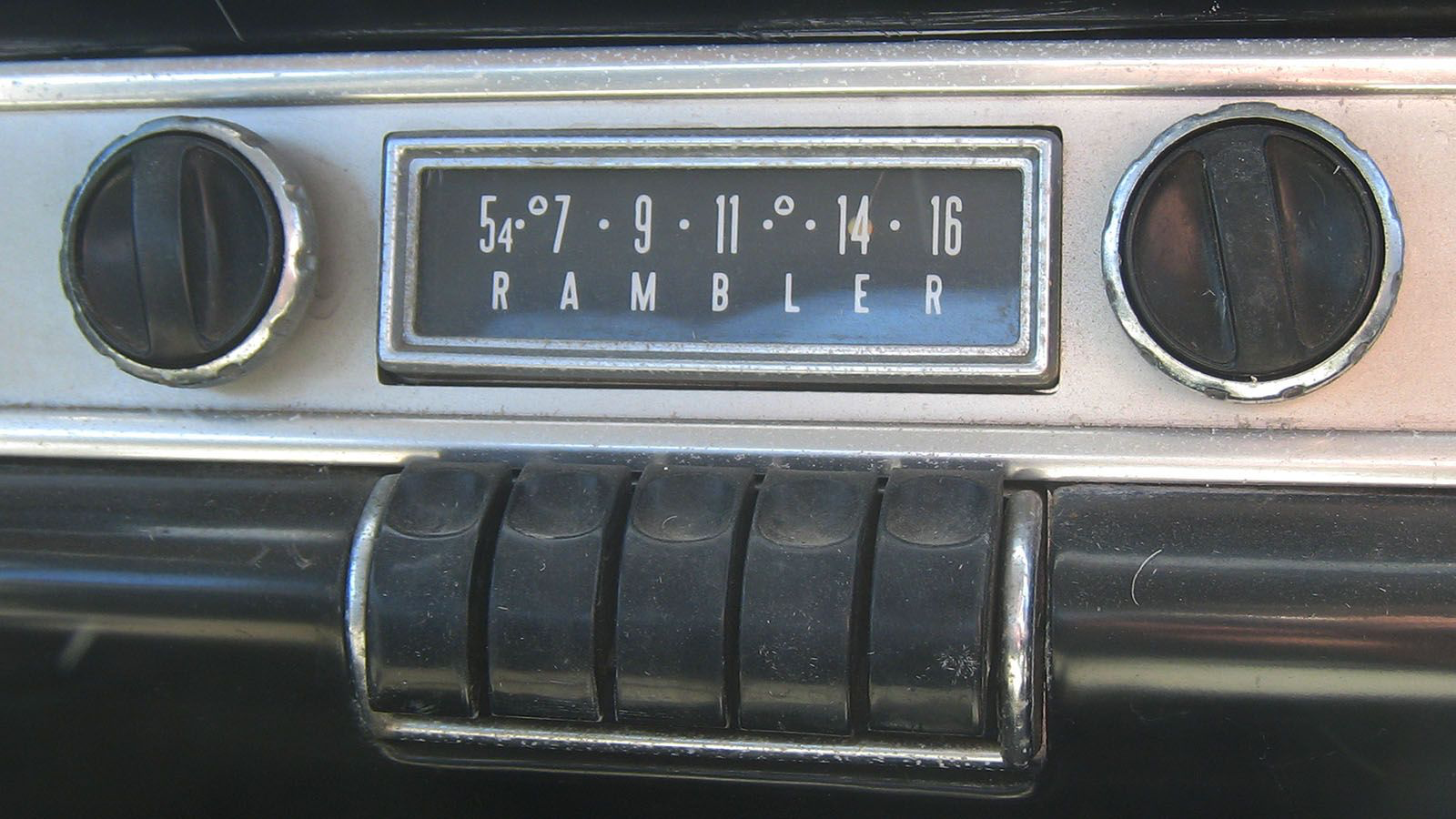
Is AM radio disappearing from new cars the issue the radio industry should be focused on?
I think not and here’s why I say that.
WBZ 1030AM
I grew up listening to WBZ AM out of Boston on my daily college commute in Western Massachusetts. Carl DeSuze, Dave Maynard, Larry Justice, Mean Joe Green in the BZ Copter with Boston traffic reports and Gary LaPierre with the news. It was truly “The Spirit of New England.”
So, when Sue and I were headed to Boston for the graduation of our son-in-law from Berklee College of Music, I put on WBZ as we left our hotel in Spring Valley, New York, and we listened to this station on our three hour drive into Boston, we didn’t listen to it on 1030AM, but via its stream on the StreamS application (App). The station, which is now an all-news operation, sounded fabulous.
The fidelity was of higher quality than FM and there was no buffering or dropout of the signal.
Once in Boston, I tried listening to WBZ over my car’s AM radio and the quality was poor, with noise and interference emanating from our surroundings.

What Does a Radio Look Like?
Back in June of 2017, I wrote a blog article asking what a radio looks like today and the most likely answer to that question was a smartphone. I also addressed in that article of six years ago, I was noticing that hotels were replacing those cheap AM/FM radios with charging stations containing a digital clock, perfect for charging smartphones, tablets and laptops.

Car Radios & The Future
Then in September of 2020, I wrote about how radios first came to be an option for buyers of new cars in June of 1930. But today’s new car buyer wants Bluetooth capabilities more than they want an FM radio; AM radio is not a must-have in 2023 according to the latest Jacob’s Media Techsurvey. What do people connect in the car with that Bluetooth, their smartphones.
What I Recently Witnessed About Radio Use
After COVID began to fade, Sue and I took a trip out to the west coast to visit our children and grand children in that part of the country. What we noticed in every hotel room we stayed was a giant flat screen TV, but no radios, just more of those charging stations with digital clocks.
This prompted another article that same year titled, “Is Radio Up Schitt’s Creek?” Sue and I became big fans of this series out of Canada, that takes place in a fictional town called “Schitt’s Creek,” and takes place primarily in The Rosebud Motel, where the shows characters use televisions, computers and smartphones, but never use a radio.
When watching movies and TV shows, I often look to see if there’s a radio in sight, noticing in British productions they often are, but not in American ones.
Once It Was Radio

When Sue and I stayed in Bethlehem, Pennsylvania we visited the museum inside the Hotel Bethlehem and found that fifty years ago, a hotel having a radio in your room was cutting edge.
The Hotel Bethlehem opened in 1922, two years after the birth of commercial radio in the United States and in 1953, it announced that patrons would enjoy a brand new AM alarm clock radio in every room.
Now seventy years later, Hotel Bethlehem features fiber optic WiFi.
Where Are the Radios?
Last year, Sue and I took a road trip through Atlantic Canada. We stayed in hotels and Bed & Breakfasts (B&Bs) throughout our trip, and found WiFi has totally replaced the AM/FM clock radios.

In Montreal, our room at the Hôtel William Gray, had a Bang & Olufsen (B&O) Bluetooth speaker that easily connected to my iPhone. The fidelity of B&O equipment is legendary and it was a joy to be able to connect any of audio Apps on my phone during our stay.
Radio Set Ownership in the Home
In American homes today, 39% don’t have a single radio set in them, and radio set ownership gets worse for young Americans age 12 to 34, where that number grows to 57% according to Edison Research.
To put this into perspective, the Federal Communications Commission (FCC), says only 6% of the population still lacks access to fixed broadband service at threshold speeds. Meaning, the internet is more accessible than broadcast radio.
Are Broadcasters in Denial?
Valerie Geller, who wrote the excellent book “Beyond Powerful Radio,” recently said
“You can sit down with a broadcaster who rails against podcasting and digital audio and artificial intelligence (AI). Then you get in the car with them, they’re using GPS, they’re listening to a podcast, they’ve got SiriusXM, they’ve got Spotify. Podcasting and radio co-exist now. That’s our truth.
Radio is its own worst enemy. We have not spent or invested in developing talent. Every other business has research and development (R&D) and they spend on it because they are investing in the future. I love radio, but I hate the state it’s in.
A lot of the voice-tracking I’ve heard already sounds like AI. There’s nothing human about it. It’s just a broadcaster playing an actor playing a broadcaster. AI is just as good as those voice-tracks because there’s nothing real being said.”
AM Radio Leaving the Dashboard
Automobile manufacturers removing AM radio from the dashboard ought to be alerting the radio industry to BIGGER PROBLEMS. The AM situation is a symptom of what we should be focused on, and that’s creating GREAT RADIO.
If you think it won’t happen to FM next, you haven’t been paying attention.
AM/FM radio sets are vanishing from hotels, B&Bs, American homes and big box retailers.
If your listeners aren’t up in arms about that, then losing AM radio in their dashboard won’t be a big deal to them either.
To paraphrase the great sales trainer Don Beverage:
Make your radio station so valuable to a listener,
that they want to hear your programming more
than you want to broadcast it to them.

Sue & I are in Boston this weekend for our son-in-law Shawn Smith’s graduation from Berklee College of Music.
This degree has been earned while working full-time and providing for his family as a computer expert working with Uncle Sam.
A very accomplished musician already, Shawn created and leads his own band, The Sons of Liberty that play throughout the Virginia, West Virginia, Maryland and DC area.
Your beautiful and talented wife Katie, son Jameson, daughter Charlie, along with Sue, I and your entire family have come together to celebrate your latest accomplishment.
We are so very proud of you.
Filed under Uncategorized

As a boy, if I wanted to hear music, there were two choices: AM Radio & a phonograph player. Seven decades later, I can’t count the number of choices I have to listen to music, but most of them have something to do with the internet.
More than 64% of individuals primarily choose to play music
over the internet.
– International Federation of the Phonographic Industry (IFPI)
Growth In The Recorded Music Market
The IFPI Global Music Report discovered that the recorded music market grew globally by 9.0% in 2022, driven primarily by paid subscription streaming.
Subscription audio streaming grew by 10.3%.
And yes, Sue and I are among the folks who pay for streaming music subscriptions. Why do we pay to hear our music streamed? Well, for one thing, the musical genres we enjoy can no longer be heard on over-the-air (OTA) broadcast radio. Paying a small fee eliminates annoying content while allowing access to an infinite music library.
CD 101.9 FM – Smooth Jazz
What originally sent me to the internet to find a music streaming station was when WQCD, better known as Smooth Jazz CD 101.9, ceased programming this genre of music.
From August 22, 1988 until February 5, 2008, this radio station had been the greater New York City metro’s place to relax; till it wasn’t.
In fact, the smooth jazz format has basically vanished from broadcast radio in the United States but thrives quite well on the internet. My favorite streaming stations for this genre are curated by Radio Tunes.
Broadcast Radio’s Challenge
While broadcasters are getting themselves all in a lather about “saving AM radio” and whether or not AI (Artificial Intelligence) can replace live personalities, maybe what the radio industry should be focused on is where people are getting their music in a 21st Century World. This graph really tells the story of today’s music consumer.

64% play their music over the internet.
17% listen to music on the radio.
Smooth Jazz CD 101.9 Returns
If you pine to hear Smooth Jazz CD 101.9, it’s back, but only as a streaming radio station. You can listen here: https://smoothjazzcd1019.com/ or you can just say “Alexa, play Smooth Jazz CD 101 9” like I do, when I stream music from the internet.
Music is personal and the internet allows all of us the ability to hear what we want, when we want to hear it. Knowing this, broadcast radio – now more than ever – needs engaging personalities that make an emotional connection with listeners beyond the music they play.
“Without music, life would be a mistake.”
-Friedrich Nietzsche



 DickTaylorBlog