
 Last week I wrote about “relevancy.”
For any business, but especially the radio industry, making sure every element that goes on-the-air is relevant for the listener your station targets is critical.
Unfortunately, the way things get on the air these days makes it nearly impossible for any program director overseeing multiple properties at the same time to be so diligent. Worse, the commercials often come to each hour from a variety of sources (network, syndication, barter, distressed insertion, ca$h, etc). Sometimes different entities sell the same customer and the very same ad might air more than once in a single break.
TV also has this problem, and as Bernie Sanders might say, it’s YUGE!
Make it about the listener
Simon Sinek tells the story of a homeless lady.
Like many homeless people she sits on a street corner looking for money and holds a sign.
Simon says that most signs all say basically the same things:
- I’m homeless
- I’m hungry
- I’m a veteran
- I’m a God-fearing person
What does each of these types of signs have in common?
They are all saying versions of me, me, me, me.
It’s not about you
Using the approach above in signage a homeless person might expect to earn up to $30 a day.
Could they do better than that with a different sign?
A marketing person wanted to test this theory and asked a homeless person if they could change the words on their sign. The person agreed to give it a go.
A day’s pay in just two hours
Using the new sign, the homeless person made $40 in just two hours.
In the same 8-hour day that brought in $30 total – if they were lucky – using this new sign they were on pace to earn $160 in that same 8-hours.
The words you use make all the difference
So by now I’m sure you’re dying to know what the new sign said that produced such amazing results.
It said this: “If you only give once a month, please think of me next time.”
Why was this sign so effective in increasing donations?
The change was in making the donation not about the receiver but about the giver.
Leaders Eat Last
In his book, “Leaders Eat Last” Simon Sinek explains why leaders make it all about their people and not about them.
Successful radio stations do the same thing.
If you are constantly telling people why your station is so wonderful, you’re like the homeless person I started off talking about. You’re talking about you.
But when you make your listeners feel wonderful, when you make it about them, it’s you that will reap the rewards.
Is this relevant to you?
 I am a trombone player. Or maybe I should say “was” as it’s been quite a few years since I picked up the horn. Growing up, I knew that was the instrument I wanted to play. Out of all the instruments in the band, trombone was the one that caught my attention and was relevant to me.
 One of the things you often hear people say is you need to “think outside the box.” You’ve probably heard this cliché so many times that you want to punch that proverbial box out. So when I heard Ziad Adbelnour say “Don’t think outside the box. Think like there is no box,” it got me thinking how you might do this for today’s radio.
 During this year’s football season, viewership to the NFL games was down. A lot of reasons were offered as to the reason why. I’m sure you have your own theories. But when it comes to the Super Bowl – “America’s party Sunday” – surely that would again show an audience increase. It didn’t.
 Life gives us lots of fears. When we’re very young, we’re fearless. Not because we are so brave, but because we aren’t smart enough to know what to be fearful of, yet. That, however, changes quickly and life gives us a heaping helping of stuff to be afraid of.
 I can’t think of a more competitive marketplace than one that offers infinite choice. This is the marketplace that Amazon operates in. It’s called the internet.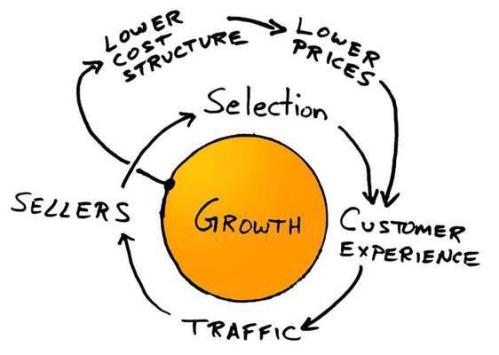
 There are some things in life you can’t have too much of.
 It seems like no matter what line of work you’re in, someone is finding a way to take your job away. If you’re in coal mining, you think the EPA is doing it to you. If you’re in manufacturing, you think its Mexico or China or some other country that pays their workers less and offers no benefits. But is that really what’s happening to jobs?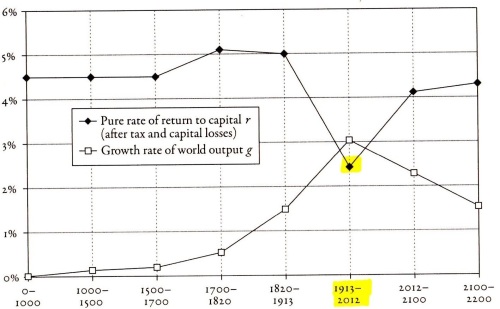
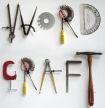 The words you use can make all the difference in the outcome of whatever you’re trying to do. Visual mediums can get lazy with wordcraft thinking the visuals will carry the message. Radio can’t.
 Before I begin my 3rd year of blogging next week, I thought I’d take a look back of the Top 5 blog posts from 2016 and share with you the posts that received the highest readership and sharing from the year just past.
