
 I remember the first radio station I worked for doing an experiment with one of their best clients, a men’s clothing store, to prove the power of radio advertising. Back in the 60s the dominant advertising vehicle in my hometown was the newspaper. This clothing store used both radio and newspaper, but felt it was the paper that drove their sales.
What the radio station did was create an imaginary character, a store mascot, using radio’s “theater of the mind.” The plan was to have the store’s clerks ask listeners where they learned about the store’s character when they shopped the store. This imaginary character was only featured in radio advertising.
What shoppers gleefully told the clerks when asked where they learned of their store’s mascot was “in the newspaper.” Virtually no one said they heard about the character on the radio.
What the store learned was how powerful their radio ads really were. What the radio station learned was how BIG the problem was in the perception of the customer as to what influenced their shopping decisions.
Fast-forward to today. Sean Luce moderated a panel at Radio Ink’s Convergence 15 conference in San Jose in May 2015. Sean shared the radio industry’s gross revenue estimates as compiled by Borrell Associates for 2008 ($14.9 billion), projected 2015 ($10.6 billion) and the projected 2019 ($9.5 billion). For an advertising medium that today can claim not only the best advertising frequency for advertiser messages, but now claim to be number one in reach in America too, this is a very disconcerting trend line.
Meanwhile, the online industry’s gross revenue looks like this for the same period of time: 2008 ($12.2 billion), projected 2015 ($50 billion) and the projected 2019 ($94 billion). Yikes!
As Mark Twain remarked, “History doesn’t always repeat itself, but it does rhyme,” I believe what we are seeing is the problem my hometown radio experienced in the 60s only now instead of the newspaper getting all the credit it’s Google or some other online search algorithm or App.
People learn of your product or business over-the-air and then make a mental note to find out more later. They don’t need to remember your phone number (most can’t anyway, so why do radio ads still include them?). They don’t need to remember much of anything but your name. And the next opportunity they have to go online they Google your name to learn more. And Google gets the credit.
Great radio ads will engage the listener, cause them to see themselves doing or using the product or service you envision. Effective ads will stimulate people to know more and they immediately go online and Google you. (Google is now 18 years old. Google dot com was registered in September 1997. It just seems like it’s been around forever.)
Sophisticated advertisers will know what kind of traffic they were getting before they began their radio campaign and when the traffic through online increases they automatically credit your radio station, right? Wrong.
Unfortunately, doing things like “tell them you heard it on WXXX” or “mention this ad and get 10% off” are ineffective because so many variations on these types of Pavlov-type tricks are only confusing and annoying radio listeners.
Radio is intrusive advertising that, used effectively, tells stories, builds brands and makes your business something people will want to go online and search for.
Create radio ads that are unique, like Bud Lite’s “Real Men of Genius” (http://budlight.whipnet.com/) and you will never have to ask if they heard about you on the radio. And maybe that’s the real problem. Radio’s copywriting. It can’t be an afterthought done by your sales reps or one-armed-paperhanging production person who’s banging out spots for multiple stations and the web. Creating great radio commercial content is a specialized skill (don’t try this at home) and done right will not only benefit your advertisers, but your radio station’s TSL and the advertising rates you can charge for your service.
It’s time radio spent as much time worrying about the content of everything that isn’t considered entertainment as it does its personalities, its records, its news/talk programming.
We don’t have a minute to waste.
 I’ve been reading all the opinions about the FCC’s proposal to change the rules regarding America’s 77 Class A (formerly known as clear channel) licensed radio stations. Supposedly, all being done to “revitalize” the AM broadcast band. Like giving AM radio stations an FM translator does nothing to revitalize AM radio listening, neither – in my honest opinion – does this bright idea either.
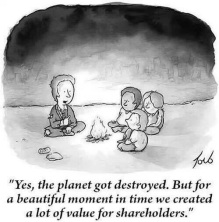 Last week I wrote about
 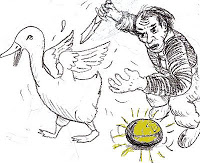 Do you remember Aesop’s fable of the goose that laid the gold eggs? Let me refresh your memory of this tale. It’s about a farmer that was poor. One day he makes a startling discovery when he finds a golden egg in the nest of his pet goose. Skeptical at first, he has the egg tested and finds that it is indeed made of pure gold. Even more amazing, each day this farmer awakes to find that his goose has laid another golden egg. In very short order, this poor farmer becomes fabulously wealthy. But then his wealth brings greed and impatience. No longer satisfied with just one golden egg per day, the farmer cuts open his goose to harvest all of its golden eggs at once only to find the goose is empty inside. With a now dead goose, there will be no more golden eggs laid.
 In two months, the world’s largest radio meeting will once again be taking place in Las Vegas; the 2016 NAB Show. Ironically, since leaving the radio industry and entering academia at Western Kentucky University, I attended my very first NAB show in 2011 and have every year since. So as visions of massive crowds and very sore feet dance in my head, I thought I’d look back over those past years and see how the theme of these meetings has evolved.
 I’m sure the title of this week’s post caught your attention. If you’ve ever been a manager, quite possibly this thought has crossed your mind on more than one occasion. Unfortunately, technology has provided many a radio company the opportunity to give this concept a whirl.
 Fred and Paul Jacobs are prolific bloggers; they blog five days a week. Recently, their blog asked four questions about the future of radio. I found them interesting and thought I’d give you my answers to their questions. I’ve provided a link to their original blog post
 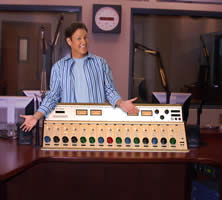 Crank it up means turning a knob. Radio people are going to have to make sure their car dealers demonstrate, or even set-up for their new car customers, how to find and lock in their local radio stations on these new digital dashboards. If the radio listener can easily find their favorite hometown companion, then they will default to what they know and love best. The reason radio has retained over 92% of its listeners is because all those new media devices mostly took out the new media device that came before it. Free over-the-air radio is unique and special. Let’s all work to keep it that way.
 There’s an old saying “Nothing lasts forever.” Do you remember flying on TWA or Pam Am? How about shopping at Woolworths? Broadcasters will remember names like Group W Westinghouse Broadcasting, or Taft Broadcasting, or Nationwide, or RKO General that would put the successful Bill Drake Top 40 format (with the non-stop innovations & promotions of 93-KHJ’s Ron Jacobs) in major cities across North America. They’re all now a memory.
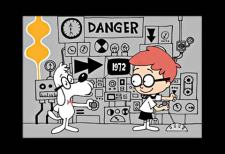 Led for Lunch (an hour of Led Zeppelin music) pre-dates a lot of things, not the least of which is my iPhone. But this radio programming staple along with “Two-fer Tuesdays” and “Million Dollar Weekends” (in a billion dollar world) remain on so many radio stations. It’s like Mr. Peabody’s Way-Back Machine broke down in 1972.
 As the clock was approaching midnight and people were anxiously waiting to ring in the New Year, many others were just anxious over the future of their streaming radio stations. Live365 put out a press release titled “Live365, Internet Streaming Leader, Downsizes and Looks to New Options in 2016.”
