Category Archives: Sales

Why I Stream ALL My Radio Listening

Twelve year ago, radio broadcast engineer Tom Ray, penned these words: “Unless we give Joe Consumer a reason to go out and purchase an HD Radio for his car – until he can obtain it easily and at a reasonable cost, and a device that works – I fear HD Radio is going to go the way of FM quad and AM stereo, relegated to the scrap pile of history.”

Tom Ray wrote his article for Radio World when he was the vice president/corporate director of engineering for Buckley Broadcasting/WOR Radio in New York City. He was a strong and vocal supporter of HD Radio and his WOR was one of the first AMs on the air with an HD Radio signal. So, any broadcaster that read Tom’s article, “HD Radio Shouldn’t Be This Hard,” should have taken it as a wake-up call about steps the radio industry needed to take to stay relevant in their listeners’ lives.

Buying a New Car in 2010

Tom is a loyal Ford customer, so when his Explorer went to the automobile graveyard with 230,000-miles on it, Tom wanted to get a new Ford Escape, equipped with HD Radio. The only problem was, Ford wasn’t putting HD Radios into their Escapes, instead, they were pushing Satellite Radio. (Tom noted that his wife listened only to Satellite Radio in her car, saying “in her opinion there is nothing worth listening to in New York’s Hudson Valley, 50 miles north of New York City.)

This should have been yet another radio industry wake-up call about its future.

I encourage you to click on the link and read what Tom Ray wrote a dozen years ago about how difficult it was to put an HD Radio into a new car which, at that time, didn’t offer OEM HD Radios and how he, as a broadcast engineer, was totally frustrated trying to install an aftermarket one.

Streaming Radio at Home

Since Christmas 2017, when my wife gave me my first Amazon Echo smart speaker, our Echo family has quickly grown to four of these devices. There is nowhere you can be in our home and not ask Alexa for something.

Since 2017, all of our in-home radio listening is via streaming.

While we also occasionally streamed radio in the car, on all of our road trips from 2018-2021, SiriusXM always seemed to be offering a 3-month free listening trial that I can honestly say we enjoyed the listening to. But, I’ve never been a subscriber, because other than road trips I spend very little time in the car.

Streaming Radio in the Car

In October, while enjoying my latest free 3-month trial for SiriusXM radio, I decided it was time to bring my in-house streaming radio habit into both of our cars. We own a 2006 Subaru Forester and a 2009 Honda Accord.

The Subaru doesn’t have an AUX input, the Honda does.

Streaming in the Subaru was accomplished with a Blue Tooth receiver that will broadcast on any FM frequency (88.1 works best). In the Honda, this same device’s output was plugged into an AUX receptacle.

The result is, as soon as either my wife or myself enters one of our cars, the Nulaxy KM18 immediately pairs with our iPhones. I installed the AINOPE Car Phone Holder Mount to hold our phones, and keep them easily assessible to control whatever we would like to listen to.

Total cost for each car: $33.43. Time to install, virtually nil. I just plugged the Nulaxy KM18 into a power port and it was operational. The AINIOPE holder easily clamps to an air vent on the dashboard and holds any smartphone.

Unlike the nightmare that Tom Ray experienced back in 2010 trying to put HD Radio into his car, this installation by me, a non-engineer, was a piece of cake.

A Call to Action

I recently sat in on a Radio World webinar called “A Call to Action, radio’s existential battle for the dash.” Paul McLane, Managing Director of Content/Editor in Chief of Radio World at Radio World/Future U.S., hosted the webinar and did an excellent job. However, one particular piece of information shared during the presentation that I thought was crucial was, how Mercedes Benz was equipping their vehicles’ radio screens with the following pre-sets: SiriusXM, FM, AM and TuneIn Radio.

TuneIn Radio is the App I use for most of my radio listening, but why was it chosen by Mercedes Benz? Turns out the answer is, “TuneIn’s radio stations can be accessed worldwide in 197 countries on more than 200 different platforms and devices.” TuneIn says it “provides the displaced radio listener a connection to home with local, national, and international stations anywhere they go and on any device.”

In other words, why would any audio consumer need DAB, DAB+, Digital Radio Mondiale, HD Radio, AM or FM when they can receive any radio station in crystal clear audio via streaming?

With the exception of the proprietary content offered by SiriusXM, everything else is available via streaming at no charge.

Cellular Plan

Now it goes without saying, that streaming consumes data. Each cellphone service provider offers different plans and different price rates. My wife and I are on Verizon’s unlimited phone/text/data plan. We have no landline phone in our home and our iPhones are our lifeline to being connected with each other, our family, our community and the world.

I’ve found streaming radio in our cars provides us with audio quality that is pristine. There’s no buffering or dropout, and it’s been a more reliable signal than AM, FM or SiriusXM radio, especially when traveling through tunnels.

Streaming Apps

I thought you might be interested in knowing what streaming Apps I have on my iPhone, here’s the current list:

  • TuneIn Pro
  • Audacy
  • Pandora
  • Spotify
  • Amazon Music
  • NPR ONE
  • YouTube
  • Simple Radio
  • StreamS
  • Apple Podcasts
  • AccuRadio
  • 650AM WSM
  • Stitcher

Why I Prefer Streaming My Radio

We live far enough away from Washington, D.C. that radio signals for WTOP or WETA experience lots of noise and dropout, depending atmospherics, sometimes making them totally unlistenable. However, their streams are always crystal clear.

This fall Sue and I escaped to Cape Cod for a week and when I get on the peninsula, I love turning on WFCC – Cape Cod’s Classical station – 107.5 FM. Now with streaming radio, I can dial up WFCC on my TuneIn radio App and listen when we’re back home in Virginia.

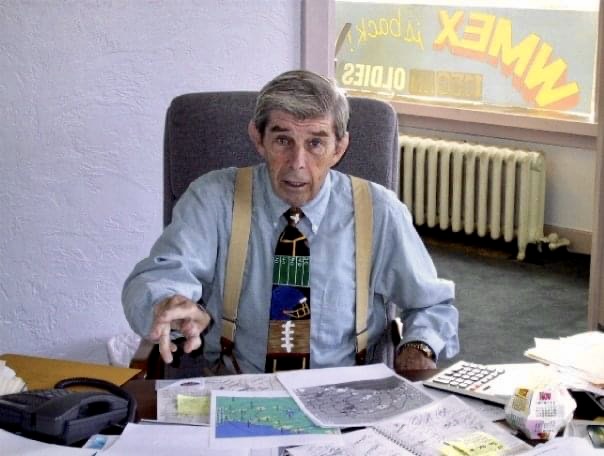
Full disclosure, I am the midday DJ on WMEX-FM in Rochester, NH. But even if I weren’t on the station, WMEX-FM would be my #1 pre-set for streaming. Gary James, the station’s morning man and program director, puts together a music mix that I find absolutely fabulous. It’s the music of my life.

Which brings me to another important point, radio today is global. No longer is your radio station competing just with other local stations, but radio that is streaming from anywhere on planet Earth.

Streaming also makes it possible for ON DEMAND spoken word radio, also known as Podcasts, to be easily available in the car.

Simington on Streaming

FCC commissioner Nathan Simington recently addressed Ohio broadcasters saying, “content delivery power had shifted away from broadcasters – stations and networks – and toward ‘online platforms,’ something he thinks the FCC needs to recognize in its quadrennial review of media ownership regs.”

He warned that:

  1. “Online media platforms are growing rapidly and threaten dominance over traditional media platforms; and
  2. Broadcast advertising revenue has flatlined, having been siphoned off from higher margin online platforms.”

The Future is Streaming

88% of the world’s population now uses mobile broadband as its main source of internet access, and nearly 90% of homes in the United States now have internet streaming. 2021 saw an estimated 22% ad industry growth rate, which Magna Global said was “the highest growth rate ever recorded” by this agency, beating a 12.5% growth rate recorded in the year 2000. The caveat however is, digital dominated traditional advertising raking in 64.4% of the growth in ad spending.

RAIN reports “The U.S. recorded music industry will exceed a 48-year revenue record set in 1999 (based on current estimates),” all coming from revenues paid by streaming music services.

The Harvard Business Review recently published “4 Principles to Guide Your Digital Transformation,” by Greg Satell, Andrea Kates and Todd McLees. In it, the authors wrote, “digital transformation is not just about technology. We’re desperately in need of a shift in focus. Leaders must inspire and empower their entire organization to boldly reimagine their work environment, customer needs, product offering, and even the purpose of the enterprise.”

Tom Ray was the proverbial “canary in the coal shaft” back in 2010, with few paying attention. Sadly, based on the early news coming out of the 2022 CES in Las Vegas, nothing has changed.

We’re living in a communications revolution,

bringing about changes that will be both

permanent and irreversible.

Revolutions never maintain or preserve the status quo.
44 Comments

Filed under Education, Mentor, Radio, Sales

Best of the Blog 2021

It’s been my tradition since I began this blog seven years ago to look back on the year that has just past and share with you the Top 5 Most Read and shared articles of the past 52-weeks. Maybe you missed them or perhaps you’d like to read them again.

To date, I’ve published 386 articles that have been viewed over 245,300-times around the world.

Most Read Article of 2021

One of the things I loved about listening to radio growing up was the flawless on-air production one could hear up and down the radio dial. Sadly, today’s radio hardly ever sounds like that anymore, which prompted my most read article of 2021 titled “Does Radio Sound Choppy to You?”

This article obviously hit a nerve with readers as thousands of you feel as I do that there is a definite lack of attention to what comes out of one’s radio speaker. It reminds me of those famous words of former FCC Chairman Newt Minow, when he referred to television back in the 60s as a “vast wasteland.”

Second Most Read Article of 2021

I’ve heard many folks blaming the state of things in America today on radio and television broadcasts. These people think that what we need to do to fix things is to bring back the Fairness Doctrine.

It was shortly after the January 6, 2021 insurrection on Capitol Hill that occurred during the counting of the President Electoral Votes that I wrote “What was The Fairness Doctrine?”

The Fairness Doctrine only applied to broadcast radio/TV stations during the years 1949-1987. It required the holder of a broadcast license to both present controversial issues of public importance, and also to present them in a manner that was honest, equitable, fair and balanced. It didn’t apply to cable networks or social media, which did not exist in 1949 when the doctrine was enacted.

Third Most Read Article of 2021

Following a much delayed trip across America to visit our children and grandchildren, I wrote “What I Recently Witnessed About Radio use.” This article would draw the most comments of any of my blog articles in 2021. I chronicled how radio was used (or not used) in three different households, as well as in hotels, businesses and public transportation. What I would witness, was concerning.

Fourth Most Read Article of 2021

Sue, (my wife and the editor of this weekly blog) and I grew up on AM radio. For me, it created a passion and desire to pursue a radio career while I was still in grade school. In the article “The Thrill is Gone,” I reviewed the declining state of AM radio in America, but even more importantly, I addressed the lack of great on-air, live radio personalities that created a medium which was exciting to listen to. It was my plea for the radio industry to bring back the thrill of listening to Great Radio.

Fifth Most Read Article of 2021

Just over ten years ago, I was in Las Vegas presenting at the Broadcast Education Association’s annual international conference about how things would be changing in our world in the decade to come. It was the beginning of the second decade of the 21st century, when already mediated communication was social, global, ubiquitous and cheap. It was the beginning of what we now call the social media revolution.

With that decade in the rearview mirror, I thought it might be pertinent to review those predictions in an article titled “What is The Future of Radio?”

Whether you are in the radio business, OR are a radio listener, there is one question you honestly need to ask yourself. Read this article to learn more.

Most Read Articles, Period

The most read article to date is “SiriusXm Radio is Now Free,” which pondered what might happen to commercial over-the-air AM/FM broadcast radio if this satellite broadcaster opened up some of its channels to everyone as an ad-supported service.

Next is “The Day the Dumbest Idea Invaded the Radio Industry,” which addressed how the concept of increasing shareholder value hurt the broadcasting industry as much as every other industry it was introduced to.

The article that holds the record for the most views on the day it was published (over 3,500 reads) continues to be “We Never Called It Content,” published in 2015. It was about the iconic radio personalities like Larry Lujack, The Real Don Steele, Robert W. Morgan, Dale Dorman, Ron Lundy, Salty Brine, Bob Steele and so many, many more upon which the magic of radio in the 20th century was created, but which 21st century radio has abandoned.

                  Radio is an art form.

When you remove the artists, there’s not much left.

Why I Blog

I blog for broadcasters, educators and students, I blog to provide media mentorship and to pay-it-forward to the broadcasting industry that I have been a part of for over 50-years. I’m grateful for the more than 184,000 people from all over the world who have visited this blog (https://DickTaylorBlog.com) and have read an article that caught their interest.

Thank You for reading, next week I will begin my eighth year of blogging with all new articles.

Together we can all learn from one another by sharing our experiences, knowledge and wisdom. Feel free to contribute your thoughts to the discussion in the comments section. I read every one of them.

Happy New Year!

Dick & Sue

FREE SUBSCRIPTIONS

You can subscribe/follow this blog for FREE and get a copy of each week’s article delivered to your email IN BOX every Sunday morning. To subscribe, simply go to the bottom right-hand corner of your screen and click on the FOLLOW button. (If you’re accessing this blog via mobile phone or tablet, that button might not be visible, so be sure to do this on a computer or laptop.)

4 Comments

Filed under Education, Mentor, Radio, Sales

Once It Was Radio

My wife and I recently visited Bethlehem, Pennsylvania, also known as “Christmas City, USA.” It has a magical Main Street filled with Christmas lights, old fashioned street lamps, and unique merchants with stores that are fun to go into.

Lodging

When we check into a hotel while traveling, the first thing I do is put all of our devices on the establishment’s Wi-Fi. It’s become the most important feature in our room, followed by a flat screen TV. However, fifty years ago, it was having a radio in your room.

Historic Hotel Bethlehem

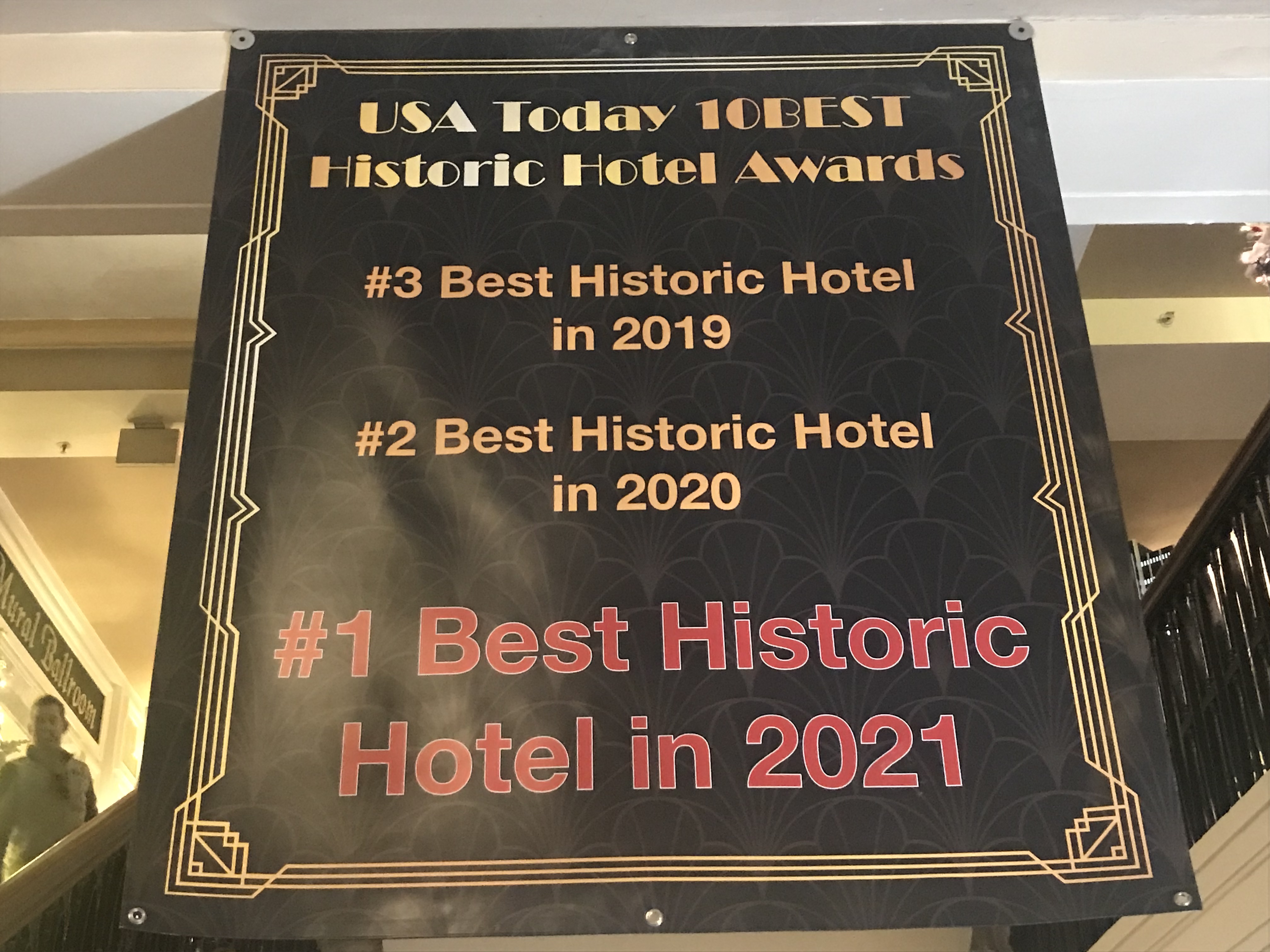
In 2021, the Hotel Bethlehem was “Voted #1 Best Historic Hotel in America” by USA Today. The hotel features 125 guest rooms and suites all connected with fiber optic Wi-Fi. The Wi-Fi is so robust, that I was able to still be connected to it as I walked Main Street.

Before Wi-Fi, It Was Radio

The hotel opened in 1922, two years after the birth of commercial radio in America. It was constructed in the midst of what would become known as “The Roaring Twenties.” It’s opulent lobby, with eight Corinthian Columns capped with gold leaf  hid the I-Beams forged in the nearby factories of Bethlehem steel.

By 1953, the hotel was proud to embrace the communications revolution in America by placing a brand new alarm clock radio in every room.

Now seventy years later, connectivity to the world means having fiber optic Wi-Fi.

My Grandkid’s Audio Habits

In 2020, all of our travel plans were disrupted by the global novel coronavirus pandemic. This year, having been “fully vaccinated,” we journeyed to visit all twenty-three of our children and grandchildren in six different states, spread out from coast-to-coast.

Our youngest grandchild is eight months and our oldest is eighteen years, but one thing I couldn’t help noticing was how our grandchildren access the music they want to hear. In each case, they asked for it via the smart speaker system in their home.

Just the other day, I was visiting my six year old granddaughter in Virginia, who wanted to show me how clean her room was. (Clean, being in the eyes of the room’s owner, parents and grandparents might beg to differ.) As we were sitting on the floor talking, a song came on that wasn’t something my granddaughter wanted to hear, and she said “Hey Google, stop” and she continued to tell me about her day.

One of our granddaughters is named Alexis and her mother told me that they had to change their smart speaker from “Alexa” to “Echo,” because the smart speaker couldn’t discern the difference between the two names.

Two of our other granddaughters out west took turns in asking Alexa to play their favorite songs via their Sonos home speaker system.

Only our eighteen year old high school graduate seemed to play a radio, but that was only in her car, when driving her mom’s car, she played her mom’s SiriusXM radio.

Parents & Grandparents

That last observation is poignant, because a lot of today’s parents and grandparents are opting for a SiriusXM subscription, or, playing Pandora or Spotify off of their smartphone that seamlessly connects to their car’s audio system. Both my wife and I have such a connection to our iPhones in our 2006 Subaru and 2009 Honda. It has allowed us to take the music we enjoy streamed in our home with us when we’re on the road.

Radio 101

Radio celebrated its 100th Birthday in 2020, and at that time I read an article entitled, “Commercial Radio is 100 Years Old. Can It Survive?” The article featured the thoughts of four industry veterans weighing in on how they’d “fix” a “medium that remains popular, but lacks innovation.”

The article’s author cited Statista’s research which found 57% of Americans listen to audio online, pondering if radio might last another ten years, let alone another hundred.

The veterans basically focused on the fact that radio was portable, free and local; and that its success is driven and made possible by its personalities.

Portable, Free & Local

My smartphone is portable and allows me to tune into the world for music, entertainment and information.

When it comes to something being “free, “ we have to define what is the cost of our time to sit through a long stop-set of commercials for things we don’t want or may need, versus owning an unlimited data plan from our cellphone provider.

Time is money, what is your time worth?

And lastly, when it comes to local, in today’s short-attention-span world…

Relevant is the new local.

When the supply chain was disrupted by the global pandemic, cargo ships sitting outside the Port of Los Angeles became a local story for every community.

In today’s connected world, relevant content rules.

For radio to have a place in people’s lives going forward, it will need to develop strong personalities that deliver relevant content to the audience it wants to serve.

Radio stations that focus on the medium’s strengths, will have advertisers lining up at their door.

11 Comments

Filed under Education, Mentor, Radio, Sales

Change, the Only Constant

At no time in the history of advertising has there been more unprecedented challenges to the creation and execution of an effective, results-oriented marketing plan. Consumers are struggling with the demands of a time-impoverished society, a global pandemic, supply chain disruptions, an uncertain economy, domestic terrorism, political polarization, the future of our democracy and the world’s climate.

Algorithms

Everything on the internet is driven by algorithms. If you think about it, these mathematical formulas have replaced “hype & puffery.” Algorithms are a new form of deception as they feed us exactly what they know we want to hear. It’s like everyone is now surrounded by their own team of “YES Men.”

Our interconnected world insures, whether good or bad, that you get the word – and lightning fast.

Passion Drives Sales

Marketing through price promotions, is like having a drug addiction; it’s difficult to stop, and when you do, it’s painful.

Today, auto manufacturers strive to make cars that people can’t wait to buy. Recording artists focus on making music people can’t wait to download.

If people aren’t passionate about what you do, you won’t be around for long.

An Educated Consumer

Anyone growing up around the New York City area remembers Sy Sims promoting his clothing stores with the phrase “An educated consumer is our best customer.”

Today, the internet has made everyone an “educated consumer,” and often, we know more about a company’s product or service than the people selling it.

I recently went into a T-Mobile store to inquire about their 55+ plan that offered unlimited talk, text and data for only $27.50/month. Unfortunately, the person who came over to help me was totally unaware of this plan and this price point.

I called up the most recent ad on my iPhone, to which this young lady said, “can we walk over to show my manager?”

When I spoke with the store manager, he went on to tell me that the service was inferior to their Magenta Plan and that when you add in the taxes and fees, I would end up paying almost as much ($90/month).

Needless to say, I walked out of the store, not buying a new iPhone nor a T-Mobile plan.

Meaningful Difference

T-Mobile’s ads promise a “meaningful difference.” Unfortunately, the instore experience was anything but.

Today, an older wiser population is more discerning. They want to know precisely how your offer will make a meaningful difference in their lives, and the mega trend that catapulted meaningfulness is access to the World Wide Web. The web has made it easy for everyone to research, compare and contrast purchase options, and when customers have greater access to information, they make more meaningful purchasing decisions.

Claims of huge selections, friendly service, clean sandy beaches and low prices mean nothing when people on social media are posting pictures and telling of their real-life experiences.

Like, what I just did with my story about my T-Mobile shopping experience.

No matter what business you’re in, if you are going to thrive and grow, delivering exactly what you promise in your advertising is mandatory.

Update: While I never heard a word from T-Mobile about my experience, Verizon Social Media reached out to me via Twitter and put us on their new 55+ Unlimited Plan. While slightly more expensive than T-Mobile advertises their plan to be, we’re happy to remain Verizon customers. 12+ years & counting.

6 Comments

Filed under Education, Mentor, Sales

Culture Eats Strategy for Breakfast

It’s always been my belief that unless you first build a positive culture in the workplace, nothing else you try to accomplish will ever come to fruition.

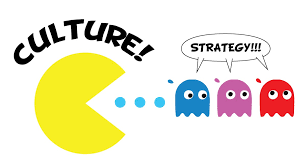
So, when I read this famous quote that business guru Peter Drucker was alleged to have coined, “culture eats strategy for breakfast,” it came as no surprise that the foundation of any successful enterprise is built on its culture.

In fact, most people don’t quit companies or leaders, they quit organizational cultures.

“The best way to improve the team is to improve yourself.”

-John Wooden

The Learning Never Stops

In my capstone classes, students learned that their time at the university should be considered a launch pad to a lifetime of learning. Leaders never stop learning.

“When I am through learning, I am through.”

-John Wooden

Your Attitude Determines Your Altitude

Your own personal culture is your attitude. Whether it is positive or negative, it’s yours to control.

As a hiring manager, I always hired people on their attitude; everything else can be trained.

In life, more than any other factor, your attitude pretty much determines where you will go –  and how far you will go.

Ron Lundy

One of my favorite radio personalities was Ron Lundy. I first heard Ron on Music Radio 77 – WABC and immediately fell in love with the contagious, upbeat, positive attitude he presented on his radio show.

When WABC switched formats from music to talk, Ron Lundy found himself out of work, but would eventually be hired by Joe McCoy at WCBS-FM.

Every air shift on CBS-FM was already filled, so in order to create a time period for Ron, Joe McCoy would need to shorten everyone’s air shift, and convince his general manager why this hire would be beneficial to the radio station.

As I heard the story, Joe’s pitch to his GM was that Ron wasn’t just a powerful personality that would attract more listeners to CBS-FM, but that Ron was the type of guy that provided a positive culture inside the radio station, inspiring everyone to do their jobs better.

Attitude in Managing

One of my radio mentors was Phil Weiner (WBEC/WQRB/WUHN/WUPE). When I departed for my first solo general manager position in Atlantic City, he shared with me the most important thing he learned as a general manager, “Whatever your attitude is, when you enter the radio station each day, that will become the attitude of your fellow employees. Keep your problems to yourself and always maintain a positive, upbeat, enthusiastic attitude.”

It may have been the most important advice of my forty-year radio management career.

In my second career as a college professor, knowing that one’s attitude is contagious, I brought that same positive attitude and energy into the classroom.

“Attitudes aren’t taught, they’re caught.”

-Margaret McFarland

Everyone You Meet Can Teach You Something

No matter how far in life you’ve gone, or how many degrees, medals or trophies you’ve earned, stay humble. Every person you meet carries knowledge about life that you can benefit from. Stay curious and be willing to soak up the wisdom from everyone you come in contact with.

“It’s what you learn after you know it all that counts.”

-John Wooden

Radio is a People Business

All of my life, I’ve invested my energies in the development of people. Many of them today are owners and managers of their own broadcast operations. As a general manager, I was proud to work with some great and talented individuals.

“You handle things. You work with people.”

-John Wooden

When it comes to managing people, one size does not fit all. I treated each member of my team for the unique personality they were, valuing their talents, and skills, as well as understanding that we all come with our own issues, problems and demons.

Great radio stations, full of talented people, can be an exceptionally exciting workplace.

“The worst things you can do for those you love

is the things they could and should do for themselves.”

-Abraham Lincoln

It’s important to have a culture that allows people to fail. Often the greatest wisdom comes from things that go wrong. As long as you have given your best effort, you are never a failure.

Great managers and teachers are great coaches of people.

The Big Four

Consider these four things when creating culture in your organization:

  1. Culture is created by the behaviors you tolerate.
  2. Change starts with YOU. You can’t expect your people to change if you won’t.
  3. Leadership gives you a voice at the table, not the voice.
  4. Listen to everyone and take their opinions into account when you make the final decision for moving forward.

“Much can be accomplished by teamwork

when no one is concerned about who gets the credit.”

-John Wooden

8 Comments

Filed under Education, Mentor, Radio, Sales

What is The Future of Radio?

Ten years ago, I was in Las Vegas presenting at the Broadcast Education Association’s annual international conference. My presentation was called “This Changes Everything.” It outlined things that would be changing in our world in the decade to come.

“Prediction is difficult…especially about the future.”

-Yogi Berra

Remembering 2011

2011 was the beginning of the second decade of the 21st century, and already we were witnessing a world where mediated communication was social, global, ubiquitous and cheap. It was the beginning of the social media revolution.

Groupon, which came into existence only a couple of years earlier, grew its revenue to over $1.6 billion in 2011. And yet, the doomsayers were already forecasting its demise. As this chart shows, revenues for Groupon did drop below 2011, but not until 2020.

A contributing factor to this downward revenue trend for Groupon might be that it’s estimated that only about 1% of Groupon users ever became regular customers of the businesses whose coupons they used.

TWITTER

A decade ago, Twitter was the most popular social media platform with more Fortune 100 companies using Twitter than any other social media platform.

As we begin the third decade of the 21st century, we know that the previous decade will now be known most for the impact of Facebook, not Twitter, when it comes to social media dominance.

Media Adoption Rates

In 1920, the adoption rate for commercial AM radio was incredibly fast, only to be eclipsed by the introduction of TV. However, both of these two forms of communication would be dwarfed by the adoption rates of the internet followed by the use of mobile internet made possible by the smartphone.

These last two brought about revolutionary changes in how we communicate.

In fact, the famous Maslow “Hierarchy of Needs” pyramid, might be updated to look like this:

How the World is Connected to the Internet

At the beginning of the second decade of the 21st century, 85% of the world’s population connected to the internet via wireless mobile devices.

To put that into perspective, only 80% of the world was connected to an electrical grid in 2011.

Today, 92.6% or 4.32 billion people connect to the internet wirelessly.

Top Three Gadgets of All Time

A decade ago, The History Channel came out with a list of the “Top Gadgets of All Time” and they were:

  1. Smartphone
  2. Radio
  3. Television

Hat Tip to Mary Meeker

None of these things were a secret, but it was Mary Meeker that tied all of these changes together in her presentation “Internet Trends 2011.” Her presentations are worth your time to view. The most recent one being 2019, before COVID19 disrupted everything. You can view that presentation HERE

What we do know is COVID19 took all of the changes that were slowly taking place and accelerated them dramatically. Think “warp speed.”

The big three takeaways from 2011 were:

  1. Every media consumer is now a media producer
  2. Smartphones are changing the world of mediated communications
  3. Media is now social, global, ubiquitous and cheap

“If you don’t like change, you’re going to like irrelevance even less.”

-General Eric Shinseki, retired Chief of Staff, U.S. Army

What Technology Might a Baby Born Today, Never Use?

Let me throw out some thought starters for you to consider. Please feel free to add to this list.

  • Wired home internet
  • Dedicated cameras
  • Landline telephones
  • Slow-booting computers
  • Dialup Internet
  • Hard Drives
  • Electric typewriters
  • Movie Theaters
  • Computer Mouse
  • Remote Controls
  • Desktop computers
  • Phone numbers
  • Prime Time TV
  • Fax machines
  • Optical disks
  • Record player
  • Cassette player
  • CD Player
  • VCR or DVR
  • Radio
  • ?????

“My passion has been to build an enduring company where people were motivated to make great products. Everything else was secondary. Sure, it was great to make a profit, because that – was what allowed you to make great products – but the products, NOT THE PROFITS, were the motivation.”

-Steve Jobs

So, What’s the Future of Radio?

In 2011, one hundred college students were surveyed about what they believed the future of radio was, here were their top three positive comments and their top three negative comments:

POSITIVE COMMENTS

  1. Radio will re-invent itself. It is always evolving.
  2. Radio has a bright future as long as there are cars. It’s the first choice for drivers.
  3. Satellite Radio will expand as subscriptions become cheaper.

NEGATIVE COMMENTS

  1. Devices are coming out that will allow iPods and MP3 players to be played in cars.
  2. Smartphones will gradually take over radio entertainment.
  3. The only time people listen to radio is in their cars. Even then, they have CDs & MP3s.

Radio’s Car Radio Paranoia

Then Fred Jacobs came out with a blog this week about the seemingly bleak future for AM/FM radio in cars. You can read that HERE

At the annual CES (Consumer Electronic Show) Fred’s been asking about the future of car radio every year, and noticed that more recently auto manufacturers are reluctant to give a direct answer if there might come a day when AM/FM car radios won’t be standard equipment.

For Elon Musk and Tesla, that day is already here.

How to Build Brands

Ernest Dichter is known as the father of motivational research. Over 50 years ago he did a large study on word-of-mouth persuasion that revealed the secrets of how to build brands. Dichter said there are four motivations for a person to communicate about a brand:

  1. Product-Involvement: the experience had to be so novel and pleasurable that it must be shared with others.
  2. Self-Involvement: people want to share the knowledge or opinions, as a way to gain attention, have inside information, or assert superiority.
  3. Other-Involvement: a person wants to reach out and help to express neighborliness, caring or friendship. They are often thought of a “brand evangelists.”
  4. Message-Involvement: the message is so humorous or informative that it deserves sharing.

“Win the hearts of the people, their minds will follow.”

-Roy H. Williams

So, if you are in the radio business, OR are a radio listener, the question you need to honestly ask yourself is:

How does your brand measure up?

10 Comments

Filed under Education, Mentor, Radio, Sales

Oh, The Insanity

The National Association of Broadcasters (NAB) submission to the Federal Communications Commission for the FCC’s 2018 Quadrennial Regulatory Review is eye-opening.  You can read it for yourself HERE. It left me shaking my head.

The NAB told the commission that “’local radio stations’ Over-The-Air (OTA) ad revenues fell 44.9% in nominal terms ($17.6 billion to $9.7 billion) from 2005-2020.” Local 2020 digital advertising revenues by stations only increased the radio industry’s total ad revenues by $0.9 billion bringing them to $10.6 billion.

The NAB’s solution to the problem is for the radio industry to become more consolidated.

The definition of insanity is doing the same thing over and over

and expecting different results.

-Albert Einstein

Say What?

Back in the mid 90s, the radio industry was telling anyone who would listen that the problem with the state of radio broadcasting in America was that the industry was made up of little “ma and pa” radio stations/groups which could not scale and if the ownership caps weren’t lifted the radio industry would perish.

Excuse me, but I’ve already seen this movie and how it ends. So, why would doing more of what didn’t work, result in a different outcome.

The Media World Has Changed

I don’t think anyone would contest that the media world we live in has changed dramatically since 2005. Facebook, the world’s largest social media company with over 1.84 billion daily active users, opened its doors on February of 2004. YouTube began in 2005 and Twitter in 2006.

Google, the dominate search engine on the internet, began in 1998 and internet retailing behemoth, Amazon, began in 1994.

The new internet kids on the block that dominate our day are WhatsApp (2009), Pinterest (2009), Instagram (2010), Messenger (2011), SnapChat (2011) and TikTok (2016).

The Top 10 internet companies at the end of 2020 raked in 78.1% of the digital ad revenue ($109.2 billion).

All Ad Dollars Are Green

While we like to break money spent on advertising into distinct categories like digital media, traditional media etc. the reality is the total number of advertising dollars is a finite number and in the end you can’t tell a dollar from digital from a dollar from analog advertising.

“You can’t handle the truth!”

–Colonel Jessup

(played by Jack Nicholson in the 1992 film “A Few Good Men”)

Since 2005, many young entrepreneurs have created a better mousetrap to capture those advertising dollars. No one ever made a regulation or a law that prevented the radio industry from doing what any of those internet companies did. The passenger railroad industry never thought of themselves as being in the transportation business but only the railroad business. That’s why it found itself challenged by other means of people transportation, namely the airlines.

The radio advertising industry was born by entrepreneurs that learned how to create a product that attracted a large listening audience, which in turn enabled them to sell audio advertising to companies wishing to expose their product or service to these consumers.

Unfortunately, we found ourselves challenged by new media competition. Initially, it was television, but transistor portable radios, along with car radios, allowed our business to reinvent its programming and flourish once again.

With the advent of the internet, radio was caught flat-footed.

If that were its only problem.

Radio Stations (2005-2020)

In 2005, America had 18,420 radio signals on the air.

  • 13,660 AM/FM/FM Educational radio stations on the air
  • 3,995 FM translators & boosters
  • 675 Low Power FM stations.

By 2020, those numbers increased to 26,001 radio signals.

  • 15,445 AM/FM/FM Educational radio stations
  • 8,420 FM translators & boosters
  • 2,136 Lower Power FM stations

18,330 vs. 26,001

That’s a 41.8% increase in the number of radio stations.

While radio folks were busy trying to steal radio advertising from the station across the street or consolidating with their former competition, the internet folks were focused on selling more advertising. From 2005 to 2020, the sale of digital advertising grew from $12.5 billion to $139.8 billion. That’s an increase of 118.4%.

But during that same time, radio grew its digital advertising footprint by $0.9 billion.

Quantity vs. Quality

When radio regulation began in America under the Federal Radio Commission (FRC) the decision was made by that regulatory body to focus on the quality of radio programming versus the quantity of radio stations they allowed to broadcast. Only people or companies with the economic capital to operate a radio station in the “public interest, convenience and/or necessity” would be allowed to obtain a radio broadcast license.

I believe you could say that the radio industry’s downfall began when we ceased worrying about quality and went with the more signals we license, the better for radio listeners mantra.

Sydney, Australia

Sydney is a major city in the country of Australia with a population of 5.312 million people. There are 74 radio stations on the air in Sydney.

By comparison, Los Angeles (America’s second largest city) has a population of 3.984 million people and 158 radio stations serving its metro.

In July 2021, radio revenues in Sydney were up 11.3% year-on-year according to Milton Data.

The Benefits of Pruning

Gardeners know that pruning is the act of trimming leaves, branches and other dead matter from plants. It’s by pruning a plant that you improve its overall health.

A beautiful garden is one where the plants have been trained to grow properly, to improve in their health/quality, and even in some cases to restrict their growth. Pruning is a great preventative gardening and lawn care process that protects the environment and increases curb-appeal.

The irony of gardening is, the more fruit and flowers a plant produces, the smaller the yield becomes. Pruning encourages the production of larger fruits and blooms.

Why do I share this with you?

I believe that everything in the world is interconnected. You can’t for a moment think that what makes for a bountiful garden would not also make for a robust radio industry.

Today’s radio industry is so overgrown with signals and other air pollution, that it has impacted its health.

Doing more of the same, and expecting a different result is insane.

It’s time to get out the pruning shears.

Less Is More

I believe that the way to improve the radio industry in America, to have more advertising revenues to support quality local services including news, sports and emergency journalism, along with entertainment by talented live performers, is by reducing the number of radio signals.

AM radio is the logical first place to start.

Elsewhere in the world we are seeing that not only the AM band being sunset but the analog FM band as well. The world has gone digital.

American radio has one final chance to get it right by correcting for past decisions, hurtful to radio broadcasting, in creating a new and robust digital broadcasting service.

17 Comments

Filed under Education, Mentor, Radio, Sales

Invest in the Future

In life we have three important choices: 1) accept things that can’t be changed, 2) muster up the courage to change the things that can be changed, and 3) be blessed with the wisdom to know the difference.

Radio’s WHY

In last week’s blog, I asked “What is Radio’s WHY Today?” In reviewing blog reader comments, I saw a common theme expressed, that radio should be LIVE & LOCAL. But does being “live” really make a difference in and of itself? If seasoned radio people are being honest with themselves, they would have to admit they had heard lots of bad “live radio” over the years. When it comes to being “local,” what is local today? We live in such a connected world, that in order to live the lives we’ve become accustomed to, requires a global supply chain. Any disruption, will negatively impact our happiness faster than a bee sting.

Radio’s guiding principle is relevance. People will gravitate to things that have relevance to them and their lives. Let me give you one example…

Fundraising

When it comes to raising money for a good cause, radio stations continue to turn in an outstanding performance, why? Because people feel these causes are very relevant, so they support these events.

Unfortunately, much like a retailer’s weekend sale, when the radio station’s fundraising ends the people depart for other activities that are higher on their relevancy scale.

The Amazon Lesson

In Seattle several decades agao, Jeff Bezos began Amazon in his garage. His guiding principle in building this company into the behemoth it is today was to invest in the future. Identify the constants of the people who use your product or service and build on them with relentless focus. In other words, be relevant to your customers.

For Amazon, it meant offering everything at the lowest possible price and delivering it to people’s homes faster and faster.

“When you have something that you know is true,

even over the long term,

you can afford to put a lot of energy into it.”

-Jeff Bezos

Great Radio

Great radio will always be about the listener, knowing what is relevant to them and delivering it 24/7.

Great radio provides community and companionship.

Great radio creates FOMO (Fear Of Missing Out) in the listener.

Great radio stations are highly focused on the audience they have set out to serve. They’re not trying to please everyone, but only to super-serve their target audience.

Less is More

The venture capitalists thought the way to riches was by putting more and more radio signals on the air,  quantity over quality and in so doing abandoned the very essence of what makes great radio.

“Successful businesses are those that continue to find ways

to best fulfill (their customer’s) core needs.”

-Jeff Bezos

4 Comments

Filed under Education, Mentor, Radio, Sales

What Do Radio Broadcasters & Almond Farmers Have In Common?

Last week, an article in The Atlantic titled “The Well Fixer’s Warning: The lesson that California never learns,” was a terrifying read about the water supply used to irrigate the almond orchards on the farms of Madera County. So many of the farm’s wells were coming up dry and the farmers were puzzled as to why water flowing out of their wells had been reduced to a trickle and were mostly producing sand.

Matt Angell is not only an almond farmer himself, but owns Madera Pumps, a company that drills wells and repairs well pumps. He knows that droughts, like the California sunshine go hand-in-hand, and as John Steinbeck wrote: “no one (forgets) the last drought faster than the farmer.”

Since the middle 1970s, almond farmers have persevered through at least five droughts and their solution to the problem was always the same – BUILD MORE DAMS.

BUILD MORE DAMS

Those three words stopped me cold. Who else thinks like this? Radio people, that’s who.

Today in America, there are now 26,076 radio stations on the air, 2,500 of these stations are broadcasting in HD which adds another 2,100 multicast radio channels to the mix. That’s about a 93% increase in the number of radio signals from when I started in high school.

The radio industry and almond farmers, have both felt that the way to grow is by adding more and more and more. Almond farmers added more acreage of almond trees and radio owners added more signals.

Aquifers

The dam reality was the San Joaquin River already had a half-a-dozen dams diverting its water, so the next solution to obtaining more water for almond irrigation was to drill down to the aquifers beneath the farmlands. Unfortunately, it didn’t take long for the farmers of Madera County to pump out the easily available ground water and see their wells coming up dry. As they were drilling deeper and deeper into the earth, a hidden lake beneath the farmlands was discovered in 2014. It was shocking to see it pumped dry in only seven years.

Angell noted that the snow on the mountain had melted two months earlier than “normal,” and the water level of the San Joaquin river was so low, it was now nothing more than a series of unconnected ponds as well as the wells – residential, business and farming – all over the community were running dry.

The reality is, the Madera County underground water table is one of the most over-tapped aquifers in the West, and all those wells had depleted the underground water source, causing the aquifer to collapse.

The Advertising Pie

It was before the COVID19 pandemic gripped our world, Gordon Borrell hosted a webinar back in early 2019 and told of how the media pie (the radio industry’s aquifer, if you will) is over-tapped.

To put things in perspective, Gordon shared how an over-populated media landscape is impacting local advertisers.

  • 1,300 daily newspapers, 6,500 weeklies
  • 4,700 printed directory books
  • 4,665 AM radio stations, 6,757 commercial FM radio stations
  • 1,760 Class A TV stations
  • More than 1,000 cable systems with local sales staffs
  • 660,000 podcasts were actively produced in 2018
  • 495 NEW TV shows were introduced last year in addition to what’s already on
  • PLUS, local ad sales are taking place on Facebook, Google and Amazon

Same Old Answer

Despite the fact that the water from the aquifer and river was being depleted by droughts, climate change and being over-tapped, the almond farmers’ answer was always the same, said Mark Angell, “Plant more almonds and pistachios. Plant more housing tracts on farmland. But the river isn’t the same. The aquifer isn’t the same.”

Listen to radio owners, and they will tell you they too need more and more radio signals in order to stay viable, despite the fact that the advertising pie is finite and media supported by advertising continues to expand exponentially.

“I used to use the word unprecedented to describe what we’re doing to the land,” said Angell, but “now I use the word biblical.” Is it any different for radio broadcasters?

The Solution

For the nut farmers of Madera County, the solution is a hard pill to swallow, it’s “to figure out a way to retire one million acres of the six million farmed, “otherwise, we’re looking at a race to the bottom,” said Angell.

For radio broadcasters, Gordon Borrell said the solution to the future of media expenditures would be a process of “thinning the herd.”

The way advertising buyers are responding to a world of media abundance, Borrell says, is by:

  • Decreasing the number of companies from which they buy advertising from 5 to 3.5, and
  • 90% of their media buys are being made with companies who can bundle traditional and digital advertising.

Killing the Golden Goose

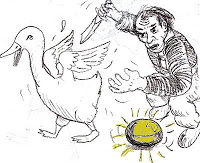
Do you remember the Aesop fable of the goose that laid the golden eggs? Let me refresh your memory of this tale. It’s about a farmer that was poor. One day he makes a startling discovery when he finds a golden egg in the nest of his pet goose. Skeptical at first, he has the egg tested and finds that it is indeed made of pure gold. Even more amazing, each day this farmer awakes to find that his goose has laid another golden egg. In very short order, this poor farmer becomes fabulously wealthy. But then his wealth brings greed and impatience. No longer satisfied with just one golden egg per day, the farmer cuts open his goose to harvest all of its golden eggs at once only to find the goose is empty inside. With a now dead goose, there will be no more golden eggs laid.

In remembering this fable, it sounded so familiar to the world of radio broadcasting and almond farmers. Both possessed a wonderful “goose” that laid daily “golden eggs.”

Unfortunately for almond farmers, in wanting more, they are killing their water supply, and for broadcasters not wishing to wait for each day’s golden egg, cut open their goose beginning with the Telcom Act of 1996, that allowed them to own as many radio stations as they basically wished.

The moral of Aesop’s fable is if you focus only on the golden eggs and neglect the goose that lays them, you will soon be without the very asset that produces the golden eggs.

The radio industry’s quest for short-term returns, or results, took their free FCC licenses and ruined them by not maintaining the balance between the production of desired results and the production capacity of the asset.

Aesop’s fable is the very principle of effectiveness. It’s a natural law. Like gravity, you don’t have to believe in it or understand its principles, but you can never escape its effects.

Radio broadcasters probably saw the moral of the fable being the more geese you own, the more spots you add to the hour, the more effective your R.O.I. (Return On Investment) will be.

Almond farmers saw the moral of the fable as planting more trees, install more powerful pumps to withdraw more water and watch your R.O.I. grow.

But ironically, it is the principle of “Less Is More” that in the end rules the day.

To be truly effective, you need to maintain the balance of what is produced (golden eggs/revenue) and the producing asset (your goose/radio station/almond trees).

Everything in excess

is opposed to nature.

-Hippocrates

12 Comments

Filed under Education, Mentor, Radio, Sales

If It’s to Be, It’s Up to Me

The first time I ever heard those words, they came out of the mouth of Dick Vaughan.

Sadly, this lifelong radio/TV broadcaster left us on Monday, August 9th. He was one of those people you meet in life that you never forget; a larger-than-life personality.

Philadelphia

The first time I had the opportunity to spend some quality time with Dick Vaughan was in the City of Brotherly Love, Philadelphia. We worked for the same radio company, but in different Massachusetts cities. I worked in Pittsfield and he worked in Ware.

Over a weeklong NAB Management Training Program at The Wharton School, we would each learn that we shared many of the same passions: a love of the radio business, love of family, a love of learning and a strong desire to make a difference in the world.

Our days were spent in classes and every evening we had dinner together. During one of those dinners, Dick mentioned that he was a member of Philadelphia’s Joseph A. Ferko String Band. Since they would be rehearsing at Ferko Hall that evening, he asked if I’d like to go over and hear them? I said, “YES!” and we departed for 2630 Bridge street in Philadelphia.

One of the earliest LP (long play) record albums I remember owning was of the Ferko String Band, so this was very exciting, but puzzling news. How did Dick Vaughan who lived and worked in Ware, Massachusetts become a member of the Ferko String Band?

Ferko String Band

Turns out that Dick became involved with the band in 1956, when he was on a committee planning an anniversary celebration for the Massachusetts city of Medford. Having played the Ferko String Band’s records on the radio and knowing the spectacular regalia the band wore in the annual New Year’s Day Mummers Parades, he figured they would be a huge attraction.

Dick picked up the phone and called Joseph Ferko. Mr. Ferko told Mr. Vaughan that the band had never performed outside of Philadelphia. Now, Dick Vaughan lived by the attitude that there was no such thing as can’t, leading to the Ferko String Band’s first out-of-state performance in Medford. This first road trip would be a success and lead to years of extensive touring by the band and Dick Vaughan being invited to become a member. Dick’s membership in the Ferko String Band would span decades and often saw him in the role of Master of Ceremonies at many Mummer’s events.

Always Say “YES”

Another thing that bonded Dick and I, was a belief that the way you get ahead in the world is to always say “YES” when anyone asks you to do something. It’s by taking on new challenges that you learn and grow in life.

WARE Radio

WARE in Ware, Massachusetts is one of two American radio stations whose call letters are also the name of their city of license, the other being WACO in Waco, Texas.

Hearing Dick Vaughan talk about WARE and the success this radio station enjoyed, created a strong desire in me to drive to that part of the state and visit the station. I expected the building to tower over this rural community, but it didn’t, it was located in a single story structure. WARE was a powerhouse radio station because what the it accomplished for its advertisers, listeners and community. Dick Vaughan would be the station’s general manager from 1958 to 1986.

Hand Grenade

One of the sales stories I remember Dick sharing with me was how he got the attention of a business owner that wouldn’t stop and listen to him explain why advertising on WARE would grow his business. Dick’s solution to this problem was to go to an Army Navy Store and purchase a dud hand grenade. He returned to this business and stood in the middle of the store, held up the hand grenade and pulled the pin. The business owner froze in place and Dick would then say, “now that I’ve got your attention, let me tell you how WARE can help you grow your business.” DV made the sale and it would become a long-term advertising relationship.

YaGottaWanna

Dick Vaughan was a mentor to many people, both in and out of radio. Many remember a sign on his desk that read “YaGottaWanna,” and how he preached that the difference between winning and losing is all about the effort you put into what you want to accomplish and that you have to want to win.

He demanded that everyone who worked at the station had to bring their ‘A’ game every day, and if you didn’t, he made sure you heard about it.

Massachusetts Broadcasters Association Hall of Fame

It was just last month that Dick Vaughan reached out to me to support him in his effort to be selected for induction into the Massachusetts Broadcasters Hall of Fame. Dick didn’t make the cut in 2021, but it gave us a chance to spend an hour on the phone together. He told me about his TV show on Charlton Community Television Channel 12 and what programs he was working on. He never retired, explaining that staying active was one of the secrets to living a long life.

You’ve got to do something you love

Dick’s father was a U. S. Navy commander and he once told his son that you’ve got to find something you like to do in life and then figure out a way to get paid for it. Dick’s broadcasting career turned out to be just that, a job he loved and got paid for.

Dick Vaughan took a radio job opportunity he was offered back in the 1950s, gave it his all and never looked back.  

R.I.P. Dick Vaughan (August 21, 1935 – August 9, 2021)

8 Comments

Filed under Education, Mentor, Radio, Sales