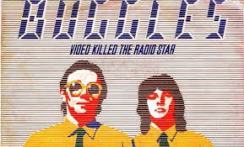
 Remember when the rock group, The Buggles, introduced a new cable TV channel, MTV (Music Television) with the song “Video Killed the Radio Star?” That was August 1, 1981. Here’s how Mark Goodman introduced the channel over 37-years ago. CLICK HERE
What Killed MTV?
By the early 90s, MTV was looking to boost its audience ratings and introduced a trivia game show called “Remote Control.” It attracted more viewers than its music videos, so MTV created “The Real World” in 1992, television’s first unscripted reality show.
These new programs were attracting a new generation to MTV and also dooming the channel’s original concept of 24/7 music videos.
So, MTV didn’t kill the radio star, but something else did.
Consolidation, Computers and Cash
Ironically, it would be the radio industry itself that would kill the radio stars. Those talented men and women that made a couple of turntables, a few cart machines and a microphone work together and created real magic. What many liked to call radio’s “theater of the mind.”
After the passage of the Telcom Act of 1996, a massive and swift consolidation of the radio industry took place. Radio was very attractive to Wall Street due to its fat bottom line and year-over-year revenue growth.
They say you make money in radio station ownership at the time you buy the station, not when you sell it. In other words, the die is cast at the closing of the purchase. Consolidators were so eager to buy up radio stations, they over-paid. iHeartMedia and Cumulus, two of the country’s largest radio owners are poster children for this practice as they work their way out of bankruptcy.
In an attempt to mitigate this problem, computers and voice tracking were introduced across these radio station empires allowing them to drastically reduce their air staffs. The very people that were the bridge to the listeners and advertisers were the first to go.
All in the name of sending more cash to the bottom line and paying down crippling debt.
What Radio Stations Promoted BEFORE Consolidation
 Radio used to really promote its greatest asset, its radio talent. WHDH in Boston promoted itself as having “New England’s Finest Radio Entertainment 24 Hours Every Day!” The “Big 5 on 85” print ad featured Jess Cain, Fred B. Cole, Hank Forbes, Bob Clayton and Norm Nathan, as their air staff, and never mentions what kind of music they play, or news they featured or anything else the radio station did. WHDH was not alone in doing this. Every radio station promoted its talent line-up. Radio air talent WAS the reason people listened.
George Johns recently wrote that when he bought his first radio station (K103 in Portland, OR) that he knew he had to have Craig Walker as his morning man. Unfortunately, Craig was already on the air in Portland at the #1 radio station, KGW. Geo pitched Craig a job with K103 for more money and said he was willing to wait out his one-year noncompete contract to get him. George Johns said his financial partners thought the deal was too expensive and so Geo took out a mortgage on his Coronado, California home to guarantee the money personally.
Did George Johns gamble pay off? Yes. On day one. Craig Walker premiered at #1.
Can you feel the love radio once had for its air talent?
Non-Competes
Which brings up another radio industry problem, the non-compete contract. Have they hurt the radio industry’s growth and innovation?
Boston’s Route 128 corridor used to be the center of technology in the 60s and 70s. In the 1990s, California’s Silicon Valley took over that title from Massachusetts.
Why did Boston’s tech companies lose to those in the Silicon Valley?
Boston was a collection of high tech companies, like Wang, DEC and Data General competing against one another. They kept everything in-house and were vertically integrated. They had employee non-compete contracts. If you left your firm, you were looked upon with great disdain.
Silicon Valley, on the other hand, built an ecosystem. They shared everything. People were free to move between companies, and did. And everyone was still considered part of the family.
Value Chains versus Ecosystems
The radio industry operates like a value chain. Radio’s big consolidators are driven by efficiencies.
Accenture Strategy published a study that found that ecosystems are a “cornerstone” of future growth in a 21st Century world, a way to increase revenue. Ecosystem companies thrive on making connections, lots and lots of them.
The broadcast industry has pushed away from so many chances to collaborate and in so doing lost a competitive advantage.
What is Radio’s Most Valuable Asset Feeling?
Don Anthony’s Morning Show Boot Camp (MSBC30) collaborated with Jacobs Media Strategies to produce the first ever “Air Talent Questionnaire: How Radio DJs View Their Industry.” Some of the takeaways were disheartening to hear. Such as:
-
Most of the shifts where DJs got their first jobs are disappearing
-
Many DJs are not air checked and that lack of attention appears to impact attitude
-
Many DJs have feelings of angst & insecurity; many others are struggling financially
If radio connects with listeners through its air talent, then just these three items ought to give every radio station operator pause.
How to Win the Triple Crown
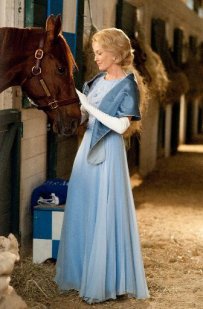
I just watched the movie “Secretariat.” In 1973, Big Red, as he was nick named, became the first Triple Crown winner in 25-years, at a time when many thought there would never be another. “His record-breaking victory in the Belmont Stakes, which he won by 31 lengths, is widely regarded as one of the greatest races of all time,” writes Wikipedia.
What struck me, was what Secretariat had, that the other horses did not, a loving caretaker, a loving trainer, a loving jockey and most of all, a loving owner. Big Red was surrounded by people who genuinely loved and believed in him.
Great radio stations are filled with people like that.
I’ve always believed that what happened in the halls of my radio stations were transmitted out, over-the-air, to the listener. We transmitted so much more than just the music we played, the news we delivered, and the entertainment we provided. We transmitted an intangible spirit that was contagious and attracted loyal listeners.
And we do that when we love, appreciate and take care of our most valuable radio asset, our air talent.

 This week I sat in on the Fred Jacobs webinar “Mobile Strategy for Radio: What we learned from Techsurvey 2019” and the #1 take away was “voice (not just smart speakers) is the next important user interface at home and in the car.”
 Roger Miller was a very creative guy. His 1966 hit song, “
 Simon Sinek says people don’t buy what you do, they buy
  I’ve been reading the trades, trying to grasp what is happening, and it is all so very confusing. Have you felt that way too? That’s what a period of disruption looks like. Black is white. Up is down. It’s enough to give you an Excedrin headache.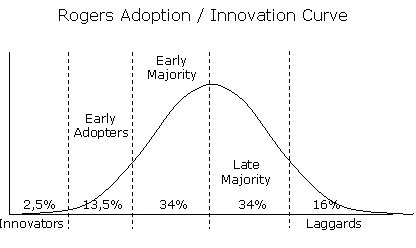
 at a time when AM/FM radio is no longer the entertainment focus of the vehicle dashboard, replaced by the entertainment center that resembles the touch screen on your smartphone.
 The other night I watched Jim Gaffigan’s 5th Netflix special called “CINCO.” In his standup comedy routine, he hit the nail on the head about why Netflix is more popular than cable TV. Here’s what Jim said:
 Managing people is a challenging proposition.
 Everything old is new again. I’m sure you’ve heard the phrase. “Everything old is new again” was the title of a song in the movie musical “All That Jazz.” Part of the lyrics to this Peter Allen/Carole Bayer Sager song include:
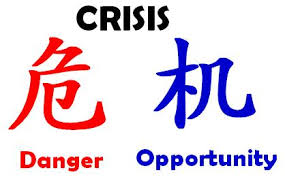 Radio has been here many times in it’s almost 100-year history before.
 The radio show was close to home this year, just down the road from my university, in Music City USA, Nashville, Tennessee. Plus, the Tennessee Association of Broadcasters decided to roll their annual convention into an opening event at the Radio Show. So as soon as I finished my morning class, I was on the road to Nashville.
 In his play Romeo & Juliet, William Shakespeare wrote “A rose by any other name would smell as sweet.” Gertrude Stein in her 1913 poem Sacred Emily wrote “Rose is a rose is a rose is a rose.” It is one of her most famous quotes and has been interpreted to mean “things are what they are.” In other words, the fact that simply using the name of a thing invokes the imagery and emotions associated with it.
 Fred and Paul Jacobs are prolific bloggers; they blog five days a week. Recently, their blog asked four questions about the future of radio. I found them interesting and thought I’d give you my answers to their questions. I’ve provided a link to their original blog post
 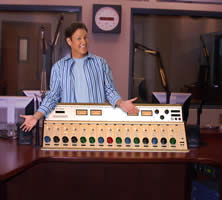 Crank it up means turning a knob. Radio people are going to have to make sure their car dealers demonstrate, or even set-up for their new car customers, how to find and lock in their local radio stations on these new digital dashboards. If the radio listener can easily find their favorite hometown companion, then they will default to what they know and love best. The reason radio has retained over 92% of its listeners is because all those new media devices mostly took out the new media device that came before it. Free over-the-air radio is unique and special. Let’s all work to keep it that way.
 DickTaylorBlog