Tag Archives: Car Radio

Radio’s Disappearing Act

Is AM radio disappearing from new cars the issue the radio industry should be focused on?

I think not and here’s why I say that.

WBZ 1030AM

I grew up listening to WBZ AM out of Boston on my daily college commute in Western Massachusetts. Carl DeSuze, Dave Maynard, Larry Justice, Mean Joe Green in the BZ Copter with Boston traffic reports and Gary LaPierre with the news. It was truly “The Spirit of New England.”

So, when Sue and I were headed to Boston for the graduation of our son-in-law from Berklee College of Music, I put on WBZ as we left our hotel in Spring Valley, New York, and we listened to this station on our three hour drive into Boston, we didn’t listen to it on 1030AM, but via its stream on the StreamS application (App). The station, which is now an all-news operation, sounded fabulous.

The fidelity was of higher quality than FM and there was no buffering or dropout of the signal.

Once in Boston, I tried listening to WBZ over my car’s AM radio and the quality was poor, with noise and interference emanating from our surroundings.

What Does a Radio Look Like?

Back in June of 2017, I wrote a blog article asking what a radio looks like today and the most likely answer to that question was a smartphone. I also addressed in that article of six years ago, I was noticing that hotels were replacing those cheap AM/FM radios with charging stations containing a digital clock, perfect for charging smartphones, tablets and laptops.

Car Radios & The Future

Then in September of 2020, I wrote about how radios first came to be an option for buyers of new cars in June of 1930. But today’s new car buyer wants Bluetooth capabilities more than they want an FM radio; AM radio is not a must-have in 2023 according to the latest Jacob’s Media Techsurvey. What do people connect in the car with that Bluetooth, their smartphones.

What I Recently Witnessed About Radio Use

After COVID began to fade, Sue and I took a trip out to the west coast to visit our children and grand children in that part of the country. What we noticed in every hotel room we stayed was a giant flat screen TV, but no radios, just more of those charging stations with digital clocks.

This prompted another article that same year titled, “Is Radio Up Schitt’s Creek?” Sue and I became big fans of this series out of Canada, that takes place in a fictional town called “Schitt’s Creek,” and takes place primarily in The Rosebud Motel, where the shows characters use televisions, computers and smartphones, but never use a radio.

When watching movies and TV shows, I often look to see if there’s a radio in sight, noticing in British productions they often are, but not in American ones.

Once It Was Radio

When Sue and I stayed in Bethlehem, Pennsylvania we visited the museum inside the Hotel Bethlehem and found that fifty years ago, a hotel having a radio in your room was cutting edge.

The Hotel Bethlehem opened in 1922, two years after the birth of commercial radio in the United States and in 1953, it announced that patrons would enjoy a brand new AM alarm clock radio in every room.

Now seventy years later, Hotel Bethlehem features fiber optic WiFi.

Where Are the Radios?

Last year, Sue and I took a road trip through Atlantic Canada. We stayed in hotels and Bed & Breakfasts (B&Bs) throughout our trip, and found WiFi has totally replaced the AM/FM clock radios.

In Montreal, our room at the Hôtel William Gray, had a Bang & Olufsen (B&O) Bluetooth speaker that easily connected to my iPhone. The fidelity of B&O equipment is legendary and it was a joy to be able to connect any of audio Apps on my phone during our stay.

Radio Set Ownership in the Home

In American homes today, 39% don’t have a single radio set in them, and radio set ownership gets worse for young Americans age 12 to 34, where that number grows to 57% according to Edison Research.

To put this into perspective, the Federal Communications Commission (FCC), says only 6% of the population still lacks access to fixed broadband service at threshold speeds. Meaning, the internet is more accessible than broadcast radio.

Are Broadcasters in Denial?

Valerie Geller, who wrote the excellent book “Beyond Powerful Radio,” recently said

“You can sit down with a broadcaster who rails against podcasting and digital audio and artificial intelligence (AI). Then you get in the car with them, they’re using GPS, they’re listening to a podcast, they’ve got SiriusXM, they’ve got Spotify. Podcasting and radio co-exist now. That’s our truth.

Radio is its own worst enemy. We have not spent or invested in developing talent. Every other business has research and development (R&D) and they spend on it because they are investing in the future. I love radio, but I hate the state it’s in.

A lot of the voice-tracking I’ve heard already sounds like AI. There’s nothing human about it. It’s just a broadcaster playing an actor playing a broadcaster. AI is just as good as those voice-tracks because there’s nothing real being said.”

AM Radio Leaving the Dashboard

Automobile manufacturers removing AM radio from the dashboard ought to be alerting the radio industry to BIGGER PROBLEMS. The AM situation is a symptom of what we should be focused on, and that’s creating GREAT RADIO.

If you think it won’t happen to FM next, you haven’t been paying attention.

AM/FM radio sets are vanishing from hotels, B&Bs, American homes and big box retailers.

If your listeners aren’t up in arms about that, then losing AM radio in their dashboard won’t be a big deal to them either.

To paraphrase the great sales trainer Don Beverage:

Make your radio station so valuable to a listener,

that they want to hear your programming more

than you want to broadcast it to them.

38 Comments

Filed under Education, Mentor, Radio, Sales

What Is That?

One of my granddaughters, who’s 8 years old, was at our home the other evening, before heading off to dance class, when she looked into my curio grandfather clock and exclaimed, “What is that?” I walked over to her to see what she was pointing at, and saw it was one of my miniature radios. I said to my granddaughter, it’s a radio, to which she replied, “What’s a radio?”

What’s a Radio?

We’ve all probably seen the YouTube videos of young people trying to figure out what a rotary telephone is and how to use it, along with having a good chuckle along the way. But, if you’re a lifelong radio person, like me, having your granddaughter ask you what a radio is, can be rather disconcerting.

My grandkids are all connected to audio sources via their iPads, smartphones and smart speakers. The only place they may even be familiar with a radio is when they ride with their parents in the car.

Saving AM Radio

Last week’s blog was another in a series about the state of AM radio in America and if it could be saved. You can read that article HERE

As the latest monthly radio audience ratings get released, I can’t help but notice how most markets have one big AM radio station – maybe – that’s still a dominant force. In our nation’s capital, there is none.

Recently, seven former heads of FEMA (Federal Emergency Management Agency) said “AM radio serves as a linchpin of the infrastructure behind the federal National Public Warning System, which provides emergency-alert and warning information from FEMA to the public during natural disasters and extreme weather events.” Which made me wonder if our nation’s capital is in severe peril, as AM radio listening is virtually non-existent.

However, fear not, as I’m sure that no one in Washington, DC doesn’t know that WTOP News Radio at 103.5 FM is fully staffed and ready to provide that emergency information 24/7.

AM Radio Formats

The real problem, it seems to me, is that people confuse the AM and FM broadcast bands with a particular format. The reality today is, both commercial broadcast bands are filled with music and news/talk/sports formats. What has been different, for many years now, is more people listen to FM radio stations than they do AM stations; and by a wide margin, with most of that listening taking place in people’s cars and trucks.

Car Radio Listening

Research presented this past week at the NAB Show in Las Vegas says 46% of radio listening by people over the age of 13 only takes place in the car; a number that jumps to 58% for teenagers, according to Edison Research.

The U.S. Bureau of Transportation Statistics says that most people’s car trips are only three miles or less, so they aren’t listening for any length of time.

When asked what they listen to on long car trips, streaming jumped to 68% and broadcast radio fell to 32%.

Today’s Youth & Car Ownership

If radio’s last beachhead is a vehicle dashboard, the future for the next generation and car ownership should also be concerning.

It was only about two decades ago that 80% of American youth (18 year olds) had a driver’s license; today that number has fallen to just 60%. Here’s some of the reasons for the drop:

  • Lyft and Uber take them anywhere they want to go
  • Cost of getting a driver’s license
  • Cost of owning a car
  • Fewer teenagers have jobs compared to past decades
  • Having a car is no longer a “virtual necessity” (which the Supreme Court enshrined in law in 1977 for anyone living in America)

What Do Today’s Youth Do?

Today’s youth have their faces buried in apps and social media. It’s all about Instagram and Snapchat, YouTube and video games.

When you can easily access everything you want, from home on your digital devices, it’s easy to understand why teenagers today have little interest in getting a driver’s license and owning a car.

Digital interaction has replaced real social interaction for today’s youth.

And that’s another fly in the ointment of future radio listening by the next generation.

In my youth, there was nothing greater than putting down the top on my convertible, cranking up the radio and driving off to explore the world in my own car.

“On some nights, I still believe that a car

with the gas needle on empty can run about fifty more miles

if you have the right music very loud on the radio.”


-Hunter S. Thompson

12 Comments

Filed under Education, Mentor, Radio, Sales

Memorial Day Weekend 2022 Road Trips

This past Memorial Day Weekend, AAA (American Automobile Association) predicted that more than 39.2 million Americans took to the road, traveling more than fifty miles to be with family and friends. It was the heaviest holiday traffic in two years and was due to pent-up demand by people trying to get back to the way things used to be before the global pandemic. Even record-high gas prices at the pump weren’t a deterrent.

What Did All Those People Listen To?

A publication I read every day, called Morning Brew, thought it might be fun to survey their four million readers as to what they planned to listen to on their drive. Here’s how they put the question to their readers:

You get handed the Aux (Auxiliary Input) during a long road trip.

What kind of audio are you putting on?

Morning Brew found they could distill the answers given down to five different options. Here are the results:

  1. Curated playlist: 54%
  2. Podcasts: 20%
  3. Audio Books: 12%
  4. No Aux needed – road trips are for the local radio stations: 10%
  5. Nothing, I prefer to ride in silence: 4%

AM/FM Radio

Two things about these results I found interesting: the first was obviously the fact that broadcast radio was not the first, second or third choice for what to listen to when taking a long road trip.

Second, streaming audio wasn’t even a choice, in spite of the fact that these days many radio stations are beginning to focus on their streams due of the growth of smart speakers in the home.

If misery loves company, satellite radio wasn’t mentioned by Morning Brew’s four million readers either, it appears.

“The first step in exceeding your customer’s expectations

is to know those expectations.”

-Roy H. Williams

Radio & the Car

For years, I sold advertising telling people that cars were nothing more than radios on four wheels. Since the 1930s, cars and radio have been like peanut butter and jelly for pairing well together.

While a peanut butter and jelly sandwich is still #1 with sandwich eaters, car radio listening is not with audio listeners.

Radio reaches 73% of people in the car

and remains the #1 source for car audio listening.

– Statista Research 2022

Over the last five years, car radio listening, as measured by Statista has decreased 9%, while people playing their own digital music in the car has gone up 8%, and listening to podcasts has gone up 9%. Satellite radio listening over that same period is basically stagnant. (As a point of reference, back in the 70s & 80s car radio listening was around 93%.)

Statista’s latest research and Morning Brew’s reader survey are sadly telling the same story to any radio broadcaster willing to listen.

The reality is that people today have more control over what they can listen to when riding in their car.

Radio is Show Business

The challenge for broadcast radio is to figure out how to increase the value of the show that attracts and engages listeners while decreasing the obnoxiousness of the business part that pays all the bills.

Like a tightrope walker, it’s a very delicate balancing act.

Leave a comment

Filed under Education, Mentor, Radio, Sales

The Car Radio is 100

Commercial radio was born in November of 1920. The first OEM (Original Equipment Manufacturer) car radio came along in 1922 designed by the Chevrolet Motor Company and manufactured by Westinghouse. This first car radio was heavy, cumbersome and expensive; costing $200. In today’s dollars this would be the equivalent of $3,347.00. A 1922 Chevrolet, Superior 5-Touring automobile was priced at only $860, so you can see how expensive it was to buy one with a radio installed.

The good news is the radio worked and would then birth 100-years of innovation in the automobile dashboard.

The 1920s Car Radio Sales Pitch

With a radio in your car, your family could drive anywhere within a hundred miles of a radio station while being entertained, informed and educated.

It’s hard for any Baby Boomer to imagine not having audio entertainment as standard equipment in their dashboard.

1930s

It was radio engineer Paul Galvin that would pioneer more affordable car radios which he manufactured and sold through his new company, called Motorola.

1940s

Midway through the 40s, it is estimated that nine million cars now had radios in their dashboard and people were becoming concerned that they were leading to distracted driving thereby causing more auto accidents. Both broadcasters and radio manufacturers made the case for how having a car radio was useful in emergencies and alerted drivers to bad weather conditions.

Today when the topic of distracted driving comes up, it’s usually about handheld cellphones being used by drivers. But back then, Radio-Craft Magazine told of the battle being waged between state legislatures and radio manufacturers: “Ever since auto-radio installations became popular, a controversy has been going on…as to whether auto radio presented an accident hazard or not.”

The president of the Radio Manufacturers Association made the case that car radios were safe saying:

“Radio is not distracting because it demands no attention from the driver and requires no answer, as does conversation between the driver and passengers. Motor car radio is tuned by ear without the driver taking his eyes off the road. It is less disconcerting than the rear view mirror.”

Several states proposed steep fines for drivers, while others considered making installing a car radio a crime.

The Princeton Radio Research Project was created to study the effects car radios were having on automobile safety. In a paper published by Edward A. Suchman for that project, he reported that his small study found no link between car radios and traffic accidents.

1960s

In 1963, Frequency Modulation (FM) radios were introduced into the automobile for the first time. Radio penetration in cars had now reached 60%.

Along with FM radios, the 60s also gave birth to both eight-track tapes and car stereos, primarily due to the use of transistors, instead of vacuum tubes. Solid state transistors were smaller, drew less power and emitted very little heat.

1970s

If the 60s belonged to the 8-track tape player, the 70s would belong to the stereo cassette tape player. Recording tape manufacturer Maxell promoted these cassettes as nearly indestructible.

1980s

While the Compact Disc (CD) would be introduced in the 80s, it didn’t really become ubiquitous until the late 90s, coexisting with compact cassette players in automobile dashboards for two more decades.

21st Century

Probably the biggest disruption to the automobile dashboard came with the advent of Bluetooth allowing smartphones to interface with a vehicle’s entertainment system.

In 2011, automobile manufacturers stopped offering cassette tape players in their new cars, soon followed by the elimination of CD players/changers.

Today’s new cars come equipped with access to Satellite Radio, and an automatic interface with your smartphone allowing you the ability to stream anything you want to hear into your car’s entertainment system.

In fact, my first article for this blog in 2022 was “Why I Stream ALL My Radio Listening,” which diagrammed how my car radio audio systems are now programmed by my iPhone.

“Radio is not going to be Numero Uno in the dash any longer.”

-Fred Jacobs

AM/FM radio will most likely coexist with other forms of audio access for a period of time, but the writing is on the wall.

The definitive answer to how long over-the-air radio will continue to be used in the automobile really depends on broadcasters and whether or not they offer compelling and attention-getting content that audio consumers demand to hear.

AutoStage

Xperi’s newest in-dash experience is AutoStage. It was demonstrated at CES2022 and it should be noted that this system comes with the following pre-sets: SiriusXM, FM, AM and TuneIn Radio.

I use the TuneIn Radio App for most of my radio listening, but why was it chosen by Mercedes Benz? Turns out the answer is, “TuneIn’s radio stations can be accessed worldwide in 197 countries on more than 200 different platforms and devices.” TuneIn says it “provides the displaced radio listener a connection to home with local, national, and international stations anywhere they go and on any device.”

In other words, why would any audio consumer need DAB (Digital Audio Broadcasting), DAB+, Digital Radio Mondiale, HD Radio, AM or FM when they can receive any radio station in crystal clear audio via streaming?

With the exception of the proprietary content offered by SiriusXM, everything else is available via streaming at no charge.

Waxing Nostalgic

Car radio has come a long way from the day William Lear and Elmer Wavering drove their girlfriends to lookout point high above the Mississippi River town of Quincy, Illinois to watch the sunset and their dates told them how much better this romantic evening would have been had they been able to listen to music in the car.

Lear and Wavering shared their girlfriends’ comments with Paul Galvin who would go on to make Motorola car transistor radios, and then AM/FM radio would dominate the dashboard for the rest of the 20th Century.

So, now moving further into the 21st Century, radio broadcasters really need to follow the advice of Steve Jobs in order to survive and thrive, and that is to:

Think Different

12 Comments

Filed under Education, Mentor, Radio, Sales

Only Change is Here to Stay

Every night, the music of Enya lulls us off to dreamland. One of our favorite songs is “The Humming.” A line from that song is “only change is here to stay.”

I’ve often written in this blog about the only constant in life is change, and that if you’re not changing your life for the better, you’re changing it for the worse, for nothing stays the same. Nothing.

Changes in Communication

Watching the Ken Burns documentary on “Country Music” it was very clear the important role that radio played in spreading the popularity of this musical genre. But that was then, today the smartphone is at the center of everyone’s life.

Smartphones

The latest from Edison Research now says that 88% of Americans over the age of 12 own and use a smartphone; 250 million, to be exact.

The wireless phone companies will tell you that today we use our smartphones primarily for data. Edison Research tells us that 82% of Americans are now active on social media platforms, the top three being Facebook, Instagram and Twitter.

Smart Speakers

While 32% of homes in the U.S. don’t have a single AM/FM radio in them, 47% now have a smart speaker.

Today, 193 million Americans – or 68%  of adults 12 years of age and older – digitally consume audio using one of these smart devices.

Car Radio

AM/FM radio’s last place of dominance is the vehicle dashboard. WFH (Work From Home) eliminated the need to commute for a lot of people, thereby causing them to spend less time with traditional radio in their cars.

McKinsey Global Institute says at least 20% of people currently in the WFH mode won’t ever be returning to an office after the pandemic ends. Just as alarming for radio station owners is the recent report by Edison Research that shows the percentage of people who listen to audio on their smartphone in their cars is now at 50%.

“We’re recovering to a different economy.”

-Jerome H. Powell, Federal Reserve Chairman

ZOOM

Before COVID-19, we already were doing video conferencing and phone calls on platforms like Go To Meeting, Face Time, WebX, or Skype. But then the world was shut down by a novel coronavirus and it was ZOOM that suddenly became the dominant platform for teaching school, conducting government, running our courts, attending church, working from home, celebrating our weddings and birthdays, and just about everything else we used to do in person.  

ZOOM is the best example of how fast our world changed when COVID-19 struck.

How did ZOOM do it? By investing the time to know what their video conferencing customer wanted, knowing it better than anyone else and then delivering it best when the critical moment – a global pandemic – arrived.

“Spend a lot of time talking to customers face-to-face. You’d be amazed how many companies don’t listen to their customers.”

– H. Ross Perot

Your listeners are changing, your advertisers are changing, your world is changing. So, you’d better be listening carefully to understand how you must change to be relevant to their wants, needs and desires.

Because as Enya sings “only change is here to stay.”

Leave a comment

Filed under Education, Mentor, Radio, Sales

When TV Disrupted Radio

97I grew up with TV.

Essentially, we were “born” in the same year.

I don’t remember a time when TV didn’t exist.

TV was supposed to put radio out-of-business. It was the “great disruptor.”

Why TV Didn’t Put Radio Out-Of-Business

While I loved my TV shows and even remember planning my life around TV GUIDE and the new fall shows, I still fell in love with radio and wanted to be a radio personality since elementary school and my first Zenith transistor radio.

Radio for me was never about Jack Benny or Groucho Marx or Amos & Andy or radio dramas like Orson Welles “War of the Worlds.”

Radio was exciting execution, engaging personalities and the best of new music from all genres.

Radio was addictive because it was so engaging.

Disruption Knows No Loyalties

It’s reported that as this decade began only 67 of the original Fortune 500 companies were still in business. Welcome to the 21st Century of Disruption.

The reality in today’s world of accelerating change is that the very success that rockets a company to raving success usually becomes the dagger that runs through its heart when the market environment shifts. Then new firms take over and former leaders fade into the history books.

The business truth is eventually every business sees its model fail.

Radio’s New Business Model after TV

Can you imagine a more difficult time than when TV swooped in and stole all of radio’s programs and talent? It was a time when people said things like “The last person to leave, please turn off the lights on your way out.”

It was a dark time for radio.

But not for all.

Only those who couldn’t see their way past the way it had been.

New broadcasters were quick to develop new formats.

1965 saw the birth of BOSS RADIO in Los Angeles with Bill Drake & Ron Jacob’s 93-KHJ.

At the same time 1010-WINS in New York would pioneer the all news format and everyone would know the phrase “You give us 21-minutes and we’ll give you the world.”

These new broadcasters would be the ones that inspired me to want to be a radio guy.

The Transistor Radio

Radio took advantage of the transistor radio. The youth of my day would all want a transistor radio of their very own and radio owned the youth generation.

The Car Radio

As we grew older and bought our first car, the car radio was a MUST HAVE accessory.

Movies like American Graffiti would romance the glory of the young and their radio.

The Internet of Things (IoT)

Today’s 21st Century finds radio with a new disruptor, the internet. It’s not a new product but an ecosystem.

Amazon and Walmart sell many of the same products and are quite competitive on price. The big difference is Walmart is a brick and mortar ecosystem and Amazon is internet based.

For radio to compete the industry needs to have a vision for how its product fits into a complex network of components, systems and user experience.

That’s the 21st Century radio challenge. (TV faces the same challenge.)

Today’s radio must seamlessly fit into a listener’s life on any platform the listener uses.

Disruption will crash and burn any business model that wants to hold onto the past.

Disruption will clear a path for those who are innovative, nimble and responsive to a changing marketplace.

For those broadcasters, the opportunities are limitless.

4 Comments

Filed under Education, Mentor, Radio, Sales

My oh MAYA

81Have you ever heard of the MAYA Principle? Neither had I. But I saw an article in The Atlantic titled “The Four-Letter Code to Selling Just About Anything, what makes things cool” and I wondered if there might be some application for radio.

MAYA

MAYA stands for “Most Advanced. Yet Acceptable.”

It means that as you design your product or business for the future you need to keep it in balance with your users’ present. In other words, as Tony Bennett might have sang, “It don’t mean a thing if it ain’t got that swing.”

This 1931 jazz composition by Duke Ellington was given the MAYA treatment by Tony Bennett and Lady Gaga in 2014. Proving anything that’s old can be new again.

Age of Distraction

I doubt anyone would take issue with the statement that the 21st Century is the “Age of Distraction.” I also am sure that when your computer, smartphone, tablet, software says you have an update, you sigh a big sigh and utter something like “Uff da. Fina mina doh.” (Translation: Oh boy. Here we go again.)

Sequels

Hollywood and television have long understood MAYA. To date we have twelve Star Wars movies, ten Halloween movies and CSI grew from Las Vegas to Miami and New York. I’m sure you can think of many others.

The reason is each is new but familiar.

Change

We humans are a fickle lot.

We hate change and we love change.

What we really like is what Derek Thompson calls “the simulation of innovation, which pushes the right buttons for novelty while remaining fundamentally conventional.”

________ R Us

Remember when Toys R Us had everyone copying their success by calling themselves “R Us” too. The iPod, iPhone, iPad had lots of imitators as well, as if putting a small “i” in front of your name made you cool.

Well, it can.

Ask Bob Pittman.

He changed Clear Channel Radio to Clear Channel Media & Entertainment before abandoning the old CC brand to adopt its successful App brand for the entire company. Voila, iHeartMedia.

“iHeartMedia reflects our commitment to being the media company that provides the most entertainment to the most engaged audiences wherever they go, with more content and more events in more places on more devices,” said Bob Pittman, Chairman and CEO of iHeartMedia, Inc.

Car Radios

I recently drove a Toyota Rav4 rental for a week in Florida. The radio was a trial. Thank goodness it had a volume and a tuning knob. Everything else was activated by the touch screen or the myriad of buttons on the steering wheel. (Don’t get me started about the HD reception.)

Laurence Harrison, Director of Digital Radio UK did a presentation at the Connected Car Show in 2016 on what the consumer wanted in their car radio. Here’s some of what he told his audience.

  • 77% want LIVE radio
  • 82% said a radio was a MUST HAVE
  • 69% said if they could only chose one entertainment option it would be radio
  • Digital is the future of radio
  • Want better radios
  • Listener centered design
  • Metadata to make it smart

Summing it all up, consumers want a car radio that’s broadcast digital, with a simple, easy-to-use interface (that’s familiar) and an app-like experience that is safe according to Harrison.

Raymond Loewy

The MAYA principle was the design approach brainchild of Raymond Loewy. You may not know his name but you know his work. Loewy designed the Coca Cola bottle, the logo for Air Force One, the logos for Shell, USPS and Greyhound. He also designed some of the iconic cars of the 40s – 60s and so much more.

Loewy understood us fickle humans. We want change, just not too quickly. He was a master of giving consumers a more advanced design but not more advanced than what they were able to deal with.

Apple

Steve Jobs was good as applying the principle of MAYA with the introduction of the iPod and its evolution. The iPod over time removed most of its buttons creating the entrance for the iPhone.

Apple wasn’t about to repeat the disaster it had with the Newton, a product that was more advanced than consumers were ready for. Google Glass is another such product that made too big a leap.

Knowing Your Customer’s Current Skill Level

For the consumer to embrace change, change must be introduced gradually over time.

The Air Pods might seem like a contradiction to this but when the iPhone7 introduced them and took away the headphone jack the percentage of wireless headphone sales to wired ones had already crossed a tipping point. iPhone7 sales are an indicator that it was MAYA time for this innovation. Apple didn’t have to explain the concept to its consumers, they were already there.

Consumers are not going to spend their time and money on trying to learn your product if there’s a product out there that is easier to use and more familiar to them.

And that is the challenge for radio.

9 Comments

Filed under Education, Mentor, Radio, Sales

History’s Technology Rhyme

Transistor Radio, Car Radio and Rock & Roll

Transistor Radio, Cars & Rock ‘n Roll

I’ve written before how history never repeats itself, but usually rhymes. So when I was reading an article in the NY Times about “Tech’s ‘Frightful 5’ Will Dominate Digital Life for Foreseeable Future” it hit me. Here was how history was rhyming when it came to communications. Fasten your seat-belt, this will get bumpy.

What this article’s author Farhad Manjoo wrote was how Amazon, Apple, Facebook, Google and Microsoft (others include Netflix in this mix) came along at a perfect time to roll up their user base. They were in the right place, at the right time in other words.

Geoffrey G. Parker, a business professor at Tulane University has co-authored a book called “Platform Revolution” where he explains how these tech companies were able to ride the perfect wave of technology change – that being a decrease in the cost of IT, an increase in connectivity and the introduction/fast adoption of mobile phones.

And when it comes to advertising, these companies are in the right place to leverage digital marketing and enjoy most of the benefits of this growth area as well. In fact, since there is a sense that these major digital companies will receive most of the online advertising monies, traditional media – like radio & TV – could see advertising monies return to them.  Let’s hope that happens.

So, where’s the rhyme in this story? Well consider this other time in communications history when television burst onto the scene after the end of World War Two in the 1950s. Radio, a lot of people thought, would cease to exist. Radio’s stars, programs and advertisers, to a large measure, jumped into television. Radio had to find a new act.

Radio was in the right place, at the right time for the birth of three things when TV came along; the transistor radio and the car radio. Both of these technology advancements would be the savior of radio along with one other important development; rock ‘n roll.

Radio was in the perfect place to ride the baby boomer youth wave of rock music, cars and transistor radios. Television grew in large measure by scarcity, only two or three television networks and few TV stations.

When broadband came along, that scarcity factor went poof. Radio now sees its dominance in the car being challenged by a digital dashboard.

The newest radio format to have come into existence – all sports/talk – is now 29 years old. Clearly, innovation in the radio world has stalled.

The good news is radio in America has more reach than any other form of mass media. The bad news is it sees annual erosion of its TSL (time spent listening). This can be fixed. To do this, radio needs to address the very factors that are causing its TSL to erode.

The thing most often heard from consumers about what they dislike about radio are its commercials. Yet, commercials don’t have to be a tune-out factor. No one tunes out the Super Bowl when it’s a blowout because they want to see what other clever commercials might still be coming on their television.

Most radio stations long ago did away with their copywriters. These masters of the spoken word who can craft a story about businesses need to be enticed back into the radio business at every radio station.

The number of commercials in a break needs to be reassessed by the radio industry as well. You can’t kill the goose that lays your gold revenue egg and expect it to continue to lay you golden eggs.

Bring back personalities. They not only sell the music (the record companies need you!); they sell your station and through live reads, your advertisers’ products and services.

Those who remember Paul Harvey News & Commentary will tell you that page two (his first live read commercial) was always something you turned up the radio for. I remember reading Paul Harvey brought in more money for the ABC Radio Network than everything else they did. And everyone loved Paul Harvey’s commercials and bought the products he talked about.

I think retired CBS Radio President Dan Mason said it best when he said this about radio:

“Without community and companionship, we have nothing.”

14 Comments

Filed under Education, Mentor, Radio, Sales, Uncategorized

Radio – America’s #1 Mass Reach Medium

radio-reaches-245-million-americans-2015-2This was certainly true in the first golden age of radio, that period of time from its birth in 1920 through the mass takeover of television in the 1950s. Once TV came along, radio had to reinvent itself.
 

That reinvention came in the form of Rock ‘N’ Roll, the transistor radio and the car radio. Radio was portable, TV was not. TV took over the living room, but radio took over every other place.


In my life, I’ve lived through every new form of technology that was going to be the death of radio. The 8-track tape, the cassette tape, the CB radio, the CD player, the CD changer, the cell phone, the MP3 player, and most recently, the World Wide Web, Internet streaming and wireless broadband.


So you might be surprised to learn that at the 2015 annual meeting of the Association of National Advertisers Masters of Marketing Conference in Orlando, Florida attendees learned that when it comes to adults 18+, RADIO reaches 93% of them every week. That’s more than TV, more than smart phones, more than PCs and more than tablets.

8

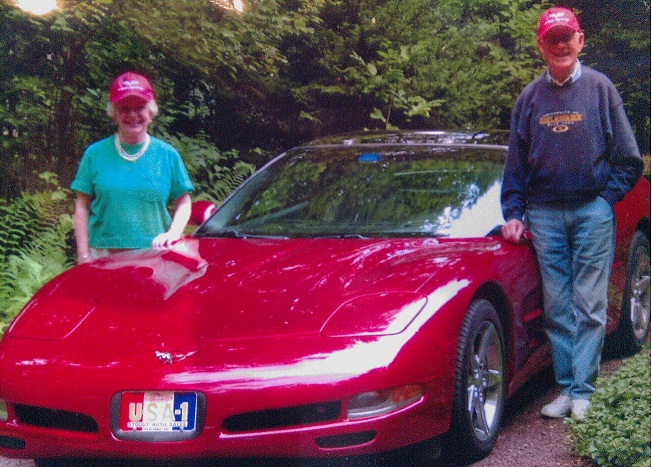
I remember when I got my first GM position. It was a daytime radio station that featured Al Ham’s “Music of YOUR Life” format, big band music for those not familiar with the programming. Yes, my audience was old. But only according to the calendar, but not the way they thought about themselves. Nampa and his corvette

It was always a tough putt with new advertisers, getting across this concept that you are as young as you think. So I wasn’t surprised to learn that one of the sessions talked about “APT.” APT was all about the “Age People Think” not demographics.


I’m not sure that lumping people by demographics was ever a sound marketing idea, but like a lot of bad ideas (buying radio on a Cost Per Point basis) in advertising, people do what’s always been done and ignore if it’s a sound way to place advertising.


A lot of my radio stations over my career have focused on an older demo. When Ken Dychtwald’s book “Age Wave” came out in 1990, I read it with enthusiasm. Dychtwald told of the massive population and cultural shifts that would be taking place because of the Baby Boom Generation. He put forward how the boomers would shift the epicenter of consumer activity from a focus on youth to the needs, challenges, and aspirations of maturing consumers. Those predictions are playing out today.


So again, I wasn’t surprised to read that at the ANA gathering attendees were told that old people were a growth market. In light of the trillion dollars in student loan debt, the millennials are cash challenged in a way that the Boomers are not.


I grew up in a Chevy family. Remember those days of yore? Chevy families and Ford families competing for bragging rights as to which drove the better cars?


Many marketers would have you believe that we are now stuck in a rut with our product choices and only the young are pliable enough to be swayed to try or change brands. So let’s see how that plays out in my family. I have two older brothers; one drives a Honda and the other a Toyota. How about our kids? Well we have a BMW, Mercedes Benz, Hyundai and Honda. In my case, I drove a Hyundai for the past eight years before switching to a Honda Accord; so much for that concept that once you are stuck in a brand, you stay there for life. Even my toothpaste is not the brand I grew up using.


Everything has changed about the world with the exception the way marketing is created and advertising is bought.


One of the big changes is that RADIO is back! It’s the massive reach medium that advertisers seek to expose their products and services on, except that they don’t know it.


Radio needs to use some frequency and repetition to get the word out.


Willie Sutton said he robbed banks because that’s where the money was.


If you’re an advertiser, you need to advertise where the people are and that’s today’s RADIO.

1 Comment

Filed under Education, Mentor, Radio, Sales, Uncategorized

New Radio World Column Premieres

Thirty years ago Michael C. Keith entered a small New England college to start a new career. Keith had just spent the past ten years as a professional broadcaster and was now transitioning into the world of teaching. The first thing that he would learn was the only textbooks available at that time were woefully out-of-date. Radio was now format driven and there were no textbooks available in 1986 that were teaching the kind of radio Michael Keith had just left. So, Keith decided to write his own textbook. He called it simply “The Radio Station” and he pitched his manuscript to Focal Press.

If you like to read the entire article, simply click here: Focal Press Updates “Keith’s Radio Station”

This is the premiere of my new column in Radio World that will appear quarterly.

Leave a comment

Filed under Education, Radio