

The other day when I went to my mailbox, I noticed a rather large piece of “junk mail” from a local HVAC company.
It said:
We’re Hiring!
Start a Rewarding Career with [business name]
Attention: High School Grads
HVAC is a Great Career Option! No Student Debt!
Great pay, hours and benefits!
Which got me to thinking about all the radio help wanted ads saying you need to have a college degree to apply. Why does the radio industry list having a college degree as a requirement, when the truth is, great radio broadcasters haven’t had one, nor did they need one.
Cost of a College Degree in 2022
According to Educational Data, when you consider student loan interest and loss of income, the cost of a four-year college degree can exceed $400,000.
It’s not unusual for a college grad to learn the starting pay in radio is often as low as $19,500/year ($9.36/hour) for on-air positions and sales positions are 100% commission based.
Start a job with Walmart with no college degree and you’ll make $12/hour. Get that same job at Target and you’ll start at $15/hour. At McDonalds the starting pay range at company owned stores is between $11 and $17/hour.
Virtually every job in today’s world will pay you more than most radio positions, and yet radio ads always require you to have a college degree while those other companies don’t.
Radio Talent Institute
I worked with Dan Vallie and his Radio Talent Institute at Western Kentucky University. It’s an excellent program, now operated by the Radio Advertising Bureau (RAB). Sadly, it’s offered as a summer program to students in colleges across America. I contend that the RAB should be offering this program in the high schools.
For all of the same reasons, one of my local HVAC companies is appealing to high school grads, this also makes sense for the radio industry.
Famous Broadcasters
Oprah Winfrey didn’t need to have a college degree to become one of the most successful women in broadcasting. She dropped out of college after only one semester to pursue a career in broadcasting.
In 2015, Forbes published the salaries of the top five radio broadcasters in America.
Glenn Beck earned $16.5 Million in 2015. Not bad for a Sehome High School graduate with no college experience.
Sean Hannity earned $29 Million and never obtained a college degree, even though he attended four different colleges.
Ryan Seacrest earned $65 Million. Like me, Ryan started his radio career at 16 while still in high school. Unlike me, who went to college and graduate school earning two degrees, Ryan dropped out of college to devote all of his energies to broadcasting. Needless to say, he’s really famous and I write this blog.
Rush Limbaugh earned $77 Million and dropped out of college after only two semesters. His mother said at the time that Rush “flunked everything…he just didn’t seem interested in anything except radio.”
The top earning radio personality was Howard Stern. Howard IS a college graduate, with a 3.8 Grade Point Average (GPA) from Boston University, earning $95 Million in 2015.
Now, if I was trying to sell you on the value of a college degree in broadcasting and compared Howard Stern to the other four on Forbes 2015 list, I would say that having a college degree can earn you 23% to 76% more money than not having that piece of paper.
College Degrees
Please don’t think I’m dissing the college experience, I’m not. What I am taking issue with is the hiring practices of the radio industry that make having a college degree a requirement. Radio is better positioned as a trade, one best learned by doing.
The radio industry should be presenting a broadcast career as an opportunity for students graduating from high school.
I treasure my four decade radio broadcasting career, but having my Bachelor of Arts and Master of Science college degrees never played a role.
It wasn’t until I pursued my second career in life, that of a college broadcast professor, that I would need those two pieces of paper to be hired at The School of Broadcasting and Journalism at Western Kentucky University.
Colleges sell pieces of paper representing knowledge learned. You can’t be part of the faculty unless you have also earned these benchmarks in higher education.
Finally, just as adamant as I am about the radio industry starting its outreach at the high school level, I am just as determined to see colleges hiring broadcast professionals based on their broadcast careers, knowledge that has been earned through years of on-the-job experience that no college curriculum can duplicate. Sadly, most colleges screen out any applicant that doesn’t have the required terminal degrees.
“Difficulties come into our lives to develop us.
Every storm is a school.
Every trial is a teacher.
Every experience is an education.”
— Nicky Gumbel.

 From my earliest days, I knew what I wanted to do in life. Drive a car, fly a plane and be a disc jockey.
 radio station with local traffic reports during beach season. When I took over the job, everything was already in place for flying lessons and I took advantage of the arrangement and learned to fly.
 Whenever people would ask me what I wanted to do next with my life, my answer was always the same, teach. Yes, I wanted to teach at a college or university the very profession that I had spent my entire working life doing, radio.
 Castle of the South
 I had not been behind the mic on a radio station in 35-years. I had a 10-minute lesson in how to run the control board from Joe and then was off on my own to do the next
  If you are a high school senior and are considering a career in broadcasting or journalism, what term would you Google to find the best colleges or universities for this field of study? Probably you would type in “broadcasting” or “journalism.”
 I began my broadcasting career as a disc jockey when I entered the 10th grade in high school. Broadcasting would pay for my college undergraduate and graduate degrees. Anyone who knew me from the outset would have told you I was a real radio guy. I thought I knew it all.
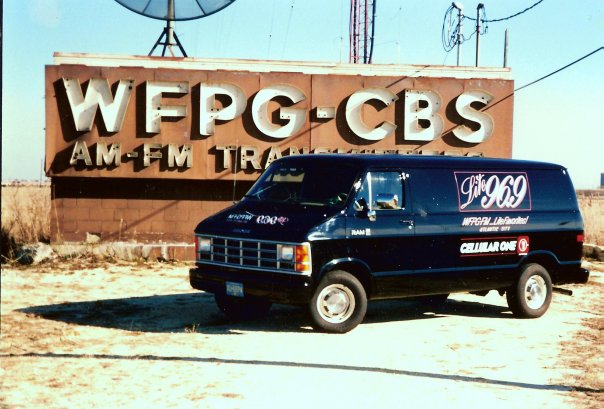 For thirteen years I was the general manager of WFPG AM/FM in Atlantic City, New Jersey. The stations were successful. I was active in Rotary, the local chambers of commerce, community social programs in addition to running the radio stations.
 I just recently moved to Virginia from Kentucky.
 This past week was another tough one for the wonderful people who work in radio. Most people who get into radio do it because they’ve caught the “radio bug” and the work becomes their life’s passion. I know that’s how it is for me.
 Life gives us lots of fears. When we’re very young, we’re fearless. Not because we are so brave, but because we aren’t smart enough to know what to be fearful of, yet. That, however, changes quickly and life gives us a heaping helping of stuff to be afraid of.
 Everything you need to know to succeed in life you probably learned by the time you graduated high school. Do you remember your high school days? You probably couldn’t wait to graduate and begin the next chapter of your life. We were all in such a hurry. Many of us were looking forward to going to college. College, we thought, would be what real life was like. It would be a world where real talent is what counts.
 DickTaylorBlog