

On June 26, 1941, at 6:57am, a new local radio station, WINC -1400AM began serving the Winchester, Virginia community. It was the city’s first radio station, and it brought Virginia Senator Harry F. Byrd and Virginia Governor James Hubert Price to town for the ribbon cutting ceremonies signing on this new radio service.
The radio station’s offices, studios, transmitter and tower were located at 520 Pleasant Valley Road in Winchester.

It would broadcast live descriptions of the attack on Pearl Harbor and FDR’s famous “Infamy Speech” only six months after signing on-the-air.
In 1947 a radio contest on WINC (known locally as Wink) would take down the entire telephone system for the City of Winchester, as female listeners tried to win a free pair of nylon stockings and a $10 handbag.
Virginia Hensley
Winchester’s most famous resident is Virginia Hensley, better known to the world as Patsy Cline.
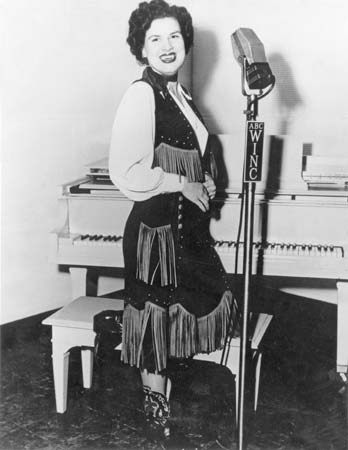
When Ginny was just fourteen years old, she walked into WINC and asked if she could sing on one the station’s live music shows, . The leader of the band, told her to come back next week and maybe he’d let her sing on the radio. Ginny returned the following weekend and made her broadcast debut on WINC in 1948.
Other stars to visit the station included, Bing Crosby, Bob Hope and Paul Harvey, who would broadcast his national News & Commentary over the ABC Radio Network on April 14, 1962.
Local Radio
WINC provided residents of Frederick County Virginia with news, entertainment and advertisements from local retailers. Those ads must have been popular with the business community because the radio station ran into trouble with the FCC (Federal Communications Commission) when trying to renew its broadcast license in 1971. At that time, the FCC allowed no more than 18-minutes of commercials per hour and WINC was airing 22-minutes of ads. It was reported that the FCC’s Broadcast Bureau Chief felt the excessive number of commercials were not in the best interests of Winchester community, but in the end renewed the station’s broadcast license.
Programming
Through the years, WINC -1400AM would undergo various programming changes. From live musical performances, to playing records. Musically, the station went from playing middle-of-the-road music, to adult contemporary, to classic hits; finally changing to a news/talk format in 1996, because its sister station, WINC-FM 92.5 had become Winchester’s most popular music radio station.
75th Anniversary
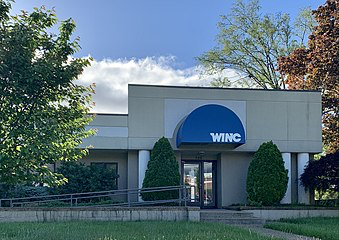
In 2016, WINC-1400AM celebrated its 75th anniversary of broadcasting. During this period of time, the station had only two different owners, the Lewis family and Centennial Broadcasting.
Richard Field Lewis, Jr., a broadcast engineer filed the initial application for a new station in Winchester in November 1940 and six years later, he would launch sister station WINC-FM.
On October 18, 1957 Richard F. Lewis, Jr. died and control of the two stations would pass to the Lewis family and incorporated as Mid-Atlantic Network, Inc.
In May 2007, the Lewis family would sell WINC AM/FM to North Carolina-based Centennial Broadcasting for about $36 million.
The End of an Era
Centennial would begin divesting their Winchester radio properties, which now numbered three FM stations and one AM radio station in 2020.
50,000-watt WINC-FM would be sold to the Educational Media Foundation (EMF) for $1.75 million, which would begin airing EMF’s Air1 network. Centennial’s other two FM stations would be sold to Fairfax, Virginia-based Metro Radio, Inc. for $225,000.
The future of WINC-1400AM was uncertain as the radio station celebrated its 80th anniversary in 2021. Ultimately, the station would find a buyer that paid $25,000 for the signal. The call letters WINC would be changed to WZFC upon completion of the sale in October 22, 2021.
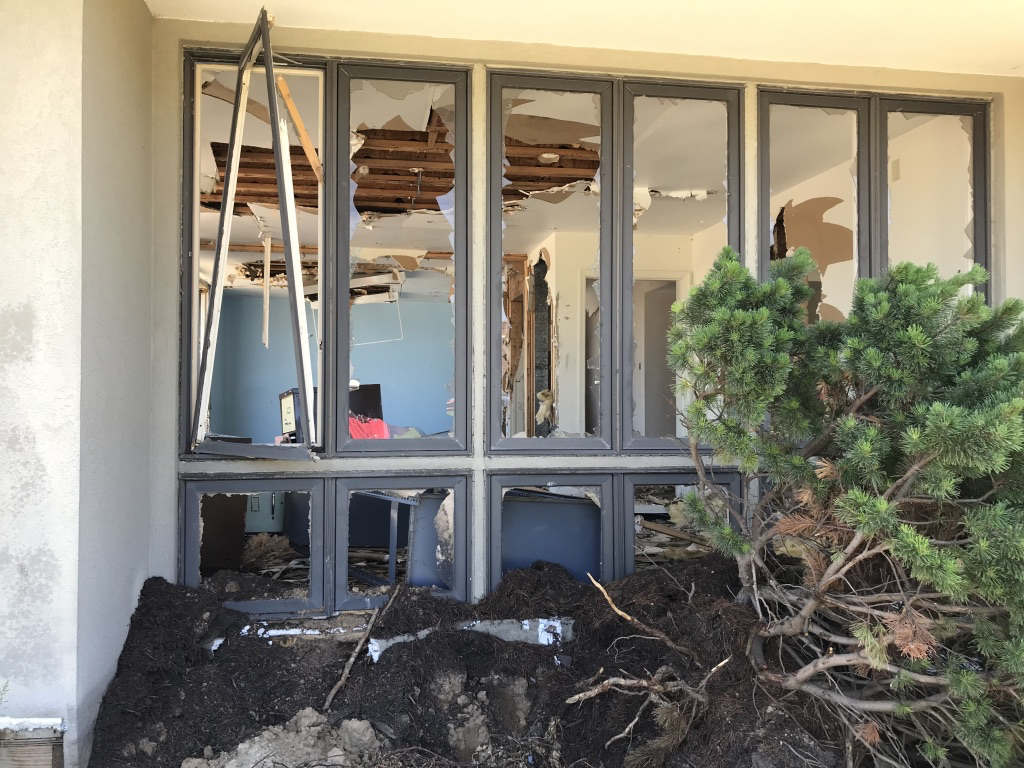
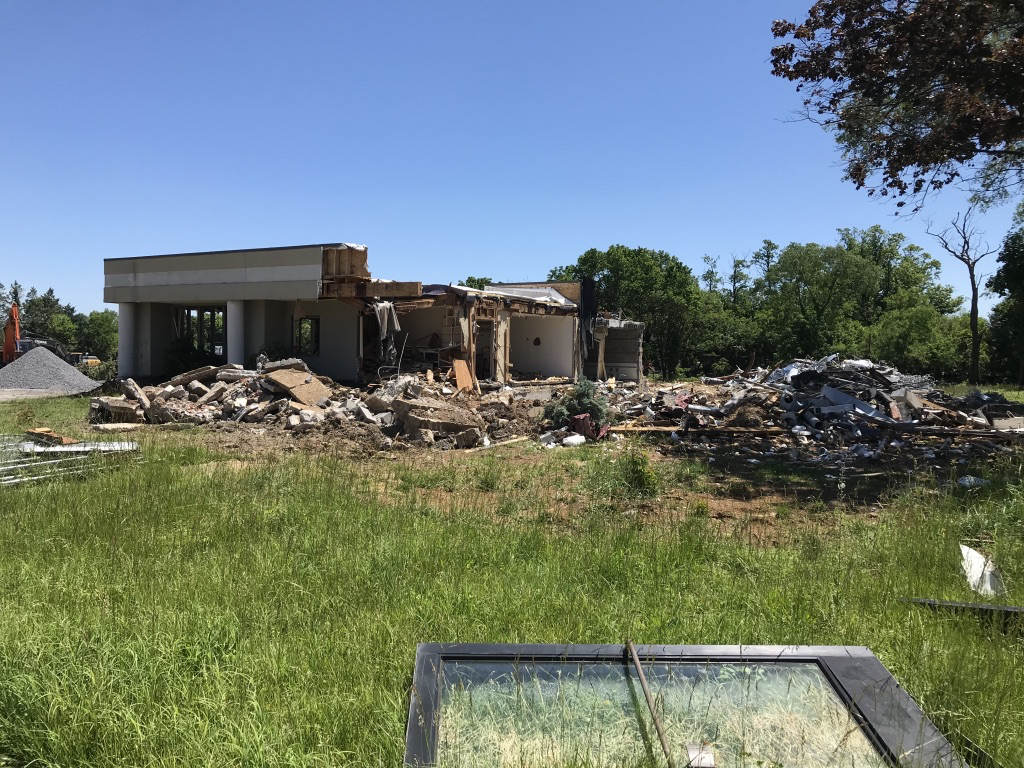
How do you mark the end of a local radio station?
Was it when:
- WINC-FM was sold to EMF and its call letters were changed to WAIW?
- WINC-AM was sold and the call letters were changed to WZFC?*
- The retirement of 37-year Wink Morning Man Barry Lee when the radio stations were sold?
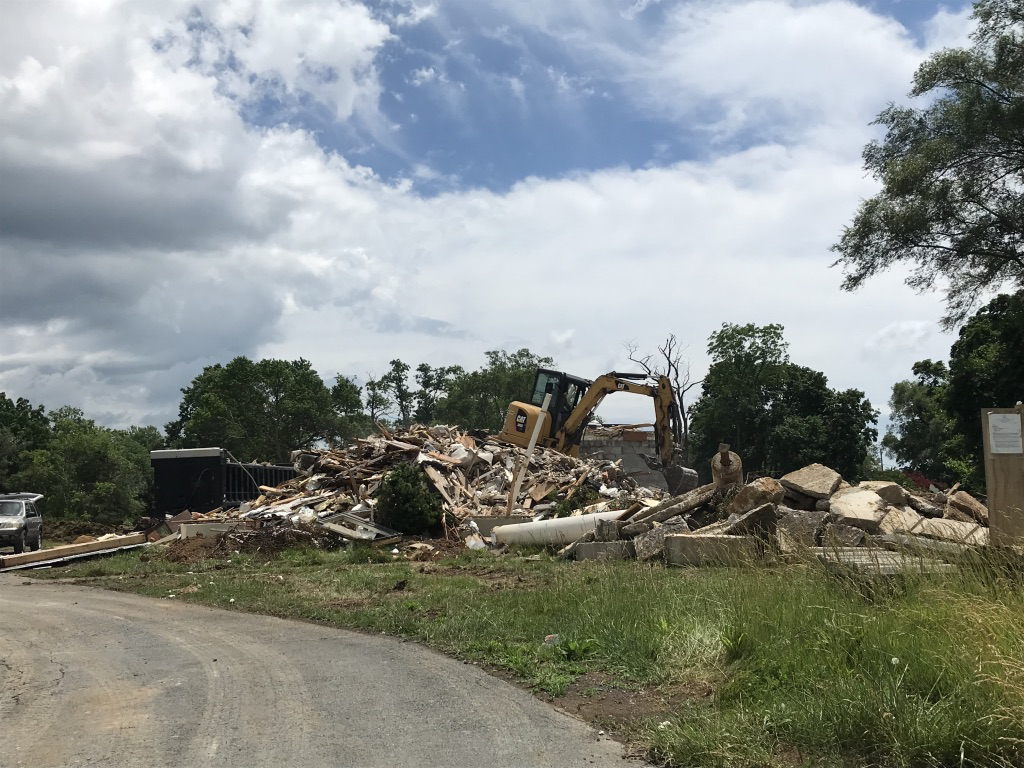
- The demolition of the building WINC AM/FM had broadcast from for over its 75-year existence?
Every day, communities across America are finding a once local radio station vanishing, sometimes they’re replaced by syndicated programming with little local service, other times the city of license is changed and the local radio service is moved to a larger population center and sometimes, the signals just go off-the-air.
Generations who grew up and lived in Winchester, Virginia depended on radio stations WINC AM/FM as they were a part of the fabric of the community. More importantly, the local radio personalities that were heard over Wink Radio for decades, were very much a part of these families lives.


 It’s not unusual for little boys and girls to ask the question “Why?” They ask it a lot.
 By definition, a commodity product lacks a unique selling point. Two examples of what I mean are lettuce and pencils. No one has a brand favorite of either. To the consumer of both, they’re all the same. Commodities are interchangeable with other products or services, widely available, and therefore undifferentiated except maybe by price.
 I’ve been reading the trades, trying to grasp what is happening, and it is all so very confusing. Have you felt that way too? That’s what a period of disruption looks like. Black is white. Up is down. It’s enough to give you an Excedrin headache.
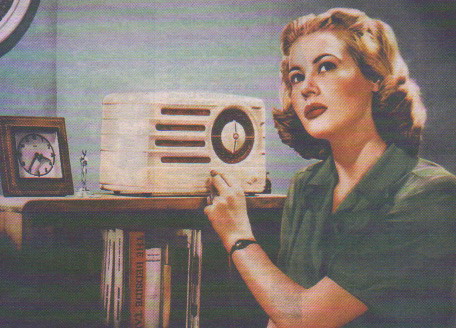
 at a time when AM/FM radio is no longer the entertainment focus of the vehicle dashboard, replaced by the entertainment center that resembles the touch screen on your smartphone.
 The other night I watched Jim Gaffigan’s 5th Netflix special called “CINCO.” In his standup comedy routine, he hit the nail on the head about why Netflix is more popular than cable TV. Here’s what Jim said:
 Have you heard the latest? People are addicted to their smartphones. “We now see smartphones as dangerous for young minds,” writes Jean-Louis Gassée in a
 DickTaylorBlog
It Was Always a “Good Day!”
He broadcast six days a week, just like all radio personalities did back in those days. It was a time when all radio was delivered LIVE. Paul Harvey was heard over the ABC Radio Networks with his News and Comment week day mornings and middays. His Saturday noon-time broadcasts were extra special broadcasts that were always sure to surprise and delight his audience of as many as 24-million people a week. Paul Harvey News was carried by 1,200 radio stations in America, plus 400 American Forces Network stations broadcasting all over the world.
Page 2
The first commercial break in each broadcast was clearly announced with the words, “now page 2.” And it caused me to turn up my radio and give Mr. Harvey my full attention as he told me about another great product that he personally used. The ad copy, just like the news and comments, were all crafted by the mind of Paul Harvey.
I bought my BOSE WAVE radio due to Mr. Harvey telling me how wonderful music sounded coming through its speakers and baffle system design. It started me on the path to owning several BOSE products as a result.
Paul Harvey News had a waiting list of sponsors to get on his program. In 1986 his News & Comment broadcasts were rated #1, #2, #3, #4 and #5 in network radio programs when he was the focus of a CBS 48-Hours broadcast commemorating Paul Harvey’s 70th birthday.
Bob Sirott did the profile piece and it showed Paul Harvey as few ever saw him. I encourage you to watch the segment on YouTube by clicking HERE
Paul Harvey News
On April 1, 1951, ABC Radio Network premiered Paul Harvey News and Comment. His Chicago based broadcasts were often called “the voice of the silent majority” or “the voice of Middle America.”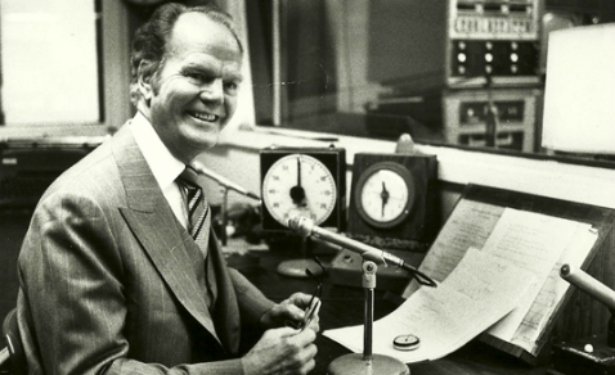
Paul Harvey was making so much money for ABC, they added a third daily broadcast to the schedule on May 10, 1976 called, The Rest of the Story. These broadcasts were written and produced by Paul’s son, Paul Harvey, Jr. for its 33-year long run.
While Paul and his son maintained this entertaining feature which was based on true stories, not all critics agreed, including urban legend expert Jan Harold Bunvand.
I know from my own personal experience of the two times Paul Harvey included stories based on my hometown of Pittsfield, Massachusetts, that Mr. Harvey played fast and loose with the facts of the events to tell a good story. It made me wonder how all the other stories I heard might have been so “massaged.”
Iowa
In 2000, I was managing a cluster of radio stations for Connoisseur and Cumulus. We carried Paul Harvey on my 100,000-watt KOEL-FM. It was the only thing, other than local news in morning drive, that stopped the flow of the best in country music.
I remember being in my car at the time Mr. Harvey’s noon-time broadcast came on the air and hitting the scan button to hear Paul Harvey News and Comment on virtually every station my car radio stopped on. In media, that’s called a “road block,” the same program or advertisement, broadcast at the same time on multiple radio or television stations.
$100 Million Dollar Contract
In November of 2000, Paul Harvey had just inked a new 10-year contract with ABC Radio Networks when a few months later he damaged his vocal cords and had to leave the air. It wasn’t until August of 2001 that Paul returned to the air waves, but only with a reduced clarity and vocal presence in his voice.
I remember this very well as I was now back in Atlantic City running a cluster of radio stations, and my AM radio station WOND-AM1400, was the Paul Harvey radio station for South Jersey.
I had been cajoling Mr. Harvey’s secretary in Chicago for months before he lost his voice for customized promotional announcements to be voiced by Paul Harvey to promote his daily broadcasts over WOND radio.
One day in the fall of 2001, a reel-to-reel tape came in an envelope from Chicago addressed to me. It contained my customized, Paul Harvey voiced, WOND announcements. I was thrilled, but just a little disappointed when we played the tape due to the hoarse, raspy sound of Paul’s voice when he recorded them.
Before the end of 2001, Paul Harvey was back to full vocal dynamics.
Touched My Heart
It was after watching the Bob Sirott piece produced for 48 Hours a second time and then sharing my personal Paul Harvey memories with the love of my life, Sue, that I found myself choking up and tearing up about the heartfelt emotional impact that this gentleman from Tulsa, Oklahoma had made on me.
Using only wire copy and his manual typewriter, Paul Harvey crafted a broadcast of words that vividly created in the mind of the listener exactly what he intended. His full vocal range, the power of the dramatic pause and dynamic inflection completed his radio magic, what most like to call radio’s “Theater of the Mind.”
Could you imagine Paul Harvey doing podcasts?
I have no doubt that they would have been as popular as the original SERIAL podcast was from NPR.
Paul Harvey didn’t use any music or sound effects.
Paul Harvey created great radio, that was welcomed into homes all across the globe by his great writing ability and vocal acting talents.
Harvey receiving the Presidential Medal of Freedom in 2005
Good Day
Paul Harvey died on February 28, 2009 at the age of 90.
Three weeks after his death, ABC Radio Networks cancelled the entire News and Comment franchise.
At the time of his death, he had less than two years left on his 10-year contract.
Paul Harvey called himself a salesman, not a journalist, newsman or anything else. He loved his sponsors saying “I am fiercely loyal to those willing to put their money where my mouth is.”
He never would have promoted his broadcast as “commercial free,” as he understood that this free, over-the-air medium called radio, was a powerful way to move product for his advertisers and that it was those very folks that paid all the bills for him and the ABC Radio Networks.
Imagine that, radio ads that were as cherished to hear as the rest of the broadcast itself.
That’s the definition of “GREAT RADIO.”
14 Comments
Filed under Education, Mentor, Radio, Sales
Tagged as ABC Radio Network, Bob Sirott, CBS 48 Hours, KOEL-FM, News and Comment, Paul H. Aurandt, Paul Harvey, Paul Harvey News, The Rest of the Story, WOND