
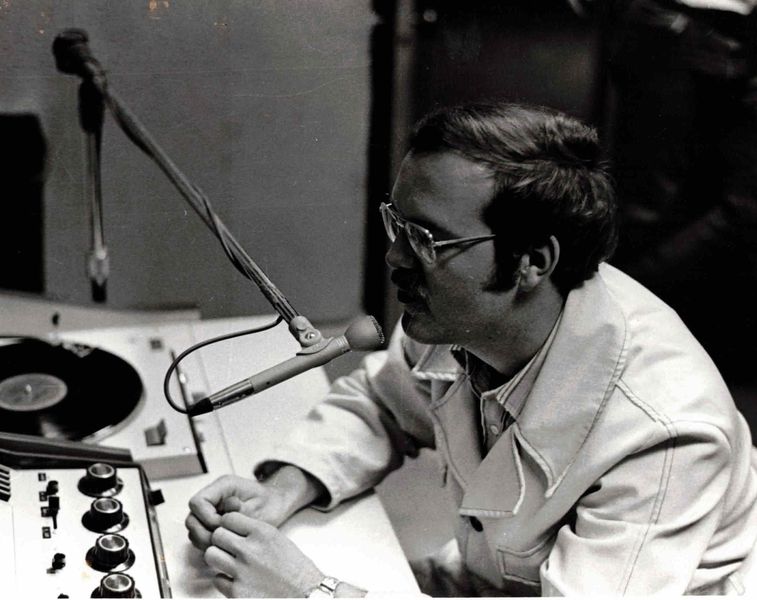
I became addicted to radio by listening to great nighttime radio personalities. But those hours are now filled by anything but inspiring, innovative personalities and that makes me sad.
Great Radio Delivered
Great radio stations delivered personality, stationality, promotions, jingles, and FOMO (Fear Of Missing Out). Today, the difference between one radio station and another is about as different as one fast food restaurant from another. Not all that much.
On-Air radio production was exciting when I was growing up. Radio stations were tight and focused. Every programming element that was allowed to hit the air was overseen by a program director that was obsessed with maintaining his/her radio station’s mission.
Those days are history.
SiriusXM
The other day, one of my daughters was complaining that SiriusXM was tripling her current rate of $5/month. She said she called to complain and was told there was nothing that could be done, so she cancelled the satellite service.
That’s not the shocking part of this story however.
What she said next was sad. She said that the local radio stations “sucked,” and that there was nothing on her car radio worth listening to.
The following week, SiriusXM sent her a $5/month for a year offer in her snail mail. She quickly returned to the satellite service.
We’re Creatures of Habit
There are so many things we do in our daily lives without thinking. We’re creatures of habit, and our habits are like being on autopilot; we do them without giving them any thought.
For example, you might be able to remember the last time you showered, but do you know which hand you always grab the shampoo with? Which armpit do you wash first? Which foot do you always put your socks on first? These are just a few examples of the many things we do every day without giving them any conscious thought.
Radio Listening Is A Habit, or It Isn’t
What my daughter learned, without thinking about it, was, listening to SiriusXM had become a habit. A habit that she had become addicted to. Only when forced to listen to today’s broadcast radio did she realize that it had changed from the days when she was growing up. Sadly, broadcast radio no longer served her listening needs.
Spotify, Pandora, RadioTunes etc.
My wife’s favorite music listening habit is Pandora’s “Secret Garden Radio.” In my case, RadioTunes serves up the best music mix of instrumental Smooth Jazz music.
What streamers offer the listener is the ability to match the genre of music to their mood of the moment. A broadcast radio station is a one flavor option, while streamers offer a myriad of flavors like Ben & Jerry’s.
CES2026
The other day I sat in on the first of many CES2026 (Consumer Electronics Show) recaps. What struck me was that the potential of AI (Artificial Intelligence) to sense our mood and serve up a stream of music that matches our mood.
Even more concerning for commercial broadcasters, AI may also be able to sense when a commercial break starts and switch a listener’s audio source to continue the genre of music they are listening to, avoiding the commercials.
Broadcast radio depends on its commercials as the primary source of its revenue.
That’s scary!
Yet, it is something I don’t hear any commercial radio broadcasters being concerned about. Instead, they are focused on keeping a century old radio service (AM radio) in the dashboard of every vehicle. (And like coal, it ain’t coming back, as I wrote in August 2017. You can read that blog article here: https://dicktaylorblog.com/2017/08/20/coal-aint-coming-back-neither-is-am-radio/ )
Is this really the best place for commercial broadcasters to be focusing their time and money lobbying Congress?


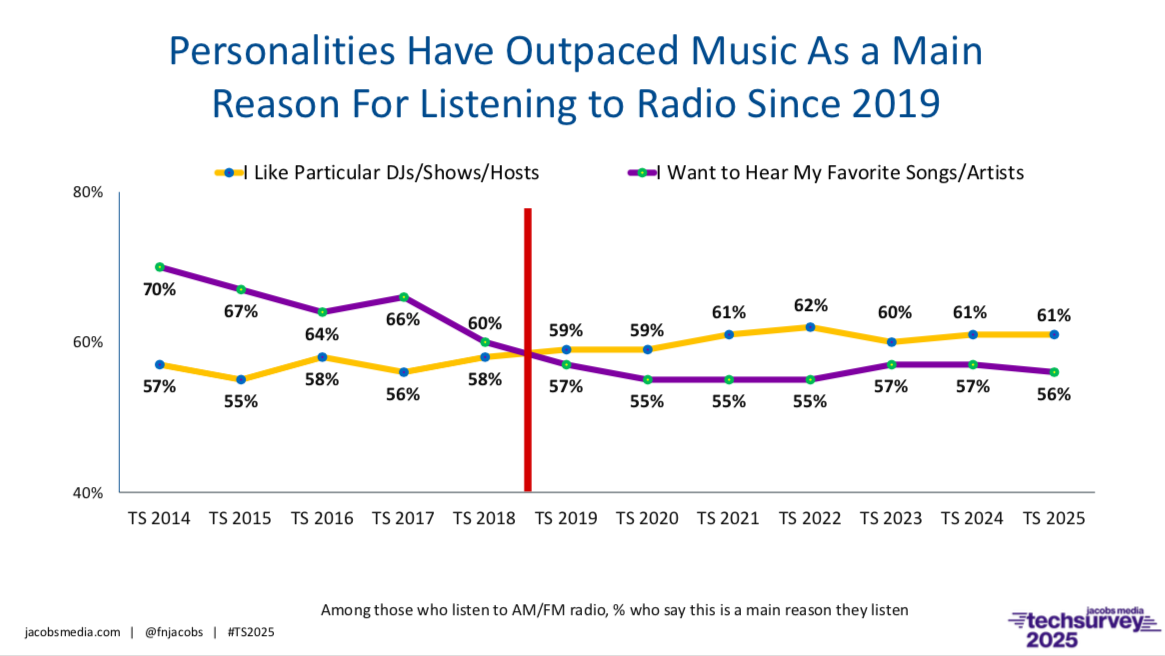
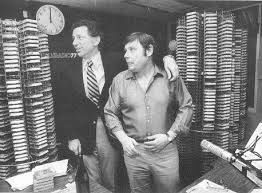






 I often wonder if today’s youth would gravitate to the style of radio that attracted me to make radio broadcasting my career for five decades. Would they be attracted to a Dan Ingram, Robert W. Morgan, Dave Maynard, Ron Lundy, The Real Don Steele, Big Ron O’Brien, Larry Lujack or any of the countless other personalities that so influenced me as I was growing up?
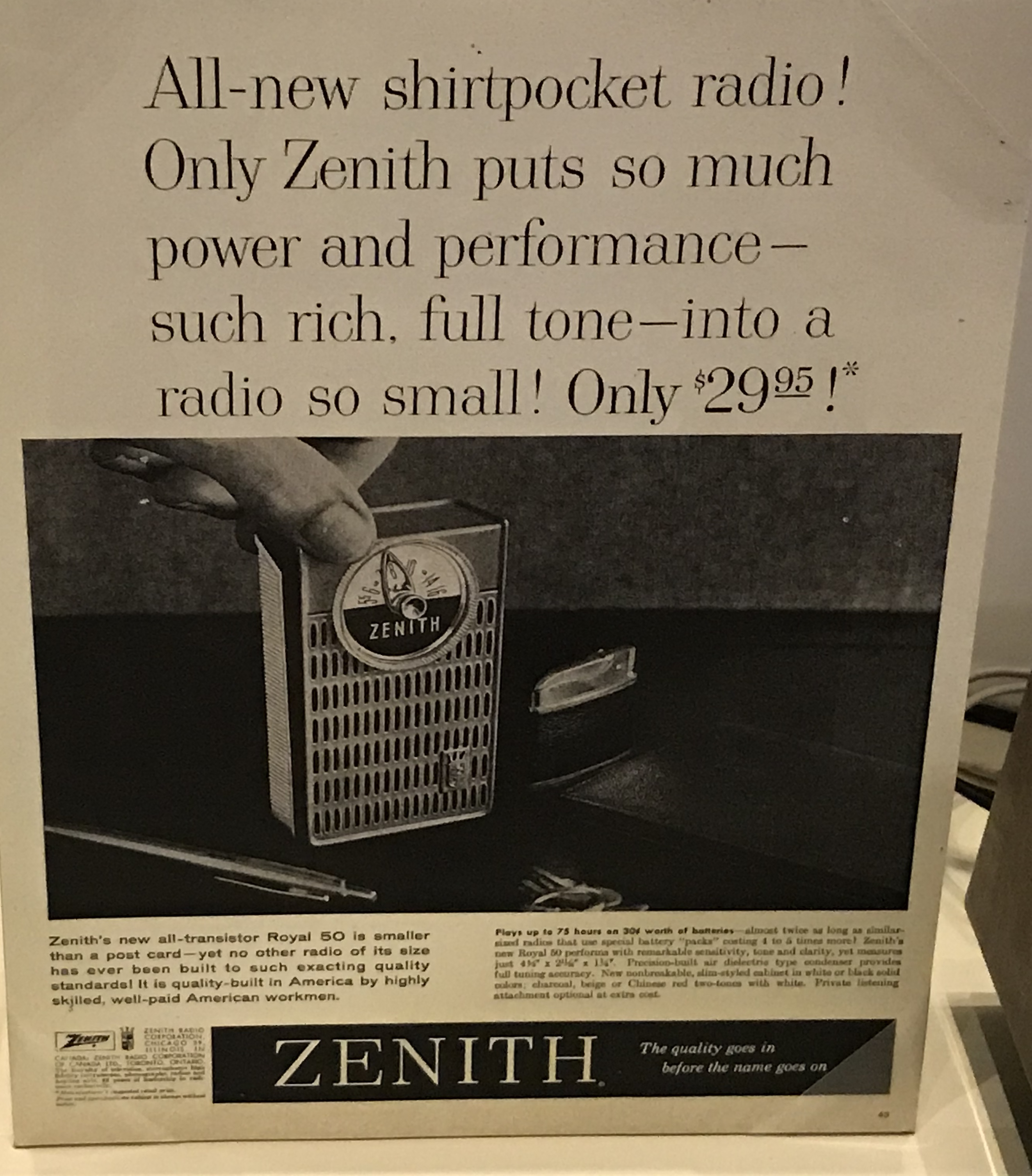 AM radio. Mine was a Zenith Royal 50 that came with an ear phone, that allowed me to listen to the Red Sox while in elementary school or to radio stations from far, far away after it was ‘lights out’ and I was supposed to be asleep.
 That got me to thinking that maybe a new radio format could be created bringing back deceased personalities like Robert W. Morgan, Dan Ingram, The Real Don Steele, Big Ron O’Brien, Ron Lundy, Larry Lujack among other greats by using the power of artificial intelligence. These incomparable radio personalities would “live again” via talented writers and programmers who would tell them what to say. Can you imagine how it might sound?
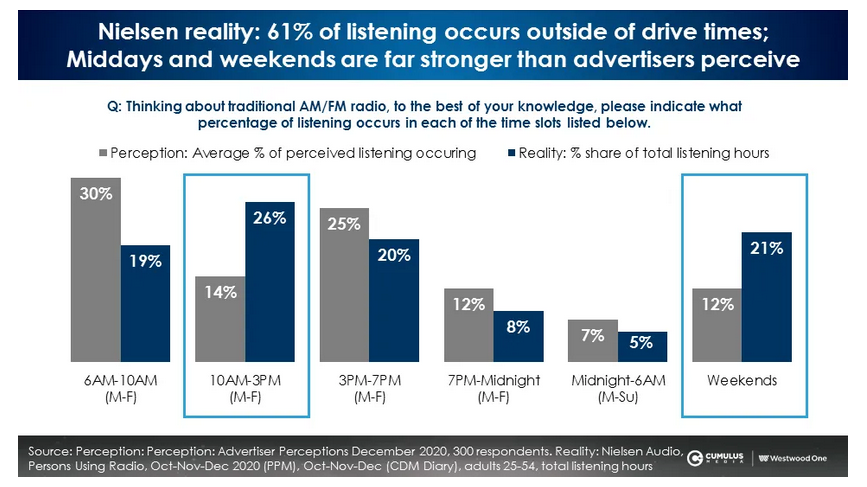
 Rich Tunkel of Nielsen Audio delivered this message at the 71st Annual NJBA Conference and Gala in Atlantic City, New Jersey along with this slide (see below).

 across TV, digital, and print media into one easy to use planning interface. It’s a product that should have everyone in radio sales salivating to get their hands on.
 I read with great interest the five part series by Matt Bailey on “
 Led for Lunch (an hour of Led Zeppelin music) pre-dates a lot of things, not the least of which is my iPhone. But this radio programming staple along with “Two-fer Tuesdays” and “Million Dollar Weekends” (in a billion dollar world) remain on so many radio stations. It’s like Mr. Peabody’s Way-Back Machine broke down in 1972.
 years ago Michael C. Keith entered a small New England college to start a new career. Keith had just spent the past ten years as a professional broadcaster and was now transitioning into the world of teaching. The first thing that he would learn was the only textbooks available at that time were woefully out-of-date. Radio was now format driven and there were no textbooks available in 1986 that were teaching the kind of radio Michael Keith had just left. So, Keith decided to write his own textbook. He called it simply “The Radio Station” and he pitched his manuscript to Focal Press.
 DickTaylorBlog